Published Updated
Related symptoms: car won't start · starter motor clicks · battery goes flat · battery has power but car won't start · engine turns over but won't start
According to the battery maker Varta, cold slows the battery's chemical reactions and the battery delivers less current. At the same time, the frost thickens the engine oil, so the starter motor needs more current than usual. That is why a battery that coped all autumn can let you down on the first morning of hard frost.
The battery is not the only possibility, though. Listen to what happens when you try to start the car, because the sound is a clue to the cause:
- The engine turns over sluggishly. The battery is flat or weak.
- All you hear is a click, or rapid clicking. The battery can't turn the starter motor, or the fault is in the starter motor, its solenoid or the cables.
- The engine turns over normally but won't fire. There is enough power. The fault lies in the fuel, a diesel's glow plugs or a petrol engine's ignition.
- Nothing happens. The battery is completely flat, a battery terminal clamp has come off, the main fuse has blown or the car does not recognise the key.
The table sums up the most common symptoms and where the cause lies. It is based on our experience in the workshop, not on statistics.
| Symptom | Probable cause | What is checked |
|---|---|---|
| Slow cranking, dashboard lights dim | Flat or weak battery | Battery charge and condition, with a battery tester |
| Just a click, lights dim | Battery cannot take the load | Battery condition and terminal clamps |
| Just a click, lights stay bright | Starter motor, its solenoid or a cable | Starter motor power supply and earth |
| Turns over normally, diesel won't fire | Paraffin wax in the fuel, water in the filter or glow plugs | Fuel filter and glow system |
| Turns over normally, petrol engine won't fire | Fuel supply or ignition | Fuel pump, ignition and fault memory |
| Dashboard stays dark | Completely flat battery, loose terminal clamp or main fuse | Battery terminals, cables and main fuse |
| Lights come on, but the key is not recognised | Key battery or immobiliser | Key battery and the manual's emergency start instructions |
How do I know if the battery is the problem?
A battery's most common warning sign is that the car has become slow to start. In the morning the starter turns lazily, and the dashboard lights dim as the starter motor draws current. The symptom has often been showing for a long time before the car finally leaves you stranded. A start-stop car also gives a clue of its own: if the engine switches off at traffic lights less often than it used to, the car's energy management may be sparing a weakened battery.
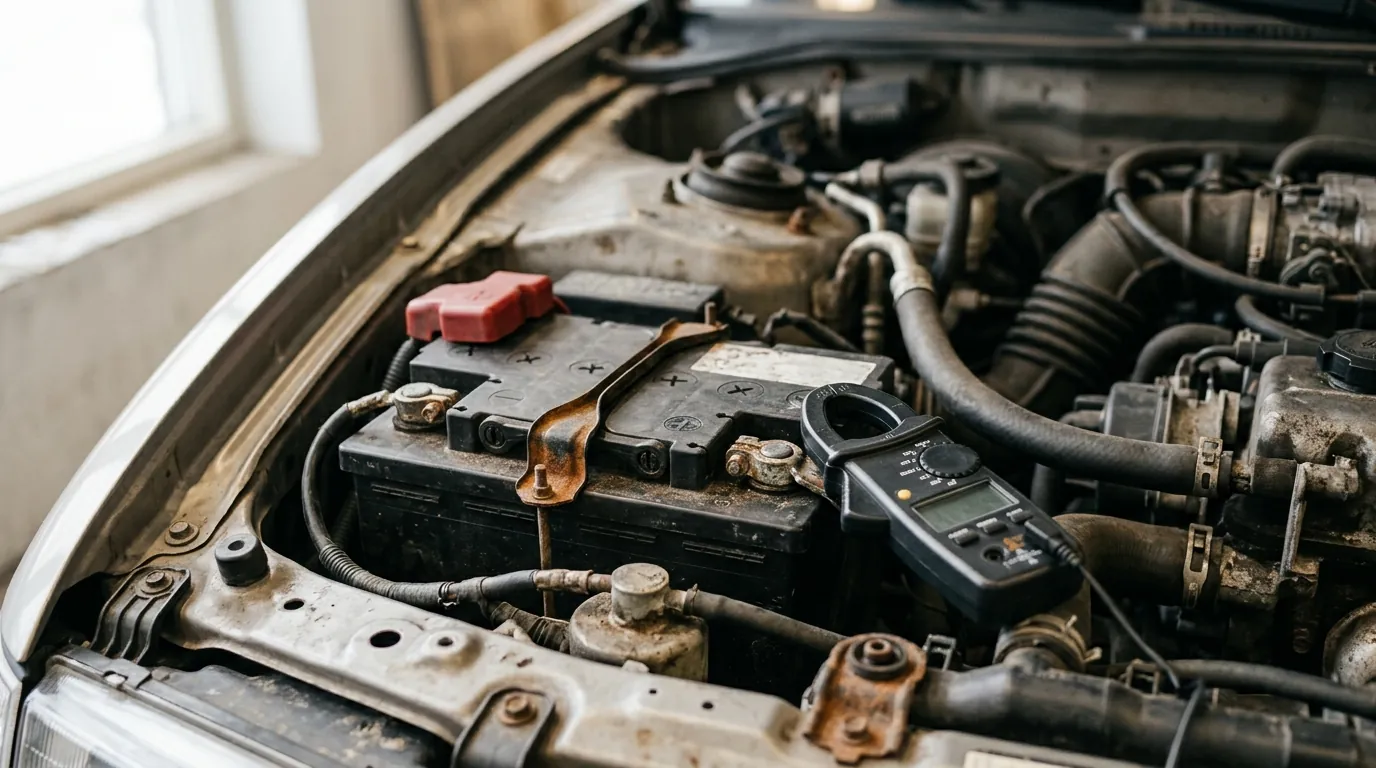
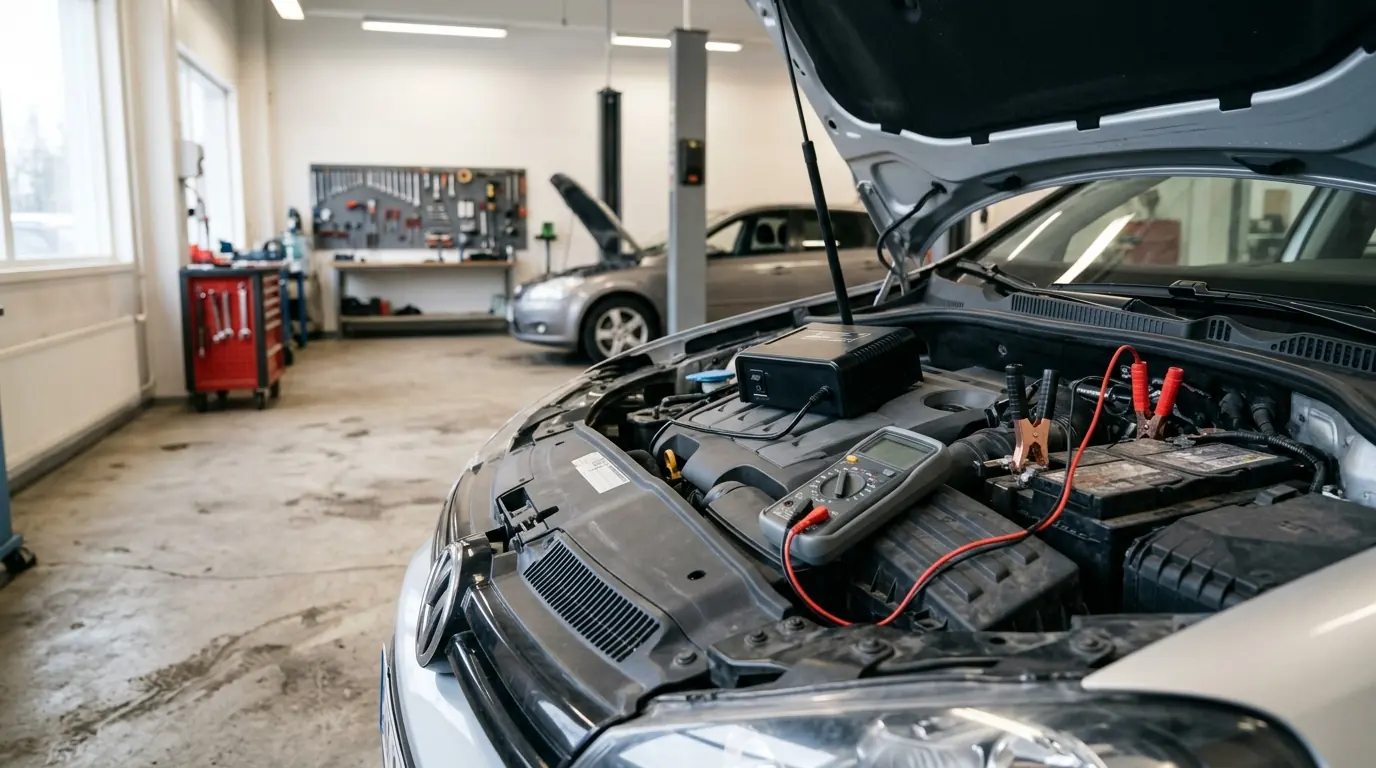
A multimeter shows you the battery's charge. Measure the voltage across the battery terminals once the car has been standing with everything switched off. A fully charged battery reads about 12.7 volts at rest. If the reading is below 12.4 volts, the battery needs charging. The article car battery charge and voltage explains how to interpret the readings and charge the battery safely.
Voltage only tells you the charge, though, not the condition. Even an old battery can read full at rest and still collapse when the starter motor draws on it. Its condition shows on a battery tester, which estimates how much starting power the battery has left.
The battery's age alone doesn't settle it either. Varta gives no single figure for service life, because it depends on the battery type, temperature, the number of charge and discharge cycles and how deeply the battery is discharged. A battery in a car used for short trips wears out faster than one in a car driven on the open road. We cover the signs of an ageing battery and when to replace it in the article when a battery is worth replacing.
The battery has power, but the car won't start: what causes it?
When the electrics come on and the radio plays but the car won't start, there is power in the battery, though not necessarily enough to crank the engine. The lights and the radio need little current; the starter motor needs many times more. So a weak battery can seem to work right up to the moment the key is turned.
Just a click
The click comes from the starter solenoid as it tries to engage the starter motor to turn the engine. Watch the dashboard at the moment of the click. If the lights dim noticeably, the battery cannot cope with the load, even though the lights otherwise work. If the lights stay bright, the current is not getting through to the starter motor. The cause may then be an oxidised terminal clamp, a corroded earth cable, the solenoid or the starter motor itself.
The starter turns, but the car won't start
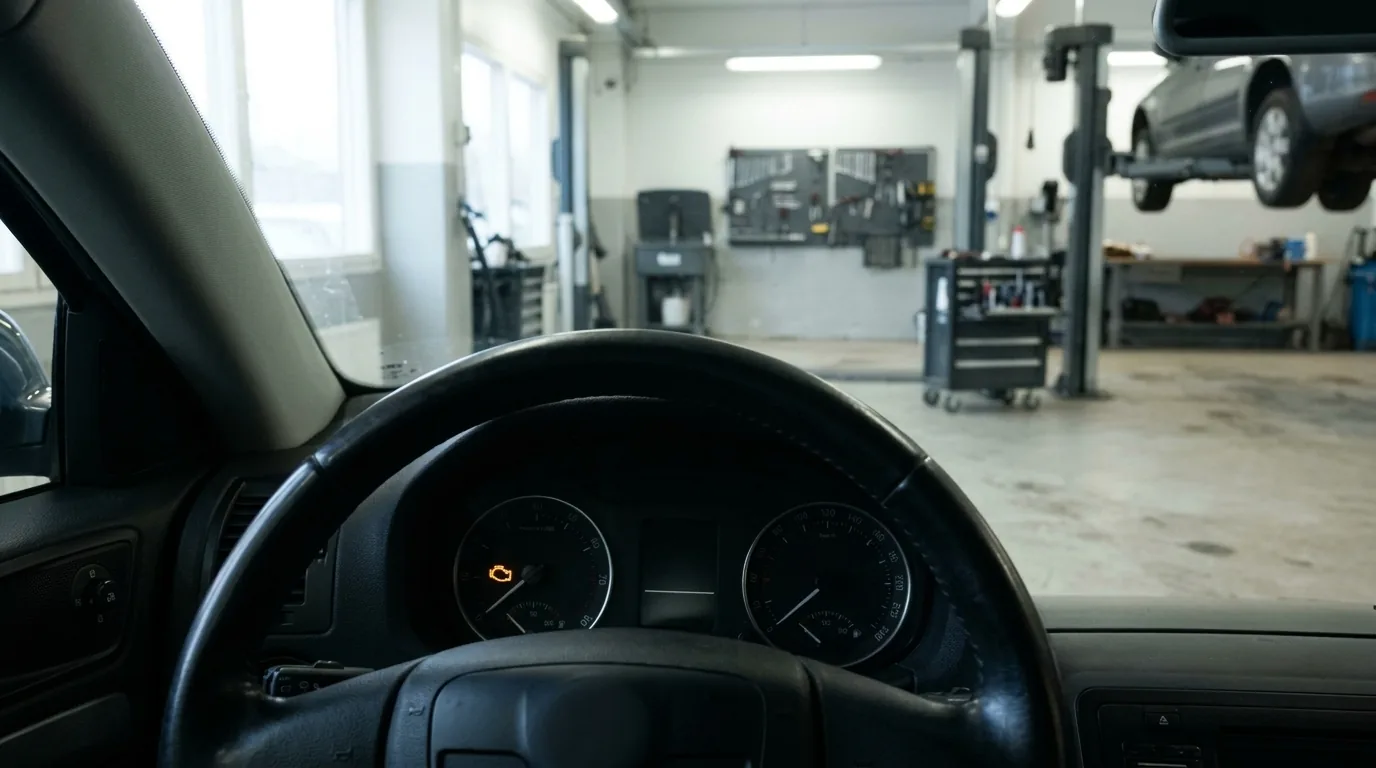
When the starter turns the engine at its normal pace but the car won't start, there is enough power and the fault lies elsewhere. In a diesel, the most common causes in the cold are the fuel and the glow plugs, which we cover below. In a petrol engine, the cause usually lies in the fuel supply or the ignition. Don't crank the engine for long, because that drains the battery. If the engine warning light is on, there is often a code in the fault memory that shows where to look. We cover the warning lights in the article engine warning light on.
Nothing happens
If the dashboard stays dark, the battery is completely flat or the current is not getting through. First check whether a battery terminal clamp is loose or oxidised. If the dashboard lights up but the car says it cannot find the key, the fault may be the key battery or the immobiliser. The immobiliser checks the key every time the ignition is switched on, and the car will not start if the key is not recognised. Kia's owner's manual describes exactly this. Your own car's manual shows how to start the car when the key battery is flat.
How to start a car in the cold
Before you try again, save the battery's power. These steps are based on the Škoda and Kia owner's manuals, but your own car's manual always takes precedence. Here is what to do:
- Switch off all electrical equipment. The lights, the blower, the seat and window heaters and the radio take power that the starter motor needs.
- Push the clutch to the floor or check the gear. In a manual car, select neutral and keep the clutch pressed to the floor until the engine runs. In an automatic, put the selector lever in P or N and keep the brake pedal pressed down. This sequence comes from the Škoda Octavia owner's manual.
- On a diesel, wait for the glow plugs. The glow-plug light comes on as you begin to start the car, and according to Škoda's manual the engine starts once the light goes out.
- Try for no more than 10 seconds at a time. Škoda advises abandoning the attempt if the engine does not start within 10 seconds, and trying again after about half a minute.
- Stop when the cranking slows. Every attempt drains the battery. A completely flat battery can freeze in sub-zero temperatures, and a frozen battery has to be replaced.
- Do not jump-start or charge a frozen battery. A frozen battery can crack or explode. If the car has been standing with a flat battery in a hard frost, do not connect leads or a charger to it until the battery has been checked.
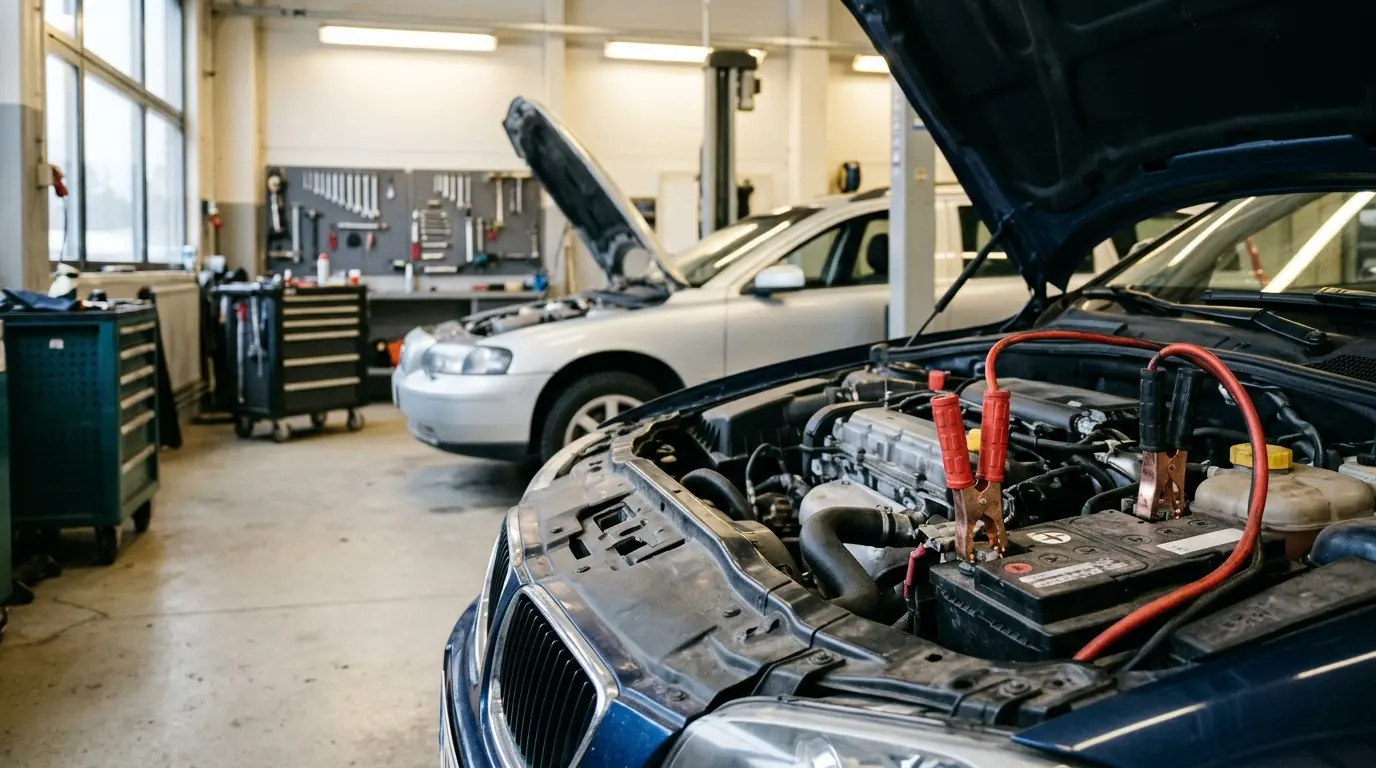
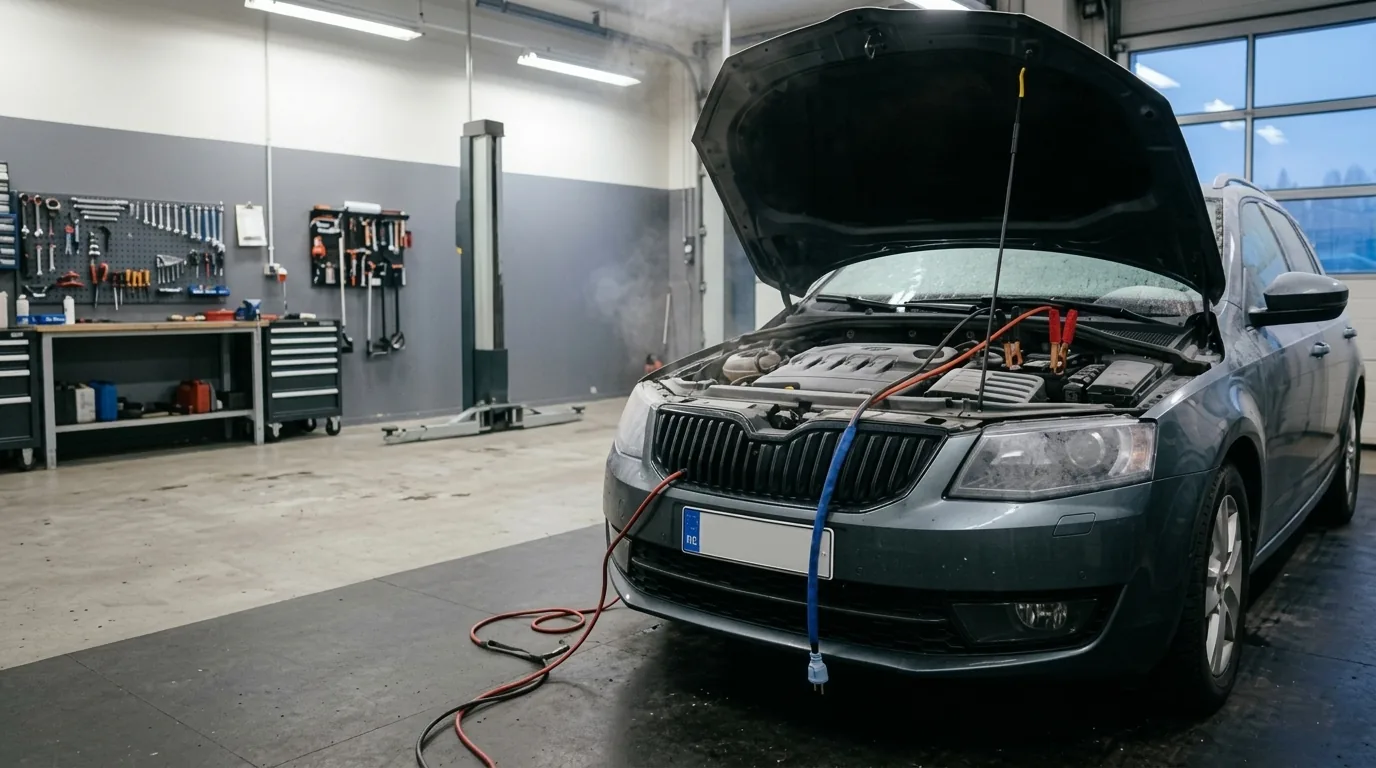
- Jump-start the car. The order in which to connect the jump leads, and the precautions to take, are in the article jump-starting a car.
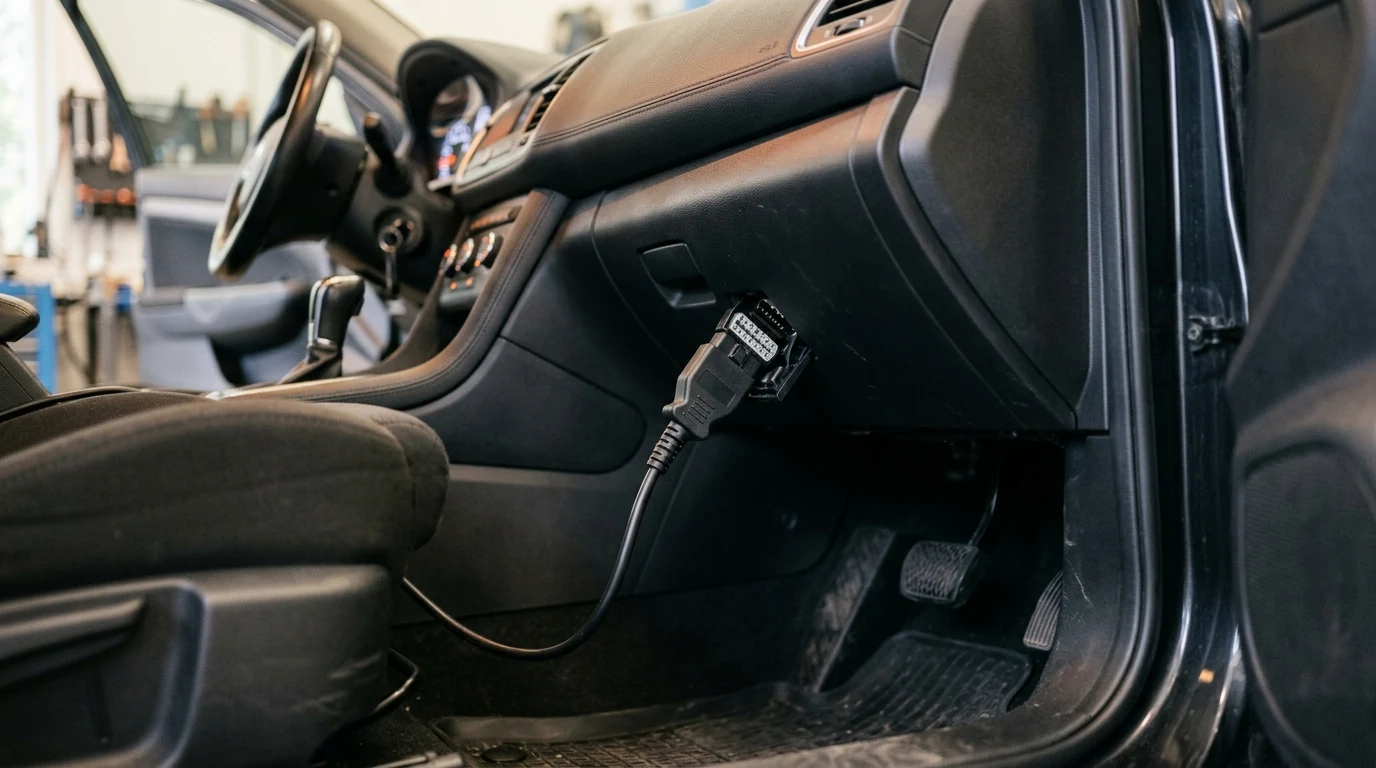
- Stop after a few failed attempts. If the car will not start even with a jump, the fault is probably not just the battery, and the car needs a diagnostic check.
Diesel car won't start in the cold
A diesel engine has no spark plugs. The fuel ignites from the heat of compression, and a cold engine does not have enough heat without help. That help comes from the glow plugs, which heat the combustion chamber during starting. If even one plug has failed, cold starts get harder and the engine runs roughly for the first few minutes. According to Škoda's manual, the glow system is faulty if its warning light does not come on at all or stays on. We describe glow plug symptoms on the glow plug replacement page.
The second cause in the cold is the fuel. Diesel contains paraffin wax, which starts to crystallise as the temperature drops. The crystals clog the fuel filter and fuel no longer flows to the engine, even with a full tank. That is why you fill up with winter diesel in winter. In the Octavia owner's manual, Škoda advises using only winter diesel during the cold season, a grade that still works properly at −20 °C. The same manual notes that fuel's resistance to cold varies from country to country.
Winter diesel sold in Finland often carries two cold ratings in its name, for example -29/-38. On the product data sheet, the first is the cloud point, at which the wax starts to crystallise and the fuel turns cloudy. The second is the filterability: the temperature at which the fuel still passes through a test filter. The fuel's grade and its limit values are stated on the distributor's product data sheet.
On some diesel cars the fuel filter is heated. Škoda states that preheating the Octavia's fuel filter keeps it working down to −24 °C. For anything colder, the manual promises nothing.
The third cause is water. A diesel's fuel filter separates water from the fuel, and the water collects at the bottom of the filter housing. In sub-zero temperatures the water freezes and blocks the filter. That is why the filter is part of a diesel's service schedule. We cover replacing it on the fuel filter replacement page.
It pays to treat fuel additives with caution. Škoda does not recommend diesel additives at all, because fuel made to the standard already meets the requirements and an additive can damage the engine or the exhaust system. If the filter is already blocked, the car needs a warm indoor space where the wax can melt, and often a new filter.
Electric car or hybrid won't start in the cold
An electric car has no starter motor, but it too has an ordinary 12-volt battery. It powers the car's electrics, such as the lights and the wipers, and the drive battery charges it through a separate converter. The Kia EV6 owner's manual, among others, describes the arrangement this way. The same manual has its own jump-start instructions for when the car will not start because the 12-volt battery is too weak. So a full drive battery is no help if the small battery is flat.
Kia's manual has a checklist that suits a frosty morning:
- Check the drive battery's charge.
- Make sure the car is in P. It will only start in that position.
- Check that the 12-volt battery's connections are clean and tight.
- Switch on the interior light. If the light dims or goes out when you try to start, the 12-volt battery is flat.
The same manual forbids pushing or towing the car to try to start it. Some cars have a separate connection point for jump leads in the engine bay, even if the battery is elsewhere. The car's handbook shows where the connection point is.
In hybrids the set-up varies. The Kia Niro hybrid, for example, has no ordinary 12-volt battery: a lithium battery is combined with the drive battery instead. The car cuts the power from it before it runs completely flat, and the manual advises using the battery reset button. An electric car's 12-volt battery also ages, and it drains while the car is left standing. If the car repeatedly fails to start, it is worth testing the battery, just as you would in a car with a combustion engine.
Battery or alternator?
If the car starts with a jump but leaves you stranded again a couple of days later, the battery is not necessarily to blame. There are three common explanations for a battery that keeps going flat:
- The alternator isn't charging. While you drive, the alternator should be charging the battery. If it doesn't, even a new battery runs down at the same rate as the old one.
- The auxiliary belt is slipping. The auxiliary belt drives the alternator. A worn belt slips and the alternator doesn't turn properly. We describe the belt's symptoms on the auxiliary belt replacement page.
- A device doesn't go into sleep mode. The alarm, the clock and the keyless entry system draw current even when the car is parked. If a device stays on, the battery goes flat within just a few days.
The way a car is driven can drain even a healthy battery. On short trips the alternator doesn't have time to make up for the power used in starting, and in winter the lights, the blower and the heaters take some of the alternator's output. Škoda says the same: if the car is often driven on short trips, the battery doesn't have time to charge. According to Škoda, a car that stands unused for three to four weeks also drains its battery.
When we test a battery, we always test the alternator too. A new battery does not fix an alternator fault, and without a test the money would go on the wrong part.
A faulty starter motor
The starter motor is an electric motor that cranks the engine into life. Its faults resemble battery faults, so the battery is tested first. If the battery is in good condition and the cables are intact but the car still won't start, the cause is the starter motor or its solenoid. The typical symptoms are:
- a click without the engine turning, even though the lights stay bright
- the car starts only on every other attempt
- a scraping or whining noise when you start
- the starter motor keeps turning even after the key has sprung back.
The starter motor usually sits low down where the engine meets the gearbox, and it is reached from underneath the car. That is why the job is done on a lift. On some cars, parts of the intake manifold or the underbody also have to come off to clear the way. We check the car first and tell you the price before the work starts. We do not replace parts by trial and error.
How to avoid trouble on a frosty morning
- Have the battery tested before winter. Varta advises testing the battery at least once a year before winter, and whenever starting begins to feel slow.
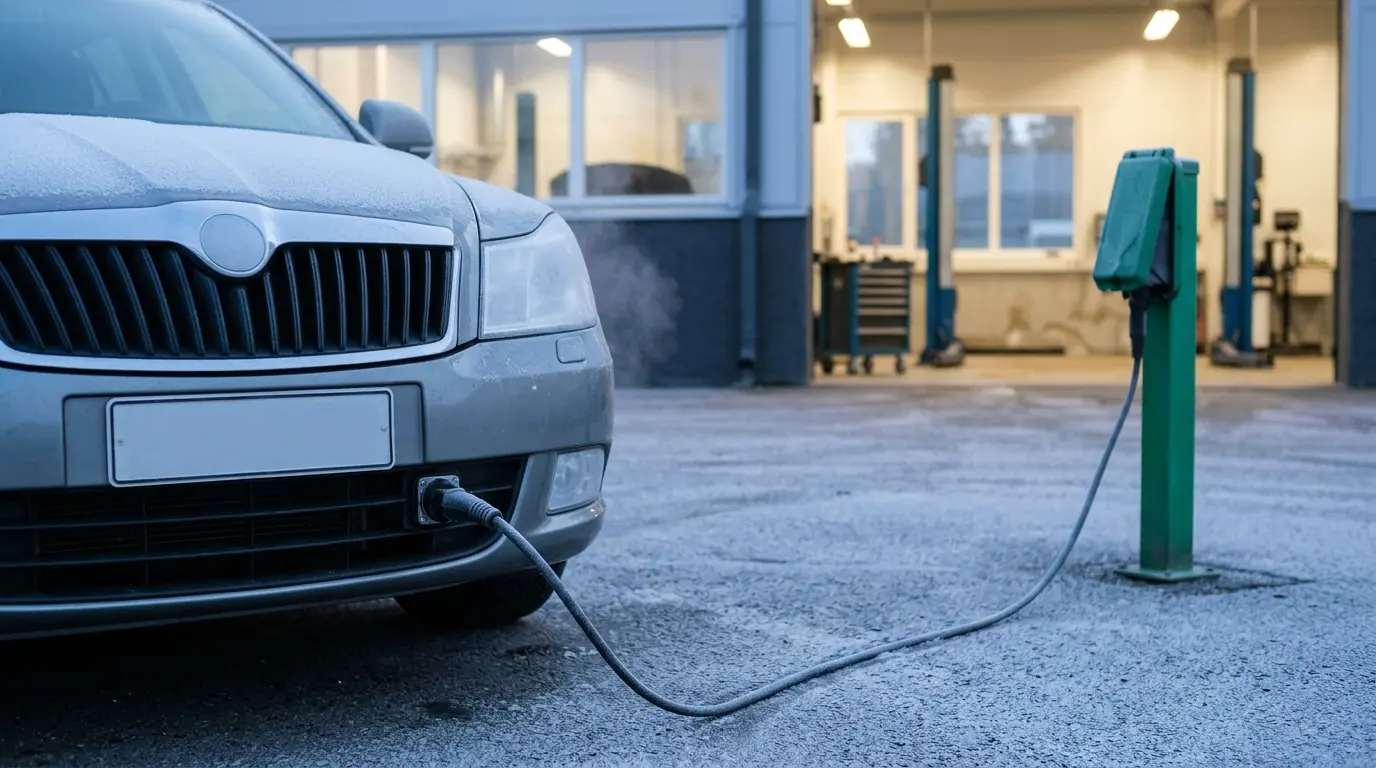
- Use a block heater. According to Motiva, preheating makes starting easier in hard frosts and reduces engine wear. You will find heating times in the article using a block heater, and a heater can be retrofitted: block heater installation.
- Take a longer drive now and then. A longer drive charges the battery quickly, and you don't need high speeds to do it. If you only drive short distances, charge the battery with a battery charger from time to time.
- Remember what the auxiliary heater uses. A fuel-fired auxiliary heater burns fuel, but it also needs power from the battery. Škoda states that the battery discharges while the auxiliary heater is running. If the heater runs every morning and your trips are short, the battery is gradually left undercharged.
- Fill up with winter-grade diesel in good time. When frosts are on the way, fill the tank with winter diesel and don't wait for the autumn fuel to run out.
- Switch off comfort features when you don't need them. On short trips, the heated seats, the heated rear window and the blower eat into the alternator's output.
The periodic inspection (katsastus) tells you nothing about the battery's condition. At the inspection, the battery's mounting and protection are checked visually and by hand, but its starting power is not measured. The 2025 statistics from Traficom, the Finnish Transport and Communications Agency, record 119 rejection faults and 7 072 repair notices (korjauskehotus) for the battery and its wiring. The statistics cover 1.67 million inspections of passenger cars first registered in 2005–2021. So passing the inspection does not mean the battery will last the winter.
When should the car go to the workshop?
Come in when starting begins to feel slow, preferably before the car leaves you stranded. If the car still starts, come straight in without an appointment. The battery and alternator test takes minutes, and you get the result to take with you even if no replacement is needed. If the battery is at the end of its life, we tell you the price of a battery replacement before anything is disconnected.
Book a time for diagnostics in these situations:
- The battery goes flat again within a few days.
- The engine turns over normally but won't fire.
- The starter motor clicks even though the battery has tested healthy.
- The diesel's glow-plug light does not come on, or stays on.
You can also come in for diagnostics without an appointment. If the car will not start at all, jump-start it and drive straight to us, or arrange a tow. We always tell you the price before the work starts.