
Engine block heater installation
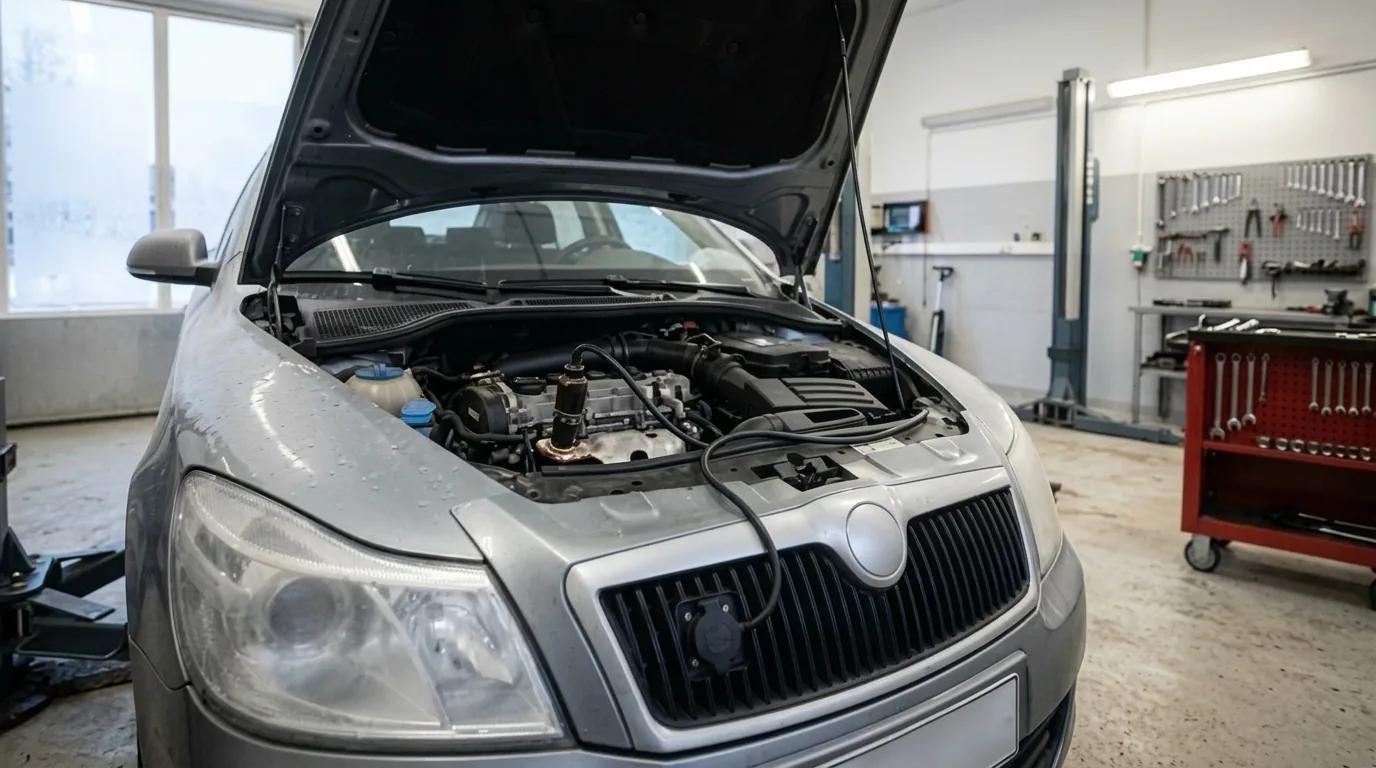
We fit an engine block heater and an interior socket. The heater is chosen to suit the engine. We check the car and tell you the price before the work starts.
estimate
approx. 590 €
- Prices include VAT
- 25,5 %
- An electric heater that suits the engine: a block, hose or radiant heater
- The heater cable and the inlet at the front of the car, usually in the bumper or the grille
- An interior socket in the cabin for a cabin heater
How it works
Call us or drop in
Give us the registration. We confirm the price and agree a time in the same call.
We do the work
You get the car back at the time we agreed.
You pay the agreed price
No surprises on the invoice. If we find anything else, we call before we touch it.
Have the heater fitted in autumn, so that it is ready for the first frosty mornings.
Call 045 262 5950What the price includes
What the price includes
- An electric heater that suits the engine: a block, hose or radiant heater
- The heater cable and the inlet at the front of the car, usually in the bumper or the grille
- An interior socket in the cabin for a cabin heater
- Fitting to the manufacturer's instructions. The wiring is secured so that it does not touch hot or moving parts.
- Coolant drained as needed, refilled and the system bled
- A function check on mains power and a leak check once the engine has warmed up
What the price does not include
- The cabin heater. It is a separate device. The fitting with a cabin heater is priced below as a job of its own.
- The heating cord from the post to the car. We tell you whether your current cord fits the car's new inlet.
- Fault-finding and repair of an old heater that does not work. We find the fault and tell you the price of the repair before the work.
- A fuel-fired auxiliary heater. That is a different device and a different job.
- Other cooling system faults, such as a leaking hose or water pump. If we find one during the fitting, we tell you about it and the price of the repair before we carry on.
At the same visit
- approx. 640 €
Block heater with cabin heater
Block heater, interior socket and cabin heater, fitted.
About this work in detail
A block heater is plugged in with a heating cord to the heating post in the yard or the car park, and the engine warms up before you set off. A preheated engine starts more easily in frost and warms the cabin sooner, so the windows clear sooner too.
According to Motiva, preheating also reduces fuel consumption, local emissions and engine wear. When the engine turns over easily, the battery is under less strain on a cold morning too.
Read the full guide
Block, hose and radiant heaters
In everyday Finnish, «lohkolämmitin» means any electric engine heater. There are three common types:
- A block heater is fitted into the engine block, usually in place of a core plug. It warms the coolant directly inside the engine.
- A hose heater is fitted into a coolant hose. It is used when the block has no suitable place for a heater.
- A radiant heater is fixed to the outer surface of the engine and warms it from outside. Most new cars that can be preheated at all are preheated with one.
A block or hose heater is not available for every new engine, and some engines cannot be preheated at all. That is why we check before the work which heater suits your car. The combustion engine of a hybrid is not always preheated, because the heating can disturb the engine's control system. We fit a heater to a hybrid only if a suitable heater exists for its engine. A fully electric car gets no heater: it has no combustion engine, and its cabin is warmed with the car's own preheating.
When a heater is worth fitting
A new car usually starts in winter without preheating, except in the hardest frosts. A heater is still worth fitting if one of these applies:
- The car has no heater at all. This is often the case with used cars imported from Central Europe.
- The car is driven on short trips in winter, on which the engine never warms up properly.
- The windows clear slowly and the cabin stays cold for a long time, even with the blower at full.
- The car stands outside overnight, and there is a heating post in the yard or the car park.
If the car starts badly in frost, the battery is worth testing too. A heater makes starting easier, but it does not fix a tired battery.
When the old heater does not work
If the car already has a heater but the engine is cold in the morning, the fault is in the heater, its cable, the heating cord or the post. These are the usual signs:
- The residual current device trips or the fuse blows as soon as the cord is plugged in. The cause can be moisture in the connector or a failed heating element.
- The car's inlet has cracked or the end of the heater cable has come off.
- Coolant leaks from where the heater sits.
First try a different heating cord and a different post. If the fault stays, we find it at the workshop. Sometimes a new heater cable is enough, sometimes the heater has to be replaced.
How long to preheat
According to Motiva, half an hour is enough in cool weather and even in hard frost two hours at most. Heating for longer wastes electricity. Housing company heating posts often have a timer that starts the heating at the right time before you leave.
How the work is done
- We ask for the car's make and model when you book, so that the right heater has been ordered by the time you bring the car in.
- We put the car on the lift and remove the undertray and any other parts in the way.
- We drain as much coolant as the fitting needs. A radiant heater usually needs no coolant drained.
- We fit the heater to the manufacturer's instructions: a block heater in place of the core plug, a hose heater in a coolant hose, or a radiant heater on the outer surface of the engine.
- We run the heater cable to the front and fix the inlet in the bumper or the grille. The cable is secured so that it does not chafe or touch hot or moving parts.
- We take the cable into the cabin and fit the interior socket, for example in the front passenger footwell.
- We refill and bleed the cooling system, run the engine up to temperature and check for leaks and the coolant level.
- We connect the heater to mains power and check that it works and that the residual current device does not trip.
How long the job takes depends on the heater and on how many parts have to come off to reach its location. We tell you how long the car will be with us when you book.
What the price depends on
The price varies from car to car. What affects it most:
- The heater type. The parts and the fitting work differ between block, hose and radiant heaters.
- The location. On some engines the heater's location can only be reached once several parts around it have been removed.
- Coolant. When a lot of coolant has to be drained, more new coolant is used and bleeding takes longer. The coolant is chosen to the manufacturer's requirements.
- Seized parts. Removing a rusted core plug or an old, broken heater can take extra time.
We check the car and tell you the price before the work starts.
The interior socket and the cabin heater
The interior socket is a power outlet fitted in the cabin, fed from the same inlet at the front as the engine heater. A cabin heater is plugged into it to warm the cabin before you leave. According to Tukes, only a heater made for car interiors may be used as a cabin heater. A household fan heater is not suitable for a car because of the fire risk.
What you can check yourself
- See whether the car already has a heater. The inlet is usually in the bumper or the grille, often under a cover. If you find one, test the heater before you book a fitting.
- Test the heater like this: on a cold morning, plug the car in for an hour and then start it. If the heater works, the blower gives warm air clearly sooner than usual.
- Check the condition of the heating cord. According to Tukes, damaged insulation must not be repaired with tape; the cord is replaced with a new one.
- Use a heating cord made for cars that reaches the outlet without an extension cord. Always unplug it before you drive off.
- Check the coolant level in the expansion tank when the engine is cold. After the fitting the level can still drop during the first few drives as the last air leaves the system, so check it again after a few days.
When not to drive the car
Do not drive the car if
- coolant is leaking from where the heater sits and the level is below the minimum mark on the expansion tank
- the coolant temperature warning light comes on or the temperature gauge climbs higher than usual.
In that case, call us before you set off. If coolant is seeping from the heater but the level is still fine, check the level before every drive and bring the car in to be checked soon. A broken heating cord or a cracked inlet should not be plugged into the post at all, because it can cause an electric shock.
If something else needs fixing
We do not start work you do not know about. If the car needs something else fixed, we call and tell you what the extra work costs and what happens if it is left undone. You decide.
The final price may exceed the estimate by at most 15 per cent, additional work included.
We work to the motor vehicle service and repair terms approved by the consumer advisory board of the Finnish motor trade.
Related work

Seasonal tyre change
Tyres already on rims. We tell you if the tread will not last another winter.
29 €
Scheduled service
The scope varies from car to car, so we tell you the price before the work starts.
approx. 189 €
Battery replacement
We test the charging system first. The battery itself is priced separately.
39 €
Shall we agree a time?
Leave a booking request online or call. We confirm the time and tell you the price before any work starts.
estimate
approx. 590 €
- Address
- Lampputie 12 C 67
00750 HelsinkiShow on the map - Opening hours
- Mon–Fri8.00–18.00Sat9.00–15.00Sunclosed
- Phone
- 045 262 5950
- huolto@caron.fi