Published Updated
How long does a car battery last?
Five years is Autoliitto's estimate of a battery's typical service life. The club's battery service puts it the other way round: five years is getting to be a long life for a battery. Modern cars' high power consumption and short journeys both shorten a battery's life.
The battery maker Varta gives no single figure for service life. It depends on the battery type, temperatures, the number of charge and discharge cycles, the depth of the discharges and how often the car is driven. Varta likens a battery to tyres and brakes: it is a wearing part with a limited service life. Five years is a rough guide. A test tells you the battery's real condition.
The receipt or the car's service history tells you the battery's age. Many batteries also have their date of manufacture marked on the lid as a code, but the marking varies from maker to maker.
An electric car also has a 12-volt battery, and it is replaced when needed just like a combustion-engined car's battery. Autoliitto points out that even in an electric car, battery problems more often involve this starter battery than the drive battery.
Why does a weak battery fail in freezing weather?
Cold slows down the battery's chemistry. Varta considers 20 degrees the most suitable temperature for a battery. When the temperature drops to ten degrees, the battery's chemical reactions slow to half their speed. At zero degrees they run at only a quarter of the speed. In freezing weather the engine oil also thickens, and the starter motor needs more current to turn the engine. So the battery gives the least just when the engine needs the most.
That is why a battery's cold cranking current is measured at minus 18 degrees, under the EN 50342-1 standard. Cold also slows down charging. When the lights, blowers and heaters are on, only a little of the alternator's output is left for the battery.
Autoliitto receives more than 50 000 requests for help from drivers and motorcyclists every year, and nearly one in five of them involves a battery problem. Help is needed most in hard frosts and in heatwaves.
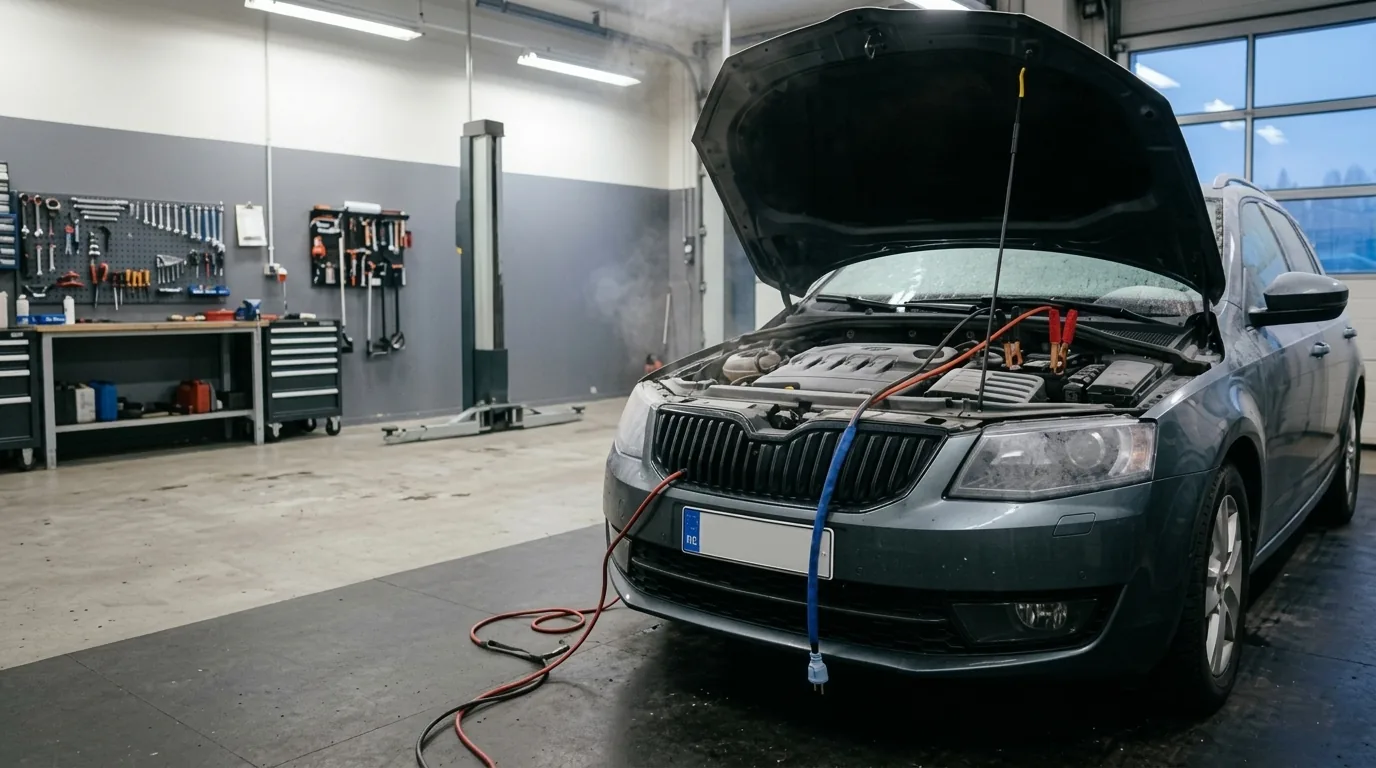
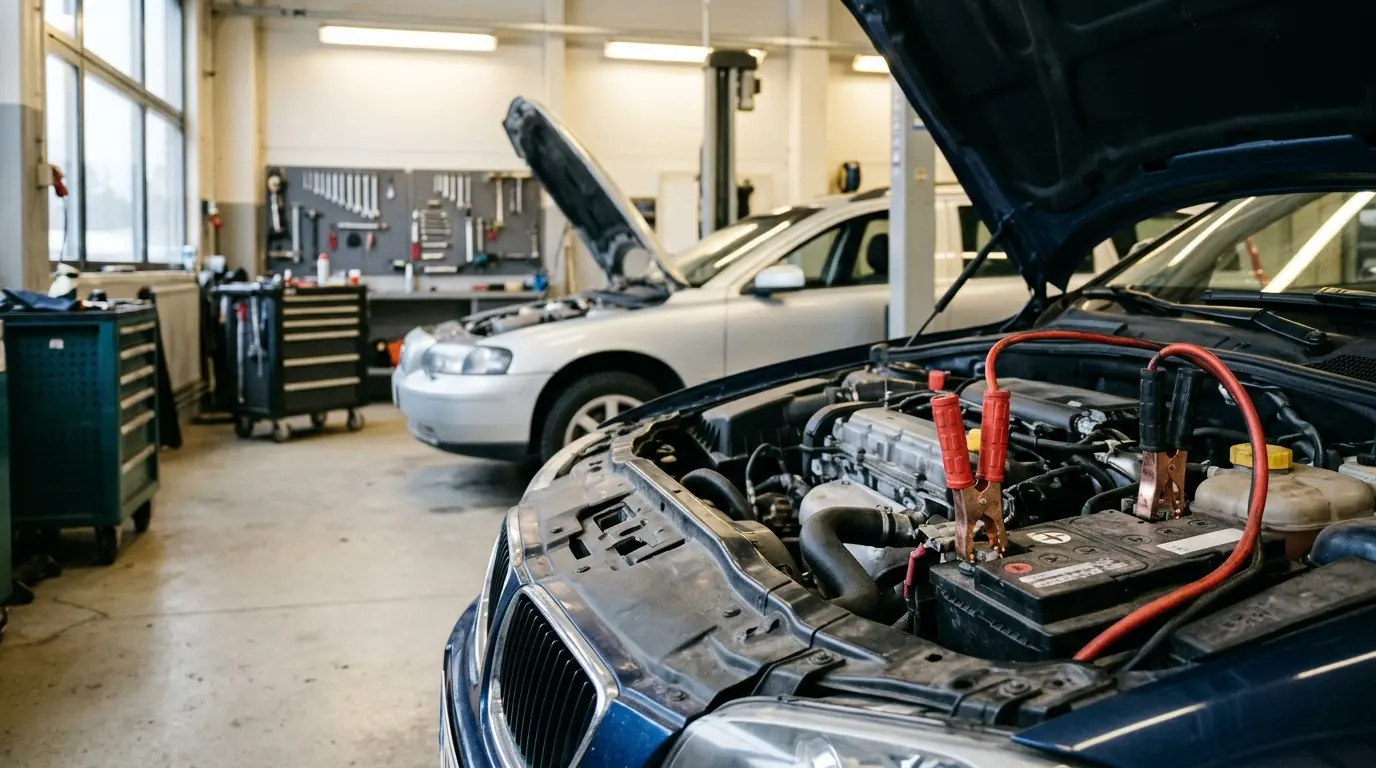
Autoliitto advises replacing a worn-out battery while the weather is good. According to the club, a battery that was already showing symptoms in warm weather is likely to fail in hard frosts. Replacing it in good weather means you can do the job at a time that suits you, not in a hurry on a frosty morning. If the car no longer starts, read why a car will not start in the cold and how to jump-start a car.
How can you tell the battery is at the end of its life?
A battery usually weakens gradually. Autoliitto points out that difficulty starting is often the result of a problem that has been developing for a long time. These signs help you spot a weakening battery in time:
- Starting has slowed down. The starter motor turns sluggishly even when the temperature is above zero.
- The lights dim when you start the car. Varta regards dimming headlights as a sign of low charge.
- Start-stop switches the engine off less often than before. That is the car's energy management sparing a weakened battery, and according to Varta it is time for a replacement.
- Strange fault messages appear on the dashboard. According to Autoliitto, undervoltage causes spurious fault codes and messages.
- The battery is five years old or older. Age alone does not decide it, but a battery that old is worth testing before the winter.
- The case is swollen or cracked, or the battery is leaking. Exide's advice is to replace a damaged battery. Battery fluid is corrosive sulphuric acid, so take care that it does not get on your skin or in your eyes.
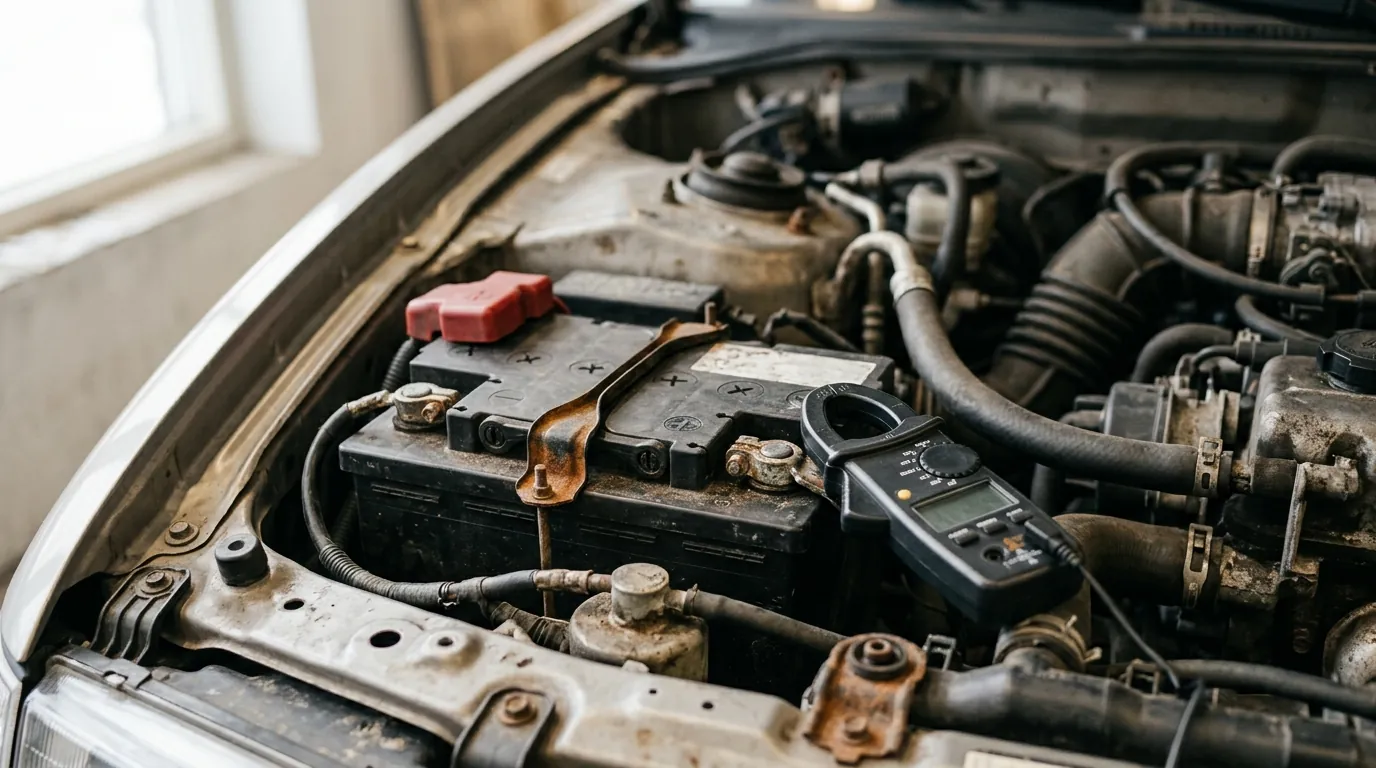
- There is corrosion around the battery. Corrosion near the battery can be a sign of leaked battery acid. In that case, Varta advises having a workshop find out the cause.
Not all battery symptoms come from the battery. According to Kia's owner's manual, for example, the charging system warning light comes on for about three seconds when the ignition is switched on. If it stays on, the fault is in the alternator or the charging system. Exide warns that an alternator that charges poorly leaves the battery undercharged while you drive, and the battery ages before its time.
A battery can also go flat while the car is standing, if some device keeps drawing current. Autoliitto gives the example of follow-me-home and welcome lights, which can drain the battery just enough that the car no longer starts. A new battery does not fix faults like these. We explain how to measure the voltage and charge the battery in our article on car battery charging and voltage.
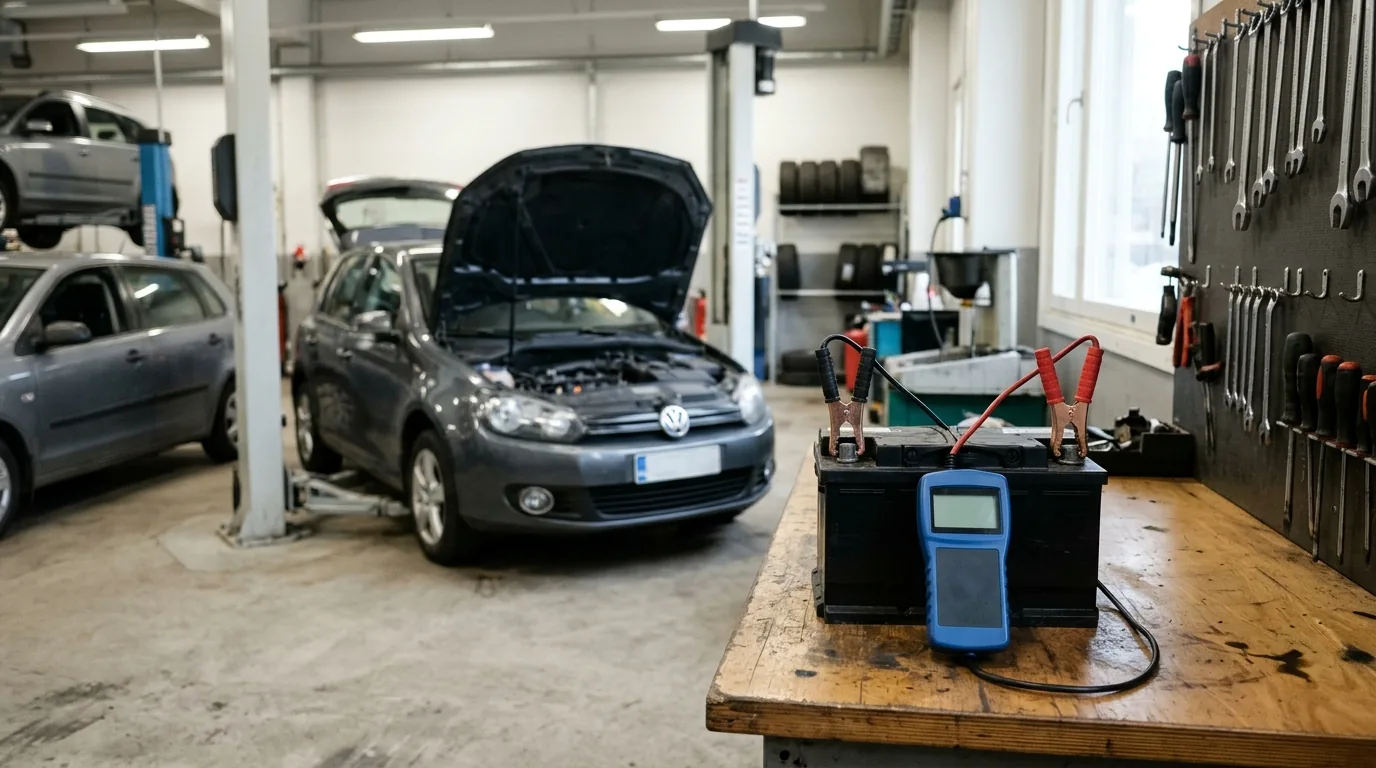
A battery test shows what is left of the battery's ability to start the car
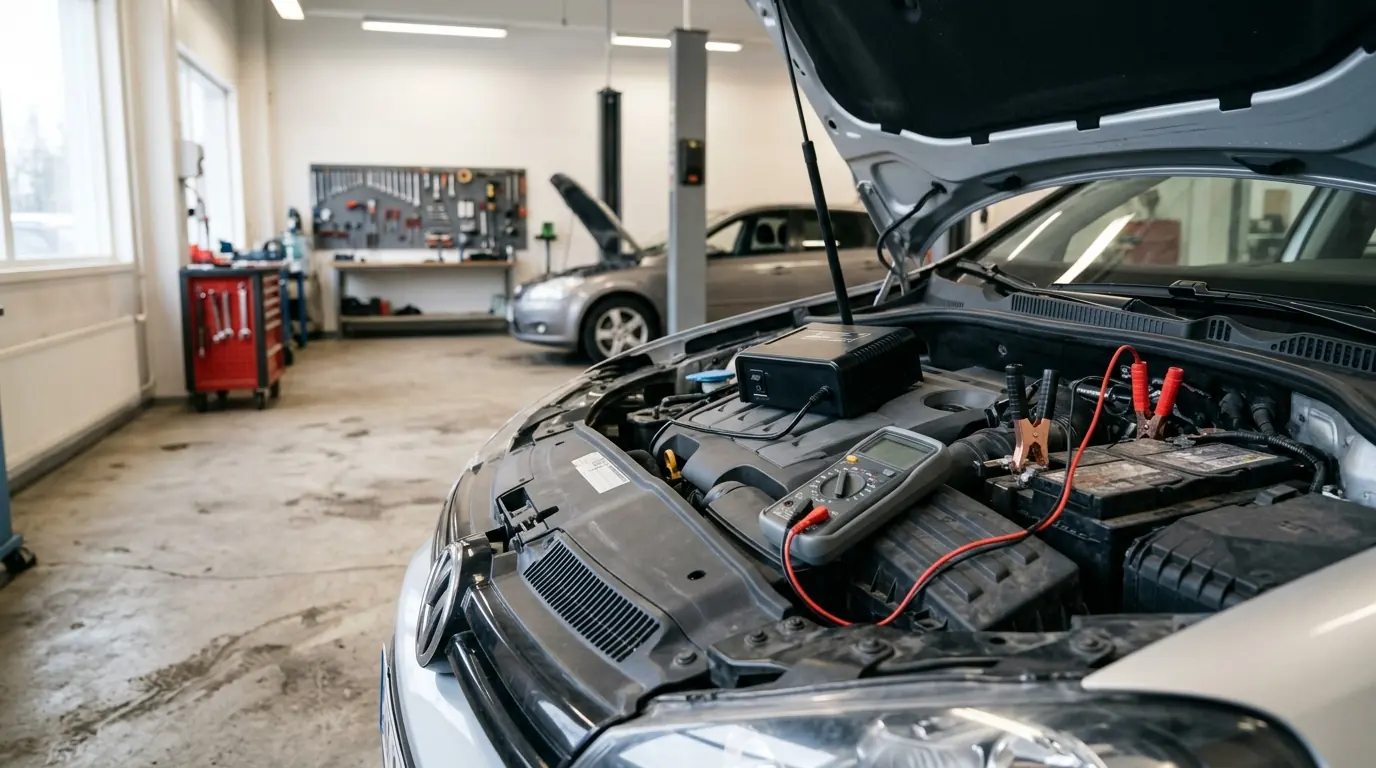
A multimeter only tells you how full the battery is. It cannot show the battery's condition: for that you need a battery tester.
The battery type is entered into the tester, along with the cold cranking current marked on the label and the standard it is measured to. The tester measures the battery's state of charge and internal resistance, and compares the resulting current with the figure on the label. The comparison is shown as a percentage, which Varta's testing guide calls starting power. It can be over 100 %.
What decides it, though, is the tester's conclusion, which is calculated from the state of charge and the starting power together. That is why a battery with a starting power of 45 % can get the result «good» and a battery at 75 % the result «replace». In Varta's guide, the results mean the following:
| Tester's result | What it means |
|---|---|
| GOOD | The battery is fully charged and in working order. |
| GOOD + RECHARGE | The battery is in good condition once it has been charged. |
| CHARGE + RETEST | Charge the battery and test it again. If the same result comes up again, the battery is replaced. |
| REPLACE THE BATTERY | Replacing the battery is recommended. |
| No result | Check the connection of the test cable. The battery may be deeply discharged: charge it and test it again. If there is still no result, the battery is replaced. |
Autoliitto recommends charging the battery fully before the test, so that the result is reliable. With the AGM or EFB battery of a start-stop car, the result is harder to interpret. Varta points out that many testers measure only the cold cranking current. They only roughly estimate the remaining capacity and the battery's ability to accept a charge. An unsuitable tester can give the result «good» even though the battery is at the end of its life. That is why the result is weighed against the battery's age, the mileage, any earlier deep discharges and the car's symptoms, such as start-stop working less often.
How to choose the right battery
The starting point is the car manufacturer's recommendation. In Varta's battery finder, for example, the recommended battery is the one the car maker usually fitted in the first place. Varta advises choosing a battery that is the same or better, never a smaller one. Compare the new battery with the old one using these details:
| What to compare | Where to find it | What to choose |
|---|---|---|
| Size and fixing | The old battery's dimensions and the battery bracket | A size class that sits firmly in the bracket |
| Terminal positions | Where the positive and negative terminals are on the old battery | The same terminal layout |
| Capacity (Ah) | The battery label | At least the same as the original |
| Cold cranking current (A) | The battery label, the figure to the same standard | At least the same as the original |
| Type | The battery label: AGM, EFB or conventional | AGM in place of AGM, EFB or AGM in place of EFB |
Battery size classes are standardised, but more than one size often fits the same car. A diesel car's battery is usually larger than that of an equivalent petrol car. Check where the terminals are before you remove the old battery, so that the cables do not go on the wrong terminals.
Capacity tells you how much charge can be taken from the battery. According to Varta, a 40–45 Ah battery is enough for a small car, and premium and sports cars have batteries of up to 110 Ah. The cold cranking current tells you how well the battery can turn the engine over in freezing weather. The label may give the current to two standards, for example as an EN figure and an SAE figure. So always compare figures to the same standard. In Varta's testing guide, the figure to the old German DIN standard is about 0.6 times the EN figure. That makes the same battery look smaller when it is rated to DIN.
EFB or AGM?
A start-stop car takes an EFB or AGM battery. EFB is a more durable battery developed from the conventional flooded battery, and it is often used in simple start-stop systems. In an AGM battery, the acid is bound in a glass-fibre mat. It is meant for the most demanding use, such as cars that recover braking energy into the battery.
A battery type is only ever changed for a better one. Varta says an EFB battery can always be replaced with an AGM battery, and this is worth doing if the battery keeps causing problems. Varta does not recommend going from AGM to EFB, because the car's energy management is designed for a particular kind of battery.
A conventional flooded battery does not last in a start-stop car. The car's energy management puts too much strain on it, and its life is shortened even if start-stop is switched off. Varta reports a field trial in Dubai in which all the start-stop cars fitted with conventional batteries broke down within 5–6 months. The comparison cars fitted with AGM batteries kept going for the whole 12-month trial.
A car without start-stop and without many electrical devices can take a conventional battery. Even so, EFB batteries are used more and more often in place of a conventional one. An AGM battery's greater power reserve extends its life in a car without start-stop too.
Does a new battery need coding?
It does if the car does not recognise the new battery by itself: the battery is then registered, or coded, to the car with a diagnostic tool.
In a modern car, a battery management system monitors the battery. Using a battery sensor, it tracks the number of starts, the energy that has passed through the battery and the state of charge, and adjusts the charging to the battery's condition. An old battery behaves differently from a new one, so the system has to learn of the replacement.
Car makers deal with this in different ways, and Varta divides them into three groups. Volkswagen, Audi, Škoda, Seat, BMW, Mini and Mazda require registration with a diagnostic tool. On Volkswagen Group cars and BMWs, this also needs the new battery's code. Toyota, Renault, Peugeot, Citroën and Honda, for example, use a self-learning system: the car recognises the new battery over time, and no coding is needed. With Ford, Kia, Hyundai, Nissan and Opel, the method depends on the model.
Registration resets the system's battery usage counter. If it is not done, or is done wrongly, start-stop may work only in a restricted way or stop working. Fuel consumption may then rise, and comfort functions may be restricted. If an EFB battery is replaced with an AGM battery, the new battery's details are entered at registration.
Can the battery be replaced without cutting the power?
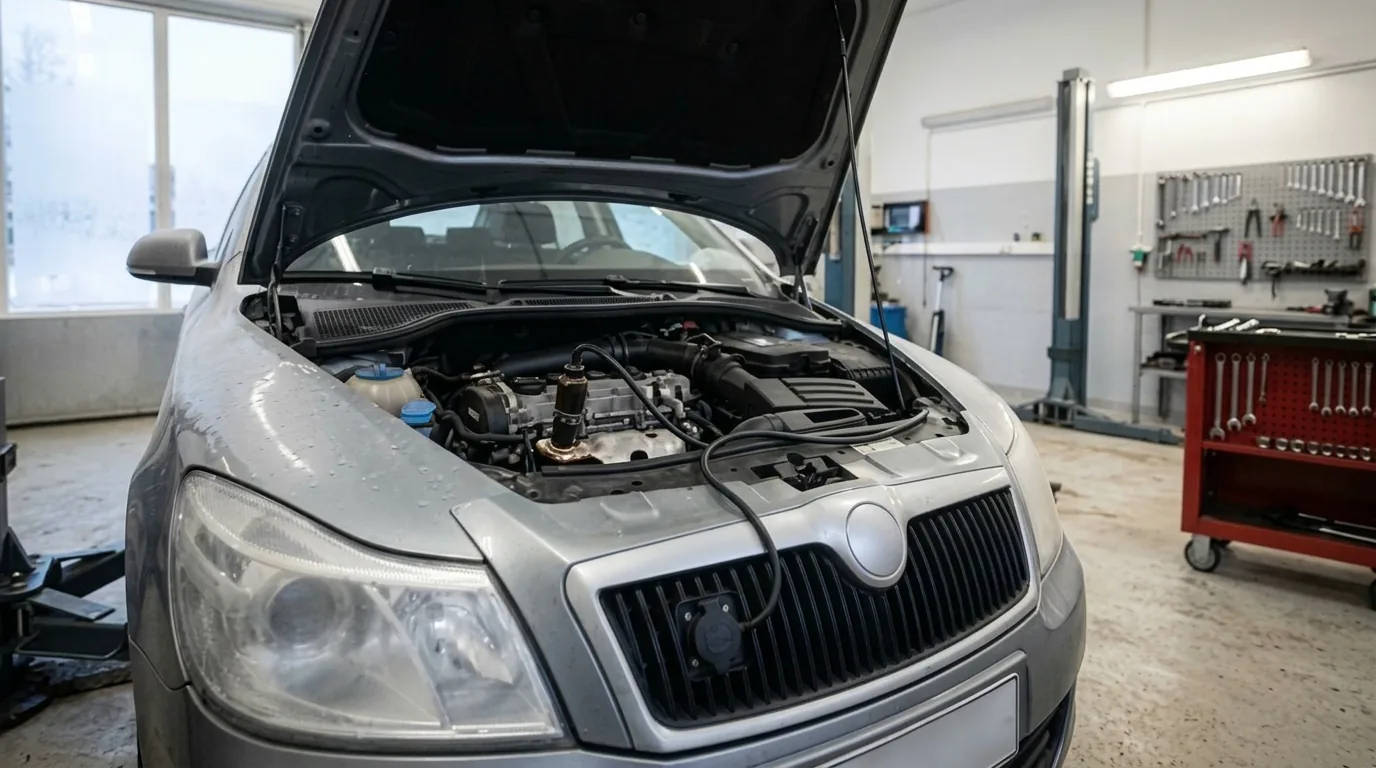
It can, if a second power source is connected to the car for the replacement. According to Autoliitto, a battery replacement often needs a simultaneous power supply to the car's systems, and professionals have their own tools for this. The power source is connected to the switched-off car, usually through the diagnostic socket. The cigarette lighter socket will not usually do, because a modern car cuts the power to it when the car is switched off. The positive cable stays live throughout the replacement, so its end is covered to keep it from touching the body. The car manufacturer's service instructions say whether this method suits the car.
If the power is cut, the car can lose some of its settings. Kia's owner's manual, for example, has a list of functions that must be reset when the battery has gone flat or been disconnected. They include the automatic raising and lowering of the windows, the air conditioning, the clock, the audio system and the driver's seat memory positions.
Varta advises leaving the replacement to a professional workshop if the car has a lot of technology or start-stop. After the replacement, the airbags, sensors and comfort functions may need recalibrating.
The replacement sequence and recycling the old battery
The battery is not always under the bonnet. According to Varta, only about 58 % of batteries are there. About 40 % are in the boot and the rest in the cabin. If you replace the battery yourself, follow the car's handbook and this sequence:
- Switch off the engine, take out the key and wear safety glasses.
- Note where the positive and negative terminals are.
- Disconnect the negative (earth) cable first, and only then the positive cable. That way no short circuit can form between the positive terminal and the body.
- Check the battery compartment and the brackets for rust and corrosion, and clean the terminal clamps.
- Set the new battery firmly in place and tighten the bracket. The correct tightening torques are in the car's handbook.
- Connect the positive cable first and then the negative cable. Tighten the terminal clamps so that vibration does not cut the power.
An old lead battery is hazardous waste and does not belong in general waste. Under the EU Batteries Regulation, a shop that sells vehicle batteries must take back a used battery free of charge, and may not require you to buy a new one. In the capital region (Helsinki, Espoo, Vantaa and Kauniainen), you can also take a lead battery to an HSY Sortti station free of charge. According to the Kierrätys.info service, almost all the lead in a battery can be reused, for example to make new batteries.
When should the car go to a workshop?
Bring the car in for a test when starting slows down, start-stop begins to play up or the battery is already five years old. The best time is in the autumn, before the frosts. Our battery test takes minutes, and we explain the result. The test also shows whether the alternator is charging as it should. If you book a tyre change online, you can add a battery health test to the booking.
If the battery is at the end of its life, we tell you the price of a battery replacement before the work starts. We choose a battery that suits the car, register it if the car requires it and recycle the old battery. If the fault turns out to be in the alternator, we tell you that too. Our workshop is in Suutarila, at Lampputie 12.