Published Updated
Car preheating time: how long should the block heater be on?
The right heating time depends on how cold it is and on the type of heater. Motiva's current advice is short: half an hour in cool weather, two hours at most in hard frost. Motiva's earlier table broke the time down in more detail:
| Outdoor temperature | Heating time |
|---|---|
| 0 to −5 °C | half an hour to an hour |
| −5 to −10 °C | 1–2 hours |
| below −10 °C | 2 hours |
For the hardest frosts the earlier table went as high as three hours, but the current advice treats two hours as the upper limit. The table follows the current advice. You will also find advice online to heat the car for three or even six hours. Motiva's guidance does not support it: once the engine is warm, the extra time only uses electricity.
The shorter end of the range suits block and hose heaters, which heat the coolant directly. A radiant heater warms the engine from the outside, and for this type you choose the longer end. A fuel-fired auxiliary heater is a different device, and its heating times are much shorter. We cover these further down.
Why doesn't heating for longer help?
According to Motiva, heating for too long is wasted. Once the engine is warm, an extra hour only keeps it warm and uses electricity. So it pays to time the heating to finish just as you set off.
In 2013, VTT Technical Research Centre of Finland measured the effects of preheating in a laboratory. In modern cars, the fuel saved did not on its own cover the electricity used for the heating. The clearest benefit showed in the emissions. Unburnt hydrocarbons, which are harmful to health, fell to less than half in most of the tests, and the difference came especially in the first kilometres after a cold start. The cabin and the windscreen also warmed up faster, because the car's heater takes its heat from the coolant.
Is preheating worth it above freezing too?
Motiva's current advice is that preheating the engine is always beneficial in cool weather and in frost, and that half an hour is enough when it is cool. On a newer car, though, it saves hardly any money above freezing: Motiva's earlier advice was that a newer car does not need preheating to save money when the temperature is above zero.
With older cars the sums work out differently. According to Motiva, in cars about ten years old or older, preheating also makes financial sense. In every car it reduces local emissions and engine wear and makes starting easier in hard frost. According to Motiva, road safety and passenger comfort improve as well, because a preheated engine delivers heat to the cabin sooner. That is why the windows clear sooner on a frosty autumn morning.
Preheating a diesel car in freezing weather
Motiva's table does not distinguish between petrol and diesel cars: the time is set by the outdoor temperature and the type of heater. So the same preheating times apply to a diesel. According to Motiva, preheating lowers the risk of a diesel's particulate filter clogging. In older diesels that have no particulate filter, it reduces particulate emissions in particular. Most Euro 4 and older diesel cars have no filter.
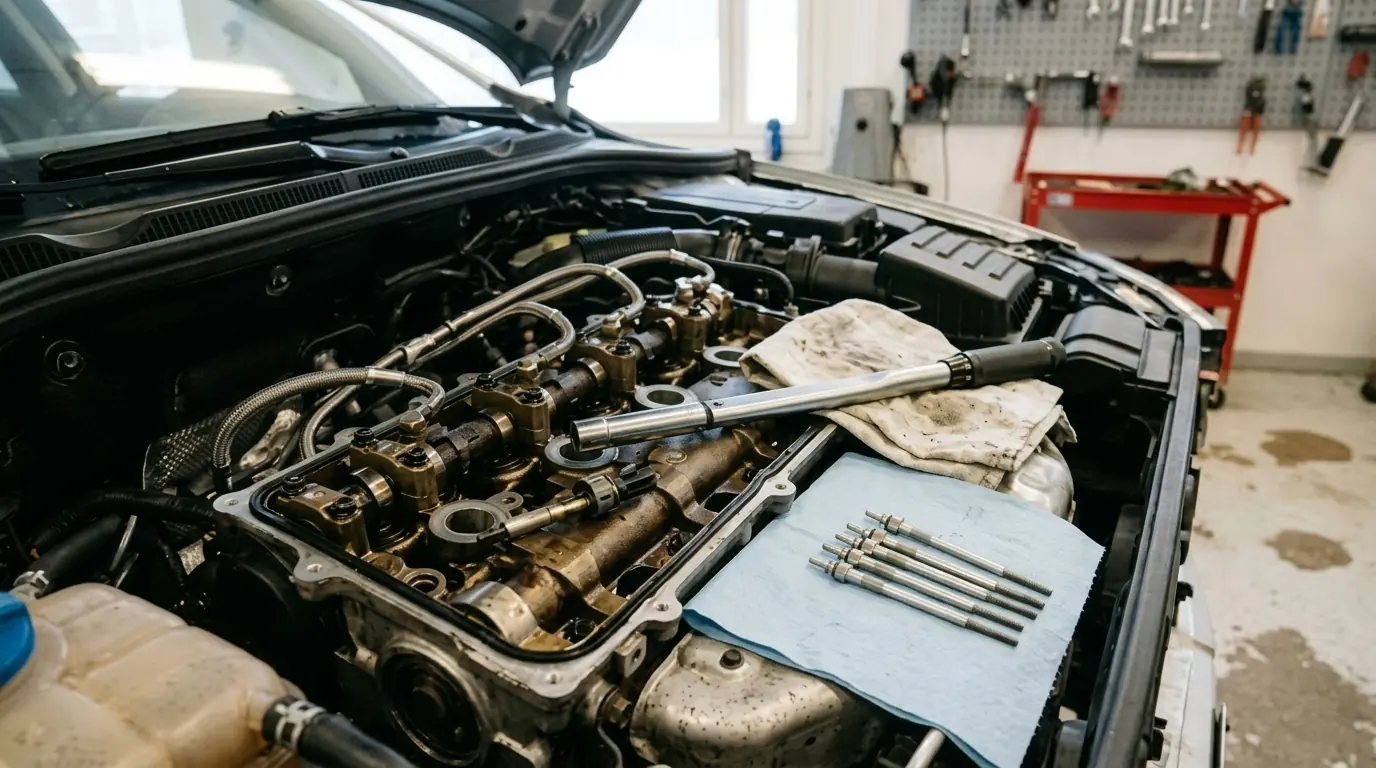
If a diesel car starts well when preheated but badly without it, the block heater may be masking a weak glow plug system.
Block heater power and electricity use
You can work out the consumption yourself: the heater's power multiplied by the heating time. In VTT's study, the electric heaters then offered for popular new cars were rated at 300–600 watts. The table works out the consumption at those powers:
| Heater power | 30 min | 1 hour | 2 hours |
|---|---|---|---|
| 300 W | 0.15 kWh | 0.3 kWh | 0.6 kWh |
| 550 W | 0.28 kWh | 0.55 kWh | 1.1 kWh |
| 600 W | 0.3 kWh | 0.6 kWh | 1.2 kWh |
To get the cost, multiply the kilowatt hours by the price in your own electricity contract. If a 600-watt heater is on for two hours on 20 mornings a month, it uses 24 kilowatt hours. Multiply that by your own price per kilowatt hour and you know what a month of heating costs.
A cabin heater adds its own power to the total, because it is on at the same time as the engine heater. The power is shown on the device's rating plate. Motiva advises using the cabin heater sparingly and timing the car's heating outside peak hours.
You can ask us which type of heater your car has and what its power is.
Heater types
In everyday Finnish, the word for a block heater, «lohkolämmitin», covers any electric engine heater. According to VTT's study, traditional block heaters in new cars have largely given way to radiant and hose heaters. Heating the coolant is the most effective method. A contact heater fixed to the outer surface of the engine is the alternative when the engine's design means the coolant cannot be heated.
| Type | What it heats | Power in VTT's study |
|---|---|---|
| Block heater | the coolant inside the engine block | 600 W |
| Hose heater | the coolant in a coolant hose | 550–600 W |
| Radiant (contact) heater | the engine or the sump from the outside | 300 W |
| Fuel-fired auxiliary heater | the coolant, by burning fuel | 4–5 kW, 80–100 W from the battery |
Not every fuel-fired heater is suitable for preheating. According to VTT, some of them are fitted at the factory only to add extra heat while driving. For a fuel-fired heater made for preheating, the makers usually recommend a heating time of 15–30 minutes, because its output is high and it draws on the car's battery.
Not every type of heater is available for every engine. Before fitting a block heater, we check which heater suits your car.
A cabin heater alongside the block heater
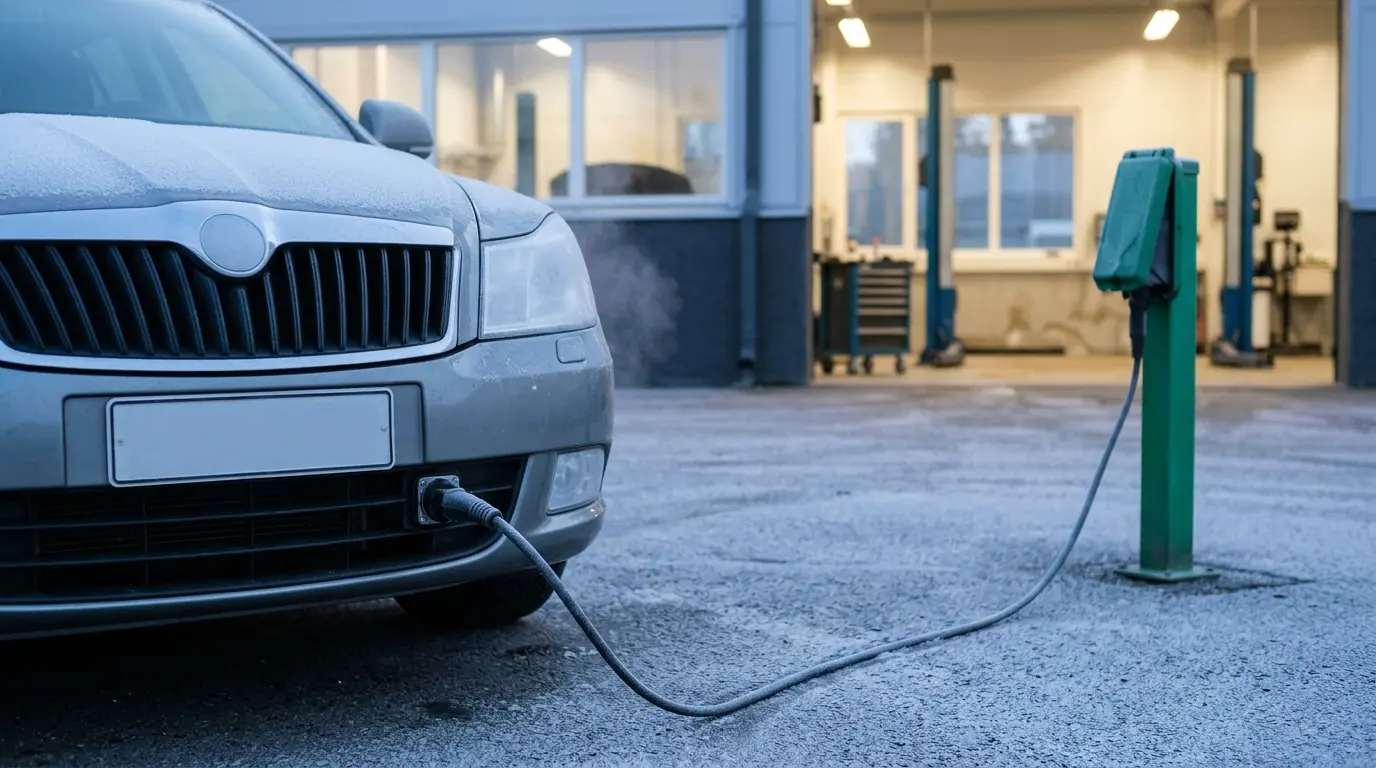
A cabin heater takes its power from the interior socket. The socket is wired to the same inlet at the front of the car as the engine heater, so one cord from the heating post serves both. Tukes, the Finnish Safety and Chemicals Agency, says the heater must carry the marking «Ajoneuvon sisätilanlämmitin» (vehicle interior heater). A heater made for use in the home is a fire risk in a car.
According to Motiva, it is not worth keeping the cabin heater on for more than two hours. In hard frost it clears the windows and makes setting off more comfortable. In cool weather the engine heater alone is often enough, because the car's own heater gets heat from the warm coolant as soon as the engine starts. The interior socket is fitted during block heater installation.
Timers and remote control
The timer is the most important control for the heating. In many housing companies the posts are controlled centrally, so the power comes on for everyone at the same time, no matter when each resident leaves. According to Motiva, power is then wasted, and some residents set off with a cold engine. Motiva recommends that housing companies use a system in which residents time the heating themselves, for two or three hours at a time at most.
A timer made for outdoor use has a spring-loaded flap that closes when the socket is not in use. According to Tukes, a timer that is not splash-proof may only be used in a post whose housing has room for both the timer and the plug with the lid locked. Remote-controlled heating works on the same principle, but you can start the heating once you know when you are leaving.
Here is how to set the timer for the morning:
- In the evening, check the temperature forecast for the morning.
- Choose the heating time from the table: from zero to minus five degrees, half an hour to an hour; from minus five to minus ten degrees, 1–2 hours; in harder frost, two hours.
- Work out the start time by subtracting the heating time from the time you leave. If you leave at 7.30 and it is 12 degrees below zero, set the heating to start at 5.30.
- Check the timer's clock, especially after the change to winter time and after a power cut.
- In the evening, plug the heating cord into the car and the post, and lock the post's lid.
- In the morning, unplug the cord first from the post and then from the car, and coil it up and put it away before you leave.
Idling is no substitute for preheating
The law restricts warming up the engine by idling. Under section 55 of the Road Traffic Act (tieliikennelaki), the engine of a stationary car must not be kept running for longer than two minutes. When it is more than 15 degrees below zero, the engine may run for up to four minutes before you set off. It may also be kept running for the time needed to make the car ready for use. A preheated car needs no idling at all.
How do I know the block heater is working?
Here is how to tell that the heater works: on a cold morning, plug the car in for an hour, then start it. If the heater works, the blower gives warm air noticeably sooner than usual and the engine starts more easily than it does without heating.
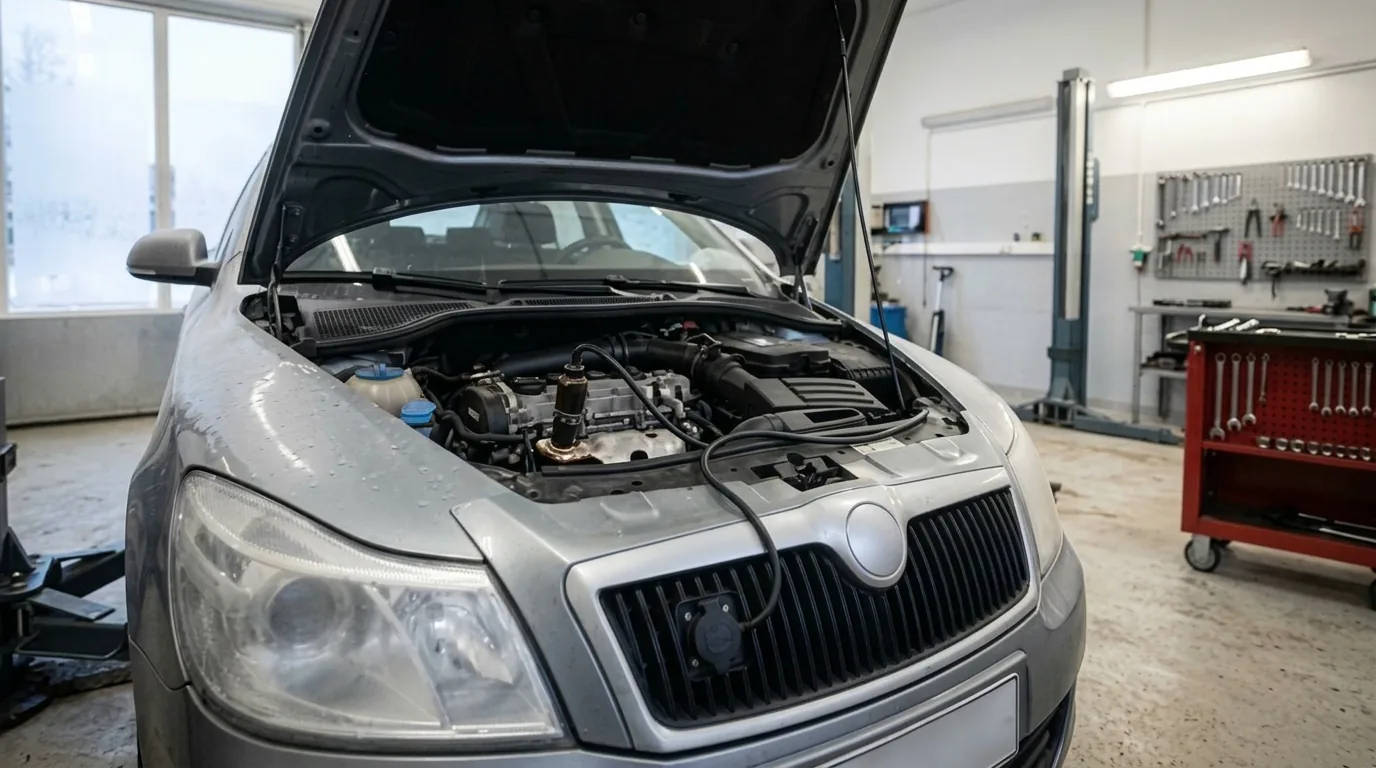
If the engine is cold in the morning even though the cord has been plugged in, work along the chain from the post to the car:
- Post and timer. Check that the timer is switched on and set to the right time. Try another post. A housing company's central control may switch the power on at a different time than you think.
- Heating cord. Look for cracks or burn marks on the plug or the connector, and check that the cord's outer sheath is intact. Try another cord.
- Residual current device (RCD) or fuse. If the RCD trips or the fuse blows as soon as the cord is plugged in, the cause is often moisture in the connector or a failed heating element. Do not keep plugging the cord back in: bring the car in to be checked.
- Car inlet and heater cable. A cracked inlet or a cable end that has come loose cuts the power before it reaches the heater.
- The heater itself. According to Motiva, dirt from old coolant that builds up on the surface of the element can overheat the element and break it, which is why the coolant is changed according to the service schedule. A power supply that cuts in and out with the outdoor temperature can also put too much strain on the element.
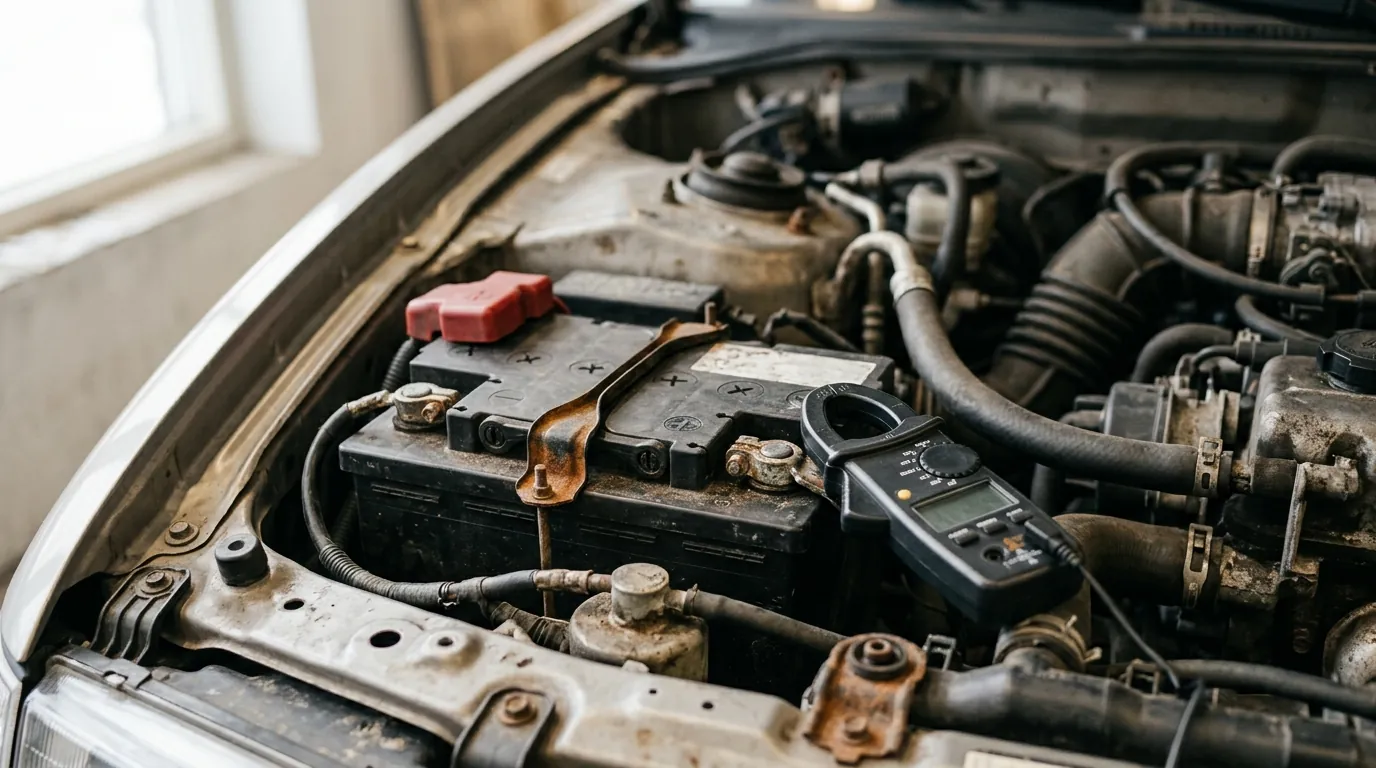
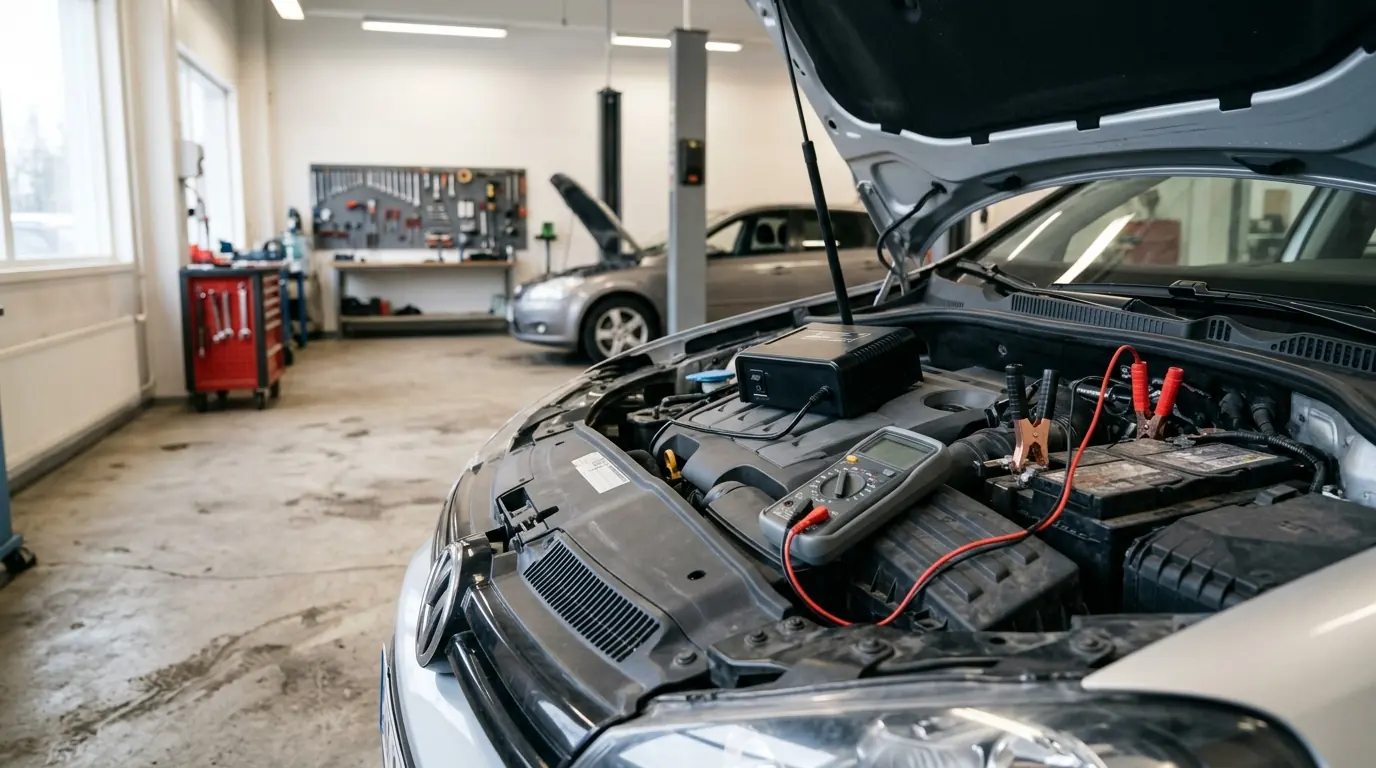
Not every starting problem on a frosty morning comes from the heater. We covered weak glow plugs in a diesel above. If the starter motor turns slowly even when the engine has been preheated, the cause is more likely the battery. The signs of an ageing battery are gathered in the article when a car battery has to be replaced.
Using the cord, extension cord and post safely
Tukes gives clear instructions for heating a car:
- Use only a heating cord made for cars, long enough to reach the post without an extension cord. If you have to use an extension cord temporarily, the heating must be supervised, and the cord must not be run across a walkway.
- Plug the cord only into an earthed socket. An indoor socket or a socket on the balcony of a block of flats must not be used to heat a car.
- Always unplug the cord from the post when you drive off, and do not leave it hanging. Keep the lid of the post's housing locked. A live plug that falls into slush or a puddle can electrify the area around it.
- Do not repair damaged insulation with tape. Replace the cord with a new one.
- Plastic insulation stiffened by frost can crack when it is bent. Check the cord and the plug regularly, in mid-winter as well.
A damaged cord or a cracked connector should not be plugged into the post at all. An electric shock is worse than a cold morning.
Electric cars and hybrids
A fully electric car has no combustion engine, so it needs no block heater. Instead, the car is preheated with its own system. Motiva's advice is clear: preheat a plug-in car while it is connected to the charger, so that the battery's power is not used to heat the cabin. The heating energy then comes from the grid, not from the traction battery. The warmer you keep the cabin as you drive, the less electricity is left for the driving itself.
In winter the difference shows in the range. According to Motiva, the range in frost is about two thirds of the warm-season range, and in the hardest frosts only half. That is why it pays to charge an electric car every night in winter, as a high charge level in the battery matters in frost.
A hybrid has a combustion engine, and an engine heater can be fitted to it too, if a suitable model is available for the engine. VTT's tests included a petrol hybrid with a 300-watt contact heater. It pays to preheat a plug-in hybrid like an electric car, with the charging cable plugged in.
When should you visit the workshop?
Bring the car to us if the RCD trips, the inlet has cracked or the engine is cold in the morning even though the post and the cord work. We find out whether the fault is in the heater, the cable or the inlet, and we tell you the price of the repair before the work starts. If the car has no heater at all, see block heater installation.
If a diesel starts badly without preheating, check the glow plugs. If the starter motor turns slowly, it is worth testing the battery. The test is included in our battery replacement, and a car that still starts can be brought in for a test without an appointment. Changing the coolant also protects the heater: see coolant change.