Published
Preparing for the inspection involves two separate jobs. You check the lights, wipers, tyres and plates yourself at home, without tools. The suspension and brakes only show on a lift. The list is based on the inspection criteria and the 2025 fault statistics of Traficom, the Finnish Transport and Communications Agency. Under the criteria, the inspector decides whether a fault leads to a repair notice, a rejection or a driving ban (ajokielto) for the car.
What is checked at the inspection?
Under section 152 of the Vehicles Act (ajoneuvolaki), the inspection checks that the car is in the condition the regulations require and is safe, that it causes no unnecessary harm to the environment and that its registration details are correct. The detailed inspection criteria are set out in a Traficom regulation. Its annex divides the items inspected into seven groups:
| Group | What it covers |
|---|---|
| A Vehicle identification | VIN, registration markings, documents, number plates |
| B Brakes | service brake, parking brake, other brakes |
| C Lights and equipment | lights and reflectors, seat belts and airbags, exhaust emissions, oil and fluid leaks |
| D Chassis and steering | axles, suspension, damping, exhaust system, tyres and rims, steering system, body |
| E Road test | controls, mirrors, windscreen and wipers, windows, horn, transmission |
| F Electric and hybrid cars | high-voltage components, drive motor, drive battery, charging system |
| G Gas-powered cars | gas installation, gas filling system, gas leaks |
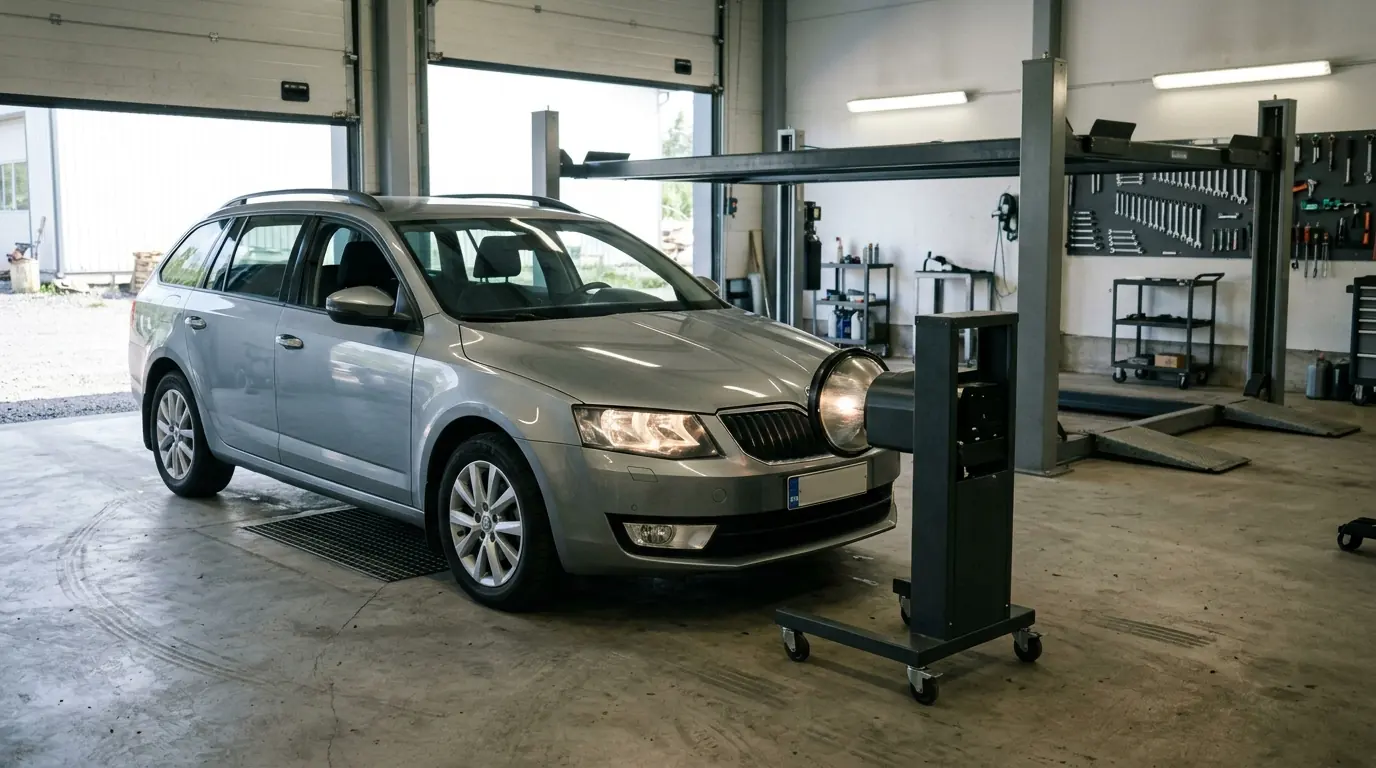
The inspector does not take the car apart. Under the regulation, tools should not be used to remove parts during the inspection. The inspector looks for faults by sight, by trying things out, by listening and with test equipment. Braking forces are measured on a test bench, and the wheel suspension is checked on a play detector. Some of the group E items, such as handling and the transmission, are checked on a road test.
Traficom's new regulation on the inspection criteria comes into force on 1 February 2027. It changes how taxis are inspected and how carcass damage to tyres and films on the windscreen are assessed. The other limits in this list stay the same.
Checklist before the inspection
You can go through the following items yourself. The figures come from Traficom's fault statistics for 2025, which cover passenger cars first registered in 2005–2021. They are numbers of faults, not of cars.
| Item | How to check | Repair notices 2025 | Rejection faults 2025 |
|---|---|---|---|
| Number plate light | lights on, look from behind | 136 417 | 95 |
| Dipped beams | each side against a wall | 132 256 | 7 310 |
| Windscreen and wipers | wipers, washer fluid, cracks | 93 481 | 3 687 |
| Front position lights (sidelights) | lights on, look from the front | 91 498 | 234 |
| Oil leaks | look under the car in the morning | 43 086 | 2 632 |
| Brake lights | press the pedal, look at the reflection | 37 882 | 1 195 |
| Rear lights | walk round the car with the lights on | 36 886 | 427 |
| Indicators | every corner and the hazard lights | 32 700 | 114 |
| Main beams | switch on briefly against a wall | 13 000 | 206 |
| Tyres and rims | tread depth, cracks, pressures | 7 660 | 29 545 |
| Horn | press it | 6 589 | 1 |
| Number plates | intact, clean, secure | 4 558 | 96 |
| Seat belts and safety equipment | pull the belt out sharply, try the buckle | 187 | 11 445 |
| Engine warning light and fault memory (OBD) | the light goes out after the engine starts | 11 | 30 779 |
Lights account for the most repair notices but rarely for a rejection. With tyres, seat belts and the fault memory it is the other way round: they draw few notices, but a fault fails the car. For seat belts and safety equipment, 11 445 rejection faults were recorded but only 187 repair notices. Go through the items in this order:
- Lights. Switch on the dipped and main beams, the front position lights and rear lights, the indicators at every corner, the hazard lights and the number plate light. To see the brake lights, reverse the car up to a window or a glass door and press the pedal, or ask someone to watch. If one dipped beam or the number plate light is out, the car gets a repair notice. If neither dipped beam works, the car fails. An LED light counts as not working if more than a third of its LEDs are out.
- Wipers and windscreen. Try the wipers at every speed, and the washer. Poor blades, weak wiping and washer fluid that does not reach the glass all mean repair notices. If the wipers do not work at all, the car fails. A crack in the driver's field of view, in the area the wipers sweep, can lead to a repair notice or a rejection. From 1 February 2027, a film or sticker attached to the windscreen is, as a rule, a rejection fault.
- Horn. Sound the horn. A horn that does not work means a repair notice, and a missing horn fails the car.
- Tyres. Measure the tread depth on every tyre. Tread under 1.6 mm puts the car under a driving ban, and from November to March the car fails on winter tyres with less than 3.0 mm of tread. Look at the sidewalls: cracks and bulges are signs of damage. The tyres on an axle must match, and studded and non-studded tyres must not be mixed. A tyre pressure that is clearly too low means a repair notice. For guidance, see tyre tread depth and tyre pressures in winter.
- Number plates and the plate light. Both plates must be in place and readable. A missing or unreadable plate fails the car. If a fixed part of the car, such as a towbar, covers a plate, that means a repair notice.
- Dashboard warning lights. Start the car and watch the instrument panel. The warning lights come on for a moment and then go out. If the engine warning light stays on, the car can fail. On a petrol car, a fault reported by the warning light is a rejection fault, and on a diesel first registered from September 2016 onwards, so is any code stored in the fault memory. The airbag warning light also tells the inspector whether the system is in working order. If it is not, the car fails. See the article engine warning light on.
- Oil and fluid leaks. In the morning, look under the car for drips. A leak that forms drops means a repair notice. A leak that drips continuously fails the car, and a leak that creates a fire risk puts the car under a driving ban.
- Seat belts. Pull each belt out sharply. The reel must lock. Fasten and release the buckle. A reel that does not lock, a buckle that does not work and a damaged belt are all rejection faults.
If you find an item you will not repair yourself, write it down. Many of these are quick jobs when they are done before the inspection, not in a rush before the re-inspection (jälkitarkastus).
What do you need to take to the inspection?
The most important thing is that the vehicle tax and the motor liability insurance have been paid. Under section 153 of the Vehicles Act, the inspection may not be completed if the car is under a ban on use (käyttökielto) because of unpaid tax or motor liability insurance. The inspection criteria record this as an interrupted inspection.
If you paid the motor liability insurance just before the inspection, take the receipt with you. The inspector checks the register for an entry showing unpaid insurance premiums. In law, the premiums count as paid when you show a receipt or other reliable proof of payment, even if the register still shows the entry.
In winter, brush the snow off the car and wash it if necessary before the inspection, so that the lights, plates and underbody can be seen. If the inspection cannot be completed because of the weather or road conditions, it is interrupted, and an interrupted inspection must be completed within a month (section 156).
Check for recalls too. Under the inspection criteria, an outstanding recall is a rejection fault. In 2025, rejection faults relating to the car's documents totalled 6 535. If repair notices were recorded at the previous inspection, keep the receipts for those repairs, so you know for yourself which items have already been dealt with.
What can't you see for yourself?
A check at home does not reach under the car, and that is where the statistics show the most faults. In 2025, 126 260 rejection faults were recorded for the front axle, 101 496 for the suspension and damping and 81 704 for the service brake.
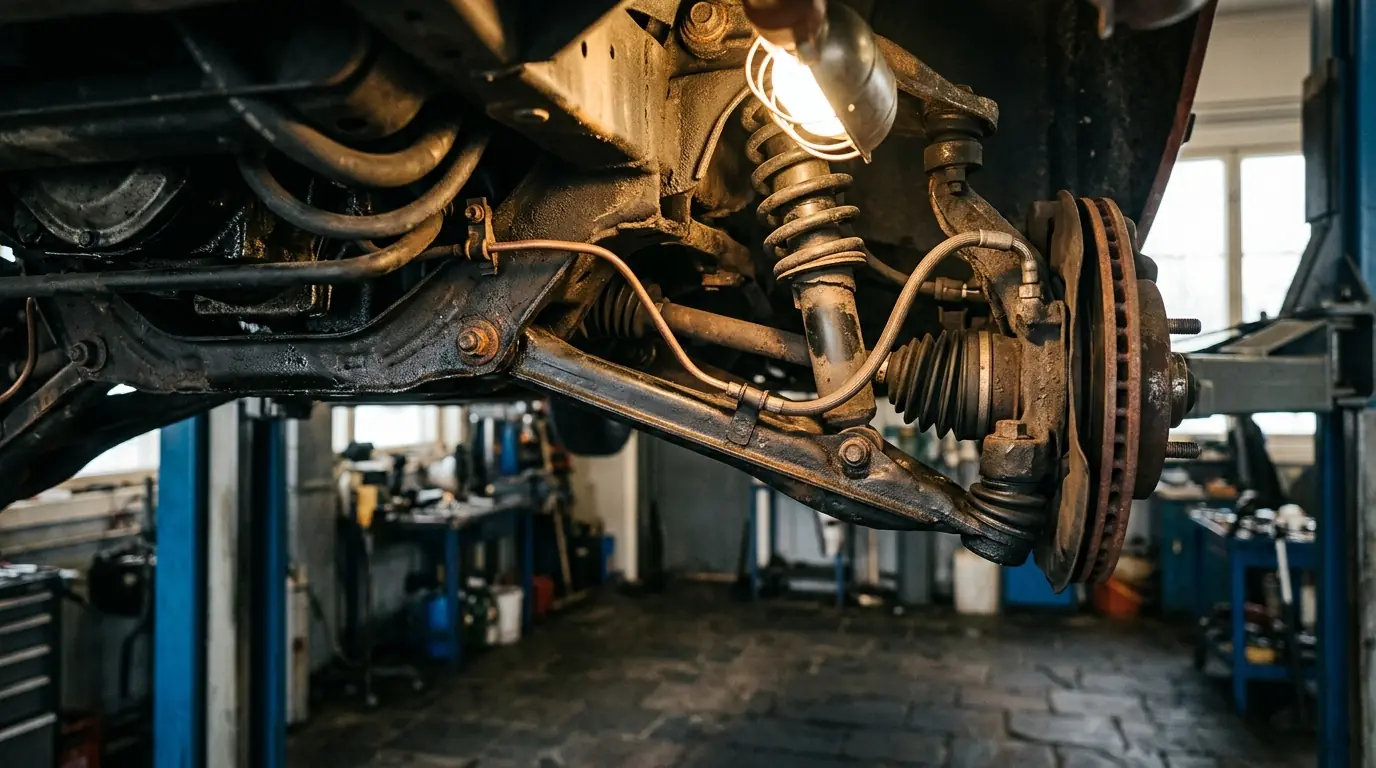
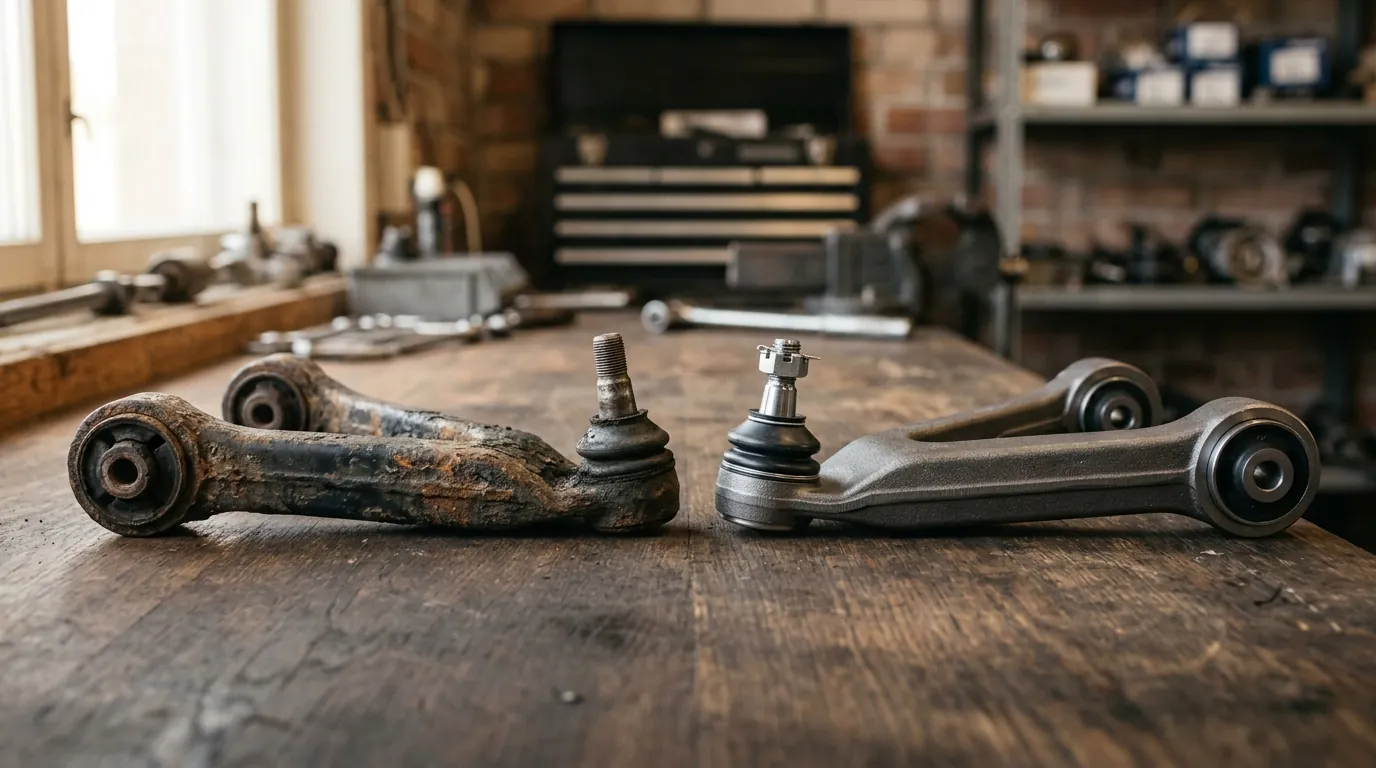
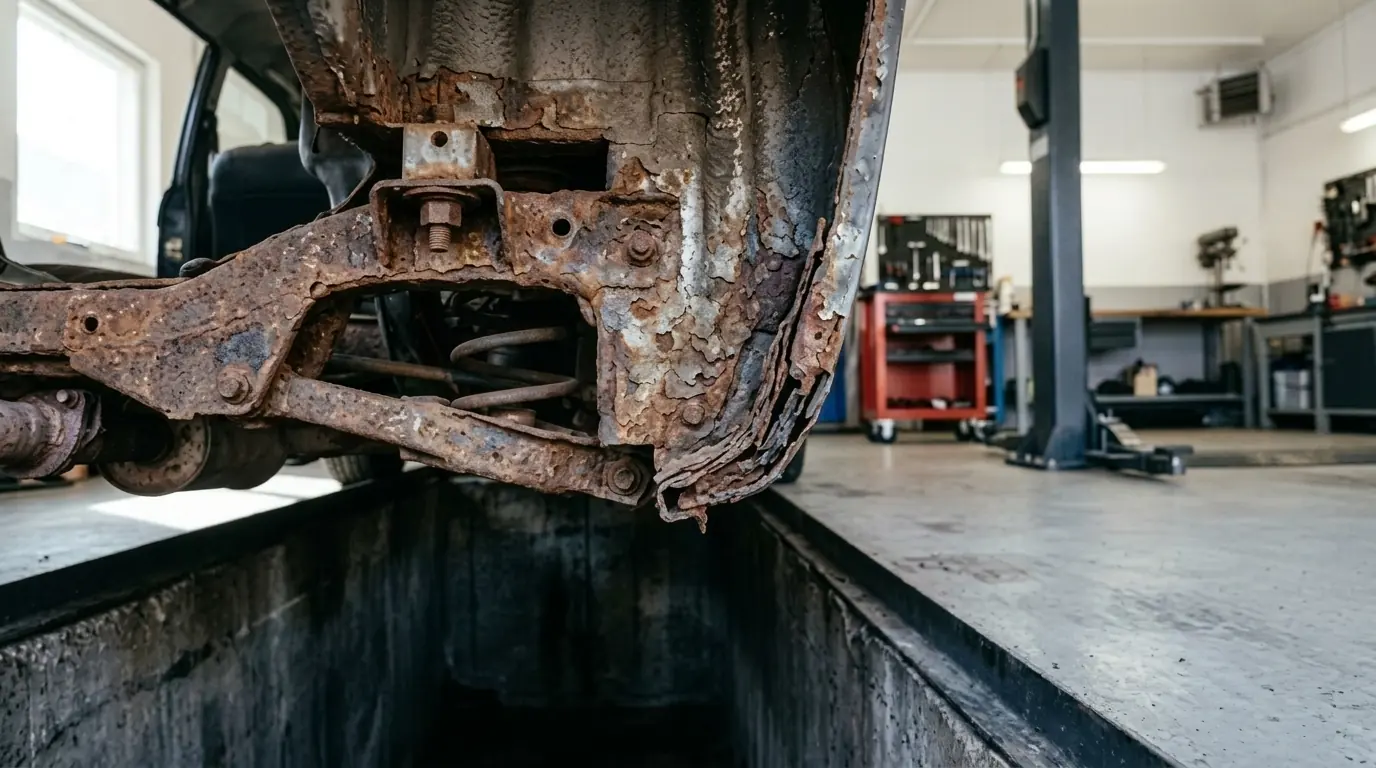
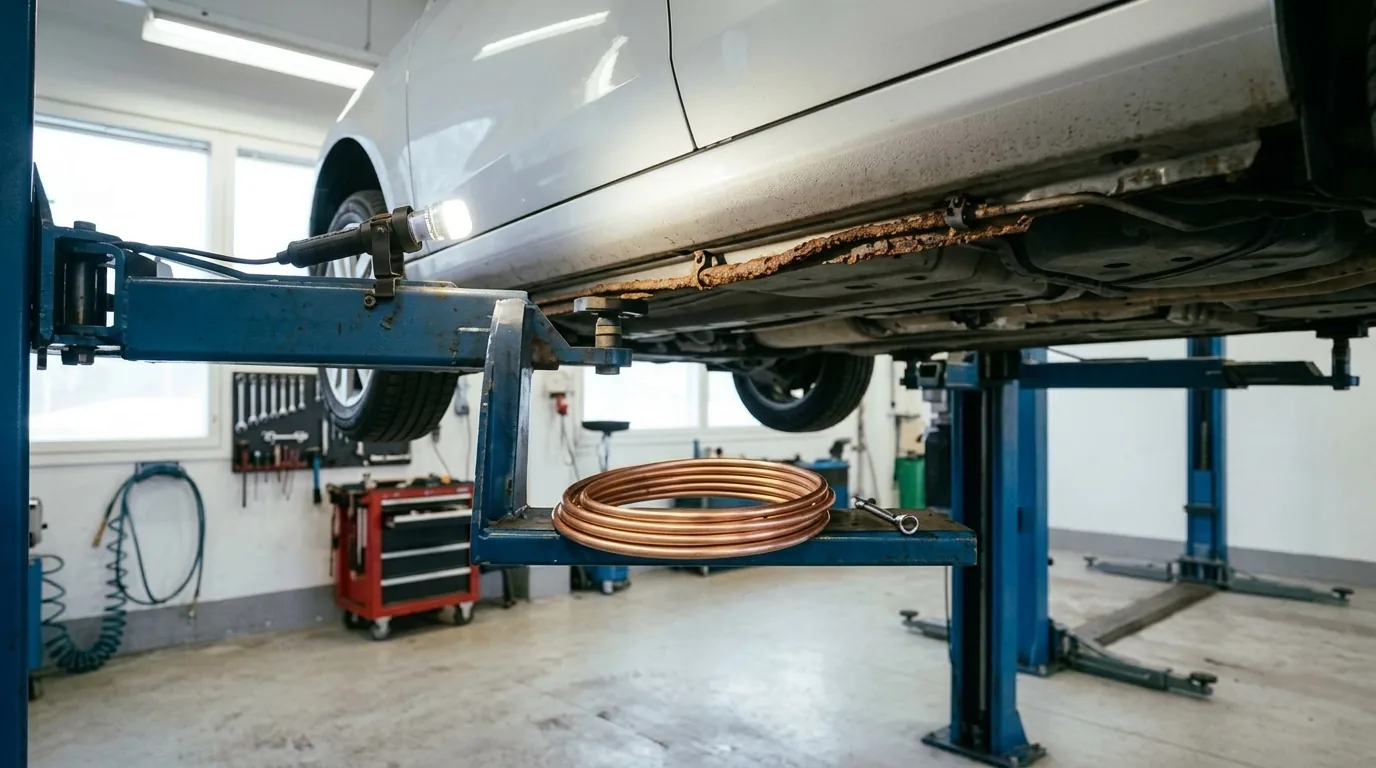
Without a lift, you cannot see play in the ball joints and control arm bushes, leaking shock absorbers, rust on the brake pipes or the condition of the underbody box sections. The inspector shakes the wheels on a play detector and measures the braking forces on a test bench. The same can be done beforehand at a workshop.
A pre-inspection check on a lift should cover at least these items. The list follows the items with the most rejections in the statistics:
- Ball joints and control arm bushes. Play shows up when the wheel is shaken with the weight off the axle.
- Shock absorbers and springs. An oily damper or a broken spring can be seen when the wheel is off the ground.
- Brake discs, brake pads and brake pipes. Wear on the discs and pads, and rust on the pipes.
- Steering joints and track rods. Play can be felt when the wheel is turned by hand.
- Sills and floor pan. Rust that has eaten through a load-bearing structure.
- Exhaust system and leaks. Loose mountings, holes, and oil leaks from the engine or gearbox.
Even so, a noise can give you a clue. Drive slowly over a speed bump with the window open. A clunk or a knock can point to wear in the suspension. The noise does not tell you the cause, but it does tell you that the suspension is worth having checked before the inspection. Pay attention to the brakes as well. If the pedal feels different from before, the car pulls to one side under braking or the steering wheel vibrates, mention it at the workshop. More on these symptoms: a clunking noise from the car and the car vibrates when braking.
We check the suspension on the lift as part of a suspension repair, and a scheduled service includes a check of the brakes and suspension. We tell you what we found and what is worth repairing before the inspection, and the price before the work starts. Book the check so that there is time left for the repair before your inspection appointment.
Inspecting an electric car
On electric and hybrid cars, the high-voltage system is inspected as well as the other items: the markings on high-voltage components, the drive battery and its management system, the drive motor, the electronic converters and the charging system. Even on an electric car, though, the suspension is where the faults are found.
According to Traficom, there were 31 432 inspections of electric cars in 2025, and 22.6 % of them ended in a rejection. Of four-year-old electric cars, 19.6 % failed, against a rejection rate of 5.4 % for four-year-old petrol cars and 10.8 % for diesels. The commonest rejection causes on four-year-old electric cars were play in the bearing of a rear-axle control arm or in the joint of an upper control arm, and play in the ball joint of a front-axle lower control arm.
Traficom puts the difference partly down to service schedules. The service interval of a car with a combustion engine is based on kilometres and time. An electric car's is often based on time alone, and there may be no real services at all. According to Traficom, many of the faults found at electric car inspections would have come to light at an ordinary service on a car with a combustion engine. If your electric car's first inspection is coming up, it pays to have the suspension checked on a lift before then.
When must the car be inspected?
A passenger car is inspected for the first time within four years of its first use, and every two years after that. Once more than ten years have passed since its first use, it is inspected every year (section 149 of the Vehicles Act). You can take the car for inspection at any time before the due date. If the car is approved at most 30 days before the due date, the due date of the next inspection does not change (section 150).
For your own car's due date and the rules for cars of different ages, see the article on inspection intervals. If the due date has already passed, read the article on overdue inspections.
If the car fails
After a rejection, the faults must be repaired as soon as possible, and you have a month for the re-inspection. If you took the car to the inspection on time, it may be used for two months from the rejection, once the faults are repaired. The re-inspection checks only the items in which faults were found. We explain the reasons for a rejection and the timetable in the article on failed inspections, and the re-inspection in the article on how the re-inspection works.
A repair notice means that the car passed but a fault was recorded. The law requires minor faults to be repaired within a reasonable time. For guidance, see the article on repair notices.
When should you take the car to a workshop?
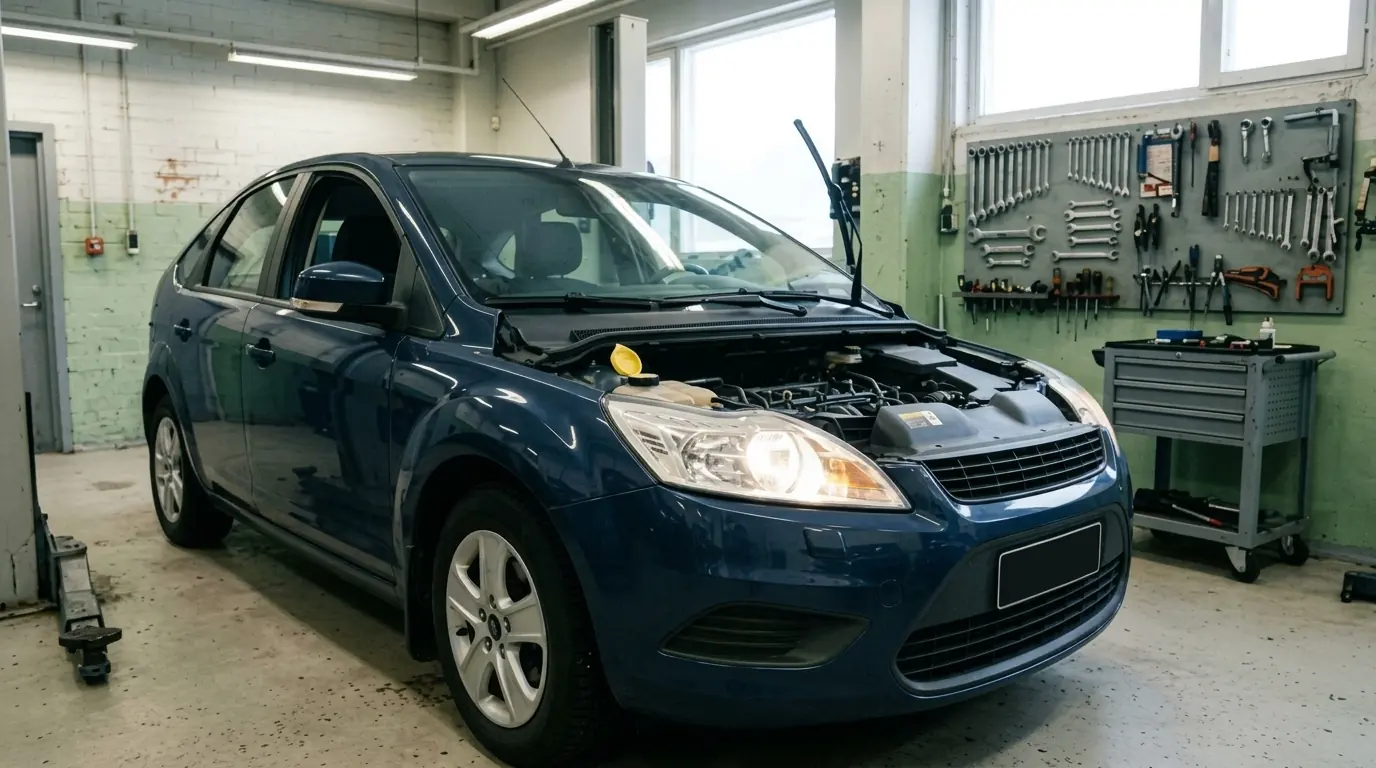
Bring the car to us when your own check turns up something you will not fix yourself, or when you want to know the condition of the suspension and brakes before the inspection. We put misaligned dipped beams right with headlight alignment, and find out why a warning light is on with diagnostics. If the tyres are worn out, see tyre change.
We do not carry out inspections, because we hold no inspection licence. If the car has already failed, we repair the items on the fault list. The service is described on the inspection repairs page.