Published
Failing is a common outcome. There were 2 184 538 periodic inspections of passenger cars in Finland in 2025, and 30.4 % of them, or 663 060 cars, failed. A rejection does not mean the car has reached the end of the road. It means that at least one of the items checked did not meet the requirements, and that the fault must be repaired before the car can pass. After a rejection, the clock is ticking, so it pays to know the timetable straight away.
What does a failed inspection mean?
Section 154 of the Vehicles Act (ajoneuvolaki 82/2021) divides the faults found at an inspection into three classes: minor, serious and dangerous. The class decides the result. A car is approved if it has no serious or dangerous fault. A minor fault is recorded as a repair notice (korjauskehotus), a serious fault fails the car, and a dangerous fault brings a driving ban (ajokielto) on top of the rejection.
| Fault class | Result | What you may do with the car | Vehicles Act |
|---|---|---|---|
| Minor: no significant effect on safety or the environment | Passed with a repair notice | Drive it. The fault is repaired within a reasonable time. | sections 154, 155 and 158 |
| Serious: may endanger safety, affect the environment or put others at risk | Failed | Drive it for up to two months with the faults repaired, if the car was inspected on time. Re-inspection within a month. | sections 154, 159 and 162 |
| Dangerous: directly and immediately endangers safety | Failed and banned from driving | No driving until the car is repaired and approved. To a workshop only with a certificate or a transfer permit (siirtolupa), or transported. | sections 157 and 159 |
One rule catches many people out. Under the inspection criteria of Traficom, the Finnish Transport and Communications Agency, minor faults found in four or more inspection items are classed together as one serious fault. The car then fails. For example, one dipped beam out, worn wiper blades, an oil leak that forms drops, and a horn that has stopped working each count as a repair notice. Together, they are enough to fail the car.
A repair notice is not just a note on paper. Under section 158 of the Vehicles Act, minor faults must be repaired within a reasonable time. Notices are stored in the Transport Register, and they drop off at the next inspection if the faults have been repaired. We say more about them in the article on repair notices.
Which faults fail cars most often?
Traficom publishes the inspection fault statistics broken down by inspection item. The 2025 statistics cover passenger cars first registered between 2005 and 2021, a total of 1 672 937 periodic inspections. These inspections recorded 783 266 rejection faults. The figures count faults, not cars, because one failed car can have many faults.
| Rank | Inspection item | Rejection faults | Repair notices |
|---|---|---|---|
| 1 | Front axle | 126 260 | 54 334 |
| 2 | Springs and shock absorbers | 101 496 | 17 492 |
| 3 | Service brake | 81 704 | 18 128 |
| 4 | Parking brake roller test | 76 812 | 22 269 |
| 5 | Service brake roller test | 53 446 | 1 067 |
| 6 | Rear axle | 51 338 | 13 731 |
| 7 | Steering joints and track rods | 48 616 | 1 606 |
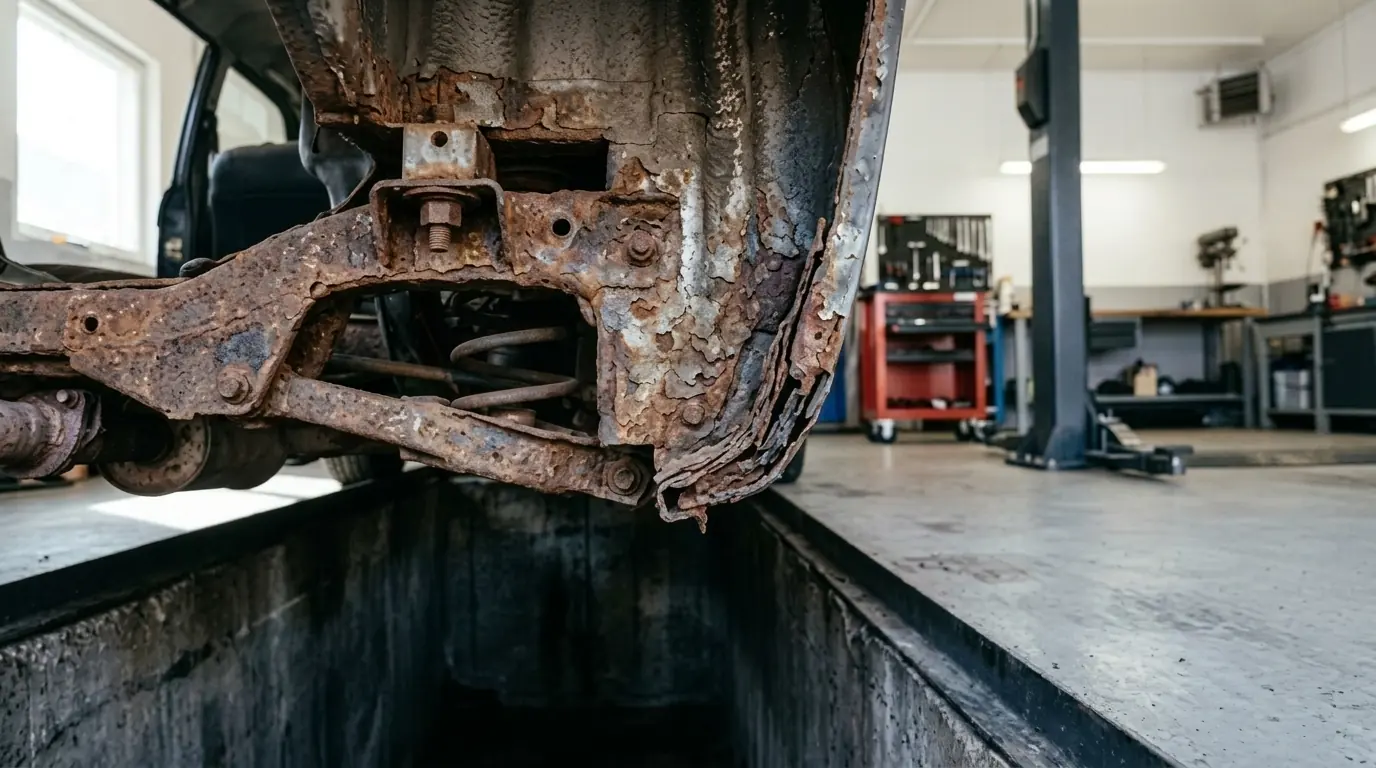
| 8 | Sills and floor pan | 45 603 | 7 029 |
| 9 | Petrol engine emissions test | 31 338 | 25 |
| 10 | On-board diagnostics (OBD) | 30 779 | 11 |
Source: Traficom, periodic inspections of passenger cars by model and fault item, inspection year 2025.
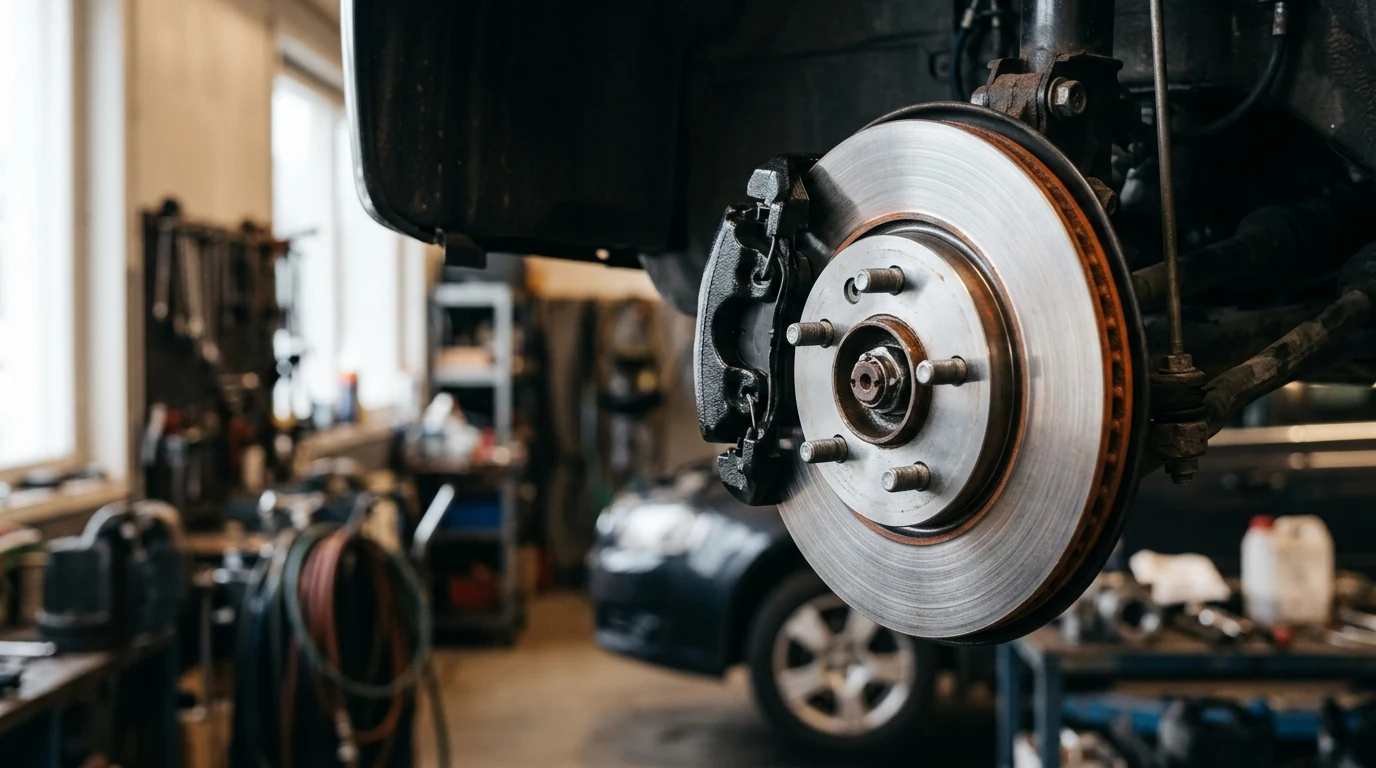
Eight of the ten items are under the car or in the brakes. The statistics recorded 308 940 faults in the axles, wheels and suspension and 217 030 in the brake systems. Together they make up 67.1 % of all rejection faults.
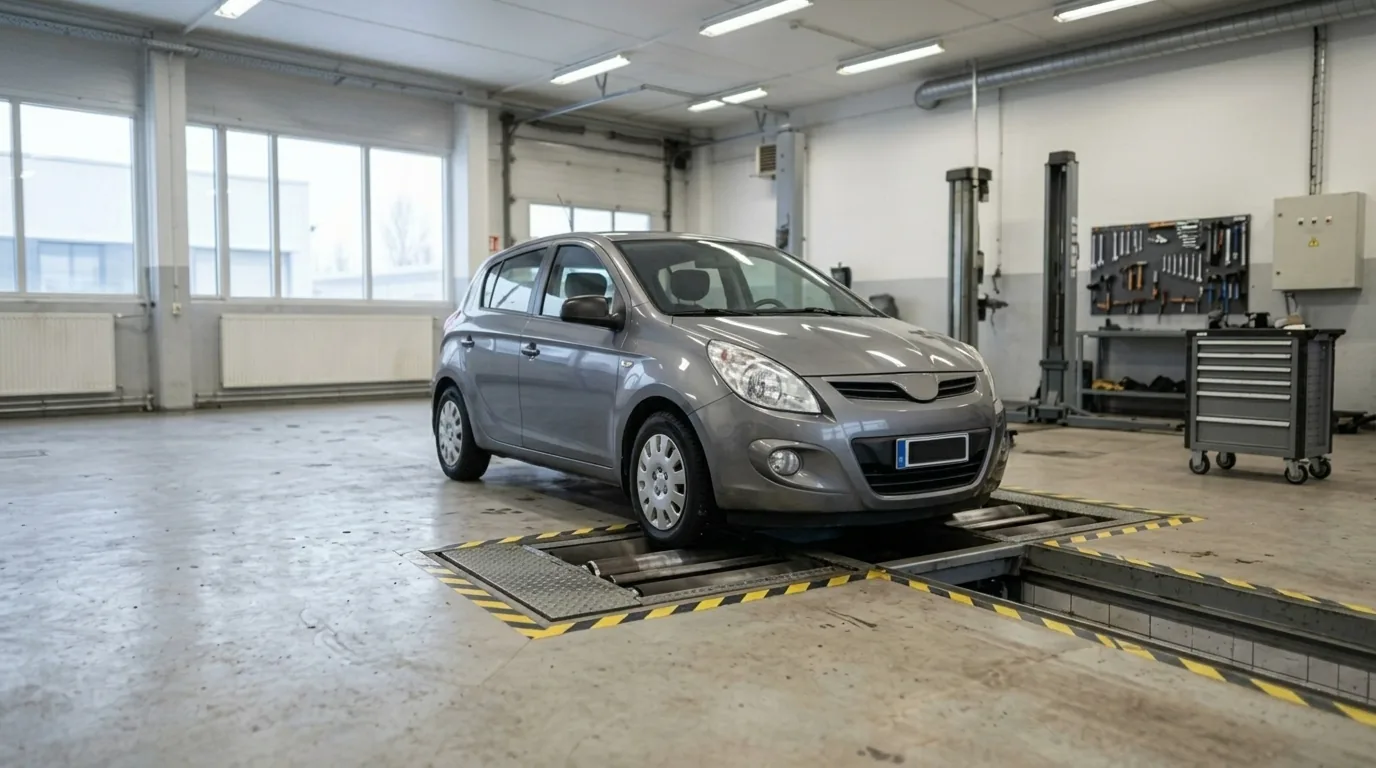
The brakes are measured on a roller test bench, which the statistics call a dynamometer. The inspector measures the braking force at each wheel separately. If the braking forces of the wheels on one axle differ by more than 30 % of the higher force, the car fails. On the steered front axle, a difference of more than 50 % leads to a driving ban.
The last two rows are about emissions. A petrol car whose OBD system is checked fails if the engine warning light malfunctions, if the light reports a fault, or if a fault code in the range P0001–P0499, or the code P0650, is stored in the fault memory. On a diesel car first registered on or after 1 September 2016, any code in the fault memory is a rejection fault. So if the warning light is on, it is worth finding out why before the inspection. We explain what the light means in the article on the engine warning light.
Why the suspension and brakes in particular?
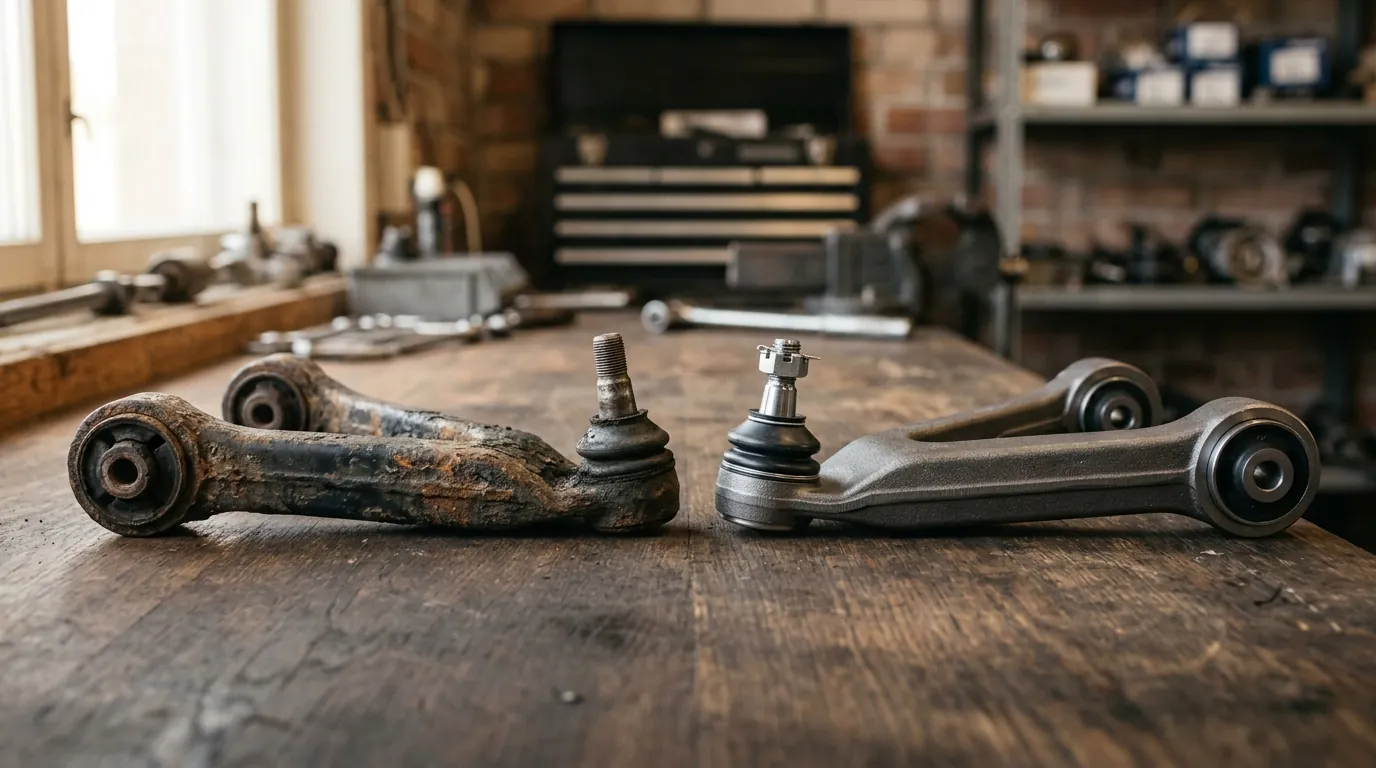
The suspension and brakes wear with every kilometre driven. Ball joints, control arm bushes, shock absorbers, brake discs and brake pipes are wear parts, and salted winter roads and potholed streets add to the strain on them. At the time of inspection, the cars in the fault statistics had covered a median of 187 000 km.
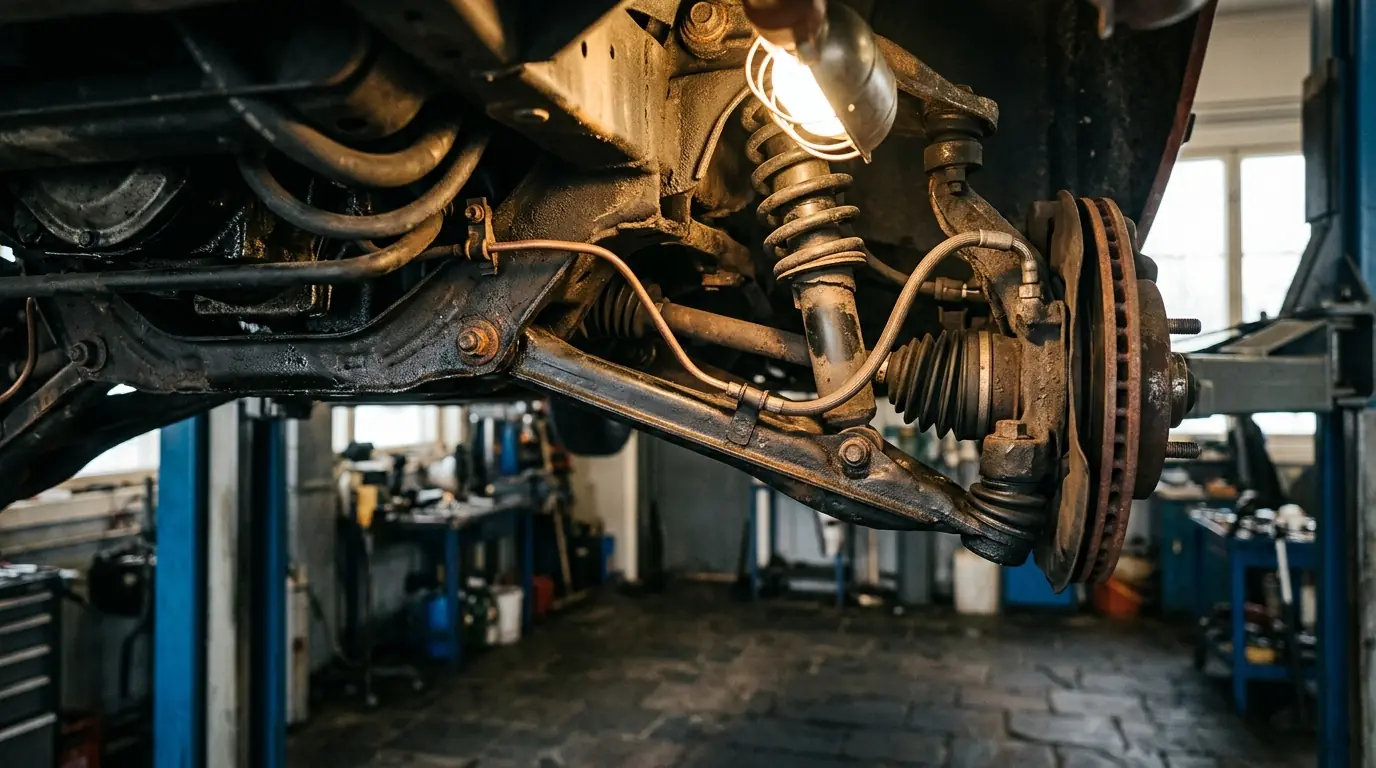
Wear builds up slowly, and the driver gets used to the change without noticing. You may not feel a loose ball joint or a weak shock absorber when driving. These are exactly the faults the inspector looks for. Under the inspection criteria, the checks on the front axle include play in the ball joints, play in the control arm bushes, rust damage to the control arms and the wheel bearings. The inspector examines them by eye, with a play detector and by shaking them by hand, partly with the axle unloaded, that is, with the wheels off the ground.
Age shows directly in the statistics. When Traficom's 2025 figures are broken down by the age of the car, the rejection rate rises almost steadily:
| Age of car | Inspections | Failed | Median mileage |
|---|---|---|---|
| 4 years | 107 200 | 8.4 % | 65 000 km |
| 6 years | 109 149 | 10.7 % | 93 000 km |
| 8 years | 38 076 | 17.2 % | 141 000 km |
| 10 years | 126 933 | 17.8 % | 162 000 km |
| 12 years | 112 960 | 23.5 % | 190 000 km |
| 14 years | 130 161 | 29.7 % | 220 000 km |
| 16 years | 87 388 | 35.6 % | 243 000 km |
| 18 years | 113 019 | 40.9 % | 251 000 km |
| 20 years | 103 271 | 43.9 % | 255 000 km |
| 22 years | 78 808 | 47.0 % | 268 000 km |
| 25 years or more | 209 244 | 40.5 % | 260 000 km |
Source: Traficom, periodic inspections of vehicles by power source and age group, passenger cars 2025.
Fewer than one in ten cars aged four failed, against almost half of those aged 22. A car more than ten years old is inspected every year, and between the ages of ten and twenty the rejection rate rises by about 2.6 percentage points a year on average. From then on, it makes sense to go over the suspension before every inspection, not only after a rejection.
Can you drive a failed car?
The answer depends on two things: whether the car was taken to the inspection on time, and whether it was banned from driving.
- Inspected on time, no driving ban. Under section 159 of the Vehicles Act, the car may be used on the road for up to two months from the rejection. Traficom's guidance says the faults that failed the car must be repaired before it may be used. If the car is not approved within those two months, it may be driven only to a booked inspection, and only once repaired.
- Inspected late. The car has been under a ban on use (käyttökielto) ever since its due date passed. The inspection station can issue a certificate that allows the car to be taken to the nearest place where the repair can be done. The certificate is valid until the end of the following day at most. This situation is covered in the article on overdue inspections.
- Driving ban. The car may not be driven until the faults have been repaired and it has passed an inspection. More on this below.
The two-month right of use does not extend the deadline for the re-inspection. For that, you have only a month.
How soon must the car be repaired?
Under section 158 of the Vehicles Act, the faults that failed the car must be repaired as soon as possible. A failed car can be approved at a re-inspection only within a month of the rejection (section 162). The re-inspection may be done at any inspection station entitled to inspect that car, so you do not need to go back to the same station.
This is how the timetable runs:
- Rejection day. You get the inspection certificate, which records the faults by class. Mark the day the month runs out in your calendar.
- Right after the rejection. Book the repair. You have a month for the re-inspection, and some parts have to be ordered in, so it pays to book on the same day.
- The repair. The items on the list are repaired, and the neighbouring parts are checked at the same time, so that the same fault does not fail the car again.
- Booking the re-inspection. Book a time so that the re-inspection falls within the month from the rejection day.
- The re-inspection. The inspector checks the items where faults were found. If they suspect a fault elsewhere that would lead to a driving ban, they check that too.
- If the month runs out. According to Traficom, the whole inspection is then done again, not just the failed items.
We go through the practicalities in more detail in the article on the re-inspection.
What if the car was banned from driving?
For a dangerous fault, the inspector fails the car and bans it from driving (section 157). To mark the driving ban, they fix a sticker to the car where it is easy to see. The sticker may not be removed or covered until the car has passed an inspection, and the car may not be driven until then either.
The 2025 fault statistics recorded 15 599 faults that led to a driving ban. They were found most often in the tyres and wheels (5 770) and the service brake (4 940). Under the inspection criteria, for example, a tread depth below 1.6 mm leads directly to a driving ban.
You can get the car to a workshop in three ways:
- With the inspection station's certificate. It states where and how the car may be moved and how long the certificate is valid, until the end of the following day at most (section 159).
- With a transfer permit from Traficom (section 117). The permit requires valid motor liability insurance and paid vehicle tax, and it is granted for seven days at most.
- Transported on a trailer or on the back of a recovery truck. The car is then not driven at all.
Can a rejection be avoided?
Not everything can be foreseen, but a great deal can. According to Traficom, number plate lights and dipped beams that did not work drew clearly more repair notices than anything else in 2025. A Traficom expert says drivers have realised that they can easily influence the result by checking the lights before the inspection. You can go over the lights, wipers, tyres and warning lights at home, without tools. The list is in the article on preparing for the inspection.
You cannot see the suspension and brakes yourself, and those are exactly where the statistics find the most rejection faults. They can be seen on a lift. We check the suspension on the lift as part of a suspension repair, and a scheduled service includes a check of the brakes and suspension. With the check done a couple of weeks before the inspection, there is time for the repair without the rush of a re-inspection.
A recall is easily forgotten. Under the inspection criteria, an outstanding recall is a rejection fault. In 2025, a total of 6 535 rejection faults relating to the car's documents were recorded. If your car has been recalled, get the recall seen to before the inspection.
When should you take the car to a workshop?
As soon as you have the fault list in your hand. We hold no inspection licence, so we carry out neither inspections nor re-inspections. We repair the items on the fault list and tell you the price of each item before the work starts. The service is described on the inspection repairs page.
The most common repairs after a rejection have their own pages: ball joint replacement, shock absorber replacement, track rod end replacement and brake pad replacement. If the car failed because of a fault code or a warning light that is on, we start with diagnostics.