Published
Related symptoms: car vibrates when braking · car shakes when braking · brakes judder at high speed · steering wheel shakes when braking · brake pedal pulsates
Many people describe the fault as «the car vibrates when I brake», «the brakes are juddering» or «the car shakes when braking». It is usually the same fault. Vibration on its own does not usually stop you driving to a workshop, but it will not go away by itself, and you only know the cause for certain once the discs have been measured.
Why does a car vibrate when braking?
In its technical guidance, the brake manufacturer Ferodo identifies three main causes: disc run-out, disc overheating and disc thickness variation. In practice, the causes are often linked.
- Thickness variation. A disc should be the same thickness all the way round. When its thickness varies, the brake pad loses and regains its grip on the disc with every revolution, and you feel that as vibration. The brake manufacturer Hella Pagid says a difference in thickness of as little as 0.015 mm can cause vibration, depending on the car.
- Uneven deposits. Under braking, the pad lays down a layer of friction material on the disc surface. If that layer ends up uneven, the thickness of the disc changes. Ferodo says this happens, for example, when new pads are not bedded in properly, or when the brake pedal is held down while the brakes are overheated, which leaves an imprint of the pad on the disc.
- A seized brake caliper. If the caliper's piston or a slide pin sticks, the pads press on the two sides of the disc with unequal force, and the disc wears unevenly.
- Run-out. The disc does not run true if there is rust or dirt on the hub face, the disc has been badly fitted or the wheel does not centre on the hub.
- Overheating. Hard, repeated braking, on a long descent for example, can heat a disc so much that it changes shape. Blue spots on the disc surface are a sign of overheating.
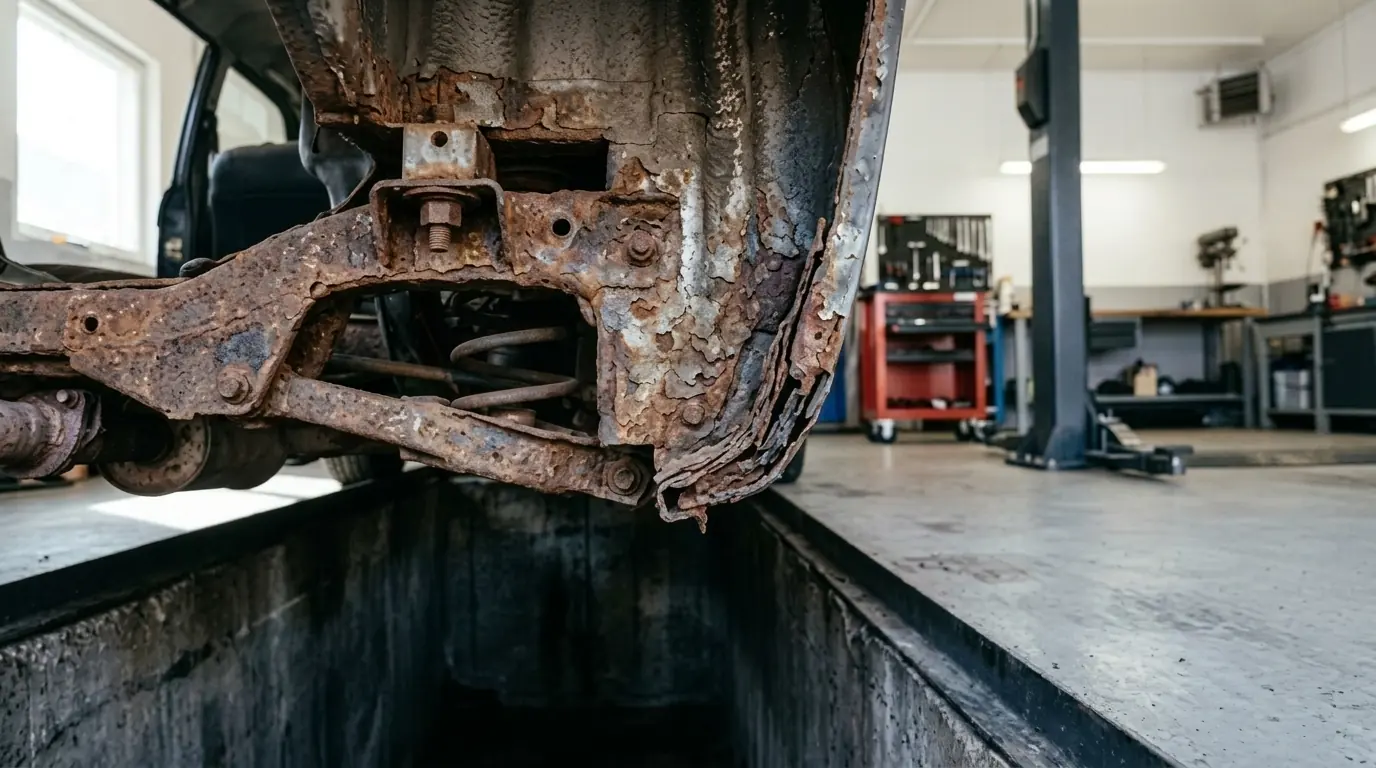
- Surface rust after standing. When a car is left standing for weeks, rust forms on the discs. A thin layer usually wears off the first few times you brake. If the vibration carries on, the rust has had time to eat uneven patches into the surface.
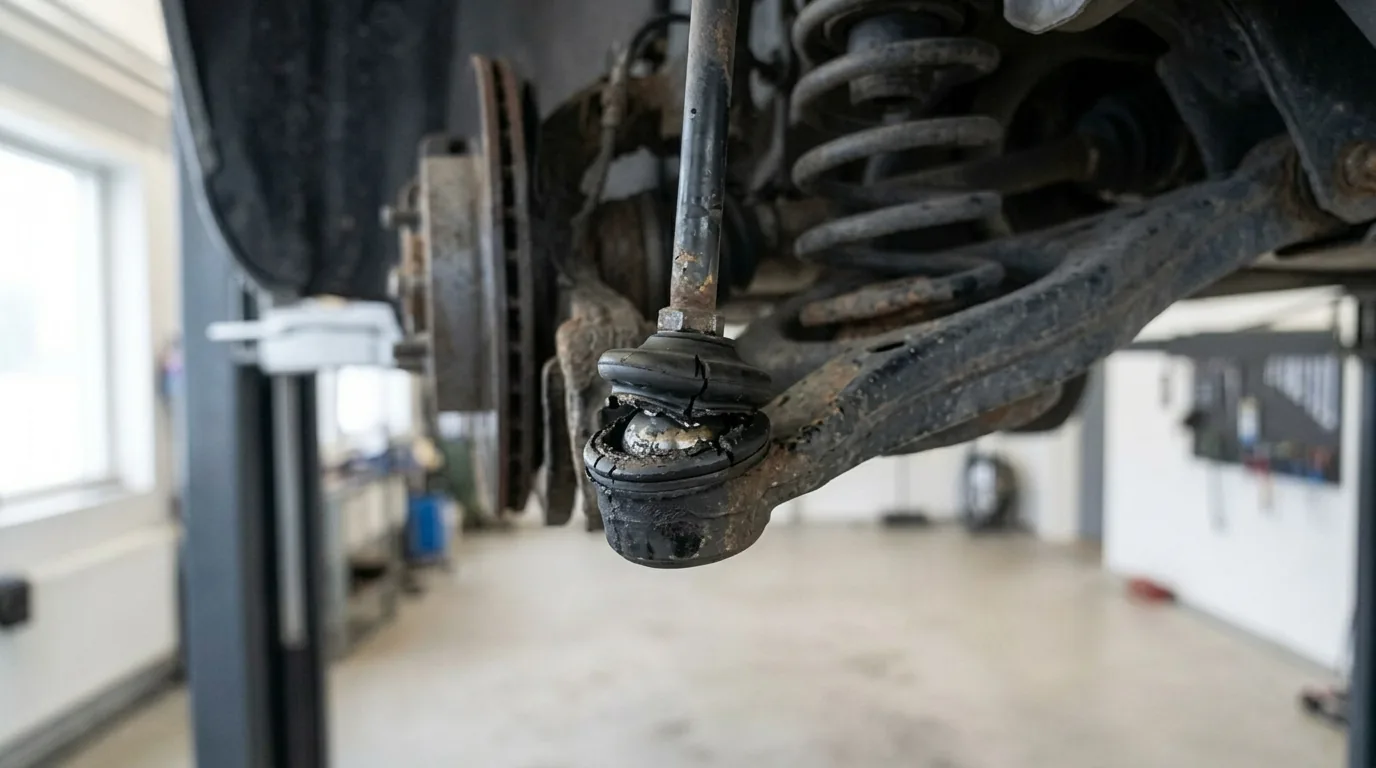
If the car also vibrates when you are not braking, the cause is more likely elsewhere: in the tyres, the wheel balancing, a wheel bearing or the suspension joints. A suspension part with play in it can also amplify a small disc fault so much that you feel it in the steering wheel.
Vibration in the steering wheel or the brake pedal?
Ferodo describes two ways the vibration is felt: as a pulsing brake pedal or as a sideways shake in the steering wheel. From the way it feels, you can tell whereabouts in the car the vibration is coming from. The table below is based on our experience, but only a measurement gives a definite answer.
| Where you feel it | Likely cause | What we check |
|---|---|---|
| The steering wheel shakes from side to side | Thickness variation or run-out in the front discs | Front disc thickness and run-out, the hub faces |
| The brake pedal pulses under normal braking | The discs, front or rear | Measuring every disc |
| The body or a seat shakes but the steering wheel does not | Often the rear brakes | The rear discs or drums and the parking brake |
| Vibration only when braking from high speed | Thickness variation or overheating | The disc surfaces and the pads |
| It shakes even when you are not braking | Tyres, balancing, a bearing or joints | The tyres, wheel bearings and suspension joints |
| The pedal pulses and rattles in an emergency stop | The ABS at work, not a fault | Nothing, if the warning light is not on |
The front brakes do most of the braking, so faults most often start at the front. That is why vibration in the steering wheel is the most common case.
Does the pedal vibrate only under hard braking?
If the pedal pulses only in an emergency stop or on a slippery road, it is probably the ABS. A Nissan owner's manual, for example, says the ABS operates at speeds above 5–10 km/h, and that when it does, you may feel a pulsing in the brake pedal and hear a noise from under the bonnet. The manual calls this normal, a sign that the system is working. The guidance for your own car is in its owner's manual.
If the pedal also pulses in normal, gentle braking on a dry road, the cause is more likely in the discs. The ABS only steps in when a wheel is about to lock, and in normal braking on dry tarmac that does not happen.
Are warped brake discs real?
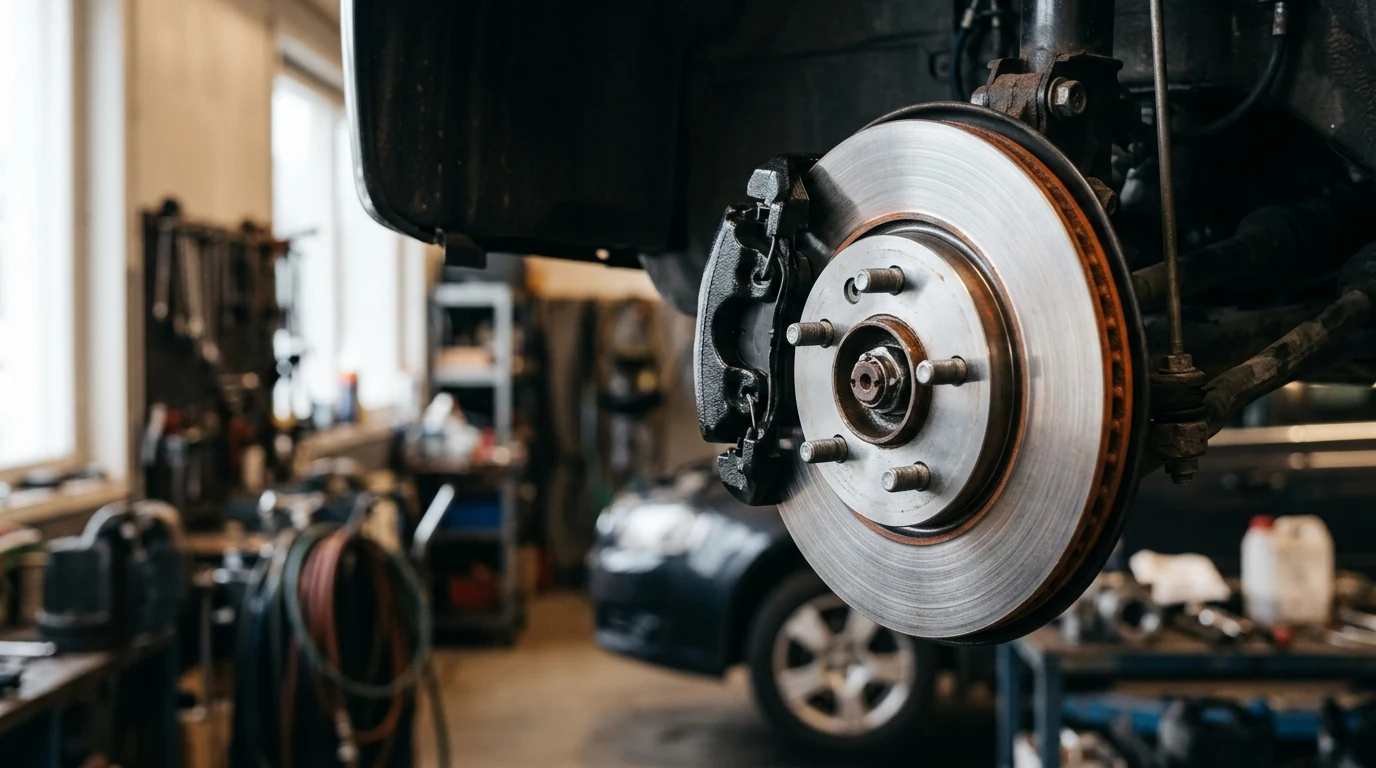
Partly. Ferodo's guidance says severe overheating can make a disc change shape, so that hot spots and waves form on its surface. In that case, the disc really is warped. In the workshop, though, thickness variation is the more common case: the disc is not out of true, but its thickness varies as it turns. In everyday speech, both get called a warped disc.
The difference matters, because the repair depends on the cause. According to Ferodo, mild thickness variation caused by poor bedding-in can be put right by bedding the brakes in again, and a deposit stuck to the surface can sometimes be removed with a brush or sandpaper. If the surfaces do not even out, the only solution is to replace the pads and discs. If a disc has blue spots, it will not recover, and the pads and discs are always replaced together.
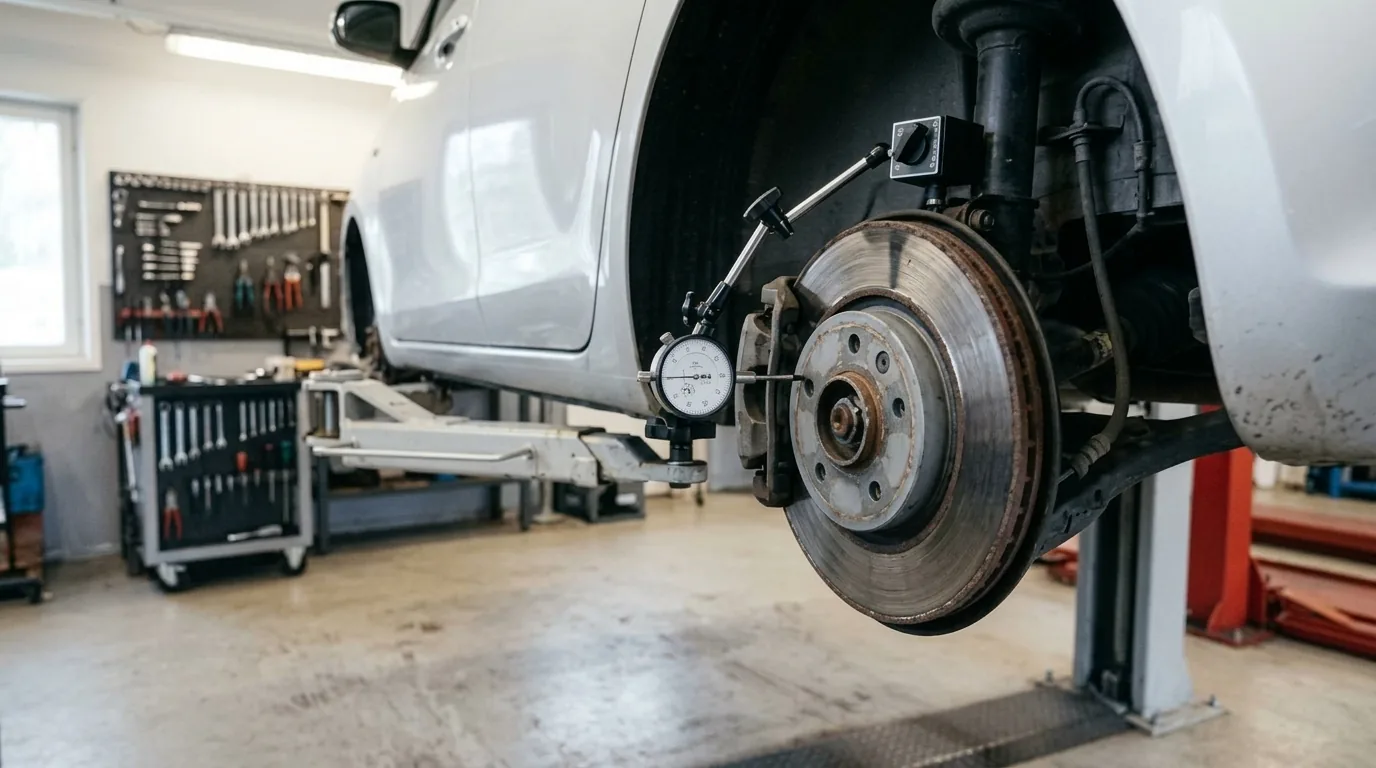
Measuring shows the difference. Hella Pagid's guidance says the thickness is measured with a micrometer at several points around the disc, about 10–15 mm in from the outer edge of the friction surface, and the difference between the highest and lowest readings is the thickness variation. Run-out is measured with a dial gauge. If the run-out is too great, Ferodo advises trying the disc in another position on the hub, for example turned through 90 degrees. If that does not help either, the fault is in the hub.
Can you drive with vibrating brakes?
Usually you can drive to the workshop, gently and with a longer gap than usual to the car in front. Stop driving at once and arrange a tow if:
- the brake pedal goes down further than usual or feels soft
- the car pulls noticeably to one side under braking
- you hear metallic grinding or screeching from the brakes
- the brake warning light comes on
- there is a smell of burning from the brakes, or smoke is rising from a wheel
At that point it is no longer a question of comfort but of whether the brakes work.
What does the inspection measure?
At the inspection, the brakes are measured on a brake dynamometer (the brake rollers), one axle at a time and wheel by wheel. The condition of the brake discs is checked by eye and, where needed, by measuring. Traficom, the Finnish Transport and Communications Agency, sets these limits in its inspection criteria:
| Item | Finding | Result |
|---|---|---|
| Condition of the brake discs (1.1.14) | Rusted or corroded over more than 1/3 of the friction surface, thinner than the manufacturer's minimum, damaged or inadequately secured | Failed, or a driving ban (ajokielto) |
| Braking forces (1.2.1) | Variation in braking force at one wheel over 30 % | Failed |
| Braking forces (1.2.1) | Difference in braking force between the wheels of one axle over 30 % of the higher | Failed |
| Braking forces (1.2.1) | Difference between the wheels of the steered front axle over 50 % of the higher | Driving ban |
On the rollers, thickness variation shows up as a braking force that rises and falls with every turn of the wheel, even though the pedal is pressed steadily. When disc thickness is measured, a margin of error of at most 1 mm is allowed. So a mild vibration will not necessarily fail the car, but a large variation in braking force on the rollers will. The same limits also appear in the new regulation, which comes into force on 1 February 2027.
In the 2025 inspections of passenger cars first registered between 2005 and 2021, 81 704 rejection faults were recorded for the service brake and 53 446 for the service brake roller test. Together they made up 62 % of all 217 030 rejection faults in the brakes. A vibrating brake is worth having checked before the inspection, not only after a rejection.
Discs and pads are replaced axle by axle
The wheels on one axle must brake almost equally, and at the inspection a difference of more than 30 % fails the car. So discs and pads are replaced on both wheels of the axle at the same time, even if the vibration seems to come from one side only. A new disc and an old one on the same axle would brake differently, and the car could pull to one side.
Vibration is rarer in the rear brakes than at the front, but there is more rust at the back. The rear brakes do less work, so braking does not keep the disc surface as clean, and in our experience rust eats into it especially on cars that see little use.
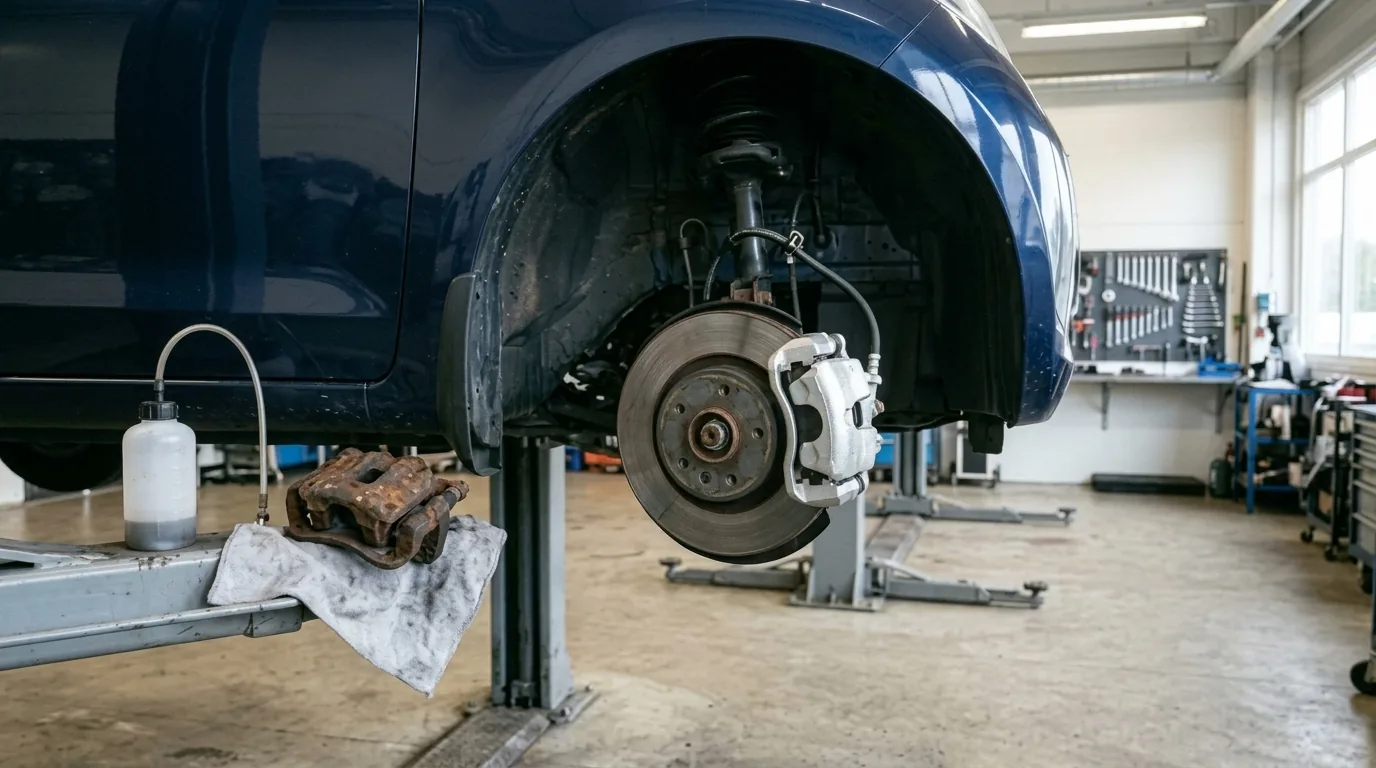
Replacing only the pads does not remove the disc's thickness variation, and a new pad starts to wear to match the uneven disc. If the cause is a seized caliper, replacing only the discs does not help: the caliper is repaired or replaced at the same time. See brake caliper replacement.
After new pads are fitted, the brakes are bedded in. Ferodo advises avoiding hard braking for the first 200 kilometres, so that the pad lays down an even layer on the disc. Bedding in this way also prevents new vibration.
Why did the vibration come back after new discs?
If new discs start to vibrate soon after they are fitted, the fault usually lies in how they were fitted or elsewhere in the brake, not in the disc itself. Ferodo's guidance names these causes:
- Rust or dirt on the hub. If the hub face is not cleaned before the new disc goes on, the disc does not sit true.
- An over-tightened positioning screw. The disc's positioning screw is only meant to hold the disc in place. Too much torque can distort the hub's contact face.
- A distorted hub. This is rare, but when it happens, no disc will run true on that hub.
- A badly centred wheel. Alloy wheels made to fit many different cars use centring rings, and if a ring is missing or damaged, the wheel does not centre on the hub.
- Poor-quality pads. They overheat easily under hard braking and heat up the disc.
- A sticking caliper, or pads never bedded in. Both bring the thickness variation back.
That is why it pays to measure a new disc's run-out after fitting, as Ferodo advises, and to clean the caliper's slide pins at the same time.
How we find the cause
- Road test. We drive the car to find the speed and the braking effort at which the vibration starts, and whether it is felt in the steering wheel or the pedal.
- Wheels off on the lift. We look at the disc surfaces: deposits, pad imprints, blue spots and rust.
- Thickness and run-out. We measure the disc's thickness at several points with a micrometer, and its run-out with a dial gauge.
- Calipers and pads. We check whether the pistons and slide pins move freely and whether the pads are wearing evenly on both sides.
- Hubs, bearings and joints. We look at the hub face, the wheel bearings and the suspension joints, so that we know whether something else is making the fault worse.
- Findings and price. We tell you what we found and what the repair costs before anything is replaced. If the fault does not need repairing immediately, we say so too.
When should you bring the car in?
When the vibration does not go away after braking a few times, or it has started to get worse. Our brake pad and disc replacement page describes replacing the front discs and pads. If a suspension part with play in it is making the vibration worse, the same check covers it: see suspension repair. If you do not know where the vibration is coming from, we start with diagnostics. We cover clunks and other noises in our article on clunking noises from your car.