Published
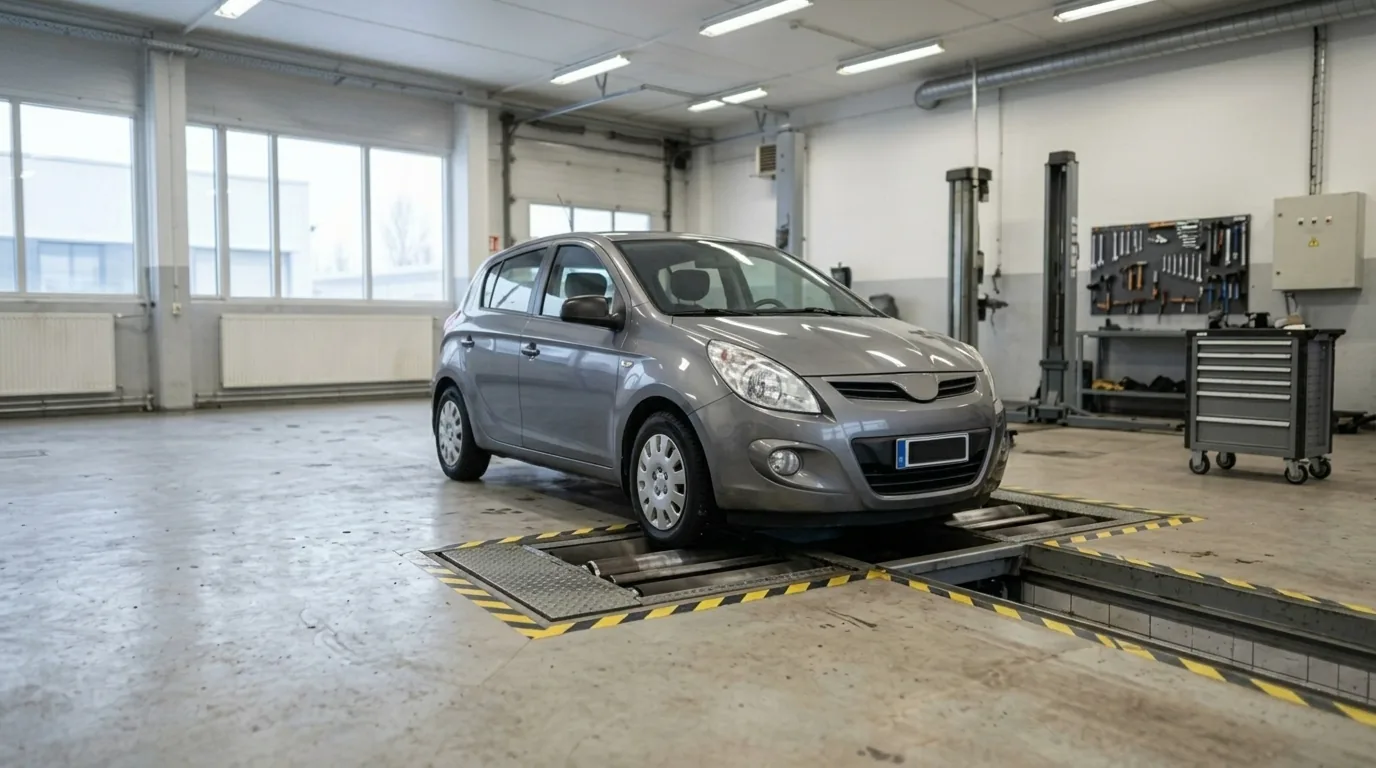
A notice does not mean the car has failed. It has passed, its inspection is valid and you may drive it as normal. The inspection certificate does, however, record the fault and the date by which it must be repaired.
A great many notices are recorded. According to statistics from Traficom, the Finnish Transport and Communications Agency, 1 002 794 repair notices were issued at the 2025 inspections. The statistics cover passenger cars first registered in 2005–2021, which were inspected 1 672 937 times. Of these notices, 59 % concerned lights and electrical equipment. So the typical notice is about a light, not the chassis.
What does a repair notice mean?
Section 154 of the Vehicles Act (ajoneuvolaki) divides the faults found at an inspection into three groups: minor, serious and dangerous. In Traficom's inspection criteria, a minor fault is one that leads to a repair notice, and on the basis of such a fault the car must be approved. A serious fault leads to a rejection, and a dangerous fault to a rejection and a driving ban (ajokielto). The annex to the regulation lists, for every inspection item, which fault leads to which outcome. If a fault is not on the list, the inspector classes it by the closest matching fault.
| Entry | Fault class (section 154) | What follows |
|---|---|---|
| Repair notice | A minor fault with no significant effect on safety or the environment | The car is approved. The fault is repaired within a reasonable time (section 158). There is no re-inspection. |
| Failed | A serious fault that may endanger safety, affect the environment or put others at risk | The fault is repaired as soon as possible (section 158). Re-inspection within a month of the rejection (section 162). |
| Driving ban | A dangerous fault that directly and immediately endangers safety | The car may not be driven until the faults have been repaired and the car has passed an inspection (section 157). |
A notice does not shorten the time the inspection is valid. The next inspection period is counted from the inspection the car passed, as always.
Do you have to fix a repair notice?
Yes. Section 158(2) of the Vehicles Act says so plainly: «Minor faults and deficiencies found at a periodic inspection must nevertheless be repaired within a reasonable time.» A notice is not a recommendation, even though the Finnish name sounds like one. Under section 160 of the Act, the duty to repair is also entered on the inspection certificate.
The repair is not checked separately, though, and that is why the faults behind many notices are left unrepaired. The fault is real all the same. When the number plate light or one of the dipped beams is out, the car is harder to see in the dark and the driver sees less too. When the wiper blades leave streaks, it is hard to see ahead on a wet road.
What is the deadline for fixing a repair notice?
The law sets no date. It says only «within a reasonable time», whereas faults that led to a rejection must be repaired «as soon as possible». The date is on the inspection certificate. Under Traficom's regulation, the certificate for a passed inspection gives the deadline by which minor faults must be repaired.
The same date appears in the car's details in Traficom's register. On the printout for a car inspected on 9 September 2024, for example, the notices are marked «to be repaired by 9 October 2024», so the car was given a month. For your own car, the date is on its certificate.
Does anyone check the repair?
Only a failed car has a re-inspection: under section 162 of the Vehicles Act, a failed car can be approved at a re-inspection within a month of the rejection. A car that has passed is not called back, the inspection station does not chase you up and nobody comes to look at the repair.
At the next periodic inspection the whole car is checked again, including the item recorded in the notice. If the fault is still there, the inspector grades it by the condition it is in at that point. If you want to be able to show later that the fault was repaired, ask the workshop for a receipt that names the repaired item.
A failed car is a different matter. If the same inspection produced both a rejection and notices, then under section 162 the re-inspection checks the inspection items in which faults or deficiencies were found. The wording of the section does not limit the check to the faults behind the rejection, so it pays to repair the notice items at the same time.
Does a repair notice show on the car's record?
It does. The inspection station records the details of the inspection in the transport register (section 161). Traficom's Tarkista ajoneuvon tiedot service lets you look up a car's inspection details free of charge by its registration number. The service's printout lists the faults found at the latest periodic inspection item by item: the inspection item, the fault, its severity and additional information. For a notice, the severity reads «Korjauskehotus» and the additional information gives the date by which the fault must be repaired. Anyone can get this information, so it is worth checking your own car's entries before you sell it.
The repair does not change the entry, because it is the inspection station that records inspection details in the register, not the workshop. The entry is only replaced when the next inspection is recorded. So when you buy a used car, it is worth looking up its details and asking the seller for receipts for the work the notices called for. You can check the easy items yourself on the test drive: whether the number plate light comes on, whether both dipped beams work and whether the wiper blades wipe the glass clean.
The most common repair notices
Of the main groups, lights and electrical equipment were by far the largest, with 590 509 notices. Next came road test and visibility (121 092); axles, wheels and suspension (93 219); chassis and body (64 049); emissions, noise and leaks (46 792); and brakes (41 809). For rejections the order is different, with axles and brakes at the top.
The table lists the twelve inspection items in Traficom's inspection statistics that drew the most notices in 2025. The items carry the names the statistics use. The last column is our own view of whether you can often do the repair yourself or a lift is needed.
| Inspection item | Notices in 2025 | Repair |
|---|---|---|
| Number plate light | 136 417 | Often DIY |
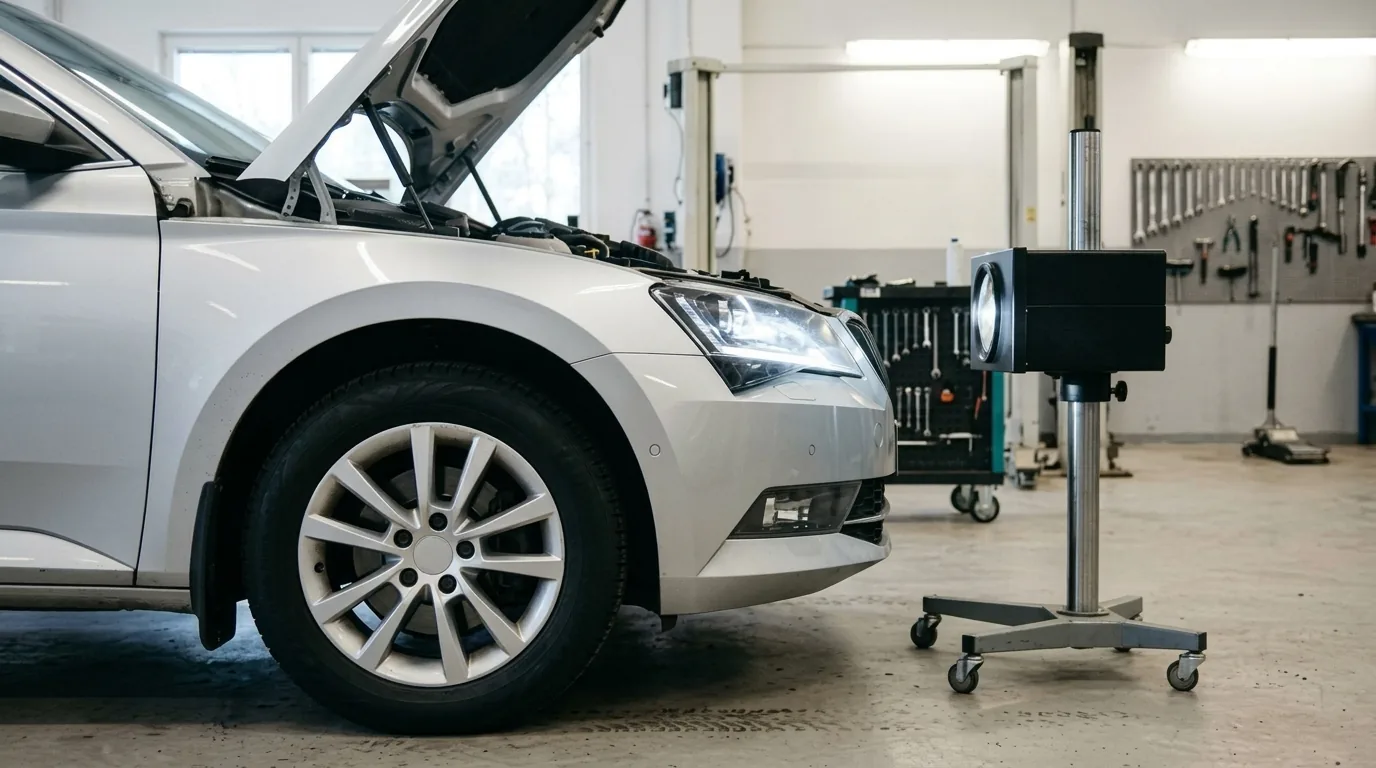
| Dipped beam | 132 256 | Bulb often DIY, alignment with a beam setter |
| Windscreen, wipers and washers | 93 481 | Blades DIY, glass damage for a professional |
| Front position light | 91 498 | Often DIY |
| Auxiliary lights | 60 605 | Often DIY |
| Front axle | 54 334 | On a lift |
| Oil leaks | 43 086 | On a lift |
| Brake light | 37 882 | Often DIY |
| Rear position light | 36 886 | Often DIY |
| Exhaust system | 36 351 | On a lift |
| Indicator | 32 700 | Often DIY |
| Drivetrain | 32 087 | On a lift |
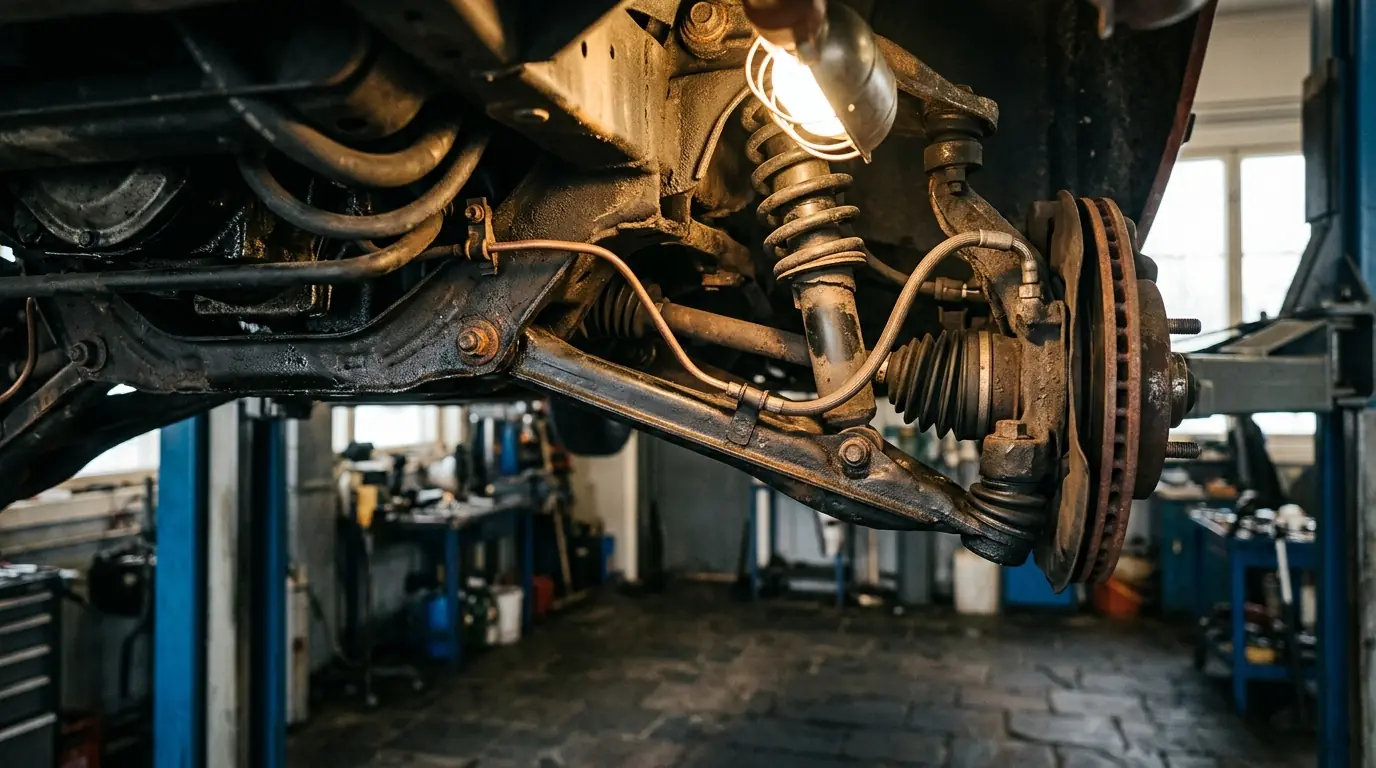
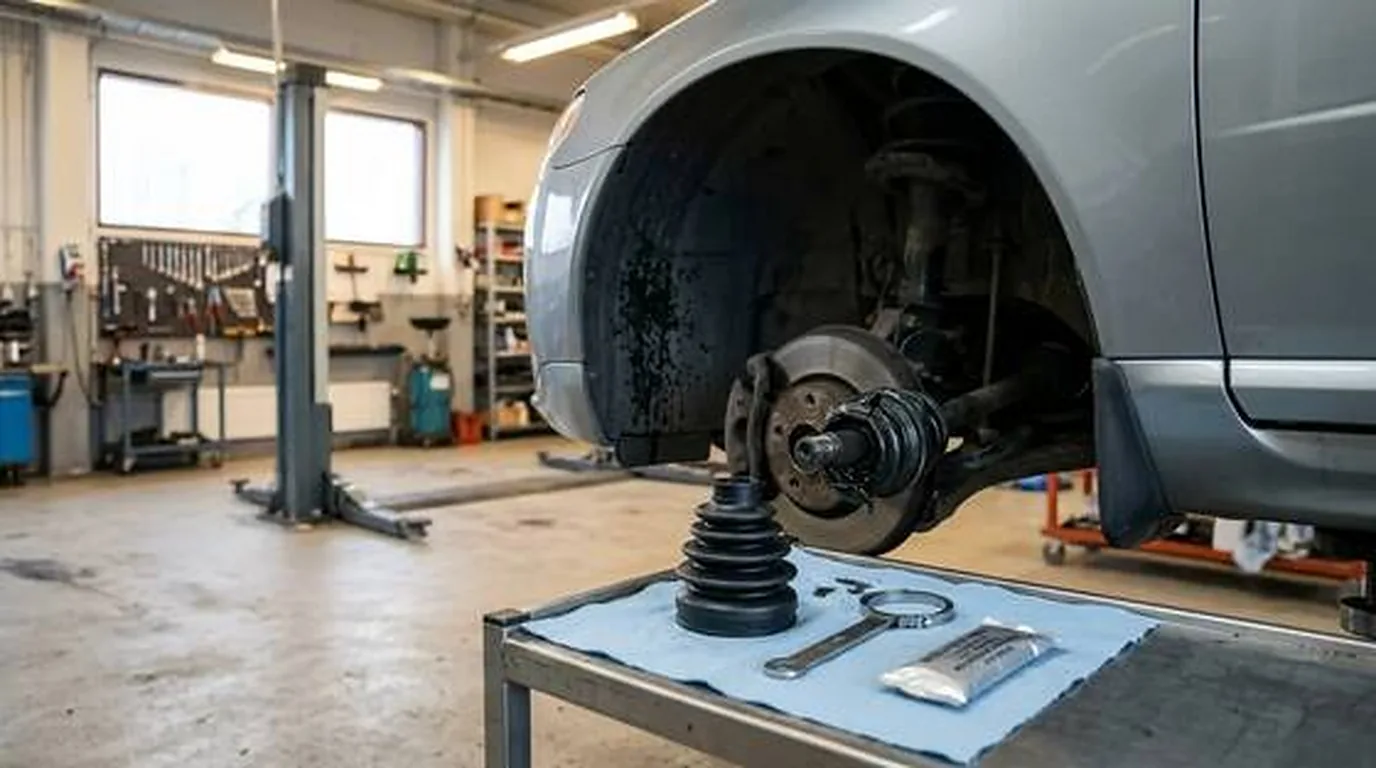
The seven light rows in the table add up to 528 244 notices, more than half of the total. Traficom's inspection criteria show what kind of fault typically ends up as a notice. A number plate light that does not work earns a notice. The dipped beams earn one when one of them does not work or they are aimed wrongly. For the windscreen, poor wiper blades or a washer that delivers no fluid are enough for a notice. On the front axle, a damaged ball joint boot, for example, earns a notice. With oil leaks, a leak that forms drops is enough for a notice, and with the exhaust system a minor leak. In the drivetrain, a torn CV boot, for example, earns one.
What can you fix yourself, and what needs a lift?
You can often deal with notices about lights and wipers yourself. The bulb and wiper blade types are given in the owner's manual, and on many cars they can be changed without tools. This is not the case on every car. If the lamp is an LED unit, or the bulb can only be reached by removing the bumper or the light unit, the job is better left to a workshop. Dipped beams are aimed with a beam setter: see headlight alignment.
The front axle, the chassis and body, oil leaks, the exhaust system and the drivetrain are lift work. The fault has to be seen from underneath, and often only then does it become clear which part is at fault. With an oil leak, the first step is to find where the oil is coming from, and only then is it decided what to replace.
A torn CV boot is worth replacing soon, because a broken boot lets the grease out and the dirt in: see CV boot replacement. A ball joint boot is often not sold on its own, and then the whole joint is replaced: see ball joint replacement. We cover exhaust leaks on the exhaust repair page.
Can a repair notice turn into a rejection next time?
It can, in two ways. The first is the fault getting worse. In Traficom's inspection criteria, the same item is graded by how bad the fault is at the time of the inspection:
- Oil leak: drops forming = repair notice, drops forming continuously = rejection, fire risk = driving ban.
- Dipped beams: one not working = repair notice, neither working = rejection.
- Exhaust system: minor leak = repair notice, clear leak = rejection.
- Ball joint: damaged boot = repair notice, play caused by wear = rejection or driving ban.
In our experience, a torn boot does not stay just a boot fault for long, because the joint starts to wear once dirt and water get in. Many of next year's rejections are this year's notices.
The second way is the number of faults. Under the regulation, minor faults found in four or more inspection items are classed as a serious fault, and the car fails. Four separate small faults can fail the car even though none of them would do so on its own.
On 1 September 2026 Traficom issued a new regulation on the inspection criteria, which comes into force on 1 February 2027. It keeps the limits above and the four-item rule unchanged.
What to do after a repair notice
- Read the inspection certificate. It lists every item, the description of the fault and the date by which the fault must be repaired.
- Do the easy items yourself. Replace blown bulbs and worn wiper blades, if you can get at them.
- Bring the certificate to a workshop for the lift items. The inspector's entry is a ready-made job list, and you do not have to explain the fault from memory.
- Ask for a price item by item. We price each line separately and tell you the price before the work starts. You decide which items are repaired now.
- Fix visibility and the chassis first. The lights, the wipers and the suspension joints are worth seeing to before the other items.
- Keep the receipt. It tells the next buyer that the notices were dealt with.
- Check the car before the next inspection. You will find a list of things you can check yourself in the article on preparing for the inspection.
A notice about the brakes is not one to put off. If the braking changes while you are driving (for example, the pedal goes down further than usual or the car pulls to one side), do not drive on. Leave the car where it is and find out what is wrong before you drive it again.
When should you go to a workshop?
When the list of notices includes a lift item or a light you cannot get at yourself. Bring the inspection certificate with you, and we will go through the list line by line. We will tell you the order we would do the repairs in, but we do nothing without asking you.
We do not carry out inspections, because we have no inspection licence. We repair faults recorded in a notice and faults that led to a rejection, on all makes: see inspection repairs. If the car failed, also read how the re-inspection works.