Published
What is a scheduled service?
The car's manufacturer decides what a scheduled service includes and how often it is done, and records both in the service schedule. The schedule is in the car's service book, and workshops can see it in the manufacturer's database. It has two limits, time and kilometres. The service is due at whichever limit is reached first.
A scheduled service (määräaikaishuolto) is not the same thing as the periodic inspection (määräaikaiskatsastus), even though the two Finnish names look alike. The inspection is governed by the Vehicles Act (ajoneuvolaki 82/2021), and its purpose is to check whether the car is roadworthy. An inspection is a check, not a service, so no oil or filters are changed at it. Nor does a service replace the inspection. You can find out when the inspection is due in the article on inspection intervals.
What is done at a service?
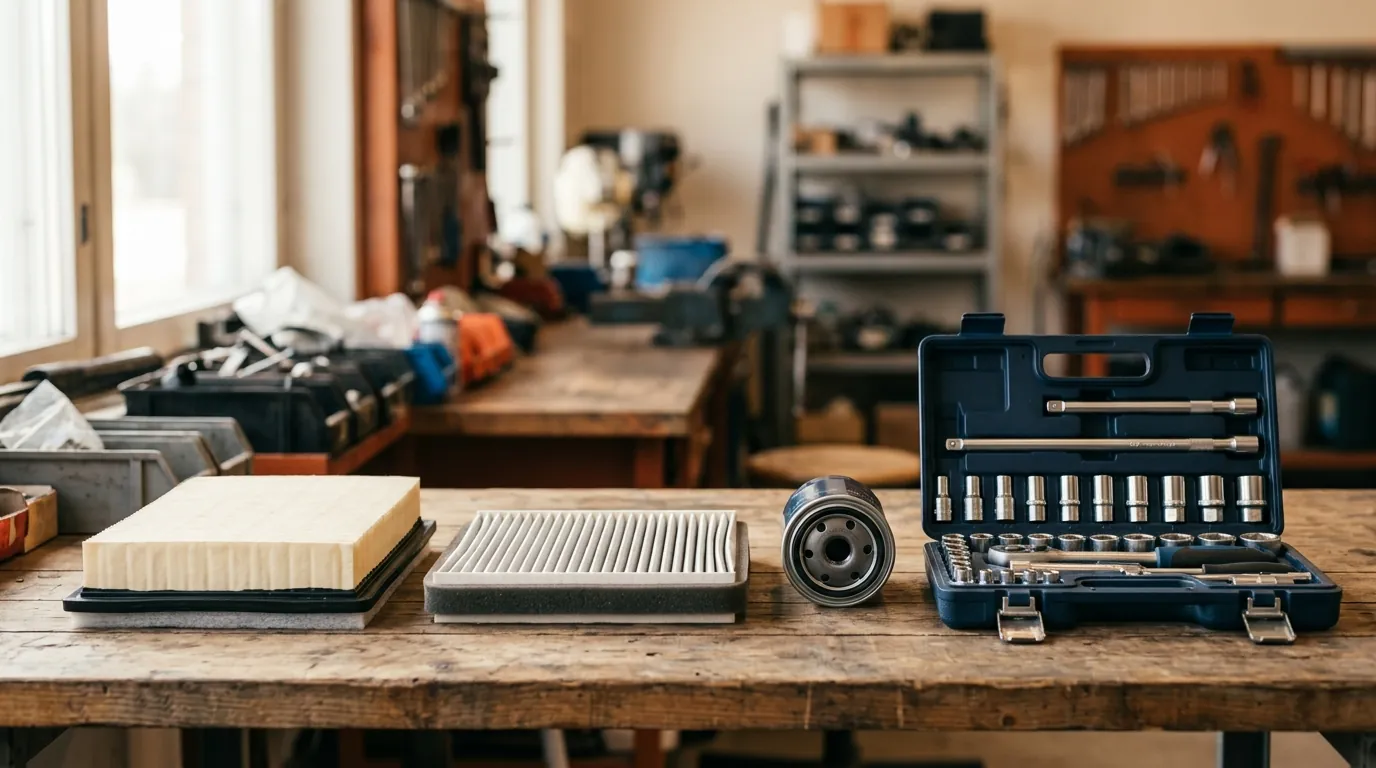
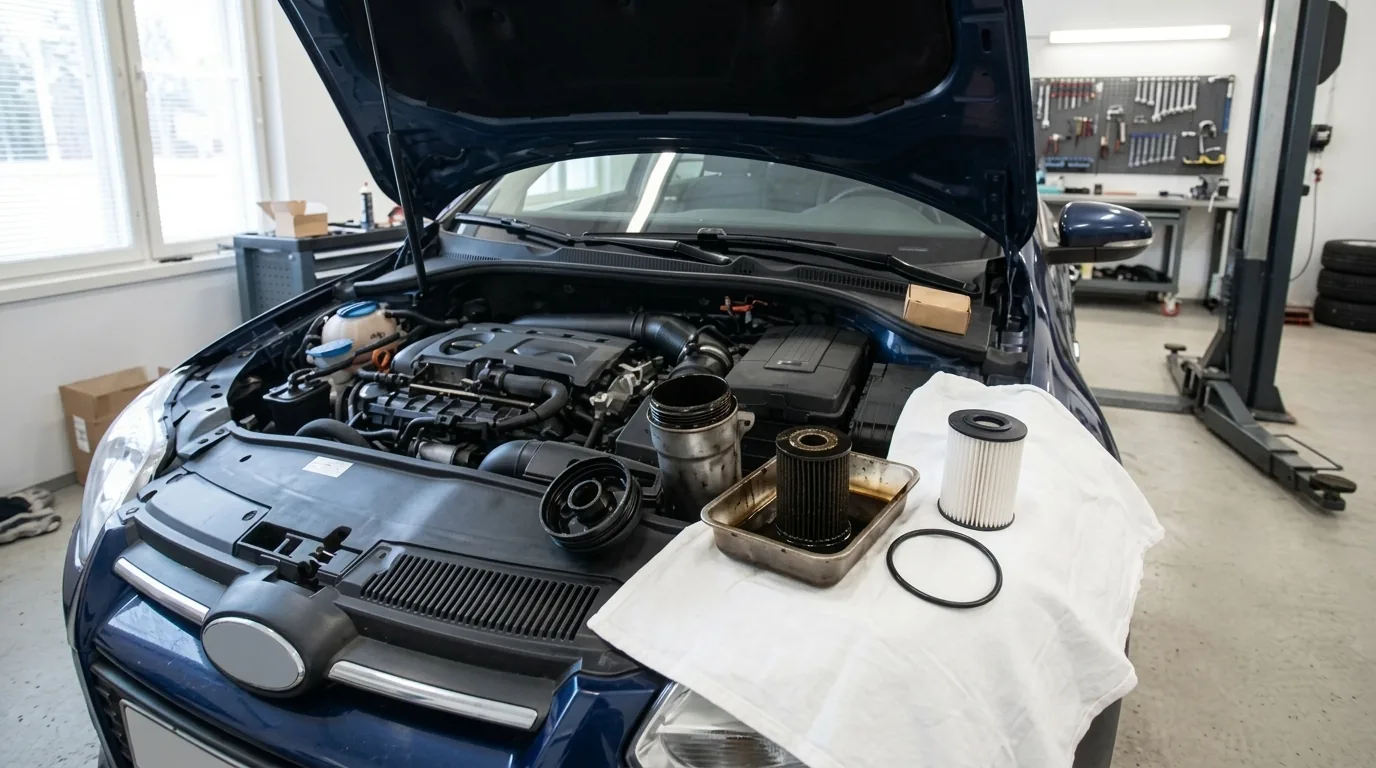
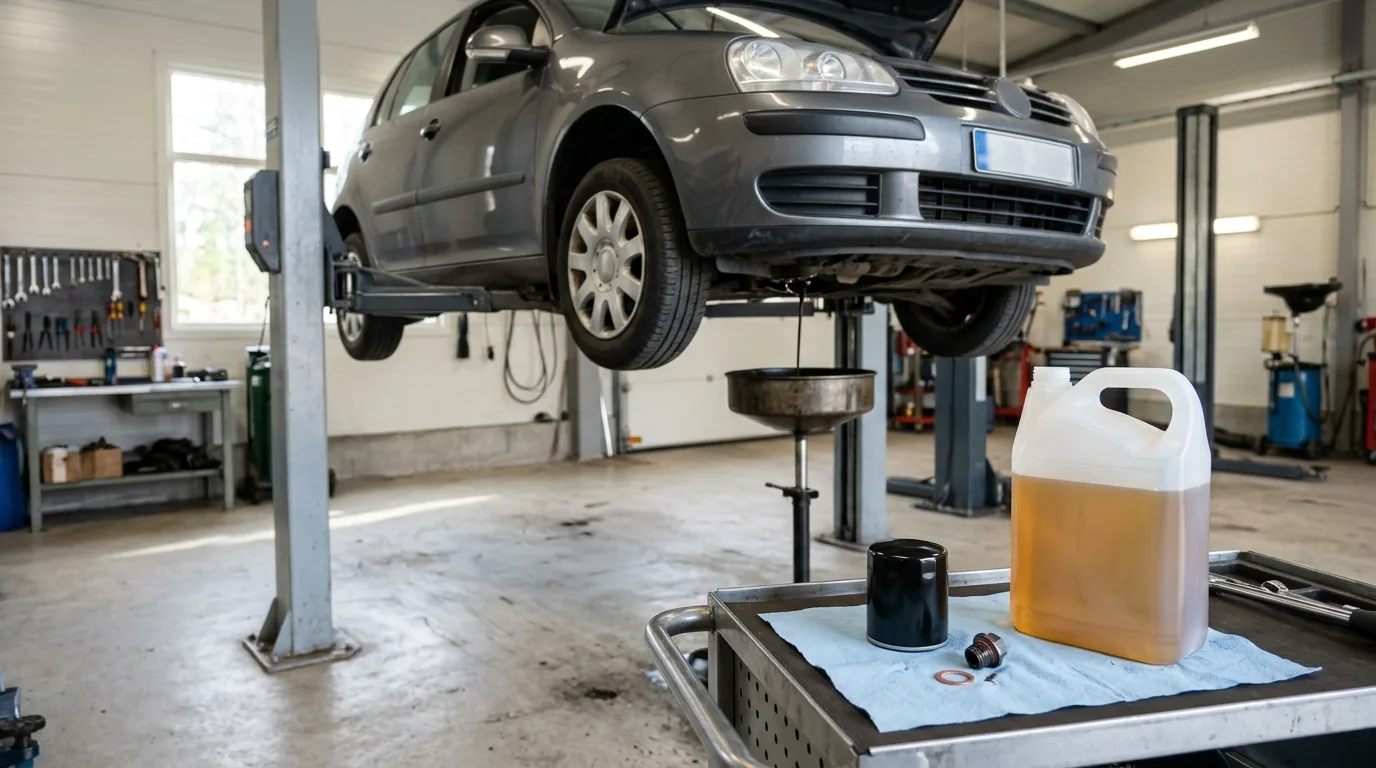
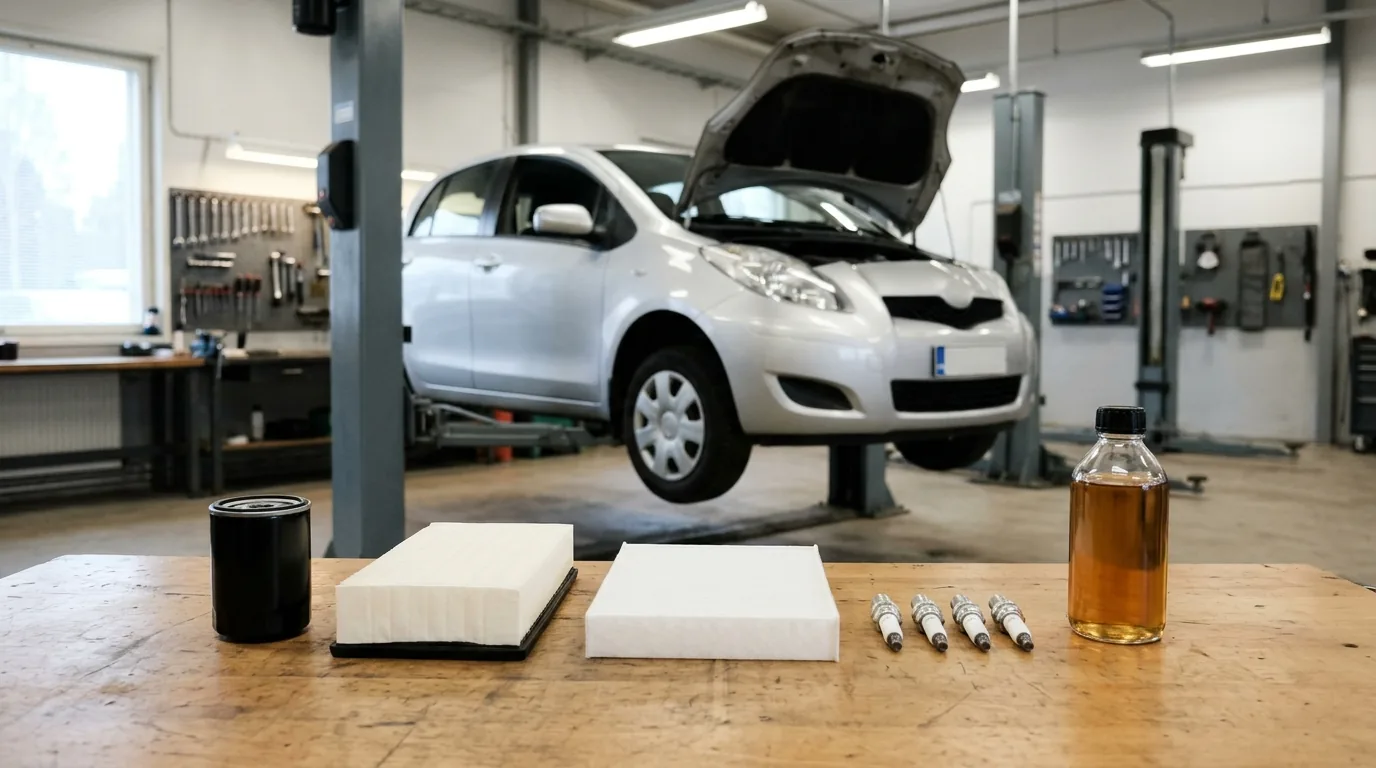
The scope of a service varies from one visit to the next. In everyday speech, people talk about a minor service and a major service. At a minor service, the engine oil and oil filter are changed and the car is checked. At a major service, jobs with longer intervals, such as changing filters, the brake fluid or the spark plugs, fall due on the same visit as well. Manufacturers use their own names for their services. Volkswagen, for example, distinguishes between oil change services and check-up services, at which the oil is not changed.
Toyota's service schedule shows clearly how the jobs are staggered. The intervals in the table come from Toyota's general schedule, and Toyota points out that there may be differences between models. You will find your own car's intervals in its service schedule.
| Job | Interval in Toyota's schedule |
|---|---|
| Engine oil and oil filter change | 15 000 km |
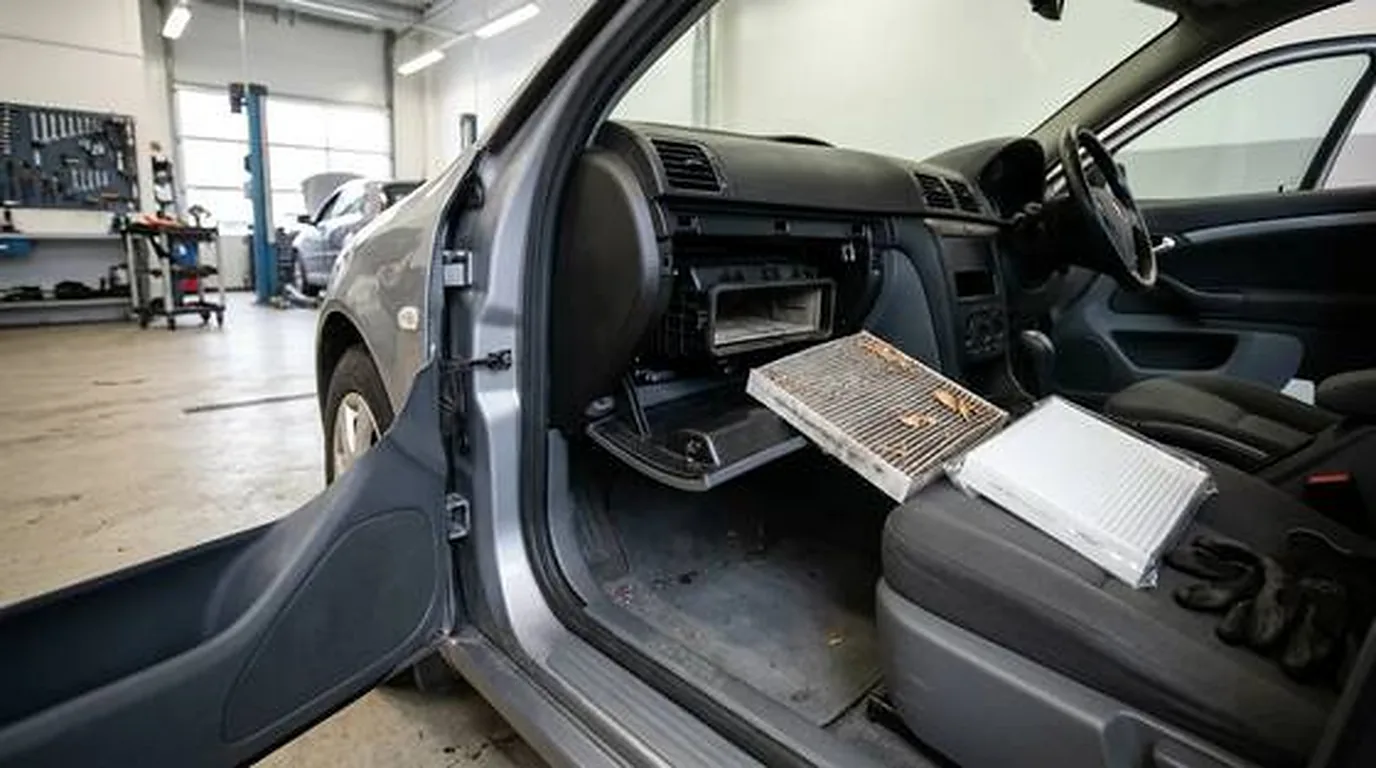
| Cabin filter change | 15 000 km or 12 months |
| Air filter | check at 15 000 km, change at 60 000 km |
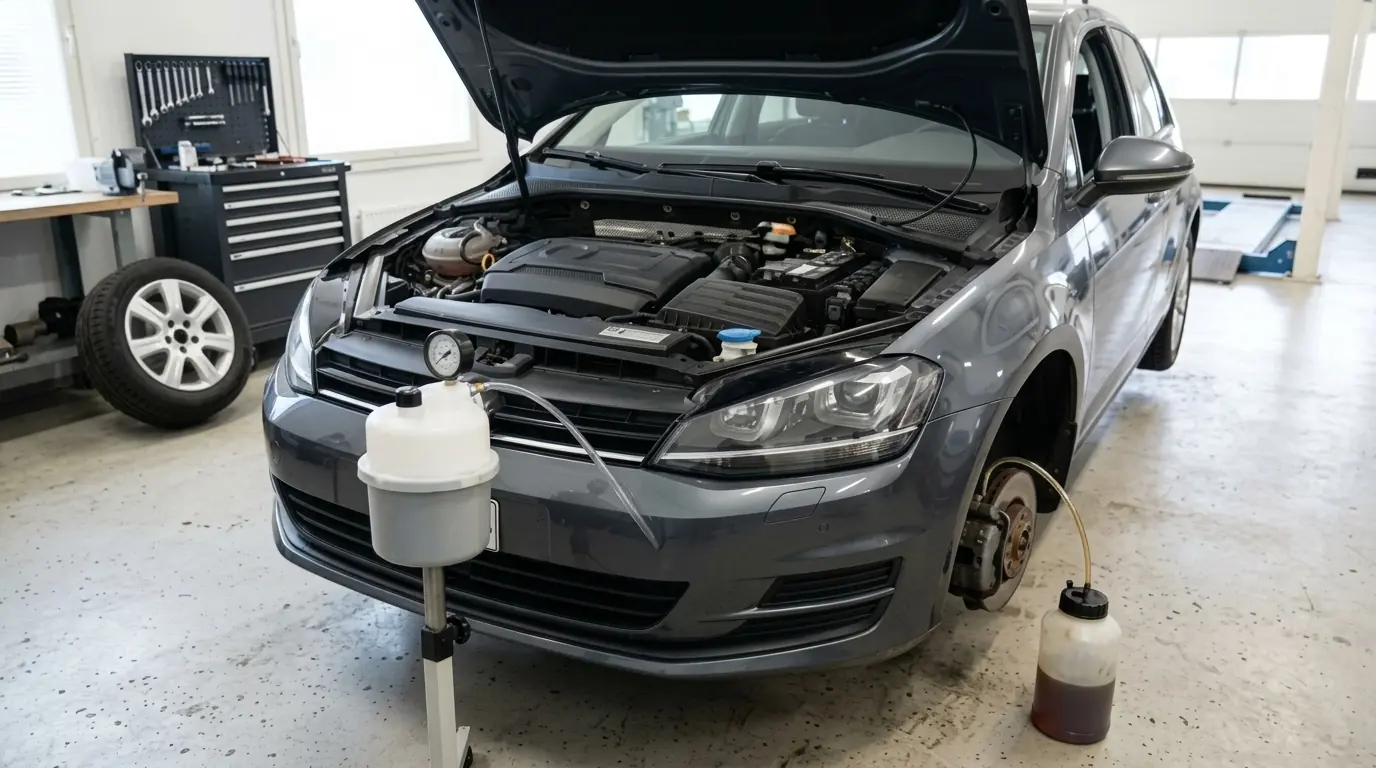
| Brake fluid change | 30 000 km, at least every 2 years |
| Brake and suspension check, corrosion check | 30 000 km |
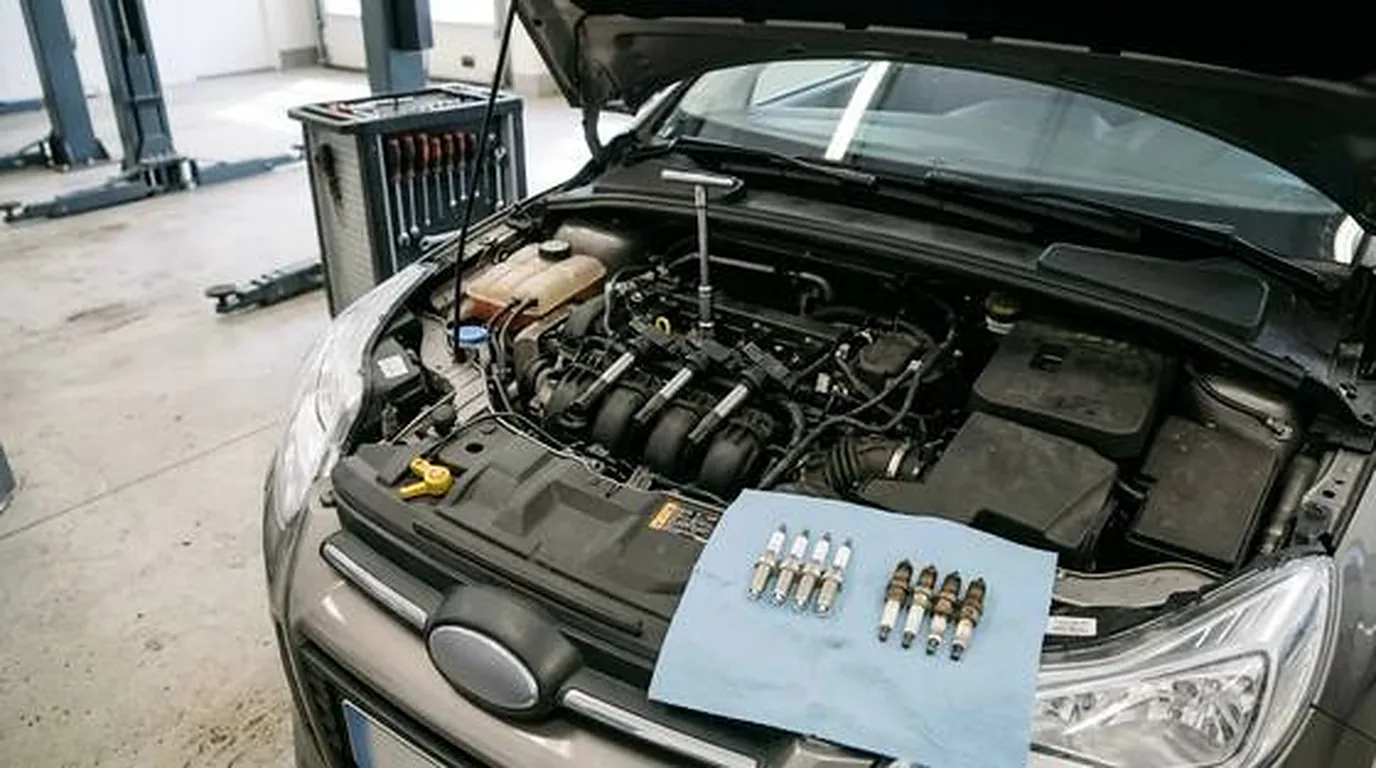
| Spark plugs | 60 000 km, iridium plugs 90 000 km |
| Diesel fuel filter | 60 000 km |
| Manual gearbox oil level check | 60 000 km |
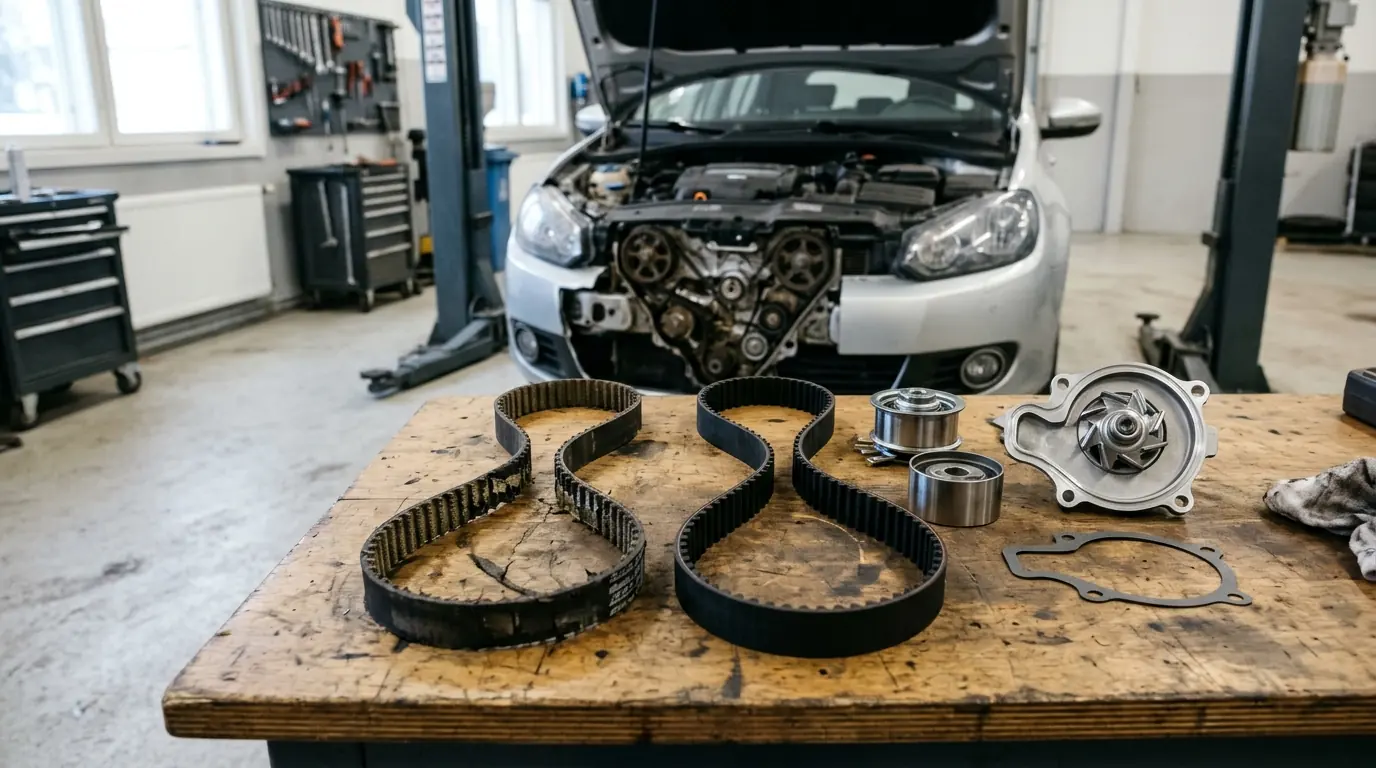
| Timing belt, if the engine has one | 105 000 or 150 000 km depending on the model, recommended time limit 6 years |
| Coolant | 150 000 km, then every 90 000 km |
Under Toyota's schedule, the lights, wipers, fluid levels and tyre pressures are also checked at every service, and on a hybrid the hybrid system is tested. In many cars the gearbox oil is a lifetime fill, but some schedules have it changed too, at long intervals. Finally, the workshop resets the service reminder, so that the car starts counting the next interval from the beginning.
Some jobs are tied to time, not to kilometres. Brake fluid absorbs moisture even if the car is driven only a little. That is why Toyota's schedule calls for a brake fluid change at least every two years. Toyota also gives cabin filter replacement a time limit of a year. Changing the timing belt is a separate, bigger job, and the article on the timing belt replacement interval explains when it is due.
An electric car has no engine oil to change, but it does have a service schedule. In Toyota's schedule, the high-voltage battery's coolant is checked every 30 000 kilometres. Brake fluid absorbs moisture in an electric car too.
Service intervals by make
The service interval depends on the make, and often on the model as well. This is how three manufacturers describe their intervals on their own Finnish-language websites:
- Toyota: the typical interval is 15 000 km or a year, for example on the Corolla. On the Proace van, the interval is 30 000 km or two years.
- Kia: depending on the model, 12 months / 15 000 km, 24 months / 20 000 km or 24 months / 30 000 km. For models with a two-year interval, Kia recommends an annual service in the in-between years in Finnish conditions, and on some models a check or an oil change in the in-between year is compulsory. Kia also advises having a first service done within the first 1 000–3 000 kilometres, but not on electric cars.
- Volkswagen: depending on its equipment and conditions of use, the car has either a fixed or a flexible service interval.
With a flexible interval, the car works out the time of the service itself and shows it on the dashboard. The calculation takes driving style and short trips into account, so the service may come round sooner than on the neighbour's identical car. When the service reminder comes on, book an appointment.
On short trips around town, the engine does not have time to warm up, and fuel and water condense into the oil. In that case it is worth changing the oil before the schedule's maximum interval is up. The oil change interval has an article of its own: oil change interval. If you do not drive much, you will usually reach the time limit before the kilometre limit.
Do you keep the warranty if the car is serviced somewhere other than a franchised dealer?
You do, as long as the service follows the manufacturer's service schedule. According to the Finnish Competition and Consumer Authority (KKV), you can choose for yourself where the scheduled service is done. The warranty and the liability for defects stay in force when the car is serviced according to the manufacturer's instructions.
If you have the car serviced somewhere other than a franchised dealer, KKV advises making sure of two things. The workshop must follow the manufacturer's service schedule that applies in Finland, and it must have the information and tools the service needs. A careful workshop also turns down work that its skills or tools are not up to, KKV points out.
The same principle is found in the EU's competition rules. According to the European Commission, a manufacturer's warranty may not be made conditional on having servicing and repairs outside the warranty done at an authorised workshop. Nor may the warranty terms require the manufacturer's own brand of spare parts when parts are replaced outside the warranty. Where the condition is written makes no difference: the assessment is the same whether it is in the purchase contract or in the service and warranty book.
This position is set out in the Commission's supplementary guidelines, which explain how the motor vehicle block exemption regulation (EU) 461/2010 is applied. The Commission extended the regulation's validity until 31 May 2028 with Regulation (EU) 2023/822.
A manufacturer can still legitimately reject a warranty claim if the fault was caused by poorly done servicing or a poor-quality spare part. In addition, a few things stay with the franchised dealer even if you have the scheduled service done elsewhere:
- Warranty repairs. According to KKV, the warranty provider may require warranty repairs to be done at a workshop it designates.
- Recalls. Repairs under a manufacturer's recall are done free of charge at an authorised workshop. On Toyota's website, for example, you can check for an open recall with the car's vehicle identification number.
- Extra cover tied to servicing. After the warranty ends, Toyota gives its Relax cover only to a car that is serviced at a Toyota franchised dealer. The cover is valid until the next service, and at most until the car is 10 years old or has covered 185 000 kilometres. Toyota's battery cover for electric cars and its hybrid battery cover are tied to franchised dealer servicing in the same way.
- Software updates. A franchised dealer can update the car's software at the service. Kia says that its franchised dealers do the updates automatically at the scheduled service.
Extra cover is a different matter from a new car's warranty. The Commission draws the line according to when an extended warranty is given. A servicing condition may not be attached to a new car's warranty, nor to an extended warranty given at the time of sale or shortly after it. An extended warranty bought years after the car was purchased, on the other hand, can usually require servicing at a franchised dealer. When you have the car serviced elsewhere, check with the manufacturer now and then whether any recalls or updates have come out for your car.
What should be recorded about a service?
For the warranty, what matters most is proof of what was done, when and at what mileage. Kia lists on its website what its dealers record in the service book. The entry shows the services and body checks carried out, the true mileage, the date, when the next service is due, and a stamp. Ask your workshop for the same details.
The body check affects the warranty. Kia's body warranty requires the body's rust protection and any damage to the paintwork to be monitored, and the damage to be repaired. At Volkswagen, the body's long-term protection is conditional on the checks in the service schedule. So make sure that the body check also shows in the entry.
Spare parts do not have to carry the car's brand. The Commission's guidelines mention three kinds of parts: parts bearing the car's brand, parts made and sold by the original parts supplier, and parts of matching quality. Because the manufacturer can reject a warranty claim on account of a poor-quality part, the invoice needs to show which parts were fitted to the car.
The same goes for oil. A manufacturer may recommend a particular brand of oil, but according to the Commission, it cannot usually make that a condition of the warranty. The oil must still meet the quality classification and viscosity the car's manufacturer requires. You will find more about both in the article on engine oil viscosity.
If the car has only a digital service book, the entry is made in the manufacturer's system. According to the Commission, an independent workshop may not be prevented from viewing or updating the service history when only the manufacturer or its network holds the complete history. The article on the digital service book explains how the entry is made in practice and what the invoice should say.
If a service has been missed
A missed service does not void the warranty on its own. What decides it is the causal link. According to KKV, the seller, the manufacturer or the importer can refuse liability for a defect if neglected servicing caused it. Without a causal link, the neglect alone is not sufficient grounds.
Extra cover tied to servicing is stricter. According to Toyota, the interval given in the service book must not be exceeded in either time or kilometres if you want the Relax cover to stay in force.
A gap in the service history also shows when the car is sold. The Commission notes that an incomplete service history is likely to lower the car's resale value. It also makes it harder to show that the warranty terms have been followed.
Have an overdue service done as soon as you notice it. The workshop checks the manufacturer's schedule to see which jobs are due, based on the car's age and mileage. Earlier invoices show what has already been done.
How to prepare for the service
When you book, give the following details, or bring them with you to the service:
- The registration number and the mileage.
- The service book, or the information that the car has only a digital service book.
- The invoice for the previous service, if you can find it.
- Symptoms: noises, vibration, leaks and warning lights that are on, and when they occur.
- How you drive: short trips around town, towing a trailer or a lot of driving on the open road.
- Any wishes about parts, for example if you want parts bearing the car's brand or are bringing parts yourself.
KKV advises making the work order as detailed as possible. It records the work to be done and the parts to be replaced, the price and what it includes, and how additional work will be agreed. If the job changes along the way, the workshop must ask your permission for additional work. If you bring the parts yourself, the workshop must first make sure that they suit your car. It is not, however, liable for defects in the parts you brought that could not be detected before fitting. When you collect the car, go through the work done and the invoice together.
When should you take the car to a workshop?
Book a scheduled service when the service reminder comes on, or when the time or kilometre limit is getting close. If an in-between year calls only for an oil and filter change, it can be done on its own: see oil change.
At Lampputie 12 in Suutarila, we service all makes to the manufacturer's service schedule. We record the service in the service book, and in the manufacturer's digital service book when the manufacturer gives access to it. We are not an inspection station. If the inspection is coming up, it is worth having the service done before it, because the brakes and the suspension are checked on the lift at the service. Taken together, faults in them are the most common reason a car fails the inspection. See also preparing for the inspection. You can see the estimate (hinta-arvio) for the service on its service page, and we tell you the price before the work starts.