Published
What does the timing belt do?
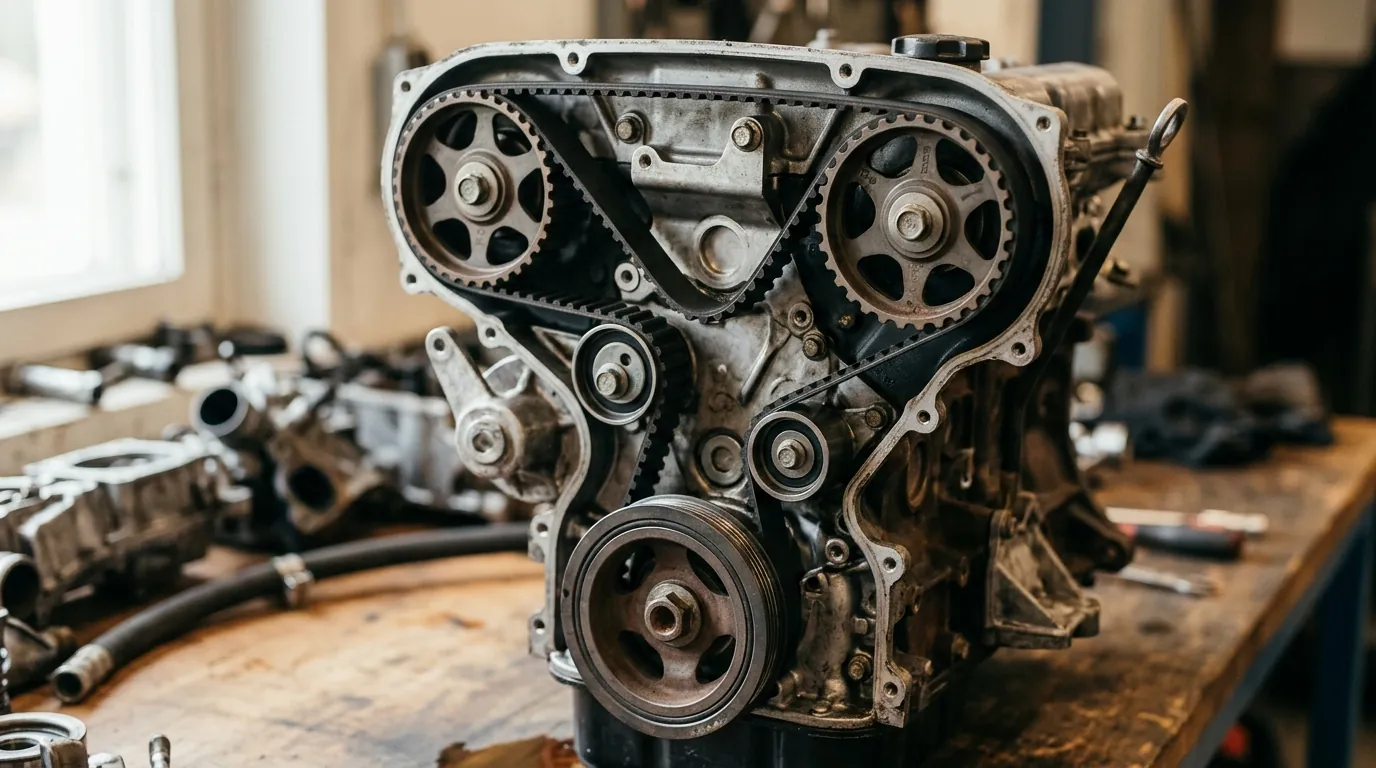
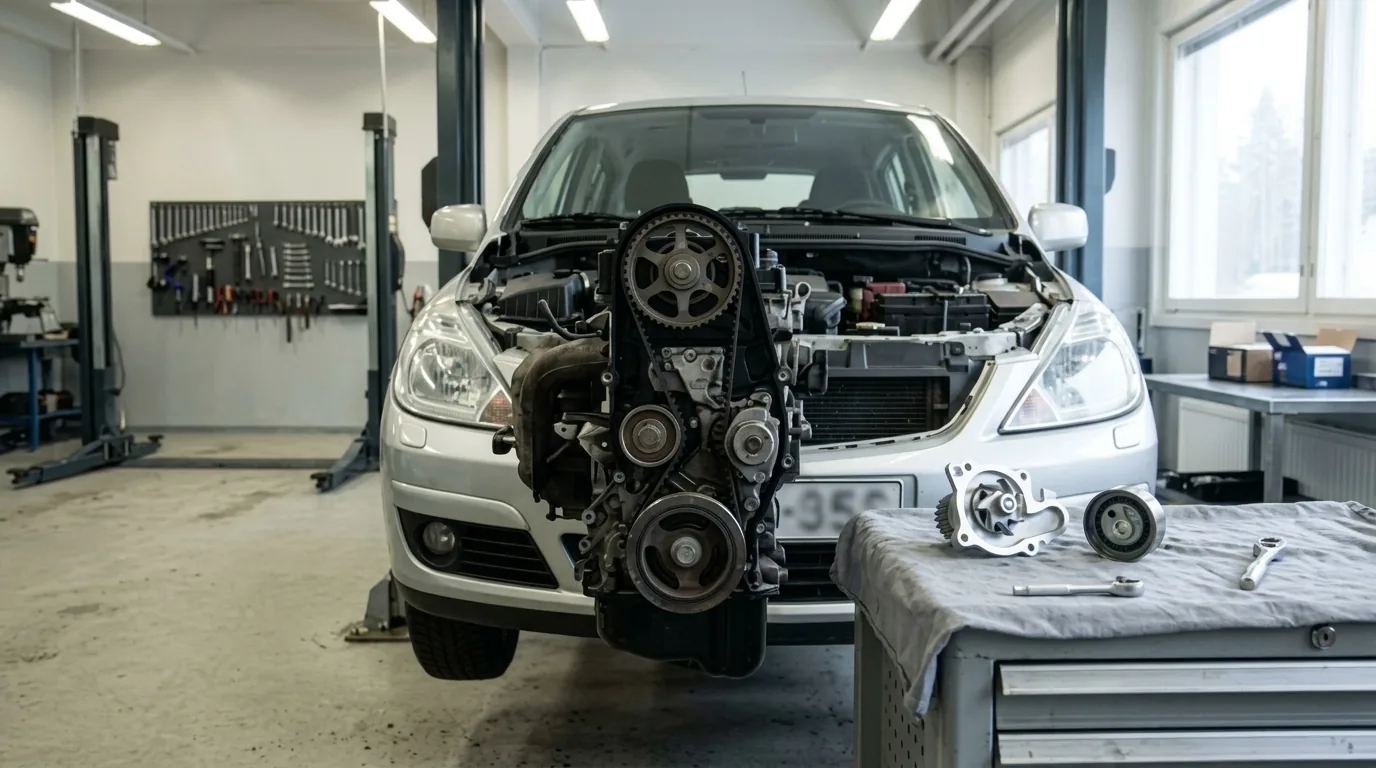
The timing belt, also called the toothed belt or cambelt, keeps the engine's valves and pistons in step. It connects the crankshaft to the camshaft, and the camshaft opens and closes the valves. In many engines, the valves and pistons move partly within the same space. When the timing is right, a valve is always out of the piston's way.
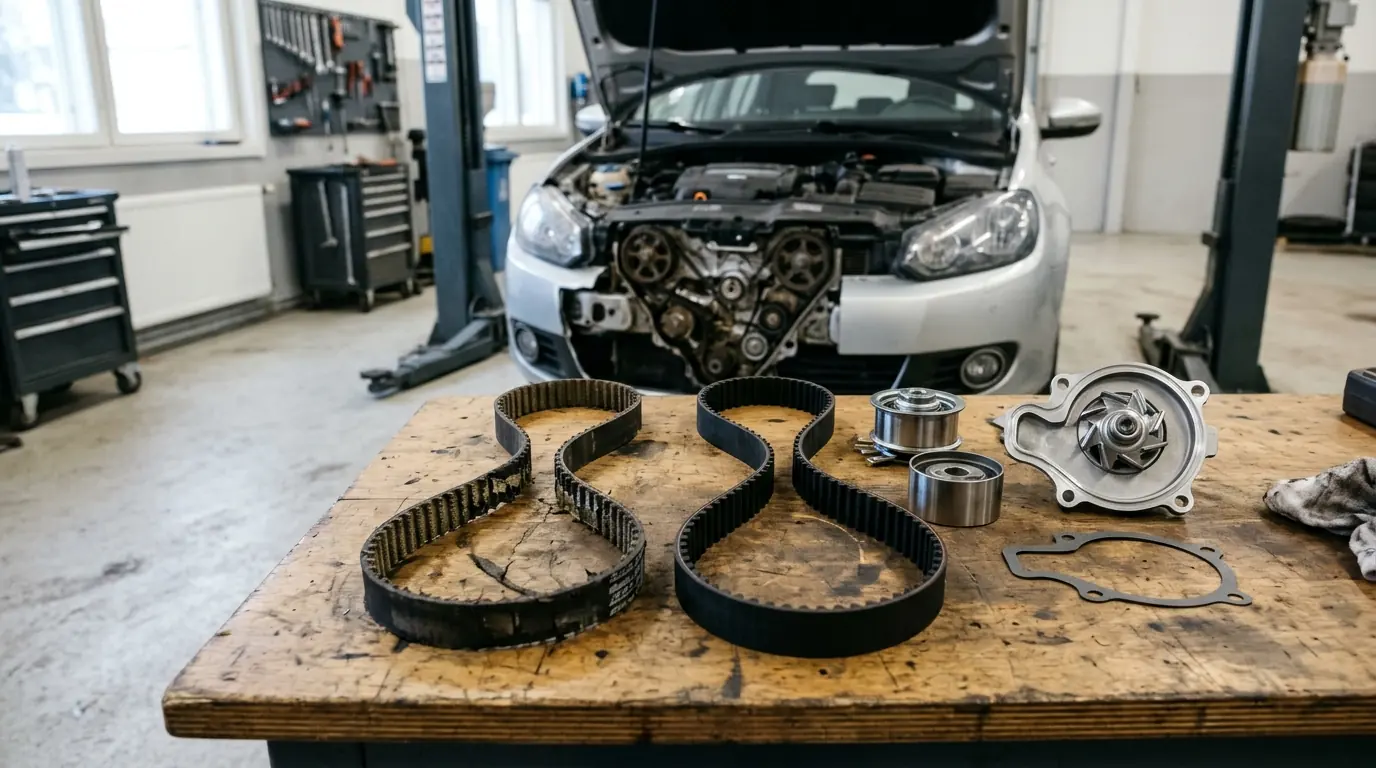
The belt is made of rubber and has teeth. It usually runs under a plastic cover at the end of the engine, so you cannot see it without opening the cover. In many engines, the same belt also drives the water pump.
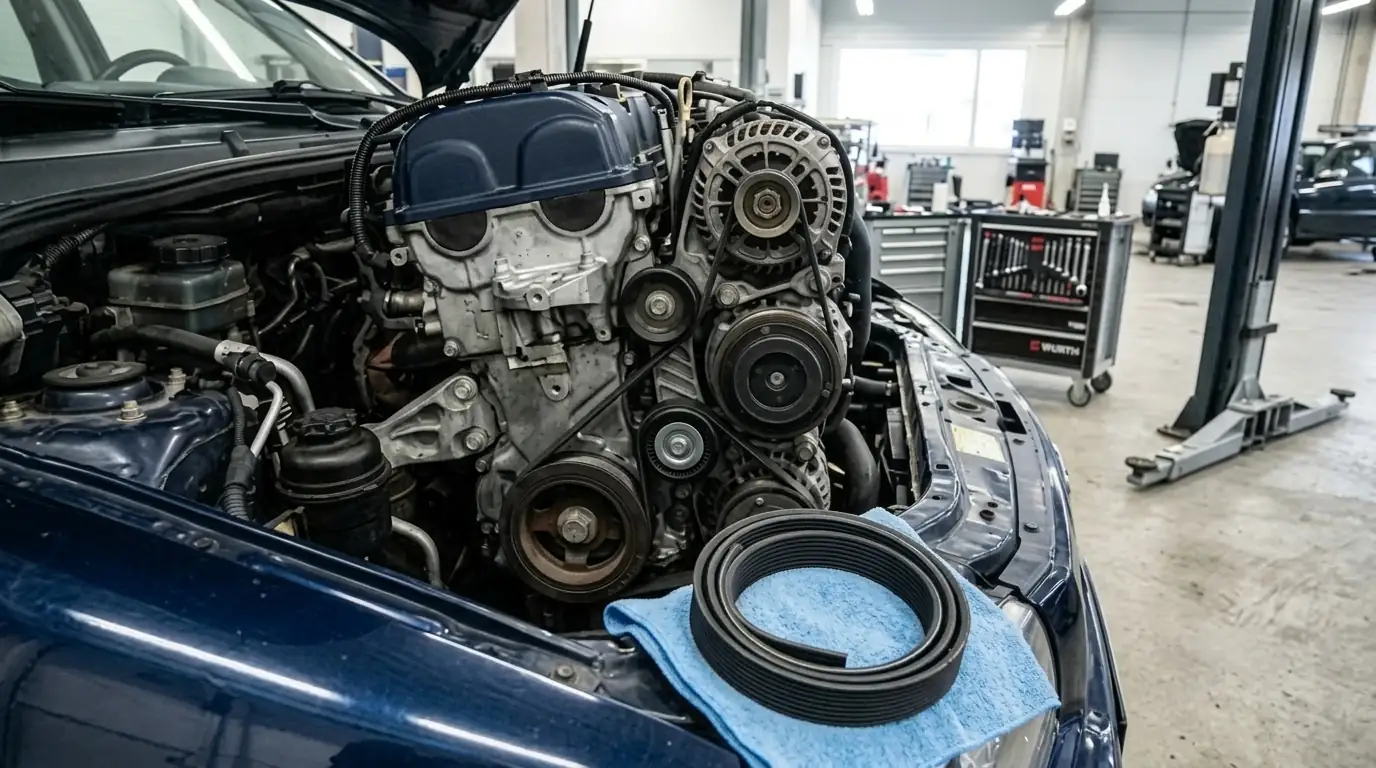
The timing belt should not be confused with the auxiliary belt. The auxiliary belt drives the alternator and the other ancillaries, and you can usually see it at the end of the engine without taking anything apart. We cover the auxiliary belt's symptoms and replacement on our auxiliary belt replacement page.
Timing belt or timing chain?
Not every engine has a timing belt. Many have a metal timing chain instead, which runs inside the engine and is lubricated by the engine oil. The make or model does not tell you which one your car has. For example, the Volkswagen group's older 1.2 TSI and 1.4 TSI engines have a chain, but the newer engines of the same name have a belt. The engine code tells you which.
The easiest place to find out is the service schedule. If it includes a timing belt change, the car has a belt. A workshop can also tell from the engine's details.
A chain is not maintenance-free either. According to the spare parts manufacturer febi, a chain lasts much longer than a belt, but it too wears and stretches. Poor lubrication speeds up the wear. The usual symptom of a stretched chain is a rattle or clatter on a cold start. We cover the symptoms and chain replacement on our timing chain replacement page.
Where the belt or chain runs is not enough to tell you which one an engine has. Some belts now run inside the engine in oil, as a chain does. We cover them further down.
The interval in kilometres and years
The manufacturer usually gives the interval as two limits, one in kilometres and one in years. The belt is replaced when either limit is reached. The interval depends on the engine, and sometimes even on the month of manufacture:
| Engine | Manufacturer's interval |
|---|---|
| Škoda Octavia 1.9 SDI and TDI, up to June 1999 | 60 000 km |
| the same engine family from July 1999 to 2001 | 90 000 km |
| the same engine family from 2002 | 120 000 km, 150 000 km on later chassis numbers |
| Volkswagen Golf V, Škoda Octavia from 2006 and Audi A4 from 2005, 2.0 TDI unit injector | 120 000 km |
| Seat Leon 2.0 FSI, from 2005 | 180 000 km or 5 years |
| Ford 1.0 EcoBoost, wet belt, new interval 2026 | 100 000 miles (about 160 000 km) or 6 years |
| Peugeot 208 1.2 PureTech, built in 2013 | 180 000 km to the first change; the interval depends on when the car was built |
The Volkswagen group figures come from a summary compiled by the belt manufacturer Gates in 2007. At that time, many of the group's engines had a time limit of five years. The Ford figure is from an investigation document by NHTSA, the US road traffic safety authority, and the Peugeot figure from a technical guide by febi. The Octavia rows show that the interval for the same engine family changed on three occasions within a few years.
Manufacturers also change intervals after the fact. According to the belt manufacturer ContiTech, some manufacturers have changed the replacement intervals of cars already sold. If your service book is years old, check the current interval with a franchised dealer or a workshop.
On a car that is not driven much, the time limit often comes before the kilometre limit. Bosch says the belt's rubber deteriorates with age, however little the car is driven. ContiTech has pointed out that standing for a long time strains a belt as much as regular driving. So a second car or a summer car may need a new belt even though its mileage is low. If the manufacturer's time limit cannot be found, ContiTech has advised replacing an older car's belt when the belt is six years old at the latest.
How the car is used matters too. According to the Gates summary, the change may fall due sooner if the car is constantly driven on short trips or stops often. The same applies to cars whose engines spend a lot of time idling, such as taxis and delivery vans. On cars like these, the Volkswagen group advised checking the condition of the parts at every major service. Extreme temperatures also shortened the group's time limit. If a car spent long periods in heat above 26 degrees or in more than 6 degrees of frost, the limit was cut from five years to four.
The wet belt: a timing belt that runs in oil
Some manufacturers use a belt that runs inside the engine, in oil. According to febi, a wet belt like this is narrower and takes up less space. It reduces friction, fuel consumption and emissions, and the oil damps vibration. Examples are Ford's 1.0 EcoBoost and Stellantis's 1.0 and 1.2 PureTech engines, which are found in Peugeot, Citroën, DS and Opel models.
A wet belt carries a different risk from a dry one. As the surface of the belt wears, the material that comes off travels with the oil. NHTSA says that in Ford's 1.0 EcoBoost engines, this material can clog the oil pump's pick-up strainer, and the oil pressure then drops. Drivers complained that the oil pressure warning light came on just before the engine lost power while the car was moving. In the cars investigated in the United States, the belt failed at about 70 000 miles on average, or about 113 000 kilometres. Failures also occurred in cars whose oil changes had been done properly.
On 2 June 2026, Ford told NHTSA that it was notifying its customers worldwide of a new replacement interval. The previous interval was 150 000 miles, or about 240 000 kilometres. The new interval is 100 000 miles (about 160 000 kilometres) or six years. The change applies to one particular type of belt on the 1.0 engine, so check your own car's interval with a franchised Ford dealer.
The problem in the PureTech engines is similar. Stellantis says the timing belt in the earlier PureTech 1.0 and 1.2 engines may have worn prematurely. Peugeot says the wear has led to oil pressure problems. According to febi, engine oil degrades quickly in city driving, when the car is not driven much and the engine does not have time to warm up. The manufacturer has changed the replacement interval according to when the car was built, and Peugeot advises looking up the correct interval in the car's service book.
In March 2024, Stellantis extended the warranty on these engines to a maximum of 10 years or 180 000 kilometres, under certain conditions. Keep your service invoices, and check the conditions with a franchised dealer before the engine is repaired.
In an engine with a wet belt, the oil is particularly important. For the PureTech engines, febi advises checking the belt by eye at every service and using the engine oil the manufacturer recommends. If the oil pressure warning light comes on, stop as soon as it is safe to do so and switch off the engine. We cover when to change the oil in our article on the oil change interval.
The water pump, tensioner and idlers are replaced at the same time
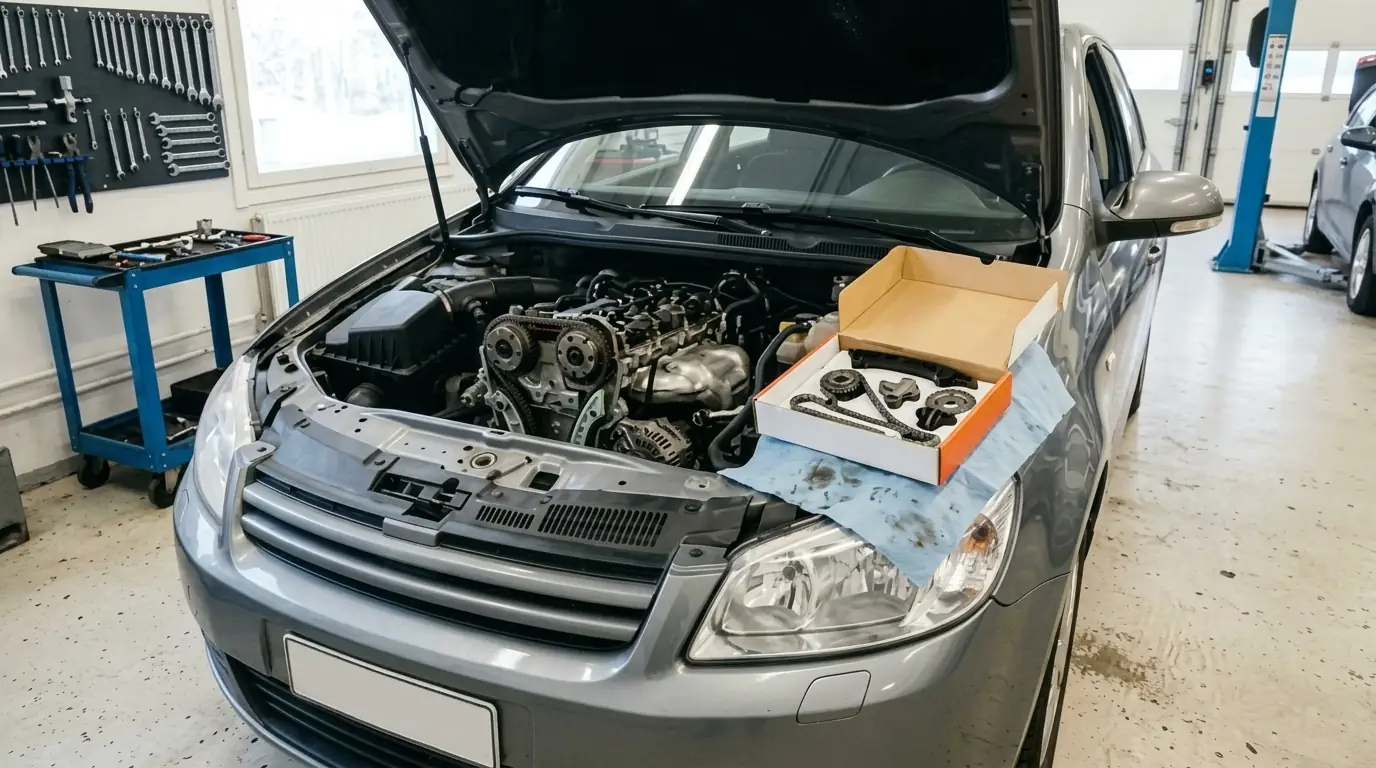
The belt does not work alone. The tensioner keeps it at the right tension, and the idler pulleys guide its path. The water pump is often on the same belt. The bearings in all of these have been turning for as long as the old belt.
The belt manufacturer Gates has long recommended replacing the belt, tensioners and idlers at the same time. Gates says car manufacturers have also adopted the practice and sell replacement kits for the whole timing drive. Bosch's damage chart shows that a seized or worn idler wears the belt's teeth and cracks the back of the belt. So an old idler can ruin a new belt.
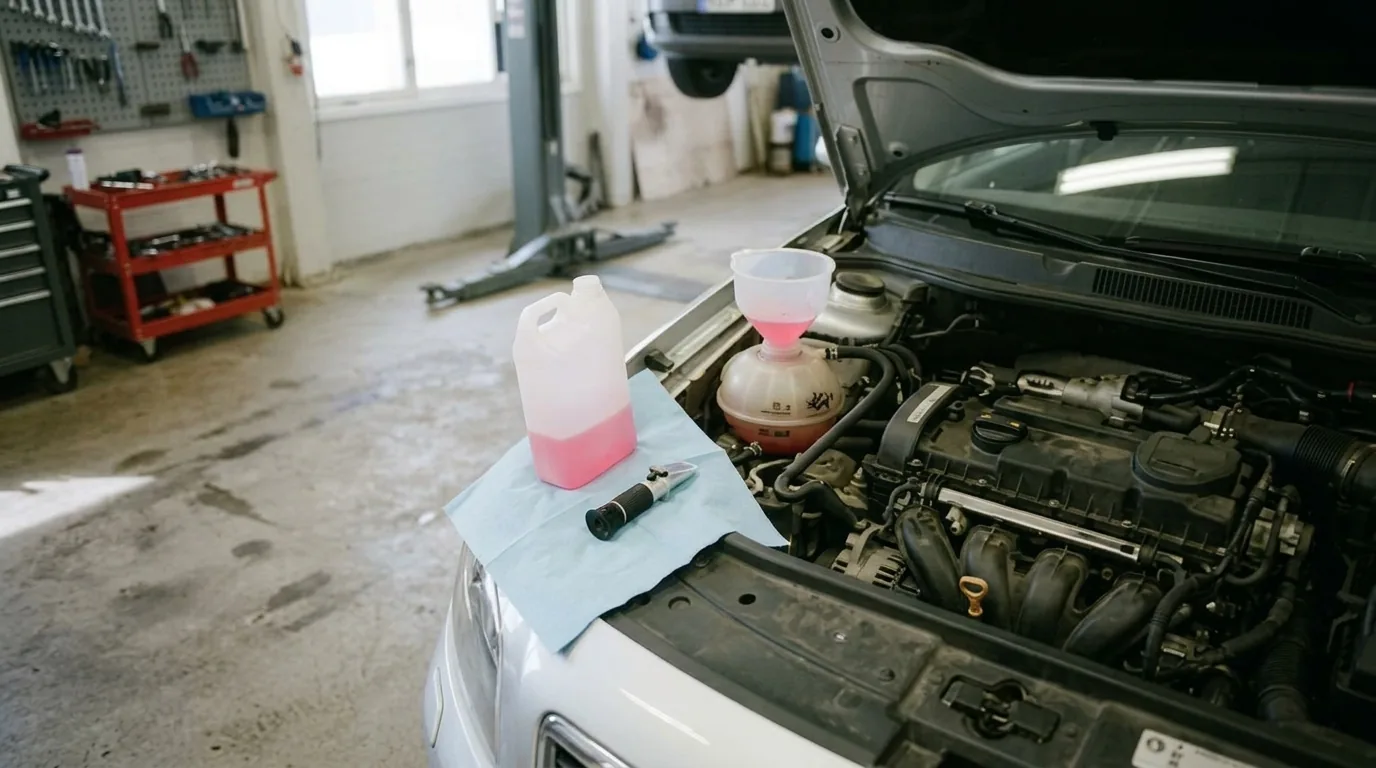
The water pump is a risk of its own. If the pump leaks, coolant can run onto the belt. According to Bosch, engine fluids such as oil and antifreeze can strip teeth off the belt. And old coolant can make the pump's seal leak, as we explain on our coolant change page.
One decision by the Consumer Disputes Board (Kuluttajariitalautakunta), published in 2009, concerned a car whose timing belt had been replaced at 155 000 kilometres, but whose old water pump had been left in place. About 26 000 kilometres later, the belt broke and the engine was damaged. According to the workshop, the cause was a failed water pump. The Board found that the buyer should have been told the pump had not been replaced, because it might not last until the next belt change.
The manufacturer's instructions decide what goes into the replacement kit, and not all of them require the tensioner or the pump to be replaced every time. We always replace the water pump when the timing belt drives it, and we change the coolant along with the pump.
Does a timing belt give a warning before it breaks?
Not reliably. There is no warning light on the dashboard for the timing belt. Bosch says the belt often snaps while the car is being driven, with no clear warning beforehand. It can also fail before its replacement interval is up. In one case decided by the Consumer Disputes Board, the belt broke when the car was about four years old. At that point, there were still about 33 000 kilometres to go before the manufacturer's limit of 160 000 kilometres.
There are sometimes signs, though. Bring the car in for a check if you notice any of these:
- There is ticking, rasping or squealing from the timing end of the engine.
- There is oil around the timing cover or near the belt pulley.
- Coolant is leaking from the timing end.
- The belt shows cracks or is missing teeth when it is exposed during a service.
- The oil pressure warning light comes on in an engine with a wet belt.
A squeal often comes from the auxiliary belt, but the cause is still worth checking.
When the belt breaks, the engine stops at once. According to Bosch, the valves and pistons can then hit each other. The damage can extend from the valves to the pistons and the cylinder head, and how far it goes depends on the engine. Do not try to restart the engine: have the car towed to a workshop. What you face then is an engine repair, not just a belt change.
A checklist for buying a used car
Before you buy a used car, it pays to find out the state of the timing belt. Go through these points:
- The service record. Look in the service book or the digital service book for the timing belt change, its date and the mileage.
- The invoice. Ask for the invoice for the change. It shows whether only the belt was replaced, or the tensioner, idlers and water pump as well.
- The sticker. Many replacement kits come with a sticker on which the workshop writes the date and mileage of the change. A sticker is a good clue, but the invoice is better proof.
- The next change. Work out from the kilometres and years when the next change is due. If it is close, allow for the change in your offer.
- No proof. If you cannot find a record or an invoice, assume the change has not been done.
According to the Consumer Disputes Board, a buyer can reasonably expect to be told if the belt change is already overdue at the time of sale. In the Board's view, the dealer would do well to record this in the contract of sale. So ask for the state of the belt to be put in writing. The decision dates from 2009, and the Board's decisions are recommendations.
On an older diesel, the belt change also matters at the inspection (katsastus). A diesel car first registered before 1 September 2016 has a smoke test at the inspection, in which the engine is revved up to the limiter several times. Under the inspection criteria of Traficom, the Finnish Transport and Communications Agency, the inspector checks before the test that the engine's servicing and belt changes have been done properly. That is why an overdue belt is worth changing before the inspection.
When should you take the car to a workshop?
Book a timing belt change when the manufacturer's mileage or time limit is getting close. If you do not know when the belt was last changed, find out now, and do not wait for symptoms. Also bring the car in for a check if there is a new noise from the timing end, or oil or coolant around the cover.
We check which engine your car has and whether it has a belt or a chain. The price depends on the engine, and we tell you what it is before the work starts. The timing belt replacement page describes what the work involves. If a chain rattles on a cold start, see timing chain replacement. If the oil pressure light has come on in an engine with a wet belt, do not drive the car to the workshop: have it towed.