Published
How long do brake pads last?
A brake pad wears every time you brake, so how long it lasts depends on how and where the car is driven. In Kia's Finnish-language service schedule, for example, the brake discs and pads are inspected at every scheduled service, which means every 12 months or 15 000 kilometres. They are replaced when necessary.
Brembo's kilometre figures are averages. As well as city driving, hilly roads wear pads quickly. Brembo advises checking the pads at least once a year or at every service.
The table sets out what makes brakes wear faster than usual. It is based on Kia's service schedule and on guidance from Brembo, the spare parts manufacturer Hella and the brake parts manufacturer Rotinger.
| Driving style or conditions | Effect on the brakes |
|---|---|
| City driving and constant stopping | There is a lot of braking, and the pads wear faster |
| Hard acceleration and braking | The friction material wears quickly |
| Hills and long descents | Constant braking heats up the brakes |
| A trailer, a roof load or commercial driving | The brakes must be inspected more often than usual |
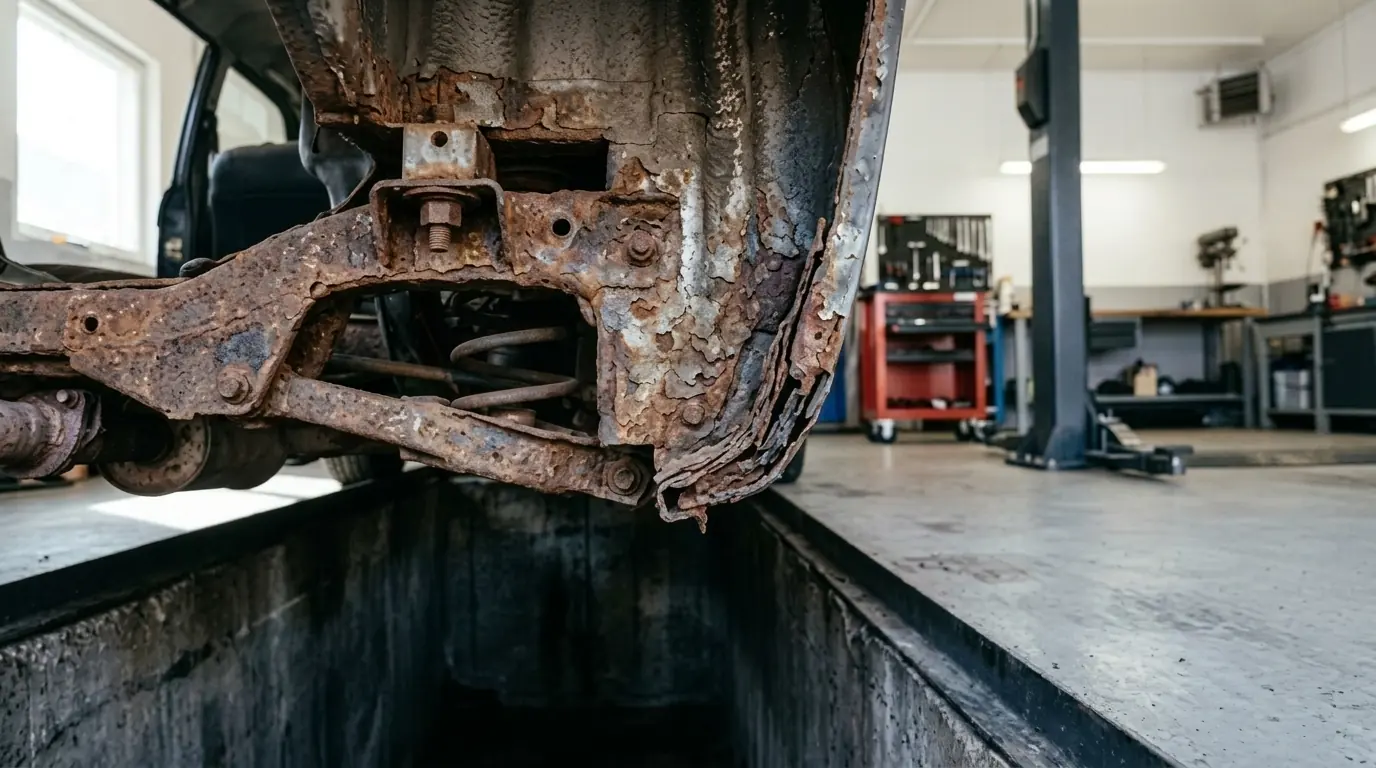
| Salt, gravel and hard frost | Salt corrodes the discs and calipers, and they must be inspected more often than usual |
| Automatic gearbox | The driver has to brake more often |
| A sticking brake caliper | The pads and discs wear quickly and unevenly |
Engine braking spares the pads, and Kia advises changing down to a lower gear on a long descent. Hybrids and electric cars also slow down with their electric motor, recovering energy as they do. According to Rotinger, this too reduces pad wear. Brakes that see little use have a problem of their own, though: rust.
Front and rear brakes wear at different rates
The front pads usually wear out first. Even so, you cannot judge the condition of the rear pads from the front ones: each axle is measured separately.
If the car has an electric parking brake, the rear brakes also hold the car when it is parked. Polestar's owner's manual, for example, says the electric parking brake locks both rear wheels. According to a guide from the brake manufacturer TRW, the parking brake's electric motor pushes the caliper piston, and with it the brake pad, against the disc. So the same pad both brakes the car and holds it still. We cover parking brake faults in our article on a handbrake that does not hold.
An electric parking brake also changes how the rear pads are replaced. According to TRW's guide, the system is put into service mode with a diagnostic tool before the pads are changed, and calibrated after the repair.
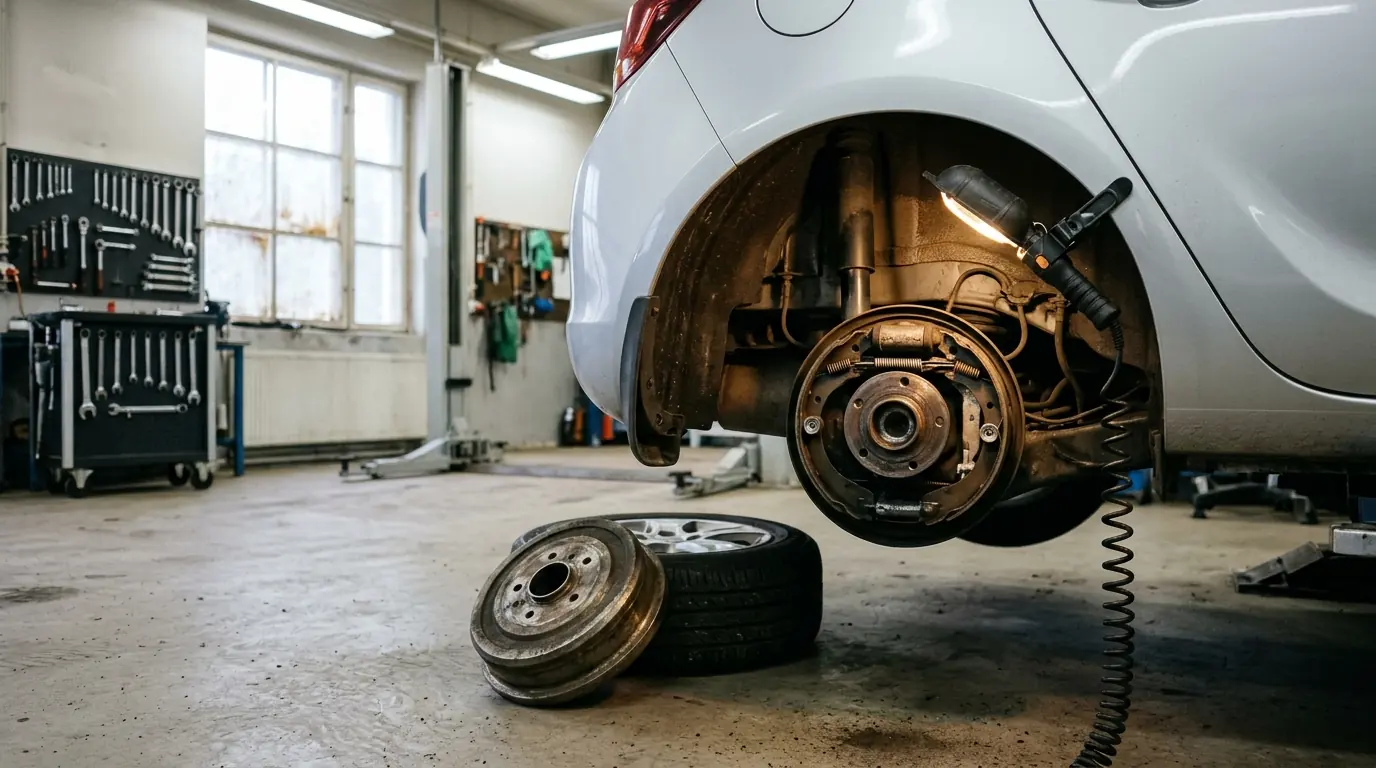
Some cars have drum brakes at the rear. Kia states in its owner's manual that its rear drum brakes have no wear indicator. That is why it advises having them checked every time the tyres are changed or rotated and whenever the front brakes are replaced.
How can you tell the brakes are worn?
On many cars, worn pads make themselves known before braking performance drops. The table is based on Brembo's and Hella's technical guidance and on Kia's owner's manual. What the warning lights mean varies from make to make, so check your own car's owner's manual.
| Sign | What it can mean |
|---|---|
| A high-pitched squeal when braking | The wear indicator is warning that the pads need replacing. The noise may come and go. |
| Metallic screeching or a scraping noise | The pad may be worn out and already scoring the disc |
| The pad wear light | A sensor embedded in the pad's friction material has been triggered |
| The red brake warning light, even though the parking brake is released | There is too little brake fluid in the reservoir |
| The car pulls to one side under braking | The wheels on an axle are braking with different force, possibly because of a sticking caliper |
| The pedal goes down further than usual | A disc has worn thin or the brake fluid has boiled |
| Vibration in the steering wheel or the pedal | The pads have worn unevenly or a disc is damaged |
The causes of vibration are explained in more detail in our article on why a car vibrates when braking.
Not every noise is a fault. According to Kia's owner's manual, de-icing chemicals spread on the road can make the brakes noisy. When a car has been standing, the surface of the discs rusts, and according to Brembo the brakes may then squeal for the first few kilometres. If the noise does not stop, it is worth having the brakes checked.
Why are discs often replaced with the pads?
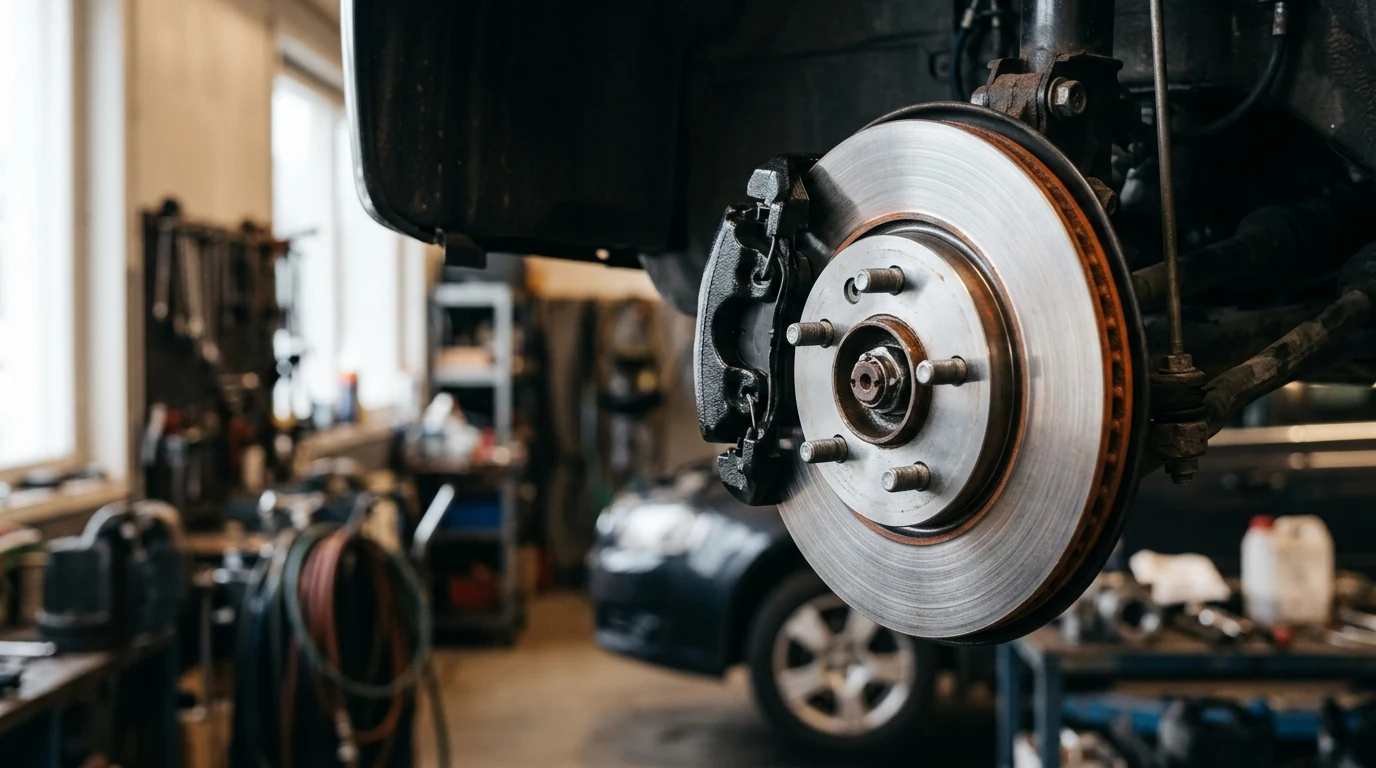
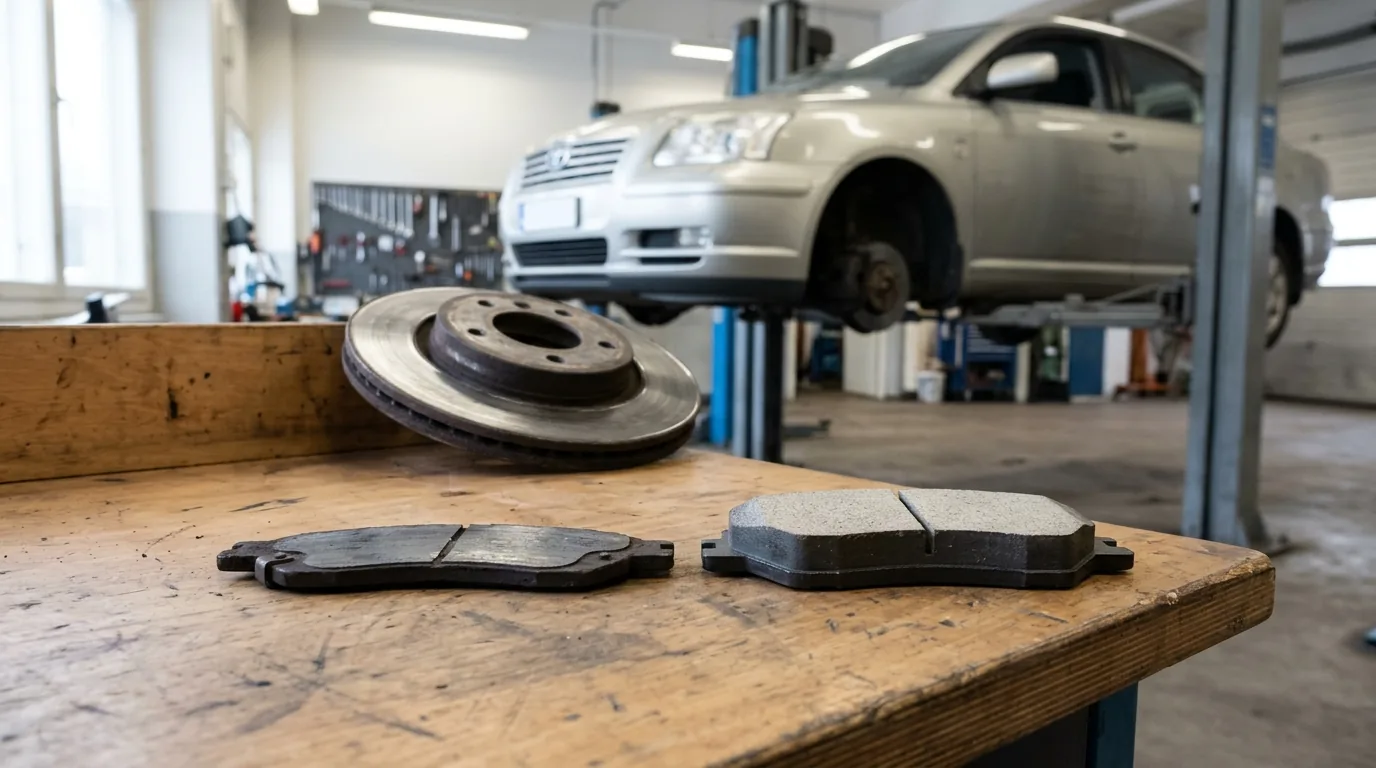
According to Brembo, many people think brake discs do not wear. In reality, the same friction that eats away the pad also makes the disc thinner. The wear limit is marked on the disc itself. According to Hella, the minimum thickness specified by the manufacturer is stamped on the outer edge of the disc or on its hub section, marked MIN TH. Brembo's guidance is to measure the thickness in at least four places and go by the thinnest reading.
There are four reasons why pads and discs are often replaced at the same time:
- A new pad needs a disc that is thick enough. According to Hella, new pads may be fitted only if the disc has not gone below its minimum thickness.
- A new disc always gets new pads. Both Brembo and Hella give this instruction.
- A pad worn right down damages the disc. A pad that is too worn scores the disc or changes its shape.
- A disc can be damaged in other ways too. Brembo advises replacing a disc if it has deep grooves, cracks, dark or blue spots, or distortion.
Brembo's rule of thumb is that the discs are replaced at every other pad change. On a car that is driven little, though, a disc can rust before it has had time to wear. Rust builds up on the discs of a car that stands still, and the braking that comes with normal driving grinds it off. At the inspection, a car fails if more than a third of a disc's friction surface is rusted or corroded.
Pads are always replaced on both wheels of an axle, as Kia's owner's manual advises. According to Brembo, discs are also replaced in pairs, even if only one of them has gone below the minimum. Otherwise the wheels on the same axle could brake with different force, and at the inspection the difference between their braking forces may be at most 30 %.
What does a workshop measure?
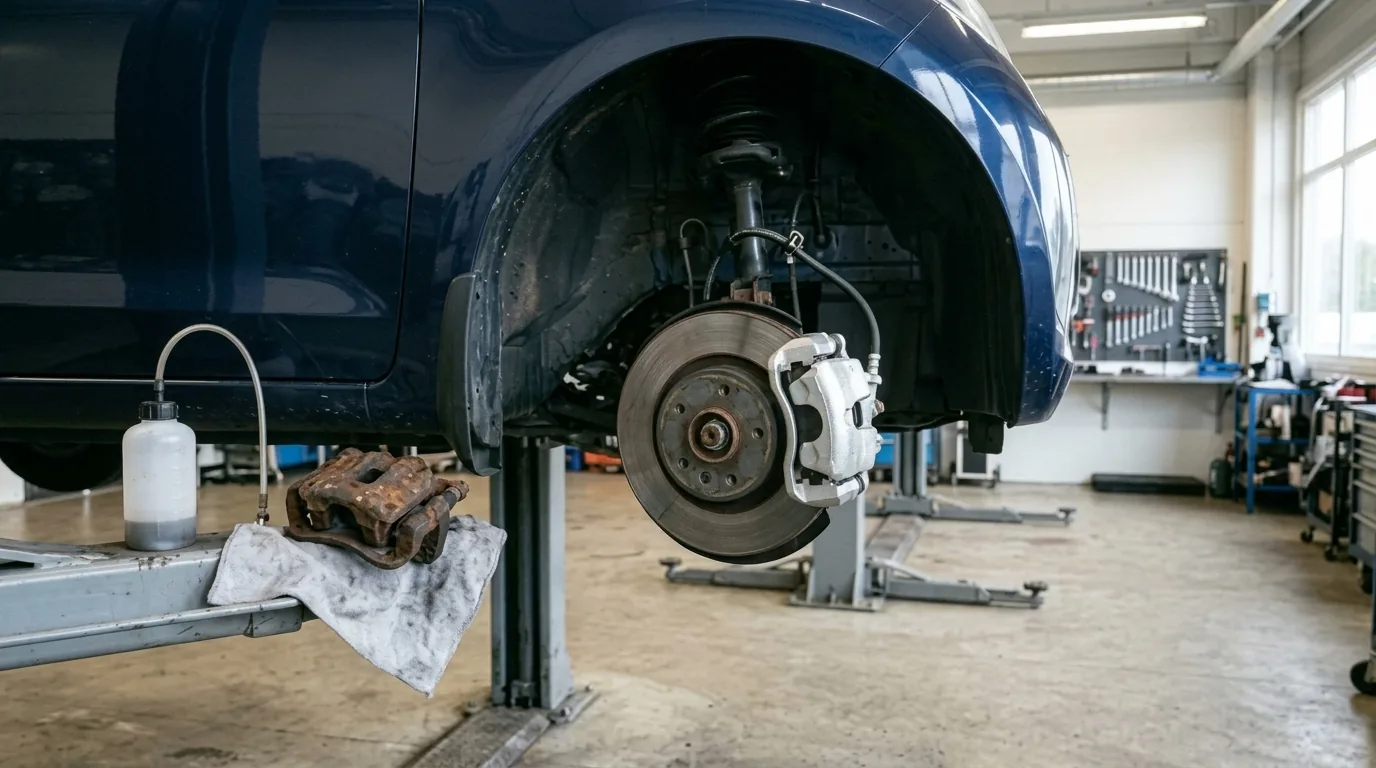
With the car on a lift and the wheels off, you can also see what is not visible through the wheel. According to TRW's repair guide, the parts that are not being replaced are also checked before any brake work. These are the brake hoses and pipes, the caliper seals and pistons, the slide pins, and the wheel hub and bearings. The brake fluid is checked for its boiling point.
| Part | What is checked | Limit |
|---|---|---|
| Brake pads | Thickness of the friction material on each pad | About 10–12 mm when new. Brembo advises replacing them when the thickness is below 3 mm. The inspection limit is 2 mm. |
| Brake discs | Thickness in at least four places | MIN TH, stamped on the disc |
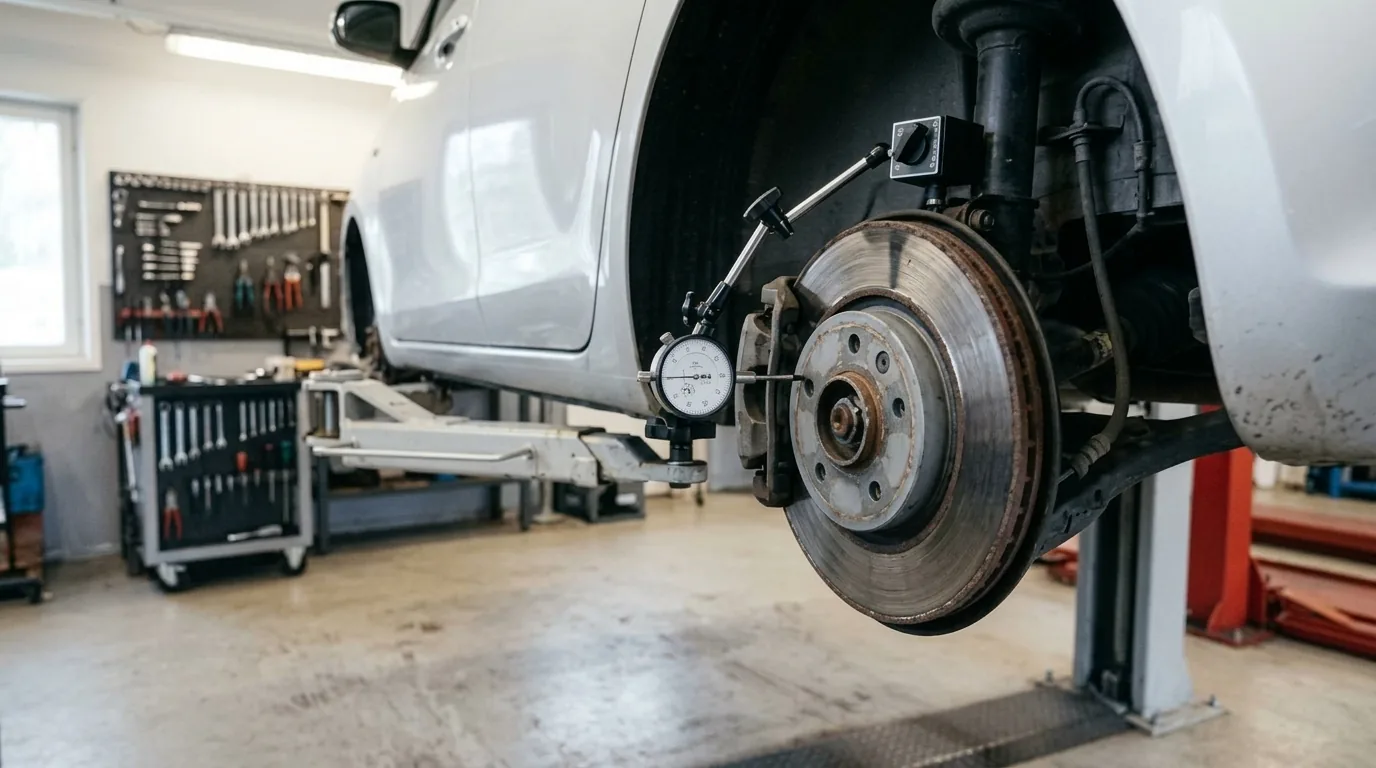
| Disc run-out | Lateral run-out with a dial gauge, with the disc on the hub | According to Brembo, usually at most 0.10 mm |
| Brake calipers | Pistons, seals and slide pins | The pins must be clean and rust-free and must move easily |
| Brake fluid | Level, condition and age | Level between the MIN and MAX marks, changed at the manufacturer's interval |
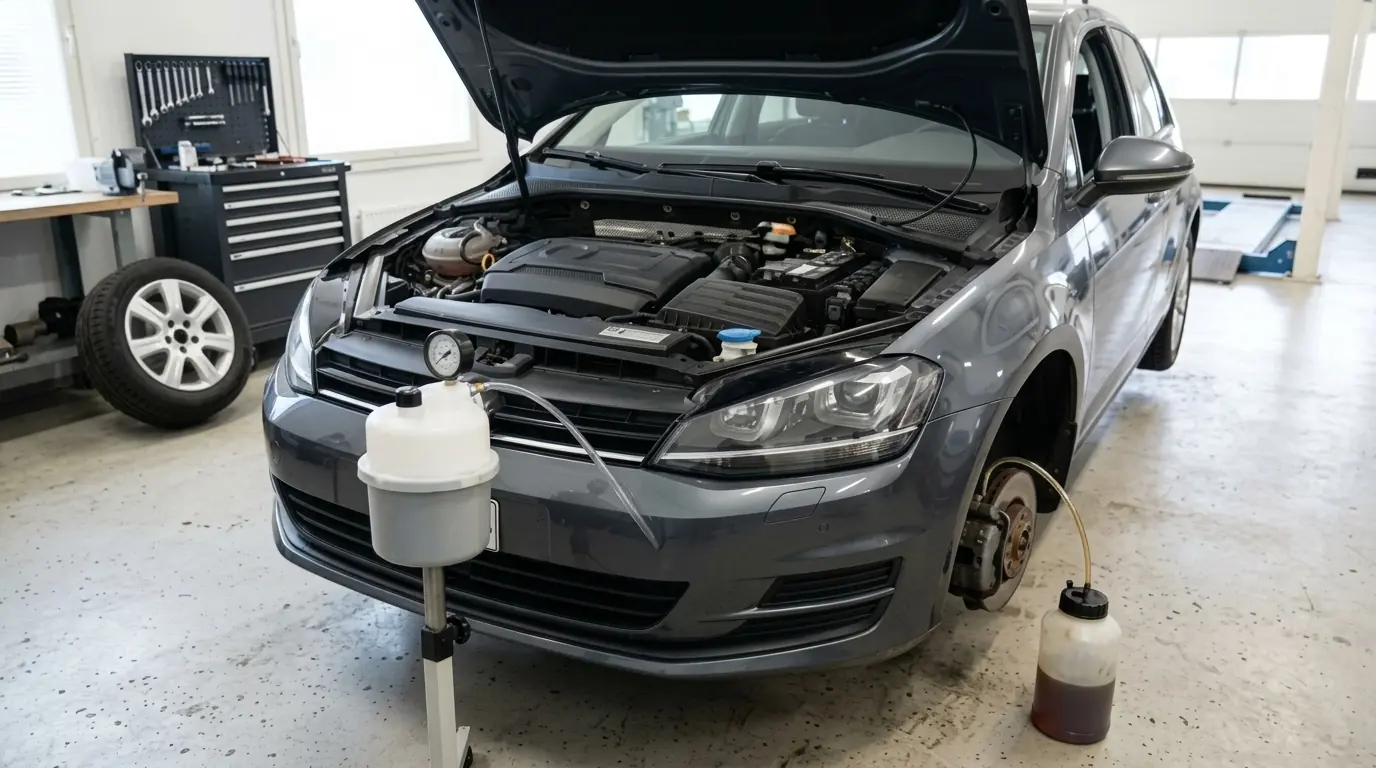
Brake fluid ages over time. According to Brembo, it absorbs moisture from its surroundings, and the water lowers its boiling point sharply. The DOT 4 marking comes from FMVSS 116, a US standard. Under it, new DOT 4 fluid must have a boiling point of at least 230 degrees, and fluid that has absorbed moisture at least 155 degrees. According to Brembo, constant braking, on a mountain road for example, can raise the fluid's temperature above 200 degrees. So fluid that has taken on moisture can boil in conditions that new fluid withstands. Vapour bubbles then form in the system, and the pedal can go to the floor without the car slowing down.
That is why the fluid has a replacement interval even though the pads do not. Brembo advises changing the brake fluid every two years or as the car's manufacturer instructs. In Kia's service schedule it is changed every 24 months or 30 000 kilometres. The Tesla Model 3's service intervals, on the other hand, have the fluid's condition checked every four years and the fluid changed if necessary. You can find your own car's interval in its service book or service schedule. We describe the work on our brake fluid change page.
Brakes at the inspection
At the inspection, the brakes are checked by eye and on a brake dynamometer (the brake rollers). Traficom, the Finnish Transport and Communications Agency, sets these limits for pads, discs and brake fluid in its inspection criteria:
| Item | Finding | Result |
|---|---|---|
| Brake pads (1.1.13) | Less than 2 mm of friction material, or less than the manufacturer's minimum | Failed |
| Brake pads (1.1.13) | Oil on the friction surfaces | Failed |
| Brake discs (1.1.14) | Thinner than the manufacturer's minimum, more than 1/3 of the friction surface rusted, or damaged | Failed, or a driving ban (ajokielto) |
| Brake fluid level (1.1.10) | Below the minimum level | Failed, or a repair notice (korjauskehotus) |
| Brake fluid (1.8) | Dirty or with sediment | Failed, or a driving ban |
| Braking forces (1.2.1) | A difference of over 30 % between the wheels of one axle, or a dragging brake | Failed |
| Braking performance (1.2.2) | A passenger car's braking ratio below 58 %; for one registered before 2012, usually below 50 % | Failed |
The inspector judges the brake fluid by eye, from how clear it is, so the inspection does not measure the fluid's boiling point. When disc thickness is measured, a margin of error of at most 1 mm is allowed. The new regulation, which comes into force on 1 February 2027, keeps the same limits.
Brakes are the second most common rejection cause at the inspection. Traficom's statistics cover the 2025 periodic inspections of passenger cars first registered between 2005 and 2021. Those inspections recorded 217 030 rejection faults in brake systems. Only the axles, wheels and suspension had more, with 308 940. Of the faults that led to a driving ban, 8 609 were in the brakes: more than half of all 15 599. Our article on why cars fail the inspection covers the other common causes.
How to check the brakes yourself
With a torch, you can make some checks on the brakes at home:
- The pad, through the wheel. Look between the spokes of the wheel: you can usually see the outer pad from there. A new pad has about 10–12 mm of friction material, and a pad with less than 3 mm must be replaced. You can see the inner pad only with a mirror or with the wheel off.
- The disc surface. Deep grooves, cracks and blue spots mean the disc must be replaced.
- The brake fluid level. The reservoir is under the bonnet, and the fluid level must be between the MIN and MAX marks. According to Kia's owner's manual, the level falls slowly as the kilometres add up and the brake linings wear. That is normal. If the level is too low or you often have to top up the fluid, take the car to a workshop.
- Brake dust on the wheels. If one wheel is clearly blacker than the others, its caliper may be sticking. Hella lists heavy brake dust on one side as one sign of a sticking caliper.
Do not put just any fluid in the reservoir. According to Kia, even a few drops of mineral oil, such as engine oil, can damage brake parts. Watch out for splashes too: brake fluid damages paintwork.
Winter is hard on calipers. In Kia's service schedule, the discs, pads and calipers are inspected more often than usual if the car is driven on salted roads or in hard frost. Tesla advises cleaning and lubricating the Model 3's brake calipers every year or every 20 000 kilometres in areas where winter roads are salted. The other winter checks are in our winter maintenance checklist.
An electric car uses its brakes less, and according to the magazine Moottori, little use can make the wheel brakes seize. That is why they must be used regularly.
When should you take the car to a workshop?
Stop driving and have the car towed to a workshop if:
- the brake pedal goes down to the floor
- the red brake warning light is on even though the parking brake is released
- you hear metallic scraping from the brakes
Kia's owner's manual warns that if you take no notice of the wear noise, the brakes will eventually lose their effectiveness.
Book a time when the brakes squeal, the fluid level has dropped close to the MIN mark or the brake fluid is older than the manufacturer's replacement interval. If the inspection is coming up, have the brakes checked before it.
At our workshop in Suutarila, brake pad replacement comes at four fixed prices (kiinteä hinta): front pads, front pads and discs, rear pads, and rear pads and discs. If you do not know whether the discs are needed, choose pads. We measure the discs during the change and show you the measurement. We do not replace discs automatically: if they are close to the minimum, we tell you so, and the price, before the work starts. A seized caliper is a separate job: see brake caliper replacement.