Published Updated
Related symptoms: handbrake not holding · handbrake stuck on · frozen handbrake · handbrake lever comes up high · rear wheel gets hot when driving · electric parking brake will not release
In winter you can often stop the brake freezing in the first place by following your car's owner's manual when you park. Parking brake faults also show up at the inspection (katsastus). In the 2025 statistics from Traficom, the Finnish Transport and Communications Agency, the parking brake test accounted for 76 812 rejection faults, nearly one in ten of all rejection faults.
«Handbrake» and «parking brake» mean the same thing. At the inspection and in owner's manuals the term is «parking brake» (seisontajarru), and on many new cars an electric switch has replaced the lever.
Handbrake frozen: how do you get it free?
In a frost, the handbrake can freeze on. Kia's owner's manual says this is most likely when snow or ice has built up on or near the brakes, or when the brakes are wet. Water gets into the cable sheath or inside a drum brake, and when the car stands overnight in the frost, the brake will no longer release. If the brake is already frozen, do this:
- Release the lever or switch as usual. Check on the instrument panel that the parking brake warning light goes out.
- Pull away gently. If the car does not move, or a rear wheel feels as if it is braking, stop.
- Do not try to force the brake off with the accelerator or by jerking the car. Driving on a locked wheel can damage the brake and the tyre. According to Kia's manual, driving with the parking brake on wears the brake pads and discs excessively.
- Let the brake thaw. A heated garage or milder weather will release it. Idling the engine does not warm the rear brakes, so there is no point trying that.
- Make sure the brake has released fully. According to Škoda, a handbrake left partly on heats up the rear brakes and impairs braking. If a wheel rim is clearly hot after a drive, the brake is dragging.
- Take the car to a workshop if the brake does not release fully. Kia gives the same advice.
Preventing it is easier than thawing it out. For a car with a manual gearbox, Kia's manual advises using the parking brake only temporarily when there is a risk of freezing: apply it until you have put the car in first or reverse and chocked the rear wheels, then release it. Kia's advice for the electric parking brake is the same. In winter it can freeze, so it is better not to use it: instead, leave the car in P, chock the wheels and park somewhere level and safe.
| Do this | Do not do this |
|---|---|
| After driving in the wet, park on level ground | Do not leave the brake on overnight after driving in the wet if a frost is forecast |
| Put the car in first or reverse, or an automatic in P | Do not try to force a frozen brake off with the accelerator |
| Chock the rear wheels if you do not apply the brake | Do not drive if the brake does not release fully |
| Let a frozen brake thaw somewhere warm | Do not leave a brake that keeps freezing unrepaired |
The advice in the table is based on the Kia and Škoda owner's manuals. Your own car's handbook always takes precedence over them. If the brake keeps freezing, the cable sheath or the brake's seals are letting water in, and the fault is worth fixing before the next cold spell.
Do you always have to use the handbrake when parking?
According to the carmakers' manuals you do, unless there is a risk of it freezing in winter. Kia's manual states that the parking brake must be applied on every parked car, so that the car cannot move without warning. In the Octavia manual, Škoda gives this order for parking:
- Stop the car and keep the brake pedal pressed.
- Apply the handbrake firmly.
- In an automatic, move the selector lever to P.
- Switch off the engine.
- In a manual, engage first or reverse gear.
- Release the brake pedal.
When you park on a hill, Kia's manual adds two things. Turn the front wheels towards the kerb when facing downhill and away from it when facing uphill, and if there is no kerb, chock the wheels.
Using it matters for another reason too. In a car with an automatic gearbox it is easy not to use the handbrake, because the car stays put in P. In our experience, it is the unused mechanism that seizes, because its moving parts rust in place. Regular use keeps the cables and the mechanism moving.
Electric parking brake will not release
An electric parking brake releases only when certain conditions are met. In the Kia EV6 manual, automatic release requires the car to be running, the driver's seat belt fastened, the doors, bonnet and tailgate closed, and D or R selected with the brake pressed. To release it manually, you must press the brake pedal and the car must be in P. If the brake will not release, go through these in order:
- Check the conditions. Make sure the seat belt is fastened, the doors, bonnet and tailgate are closed and the brake pedal is pressed.
- Restart the car. According to the Kia Sportage manual, the warning light can come on if the switch malfunctions. Switch off the engine and start it again after a few minutes.
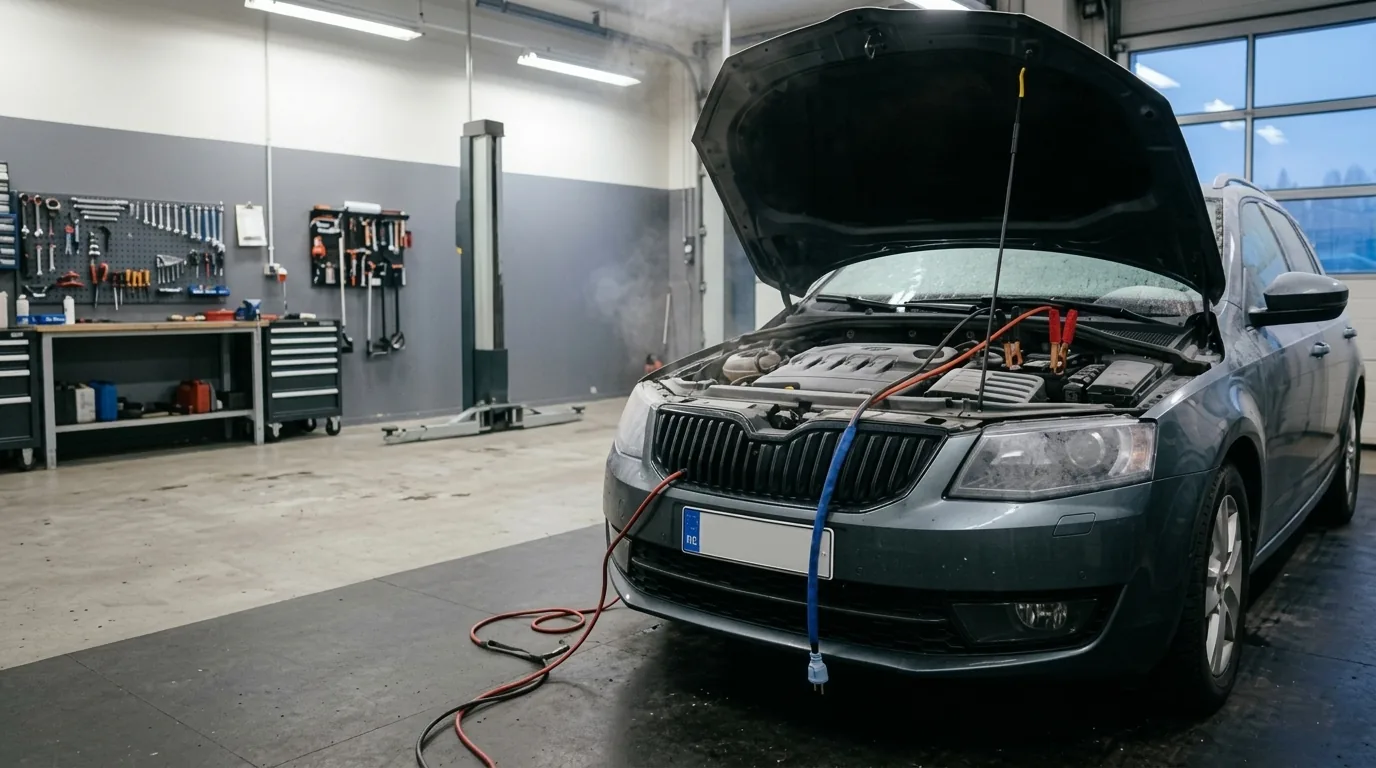
- Remember the battery. Kia says that the electric parking brake can be neither applied nor released if the battery does not have enough charge. You then need a booster battery. We explain how to give a jump start in our article on jump-starting a car.
- In winter, the brake may be frozen. Let it thaw, and do not force the car to move.
- If the brake still will not release, do not drive. Kia's manual says to have the car carried on a flatbed recovery truck or taken to a workshop so that the system can be checked.
If the electric parking brake malfunction light is on, comes on while you are driving or does not light up at all when you switch on the ignition, there may be a fault in the system. Kia advises having the car checked as soon as possible. At the inspection, an electric parking brake fails if its warning light or the system does not work.
Service mode
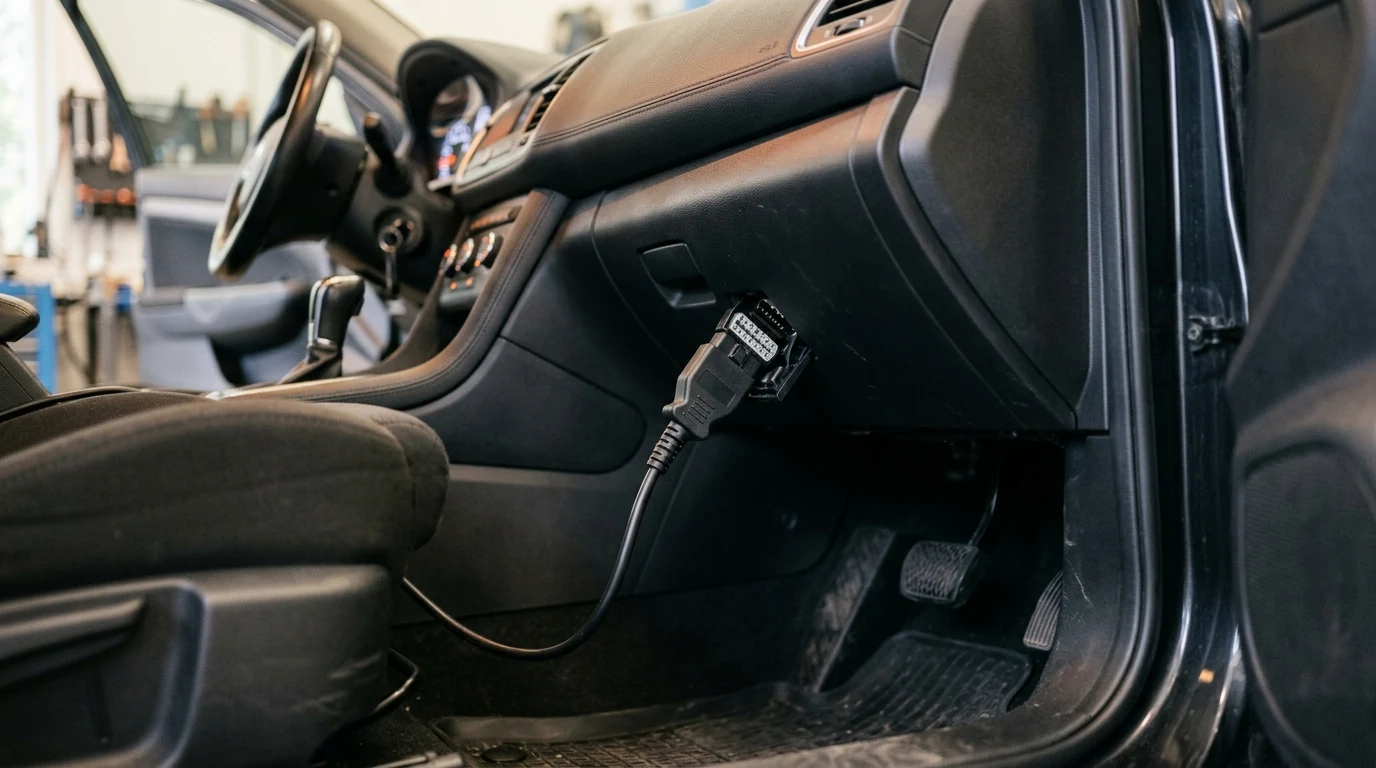
On most electric parking brakes, an electric motor on the rear caliper takes the place of the cable. Work on the rear brakes is then done in service mode. Before the pads are changed, the motor is wound back with a diagnostic tool or a function in the car itself, and after the work the system is calibrated. Forcing the piston back can damage the motor or the caliper.
Why the parking brake weakens
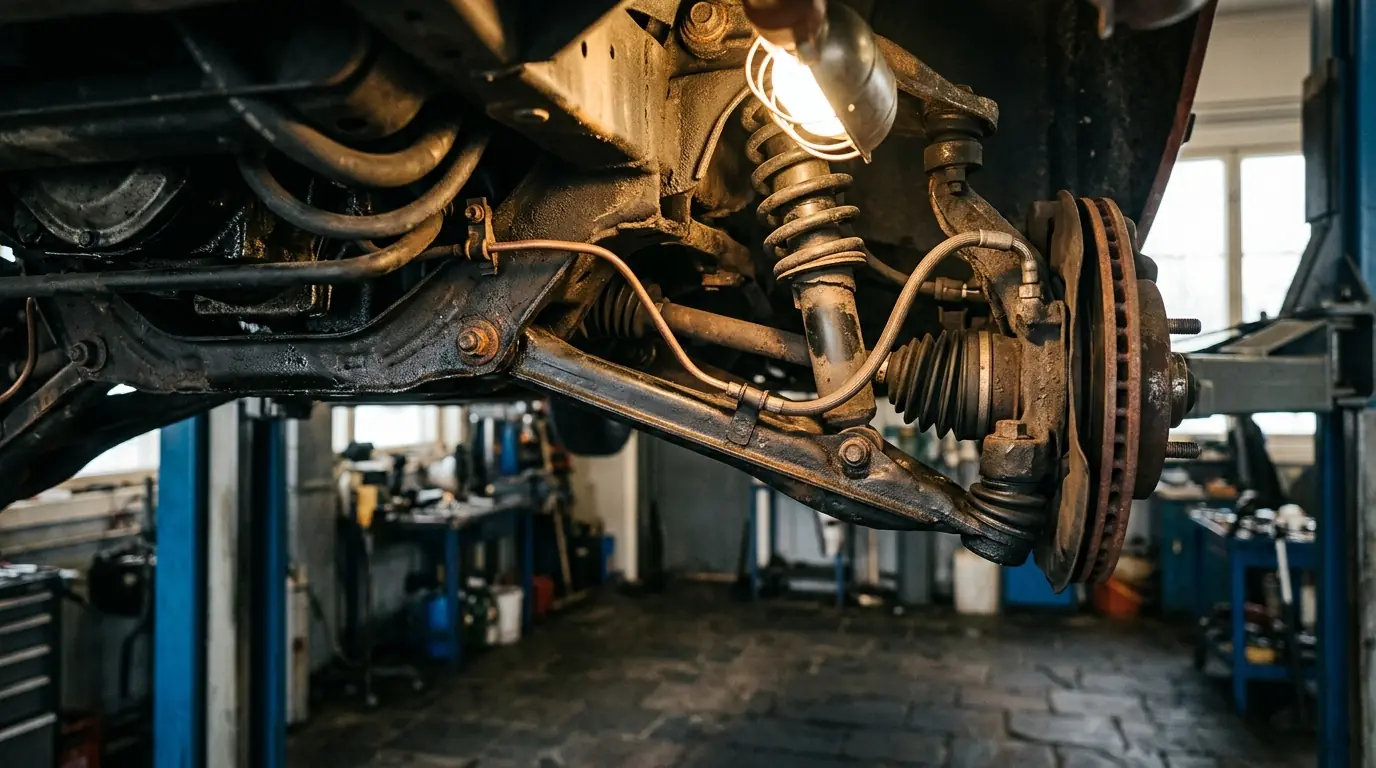
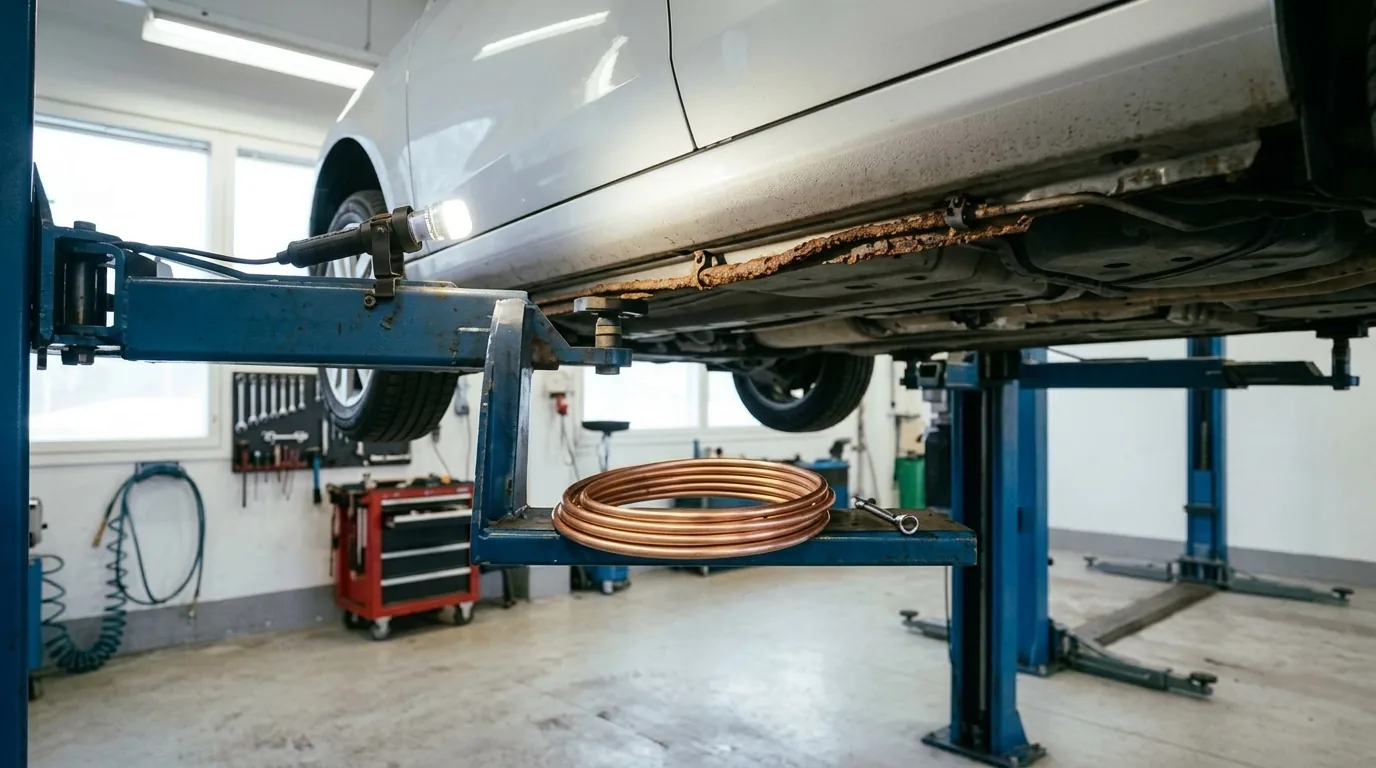
On salted roads, the cause is often rust. The parking brake cables run under the car in protective sheaths. When a sheath cracks, salt water gets in, and the cable gradually stiffens until it seizes.
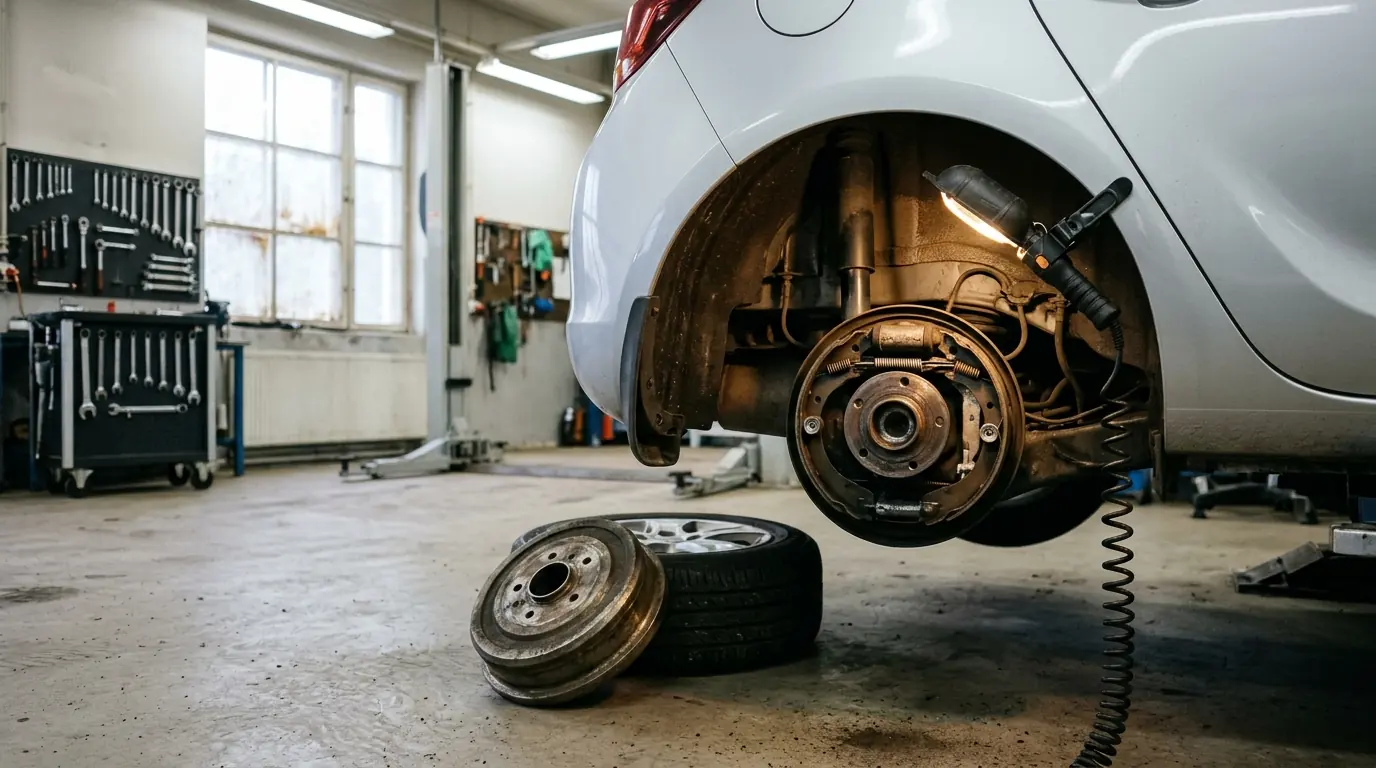
At the rear wheels, the parking brake is usually built in one of three ways:
- the rear brake caliper has a mechanism of its own that presses the brake pads against the disc
- a small drum brake with its own shoes sits inside the rear disc
- the rear brakes are drum brakes throughout.
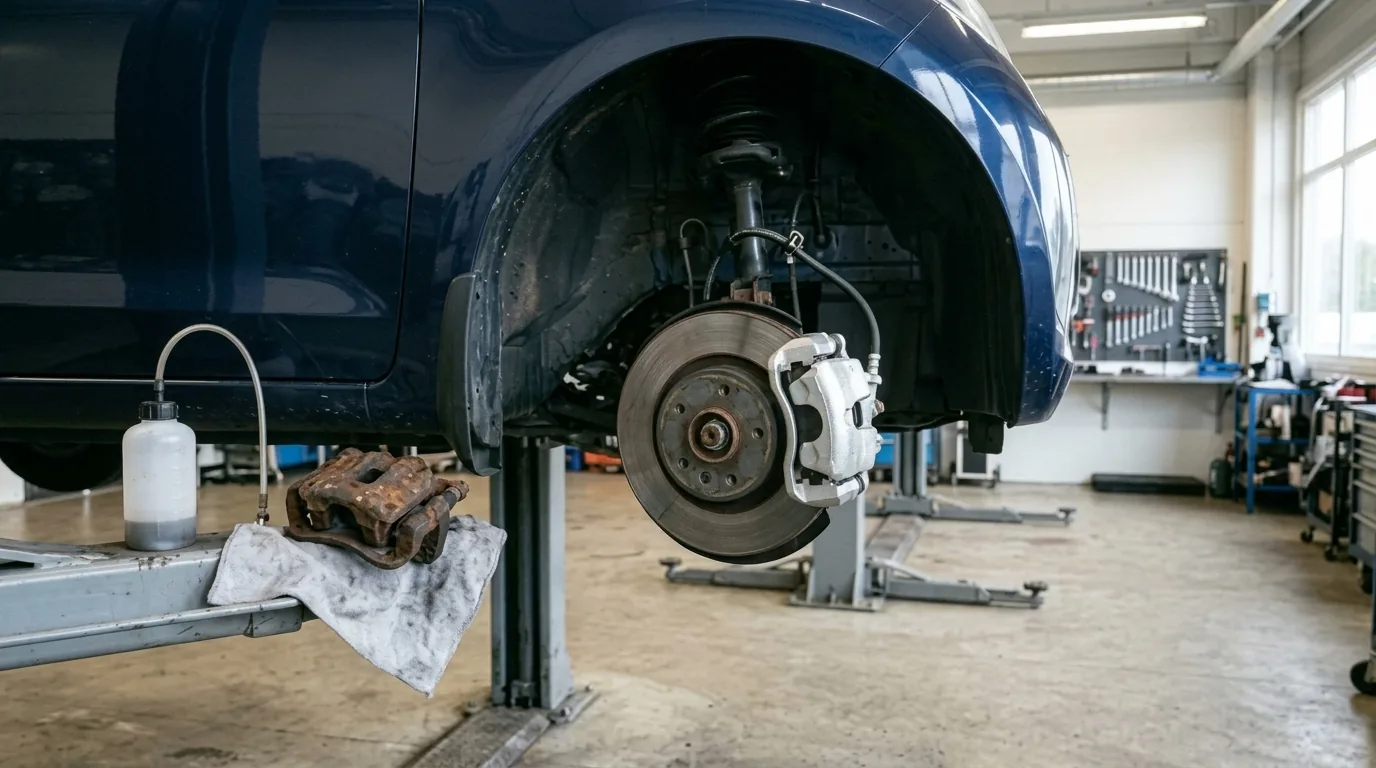
In all three, the moving parts rust and stiffen if the brake is not used. A seized mechanism gives itself away in two ways. Either the brake does not hold, or it does not release fully and keeps dragging. A dragging rear brake heats up the wheel rim and wears out the pads or shoes quickly. We go into seized rear calipers in more detail on the brake caliper replacement page.
Adjusting the handbrake is not always enough
If the lever comes up higher than usual before the brake holds, the cable has stretched or the rear brakes have gone out of adjustment. Adjustment helps when the mechanism moves freely. If the mechanism has seized, tightening the cable will not cure the fault, and a tightened brake can end up dragging. That is why the cause is worth checking on a lift before the brake is adjusted.
The parking brake at the inspection: 76 812 rejection faults
At the inspection, the parking brake is measured on a brake dynamometer, better known as the brake rollers. In Traficom's statistics, this test produced a total of 76 812 rejection faults and 22 269 repair notices (korjauskehotus) in 2025. A further 2 989 faults put cars under a driving ban (ajokielto). The figures cover periodic inspections of passenger cars first registered between 2005 and 2021. There were 1 672 937 of these inspections.
The parking brake test produced more rejection faults than the equivalent test of the service brake, where 53 446 were recorded. In the statistics, it was the fourth most common item to produce a rejection fault. It accounted for 35.4 % of the rejection faults in brake systems, and nearly one in ten of all rejection faults at the inspection came from the parking brake test. For the parking brake's own parts, such as the cables and the ratchet, only 599 rejection faults were recorded separately. So most of the faults come to light only when the braking force is measured.
The car's age shows clearly in the figures
On average, 4.6 rejection faults from the parking brake test were recorded for every hundred inspections. In older cars, the figure was several times higher:
| Year first registered | Inspections | Rejection faults | Faults / 100 inspections |
|---|---|---|---|
| 2005 | 101 227 | 11 482 | 11.3 |
| 2008 | 118 269 | 9 559 | 8.1 |
| 2011 | 128 023 | 6 234 | 4.9 |
| 2014 | 116 200 | 2 300 | 2.0 |
| 2017 | 37 576 | 428 | 1.1 |
| 2021 | 104 458 | 177 | 0.2 |
There are big differences between models too. The first six in the table are the models with the highest figure, counting only models inspected at least 5 000 times. The last two are the Mercedes-Benz C-Class and E-Class, which had more of these faults than any other model in absolute numbers: 3 302 and 2 677 rejection faults.
| Model | Inspections | Faults / 100 inspections |
|---|---|---|
| Volvo XC90 | 6 461 | 17.2 |
| Peugeot 307 | 5 219 | 12.4 |
| Kia Sportage | 8 207 | 12.0 |
| Fiat Punto | 8 322 | 11.2 |
| Citroën C5 | 5 773 | 10.9 |
| Hyundai i30 | 10 598 | 10.3 |
| Mercedes-Benz C | 37 915 | 8.7 |
| Mercedes-Benz E | 32 241 | 8.3 |
A model's figure includes all of its cars first registered between 2005 and 2021. A model with many old examples therefore climbs the list easily. The figure tells you about the condition of cars of this age at the time of their inspection, not about the model's quality when new.
What the inspection measures
On the rollers, the inspector applies the parking brake up to the point where the wheels lock, while holding the lever's ratchet button in. On a passenger car, the force allowed on the control is 400 newtons for a hand-operated brake and 500 newtons for a foot-operated one. Under Traficom's inspection regulation, the car fails if the parking brake's total braking force is below 16 per cent of the car's total mass and the wheels do not lock. If the braking force is below 8 per cent, the car is banned from driving.
A dragging brake, a ratchet that does not work properly and a loose, broken or damaged cable also lead to a rejection. An electric parking brake fails if the system or its warning light does not work. If the braking force is sufficient but the lever moves through more than three quarters of its full travel, the inspector records a repair notice.
When should you bring the car in?
Bring the car in if the handbrake lever comes up higher than usual, the car moves on a hill with the brake applied, a rear wheel gets hot while you drive or the brake keeps freezing. A malfunction light on the electric parking brake is also a reason to come in before the inspection is due.
A lift shows the condition of the parking brake. We check whether the cables move, whether the brake holds the wheels in place and whether it releases fully. We do the check as diagnostics: you get a written report with the price of the repair. We tell you the price before the work starts.
If the car has already failed on its parking brake, bring the inspection certificate with you. Inspection repairs focus on exactly the items that failed. If the cause is in the rear brakes, the work may be a brake pad replacement or a brake caliper replacement.