
Brake caliper replacement and repair
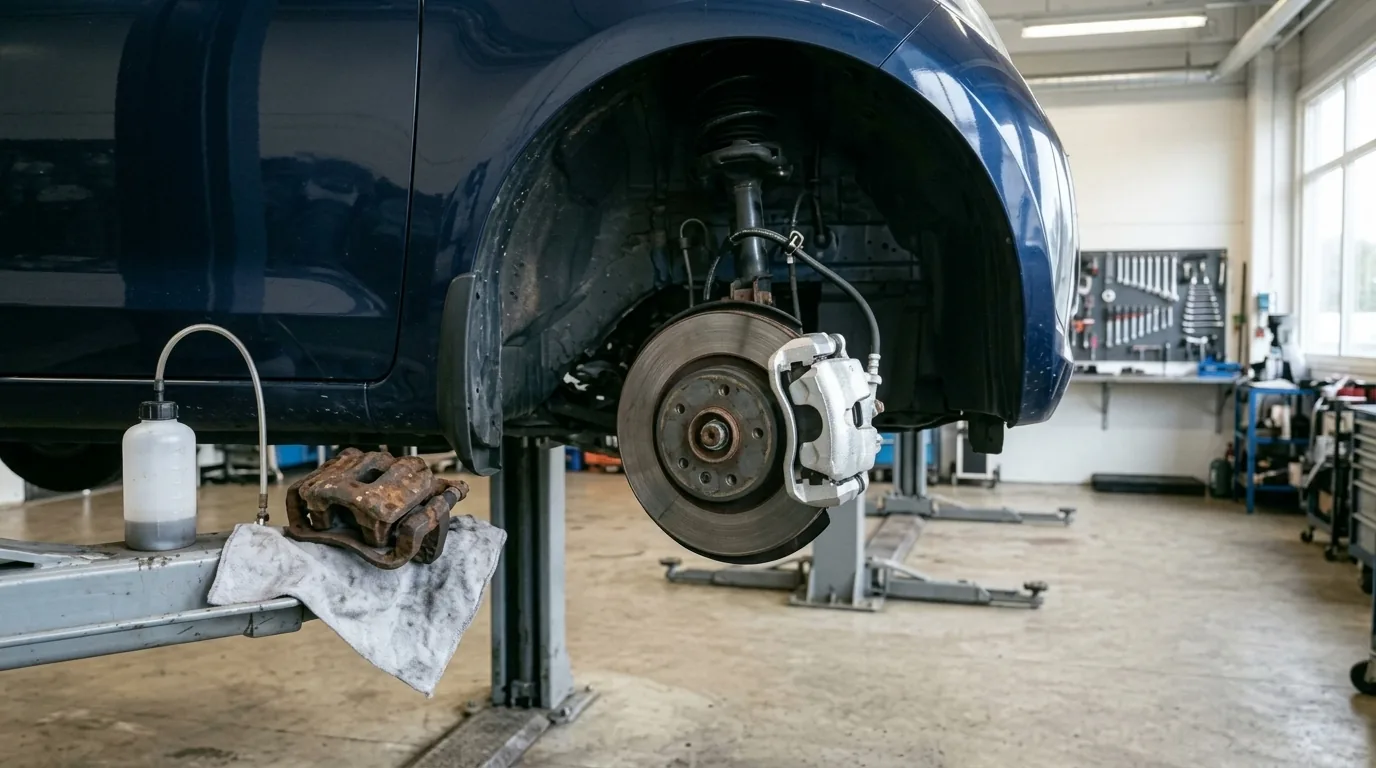
We replace a seized or leaking brake caliper, front or rear, on cars of every make, and replacing one caliper, bleeding included, usually takes about an hour. We check the car and tell you the price before the work starts.
typical price range
185–
We tell you the exact price for your car before the work starts.
- Prices include VAT
- 25,5 %
- A brake check on the lift before the work: calipers, pads, discs, hoses and the parking brake
- The faulty brake caliper replaced, parts and labour
- The caliper bracket and the pad guide surfaces cleaned, and the slide pins lubricated
How it works
Call us or drop in
Give us the registration. We confirm the price and agree a time in the same call.
We do the work
You get the car back at the time we agreed.
You pay the agreed price
No surprises on the invoice. If we find anything else, we call before we touch it.
If a brake drags and the wheel rim gets hot while you drive, book a time soon. A dragging brake wears the pads and the disc out quickly, and the repair gets dearer as it does.
Call 045 262 5950What the price includes
What the price includes
- A brake check on the lift before the work: calipers, pads, discs, hoses and the parking brake
- The faulty brake caliper replaced, parts and labour
- The caliper bracket and the pad guide surfaces cleaned, and the slide pins lubricated
- Fixing bolts tightened to the manufacturer's torque
- Brakes bled after the caliper replacement
- An electric parking brake put into service mode and calibrated with a diagnostic tool, where the car has one
- A road test, checking that the car brakes straight and the wheel does not drag
What the price does not include
- Brake pads and brake discs. A seized caliper often wears the pads and the disc out, and pads are always replaced across the whole axle. We tell you before the work whether they are needed and what they cost.
- The other caliper on the same axle. We replace it only if it is faulty too and you have accepted the price.
- Brake hoses and brake pipes, if they are cracked, swollen or rusted.
- A brake fluid change for the whole system. Bleeding renews only the fluid in the replaced caliper's line, so if the brake fluid change interval is up, the full fluid change is worth doing at the same time.
- Parking brake cables, and parking brake shoes inside the disc.
About this work in detail
The brake caliper presses the brake pads against the brake disc. When you press the brake pedal, the brake fluid pushes the caliper's piston, and the piston presses the pads onto the disc. When you lift your foot off the pedal, the piston's rubber seal pulls the piston back slightly and the pads stop pressing on the disc.
On most cars the caliper is a sliding one. It moves in its bracket on two slide pins, so a single piston is enough to press both pads. A rubber dust boot surrounds the piston. A rear caliper often also carries the parking brake mechanism or, on newer cars, the motor of an electric parking brake.
Read the full guide
How to recognise a faulty brake caliper
The most common fault is seizing. The piston or the slide pins no longer move freely, and the brake either keeps dragging or does not brake properly. The signs are:
- After a drive, one wheel rim is clearly hotter than the others, and there is a burning smell from the wheel.
- The car pulls to one side under braking, or slows down faster than usual when you lift off the accelerator.
- The pads are worn unevenly: the pads on one side are worn out while the other side still has plenty of friction material, or the inner pad is worn far more than the outer one.
- The parking brake does not hold or does not release properly, or the electric parking brake warning light comes on.
- There is brake fluid on the inside of the rim or on the tyre's sidewall. That means the caliper or its hose union is leaking.
- There is a dragging noise or a squeal from the wheel even when you are not braking.
Similar symptoms can also come from a brake hose that has swollen inside and no longer lets the fluid back, or from a seized parking brake cable. So we check the brakes before we replace a caliper.
Why a caliper seizes
In Finland a caliper usually seizes because of salt and moisture. When the dust boot cracks, water gets in between the piston and the cylinder and the piston rusts solid. The grease on the slide pins dries out and collects dirt, and the caliper no longer slides.
Rear calipers seize more often than front ones. The rear brakes do a smaller share of the braking and so rust more easily, and their parking brake mechanism can seize as well. A car that has stood for a long time is prone to it too: when a summer car is put back on the road in spring, a brake may already have stuck.
Freeing, overhaul or replacement
If only the slide pins are stiff, the caliper usually does not need replacing: cleaning and lubricating them, known in Finnish as herkistys, is often enough. When the piston has rusted solid or the seal leaks, the caliper is replaced. A caliper can in principle be overhauled with new seals and a new piston, but a new or factory-reconditioned caliper usually works out cheaper and is the more reliable fix.
Calipers do not have to be replaced in pairs. If the other caliper on the same axle is just as old and already stiff, we tell you, and you decide whether both are replaced at the same time.
When a replacement is due
A brake caliper has no replacement interval set by the manufacturer. It is replaced when it seizes or leaks. Most often a caliper is replaced only when the odometer reads 150 000 to 300 000 km, but age, salt and standing still matter more than distance. The caliper's condition is easiest to see during a brake pad change, when the wheel is off and the movement of the piston and the slide pins can be tested.
How the work is done
- We road test the car and raise it on the lift. We turn the wheels by hand, look at the pad wear and check the hoses and the parking brake. We tell you what we found and what the repair costs. Parts are ordered only once you have accepted the price.
- We remove the wheel. If the car has an electric parking brake, we switch it into service mode with a diagnostic tool.
- We close off the brake hose with a hose clamp so that as little fluid as possible runs out, and remove the hose and the old caliper.
- We clean the bracket and the pad guide surfaces, lubricate the slide pins and fit the new caliper. If the pads are worn or soaked in brake fluid, we replace them across the whole axle once you have accepted the price.
- We tighten the bolts to the manufacturer's torque, bleed the brakes as the manufacturer instructs and pump the pedal until the pads sit against the disc. An electric parking brake is calibrated with the diagnostic tool.
- We road test the car and check that it brakes straight, the pedal feels firm and the wheel turns freely.
How long it takes
Replacing one brake caliper, bleeding included, usually takes about an hour. If the pads and discs on the same axle are replaced at the same time, it usually takes about an hour longer. On a rear caliper, disconnecting the parking brake cable or calibrating an electric parking brake can add work, and bolts and bleed screws rusted solid make the job longer. The caliper is ordered for the car, so we tell you when it will be ready at the same time as we agree the price.
What the price depends on
The price of a brake caliper replacement depends on:
- Front or rear caliper. A rear caliper with a parking brake mechanism or an electric motor is usually a dearer part than a front caliper.
- New or reconditioned part. A factory-reconditioned caliper is often cheaper than a new one. We tell you which part we use.
- Caliper type. The fixed multi-piston calipers on high-performance cars cost considerably more than ordinary sliding calipers.
- Pads and discs. If the seized brake has worn them out, they are replaced across the whole axle at the same time.
- Extra findings. A cracked brake hose, a rusted brake pipe or a bleed screw rusted solid add work.
So we check the car and tell you the price before the work starts. If something turns up during the work that changes the price, we call you before we go on.
The brake caliper and the inspection
At the inspection, on most cars, the brakes are measured on a brake dynamometer, the brake rollers, one axle at a time, and the measurement shows the braking force of each wheel. The inspector may also check whether the rims warm up in driving. Under Traficom's inspection regulation, a car fails if a brake drags or if the braking forces of the wheels on one axle differ by more than 30 per cent. If the difference on the wheels of the steering front axle is more than 50 per cent, the result is a driving ban. A leaking brake line earns a driving ban, and if fluid that has leaked from a caliper is on the pads' friction surfaces, the car fails. The parking brake has minimum braking-force requirements of its own.
In Traficom's inspection statistics for 2025, 217 030 rejecting faults and 41 809 repair notices were recorded for brake systems. The service brake dynamometer test accounted for 53 446 rejecting faults and the parking brake test for 76 812. The statistics do not say how many of the faults came from a caliper, but a seized caliper shows up in exactly these measurements, as drag or as a difference in braking force.
If the car failed because of its brakes, bring the inspection certificate with you. It shows us at once what the inspector found. Read more about inspection repairs.
What you can check yourself
- Rim temperature. Drive a short distance without braking more than you need to, and hold your palm near the rim without touching it. If one rim is clearly hotter than the others, its brake is probably dragging. Do not touch the disc or the caliper, as they can be hot enough to burn.
- Brake dust. If one rim carries clearly more brake dust than the others, its brake may be dragging.
- Leaks. Look through the openings in the rim for a wet mark on the inside of the rim or on the tyre's sidewall.
- Fluid level. If the level in the brake fluid reservoir drops week by week, the system has a leak.
- Direction. Notice whether the car always pulls the same way under braking, and tell us.
When not to drive the car
A brake that drags only slightly can usually be driven gently to the workshop, but a time is worth booking soon. Do not keep driving if
- brake fluid is leaking from the caliper or a hose, or the reservoir level drops quickly
- the brake pedal feels soft or goes down further than usual
- smoke rises from a wheel or the burning smell is strong
- the car pulls hard to one side under braking
- a wheel is so stuck that the car will barely move.
An overheated brake loses its bite, and hot brake fluid can boil, so the pedal goes to the floor. In these situations, have the car towed to the workshop. Call us and we will agree a time.
If something else needs fixing
We do not start work you do not know about. If the car needs something else fixed, we call and tell you what the extra work costs and what happens if it is left undone. You decide.
Once we have seen the car, we tell you the price and whether it is a fixed price, a maximum price or an estimate. The work starts only once you have accepted the price.
We work to the motor vehicle service and repair terms approved by the consumer advisory board of the Finnish motor trade.
Related work

Front brake pads and discs
Front axle pads and discs, labour and parts, fixed price. Passenger cars with standard brakes; large or sport brakes priced on request.
299 €
Inspection repairs
We repair the faults on the rejection list, item by item. The price comes from the list, before any work starts.
Ask the price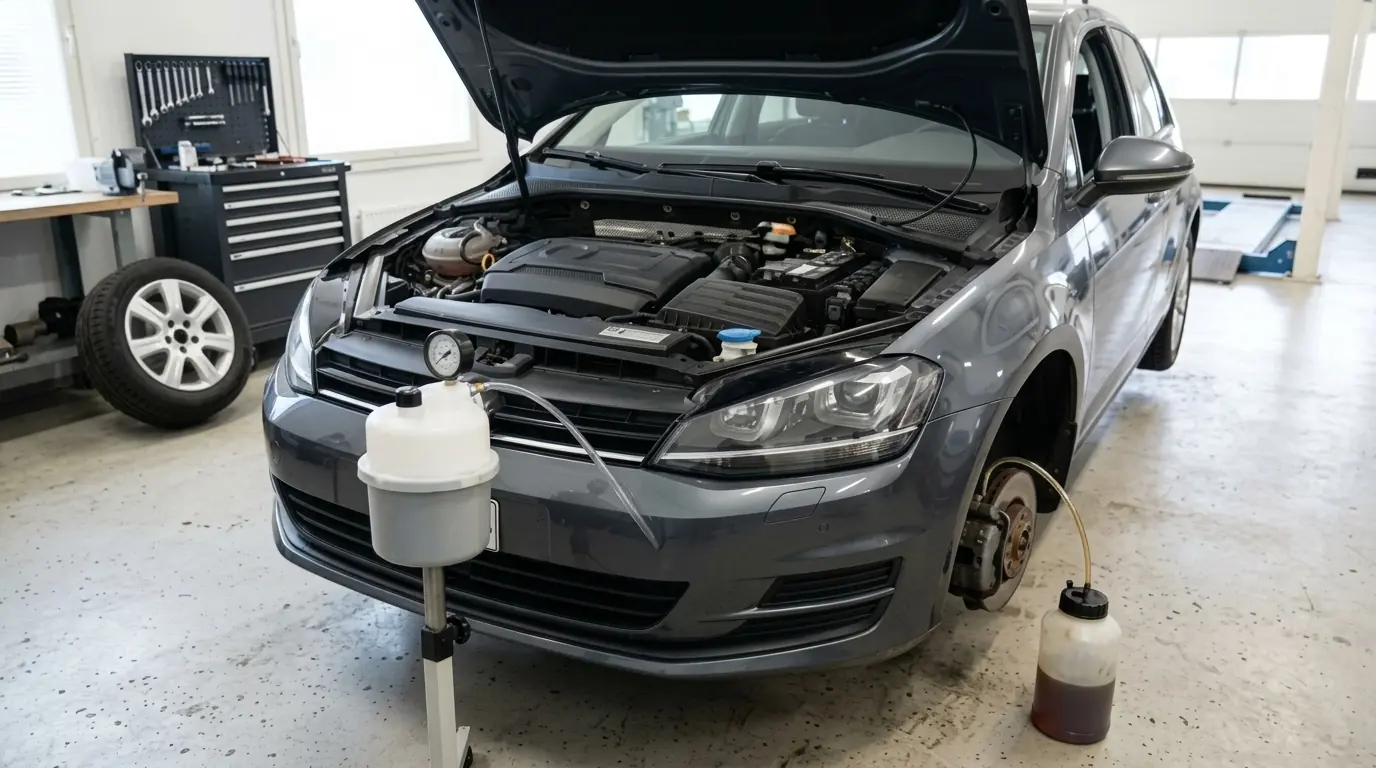
Brake fluid change
Brake fluid replaced and the brakes bled. New fluid to the manufacturer's specification.
approx. 65 €
Shall we agree a time?
Leave a booking request online or call. We confirm the time and tell you the price before any work starts.
typical price range
185–
We tell you the exact price for your car before the work starts.
- Address
- Lampputie 12 C 67
00750 HelsinkiShow on the map - Opening hours
- Mon–Fri8.00–18.00Sat9.00–15.00Sunclosed
- Phone
- 045 262 5950
- huolto@caron.fi