
Makes
Ford servicing and repairs
Ford is the fifth most common make in Traficom's inspection statistics, and its most common rejection causes are in the chassis. We service and repair every Ford model, from the Fiesta to the Kuga, and tell you the price before the work starts.
Models
Ford Focus
The Focus is the fourth most common model in the inspection statistics of Traficom, the Finnish Transport and Communications Agency, and its rejection rate is close to the average for cars of the same age. The exception is the suspension, where the Focus fails markedly more often than other cars.
42 322 inspections · 47.7 faults per hundred inspections
Ford Mondeo
The Mondeo has one of the highest mileages in the inspection statistics. For its age, its rejection rate is average, but Mondeos from 2005–2014 have about 2 to 5 times as many rear axle faults as cars of the same age.
20 896 inspections · 52.4 faults per hundred inspections
Ford: most common inspection faults 2025
The most common rejection cause was the front axle: 8.2 faults per hundred inspections, 7.5 for all cars. The next most common were springs and shock absorbers as well as the rear axle.
| Rejection cause | Faults | / 100 inspections | All cars |
|---|---|---|---|
| Front axleAxles, wheels and suspensionFor example a worn ball joint or worn control arm bushes. On many cars the joint is part of the control arm, in which case the whole arm is replaced.Repair: Lower ball joint, one side | 9 284 | 8.2 | 7.5 |
| Springs and shock absorbersAxles, wheels and suspensionFor example a broken spring or a leaking shock absorber. Shock absorbers are replaced in pairs on the same axle.Repair: Front shock absorbers | 8 341 | 7.4 | 6.1 |
| Rear axleAxles, wheels and suspensionFor example worn control arm joints and split rubber bushes.Repair: Suspension repair | 5 010 | 4.5 | 3.1 |
| Steering joints and track rodsSteeringA typical finding is a worn track rod end, which you feel as play in the steering. The alignment is adjusted after the replacement.Repair: Track rod end, outer, one side | 4 847 | 4.3 | 2.9 |
| Service brakeBrake systemsFor example worn-out brake pads, discs that are rusted or too thin, and leaking brake pipes. Pads and discs are replaced according to their condition on the lift.Repair: Front brake pads and discs | 4 744 | 4.2 | 4.9 |
| Parking brake roller testBrake systemsThe test shows whether the parking brake reaches the required force. Common causes are a seized cable and a rusted rear brake.Repair: Brake caliper replacement, one caliper | 4 206 | 3.7 | 4.6 |
All cars: every make and model in the same Traficom statistics, all ages together.
How to read the table
Traficom's statistics cover passenger cars aged 4 to 20 years and model series inspected at least a hundred times in the year. Fault figures are rejection faults per hundred inspections. The table counts faults, not cars: one rejected car can carry several. A repair notice does not fail the car, but a fault left unrepaired can fail it the next time. A make's figures are the total of all its models.
Source: Traficom, inspection statistics 2025.
What to know about this make
Ford in the inspection statistics
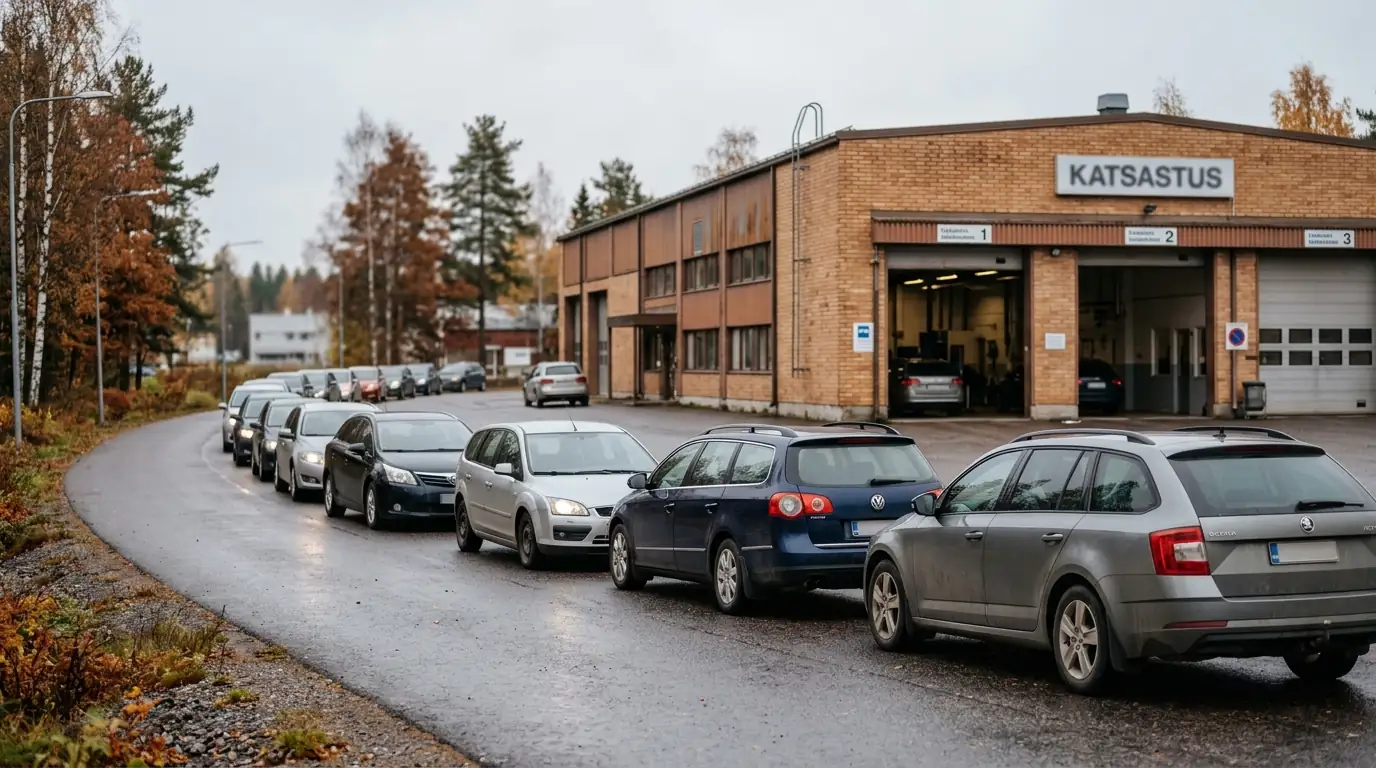
According to Traficom's statistics, 112 567 Fords went through the periodic inspection (katsastus) in 2025, the fifth-highest number of any make. They had 47.3 rejection faults per hundred inspections, against an average of 46.8 for all makes.
Of the Fords inspected, 27.8 % failed, against an average of 27.1 % for passenger cars of the same age. So as a make, Ford's rejection record is average, but the age groups differ. Fords first registered in 2005–2008 had fewer rejection faults than cars of the same age, and those first registered in 2012–2016 had more. The 2013 Fords had 45.3 faults, against 36.2 for cars of the same age.
Focus, Fiesta and Mondeo
Three models account for 77 % of the Fords inspected: the Focus (42 322 inspections), the Fiesta (23 558) and the Mondeo (20 896). Each has its own weak spot. The most common rejection cause was springs and shock absorbers on the Focus (11.0), the front axle on the Fiesta (12.5) and the rear axle on the Mondeo (8.1). The Fiesta's figure is more than one and a half times the 7.5 for all cars. Yet the Fiestas had been driven the least of the three: their median mileage was 121 000 km, against 252 000 km for the Mondeos. The figures by age group are on the models' own pages: Focus and Mondeo.
Front axle, suspension and rear axle
Ford's three most common rejection causes are all in the chassis. There were 8.2 front axle faults (all cars 7.5), 7.4 in springs and shock absorbers (6.1) and 4.5 on the rear axle (3.1). Suspension faults outnumbered those on cars of the same age in every year of first registration from 2005 to 2014, and rear axle faults did so in every year from 2005 to 2017.
In total, rejection faults in axles, wheels and suspension came to 21.9 per hundred inspections, against 18.5 for all cars. A suspension fault can make itself felt as clunking on an uneven road, but play in the front and rear axles is often only found on the lift. The most common jobs are ball joint replacement and suspension repair for the other joints and the control arms.
Faults in steering joints and track rods stood at 4.3 on Fords and 2.9 on all cars. Fords first registered in 2009–2017 had more of them than cars of the same age in every one of those years.
Fewer faults in the brakes and underbody
Fords fail on brakes less often than the average car. There were 4.2 service brake faults (all cars 4.9), 3.7 in the parking brake roller test (4.6) and 2.5 in the service brake roller test (3.2). There is less underbody rust, too: faults in the sills and floor pan stood at 1.8, against 2.7 for all cars.
Repair notices
In 2025, Fords received a total of 80 381 repair notices (korjauskehotus), or 71.4 per hundred inspections, against 59.9 for all cars. Of these, 61 % concerned lights and electrical equipment, and the most common items were the number plate light, the dipped beam and the front position light. There were 6 699 notices for the windscreen and its wipers and washers. The exhaust system drew 4.7 notices per hundred inspections and the brake light 4.5, against 2.2 and 2.3 for all cars. Read more: what to do about a repair notice.
Before the inspection
Before a Ford goes in for its inspection, it is worth having the chassis checked on a lift: the ball joints, the control arms and their bushes front and rear, the shock absorbers, the springs and the track rod ends. That is where Ford's four most common rejection causes lie. When play is found in advance, the car can be repaired before the inspection.
Servicing
A scheduled service follows Ford's service schedule. The schedule varies with the model, the engine and the model year, and the service book shows what the next service includes.
When it is urgent
- The brake pedal is soft or sinks to the floor, or the car pulls hard to one side when braking. Have the brakes checked before the next drive.
- There is play in the steering or the car wanders in its lane without steering input. A front axle or steering joint may be worn out.
- The parking brake does not hold on a slope or releases by itself. Have the rear brake or the cable checked before parking on a slope again.
- The engine warning light flashes. A flashing light usually means a misfire, which can damage the catalytic converter.
- The coolant warning comes on or the temperature gauge rises. Stop in a safe place and follow the owner's manual: some makers advise letting the engine idle briefly before switching off.
If the Ford failed its inspection
A repaired car can be approved at a re-inspection if it is presented within a month of the rejection. The re-inspection checks the items where faults were found, so the repair addresses the items on the rejection report. After a month, the car needs a new periodic inspection. If the car was inspected on time and not banned from driving, it may be driven for at most two months after the rejection.
Repair: Inspection repairs
A passenger car is first inspected four years after its first registration and then every two years. A car more than ten years old is inspected every year.
Work we do on this car
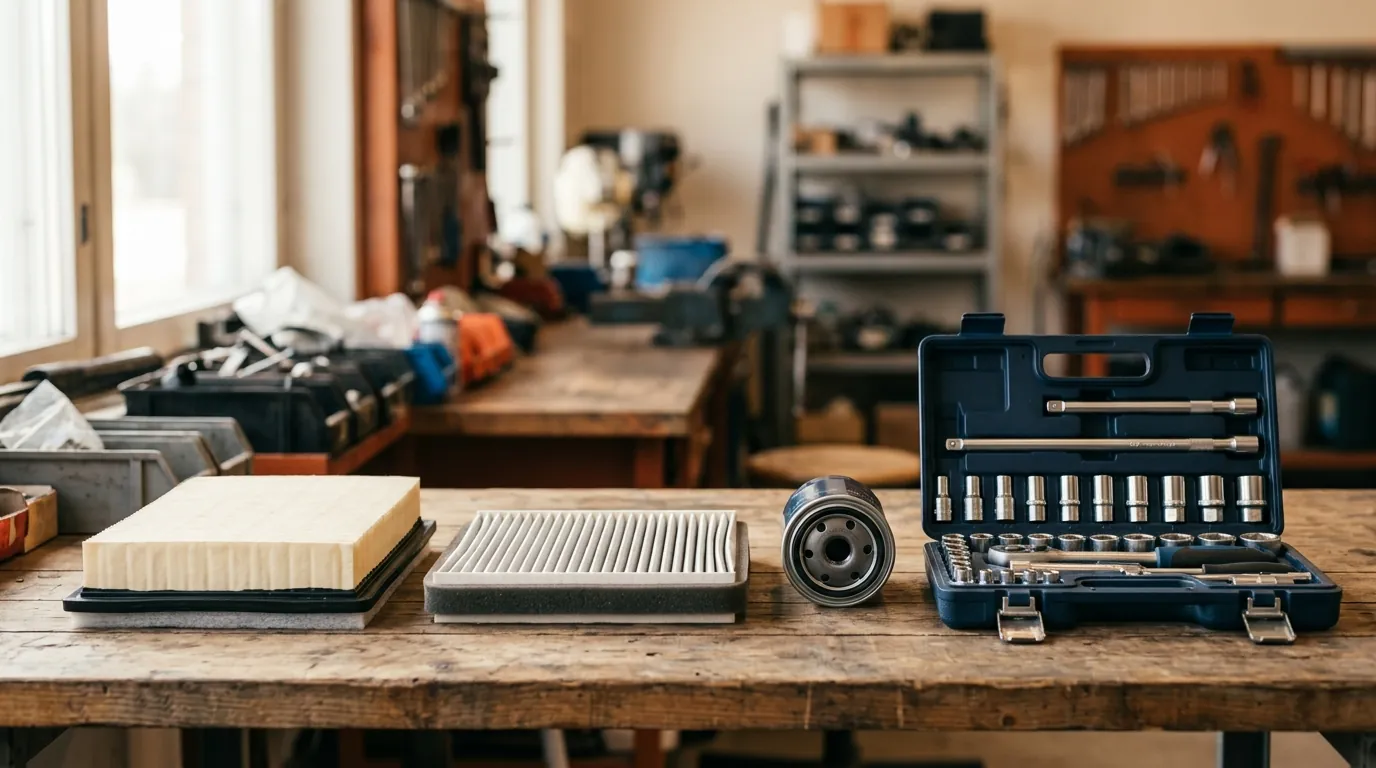
Scheduled service
The scope varies from car to car, so we tell you the price before the work starts.
approx. 189 €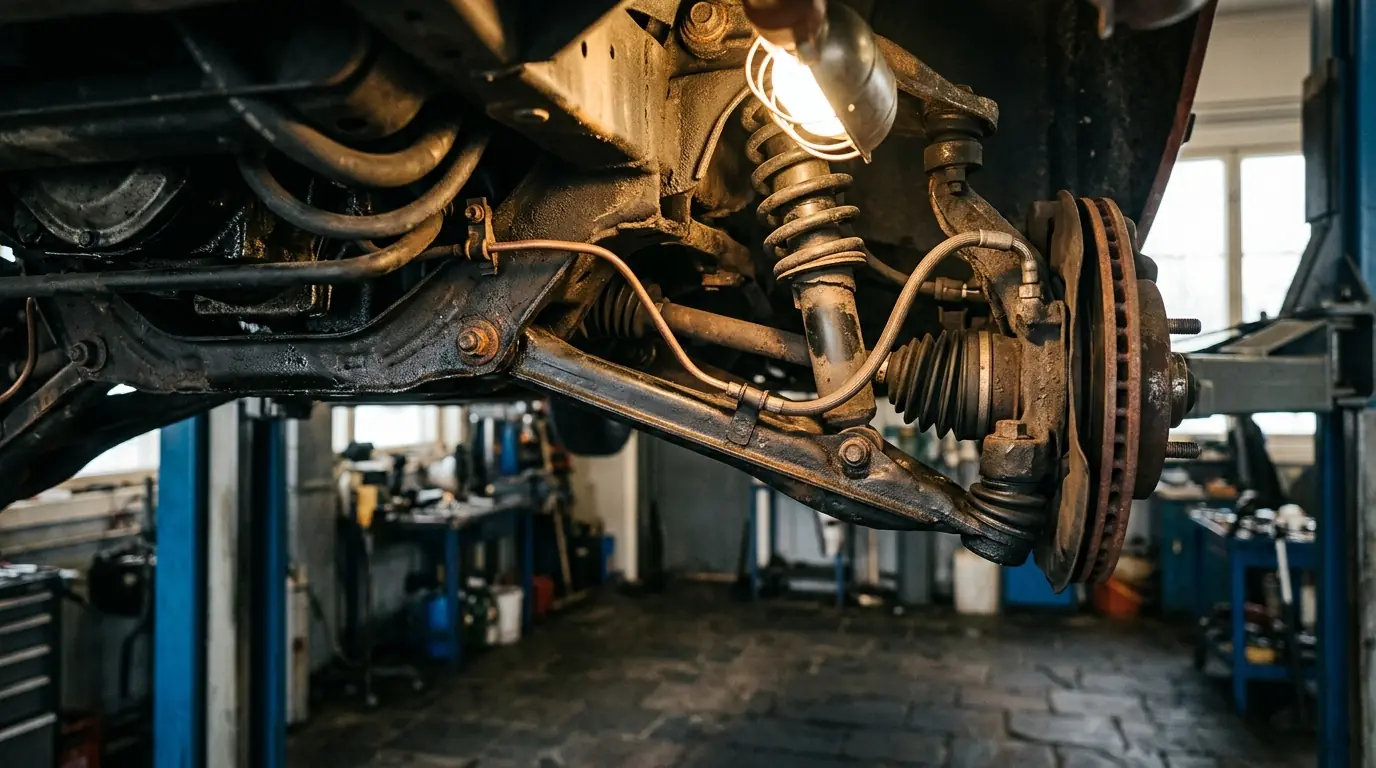
Inspection repairs
We repair the faults on the rejection list, item by item. The price comes from the list, before any work starts.
Ask the price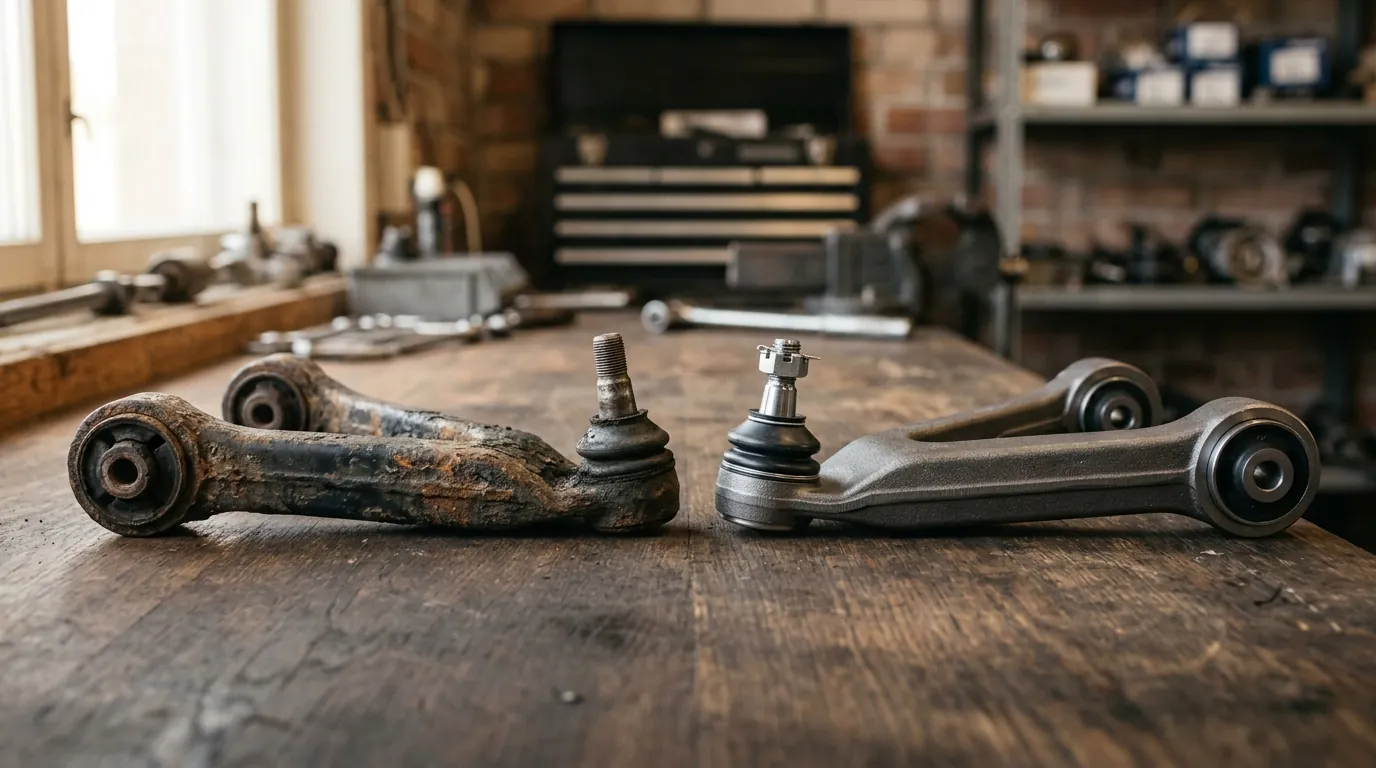
Suspension repair
Control arms, joints and shock absorbers. The price is assessed from what the lift shows.
Ask the price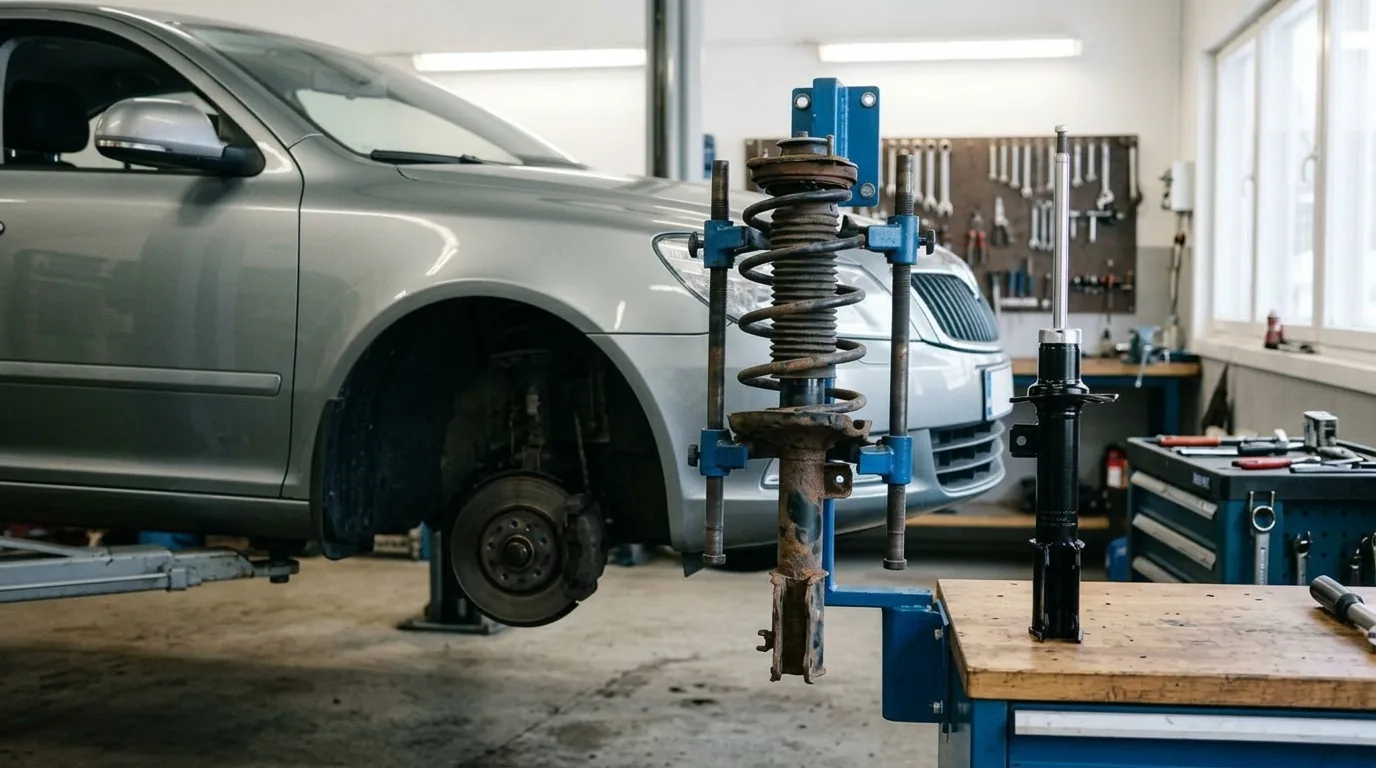
Front shock absorbers
Both front shock absorbers, as a pair. We check the springs and top mounts at the same time.
390–550 € 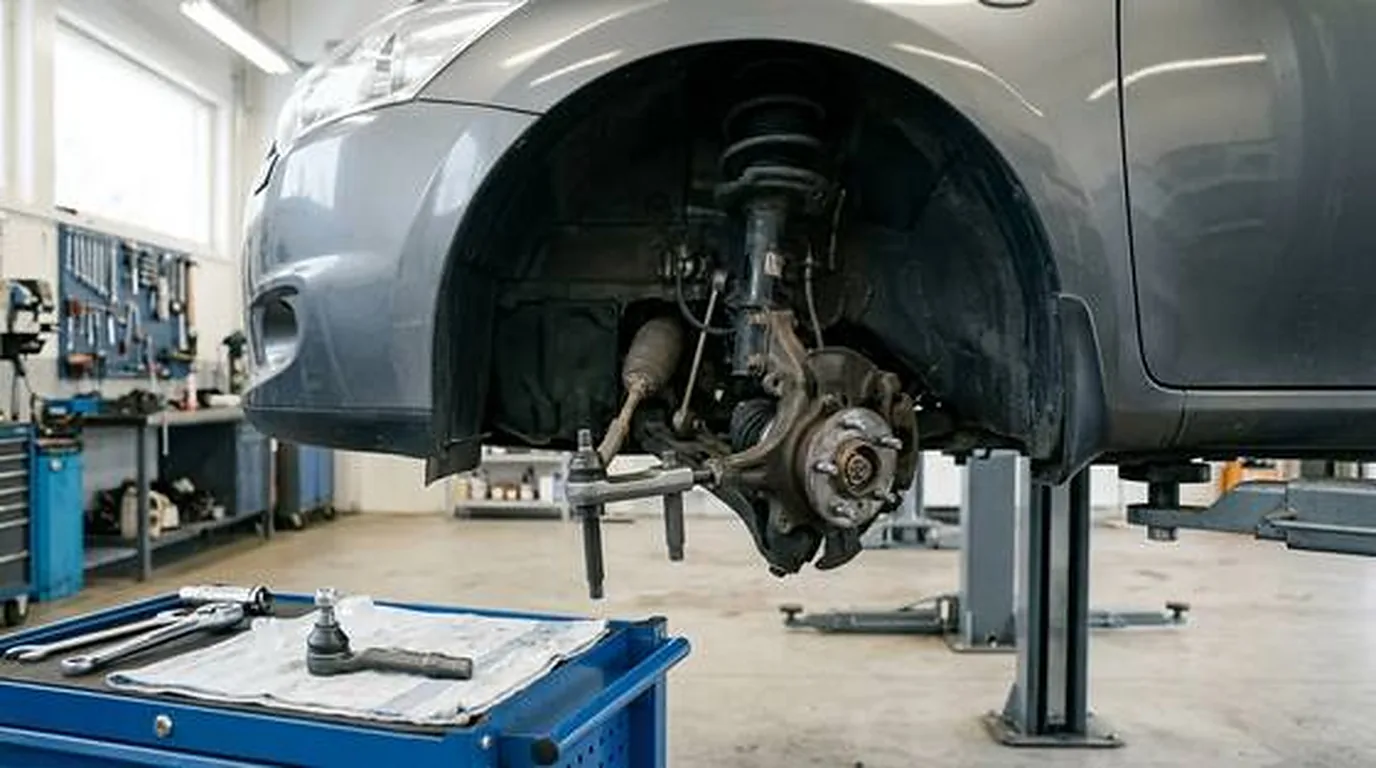
Track rod end, outer, one side
The outer track rod end replaced, part and labour. The toe is set after the swap, and we tell you that price too before the work starts.
120–170 € 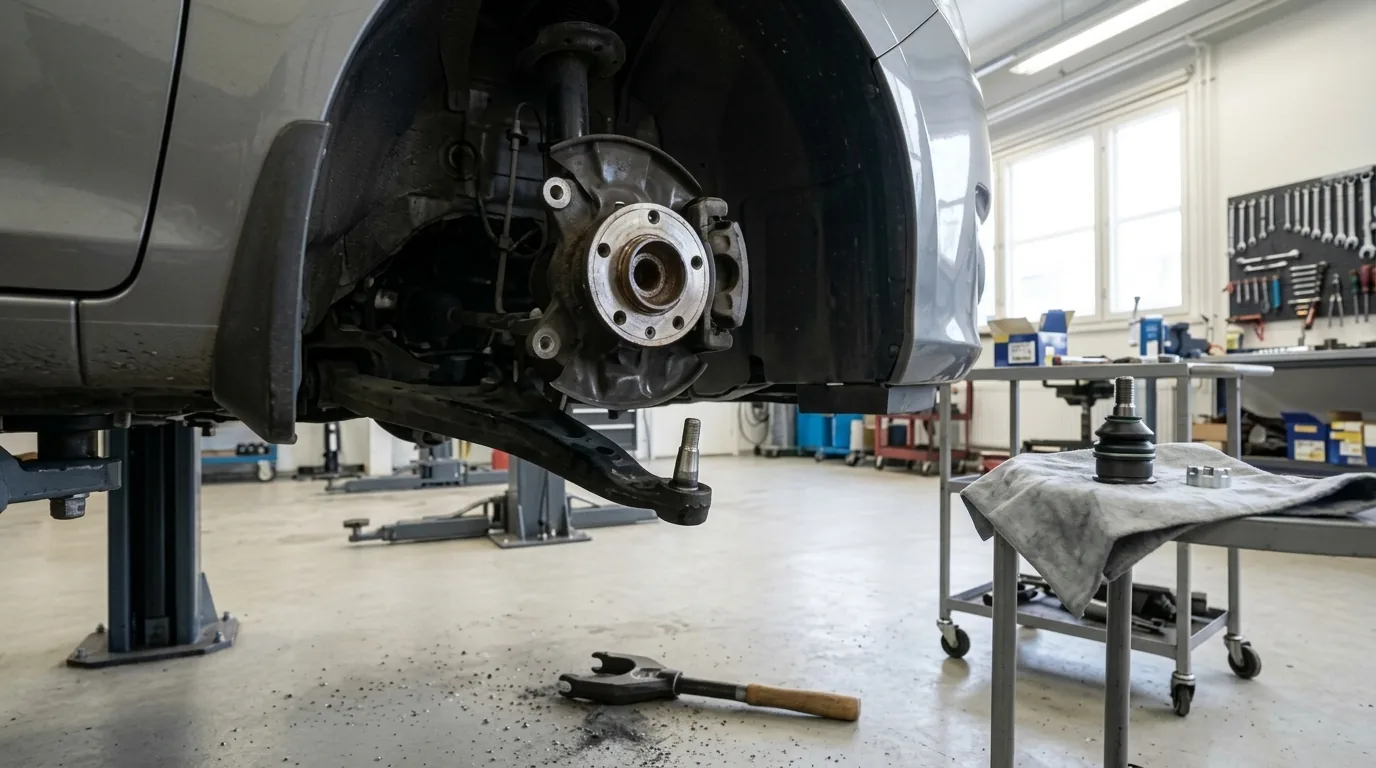
Lower ball joint, one side
One lower ball joint replaced, part and labour. If the joint is part of the control arm, we tell you the price of the whole arm before the work starts.
140–215 €
Read next
16 November 2026
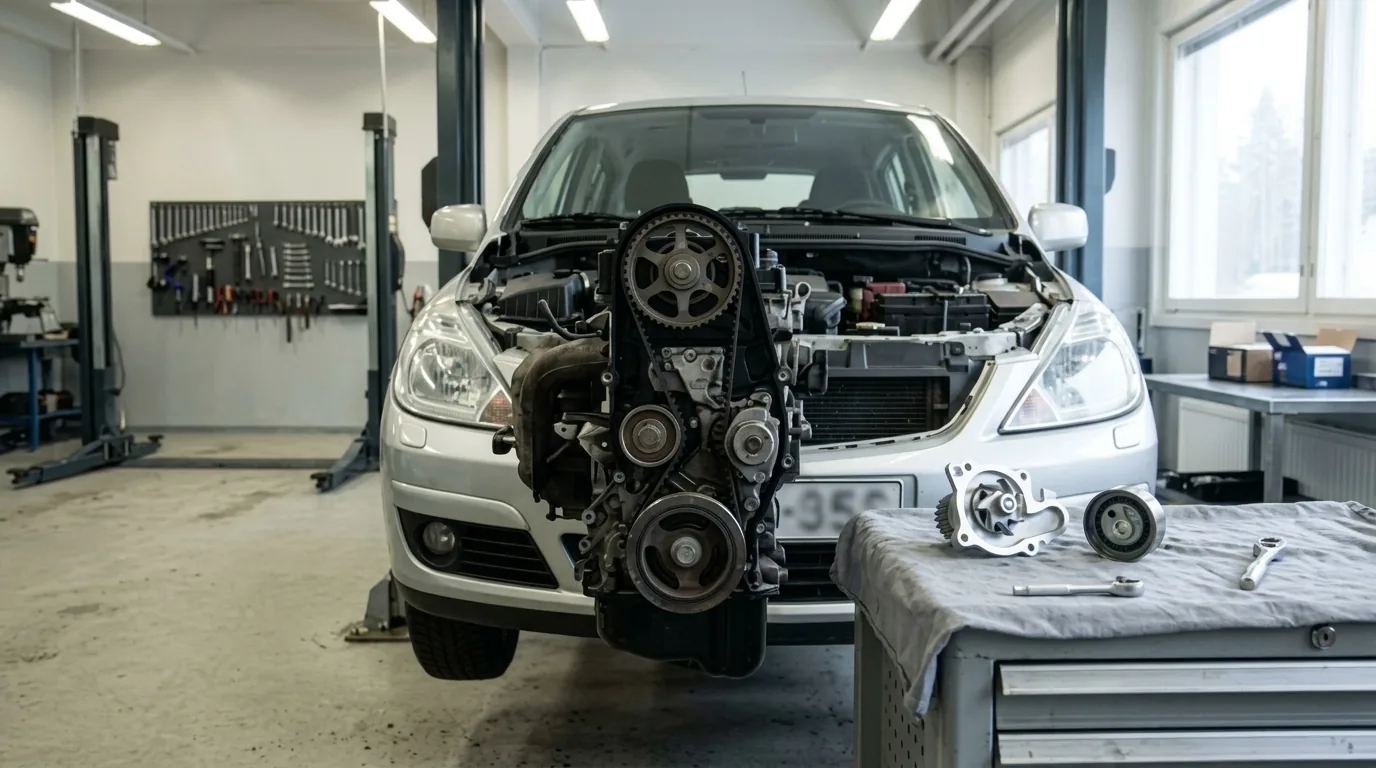
Ford 1.0 EcoBoost timing belt: interval and replacement
The timing belt on Ford's 1.0 EcoBoost runs inside the engine, in oil. In 2026, Ford announced a new replacement interval for the belt of about 160 000 km or six years. Your own car's interval is checked in Ford's service schedule, and the change is a considerably bigger job than an ordinary timing belt change.
10 November 2026
Inspection rejection rates and faults by make, 2025
In the 2025 inspections, Toyota and Audi failed least often and Citroën and Renault most often. The tables give each make's rejection rate, faults, mileage and rejection causes.
10 November 2026
Inspection statistics 2025: rejection rate, most common faults and repair notices
Passenger cars in Finland went through 2 184 538 periodic inspections in 2025, and 30.4 % of them ended in a rejection. Of the rejection faults on cars first registered between 2005 and 2021, 67.1 % were in the axles, wheels and suspension or in the brakes. We have set out the 2025 figures from Traficom, the Finnish Transport and Communications Agency, in tables.
10 November 2026
Clunking noise from your car: why it happens and when it is urgent
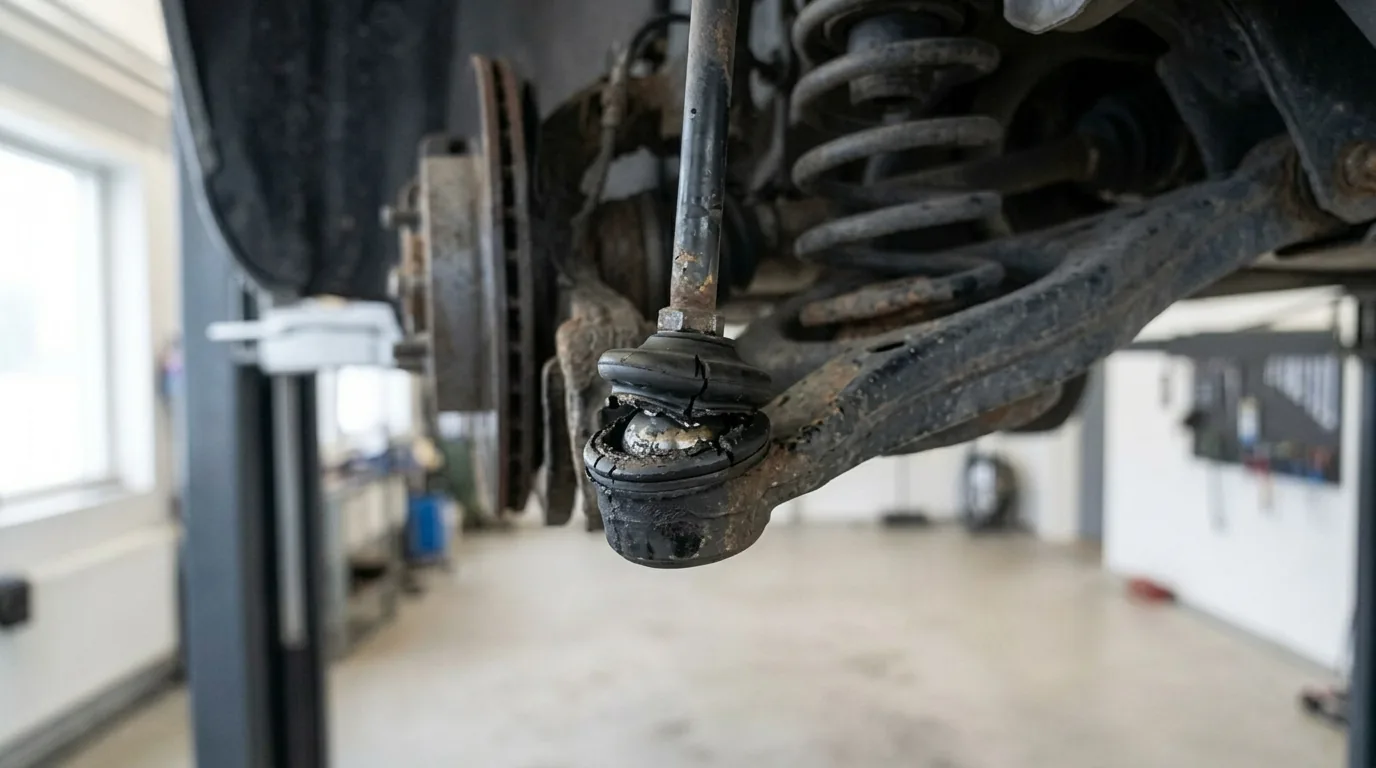
When a car clunks over bumps, in potholes or as it turns, the cause is often a worn joint or bush. The part is identified on the lift, and you are told the price before anything is replaced.
10 November 2026
Repair notice at the inspection: what it means and whether the fault must be fixed
A repair notice (korjauskehotus) means that the car passed its inspection (katsastus) but a minor fault was found on it. The fault must be repaired within a reasonable time, but no re-inspection (jälkitarkastus) is needed and nobody checks the repair separately. In the 2025 inspections, the most common reason for a notice was the number plate light.
Quote request
Ask for a quote for this car: Ford
Type the registration number and we look up the job for your car and tell you the price before you agree a time.