Published
What is different about the 1.0 EcoBoost's timing belt?
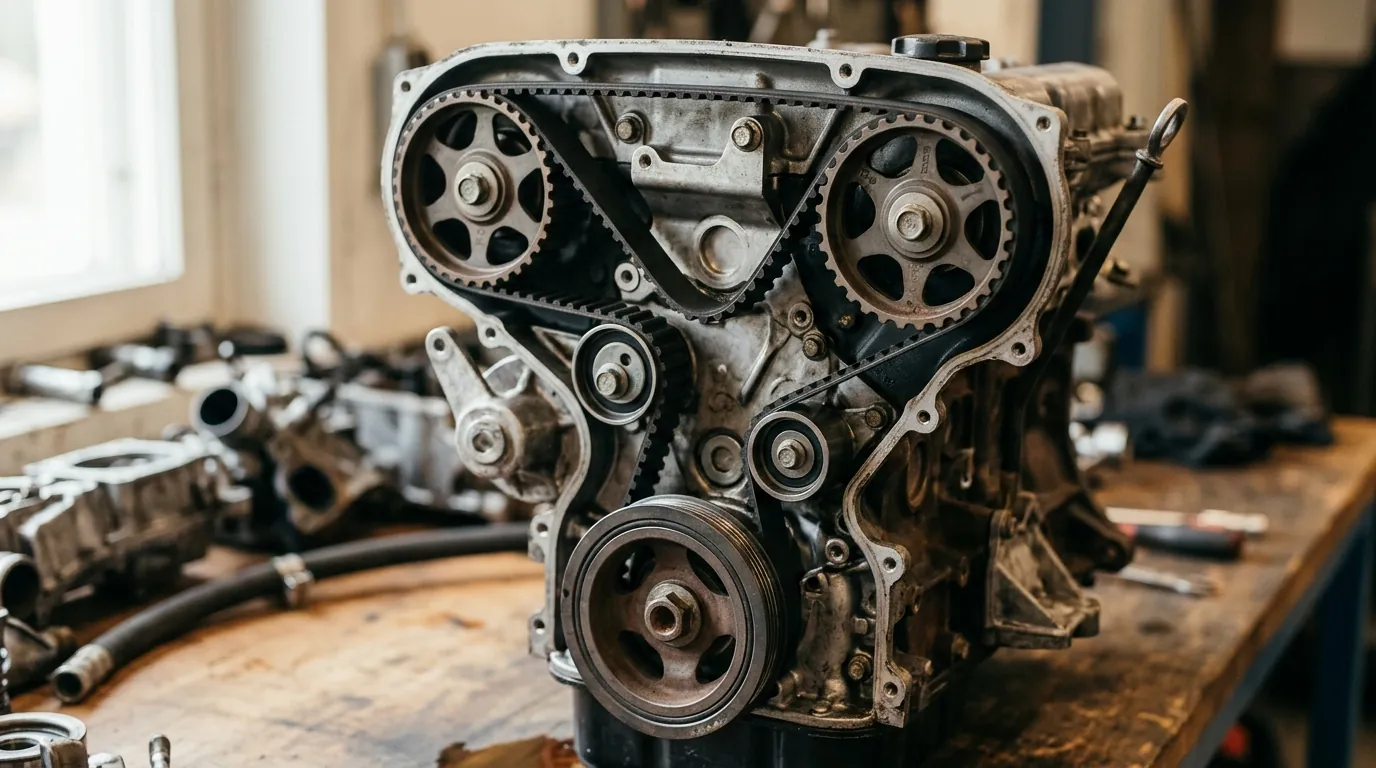
An ordinary timing belt runs dry under a plastic cover at the end of the engine. On Ford's 1.0 EcoBoost, the belt is inside the engine, behind a sealed timing cover, and it runs in the engine oil. A belt like this is called a wet belt. The same space also holds a second, smaller belt that drives the oil pump.
A wet belt carries a different risk from a dry one. According to NHTSA, the US road traffic safety authority, the belt material can degrade and material then breaks away from it. The loose material travels with the oil and can clog the oil pump's pick-up strainer, and the oil pressure then drops. As more material builds up, the engine can lose power while the car is moving, for lack of lubrication.
The pick-up strainer cannot be checked at an ordinary service. NHTSA says that material collected in it can neither be seen nor removed without taking the engine out of the car. That is why the belt is worth changing in good time rather than waiting for symptoms. We cover timing belts in general and the intervals of other engines in our article on the timing belt replacement interval.
What is the 1.0 EcoBoost timing belt replacement interval?
The interval Ford gives has changed. According to an NHTSA investigation document, the service schedule for cars sold in the United States originally set the interval at 150 000 miles, with no time limit. On 2 June 2026, Ford told NHTSA that it was notifying its customers worldwide of a new interval. The change applies to the Fox Classic timing belt on the 1.0 engine.
| Source | Replacement interval |
|---|---|
| Ford's original interval, US service schedule | 150 000 miles, about 240 000 km, no time limit |
| Ford's new interval, notified to NHTSA on 2 June 2026 | 100 000 miles, about 160 000 km, or 6 years |
| Parts manufacturer NTN-SNR, technical bulletin 4/2025 | 160 000 km or 10 years, shorter in some cases |
Among the US failures that NHTSA investigated, the belt had given way at an average of about 70 000 miles, or about 113 000 kilometres. Of the failures, 98 per cent occurred before the original limit of 150 000 miles.
We have not found a statement of the new interval from Ford Europe or Ford Finland. Various figures circulate online, but their source is not Ford. So the valid interval for a car sold in Finland is checked in Ford's service schedule using the car's vehicle identification number. We do the check when you bring the car to us.
On a car that is not driven much, the time limit often comes before the mileage. Cars built in 2012–2015 are now more than ten years old. In them, both the six and the ten-year limit have already been reached, unless the belt has been changed.
Which Fords have a wet timing belt?
The parts manufacturer NTN-SNR lists these models in its technical bulletin as having the 1.0 EcoBoost or its sister engine, the 1.1. The years are the model years the bulletin gives, and not every version has the engine:
| Model | Years according to the bulletin |
|---|---|
| Ford Focus | 2012–2018 |
| Ford Fiesta | 2012–2019 |
| Ford C-Max and Grand C-Max | 2010–2018 |
| Ford B-Max | 2012–2018 |
| Ford EcoSport | 2011–2019 |
| Ford Mondeo | 2012–2018 |
| Ford Transit Connect and Grand Tourneo Connect | 2013–2018 |
| Ford Transit Courier and Tourneo Courier | 2014–2020 |
The same bulletin also lists the Ford Puma from 2019. The engine has been revised over the years, and conflicting information circulates about which belts the newer versions have. So the model name and year alone do not settle it. What settles it is the engine code, which a workshop can see from the car's details.
Alongside them, the bulletin also covers the engine family's 1.1-litre version.
What wears the belt?
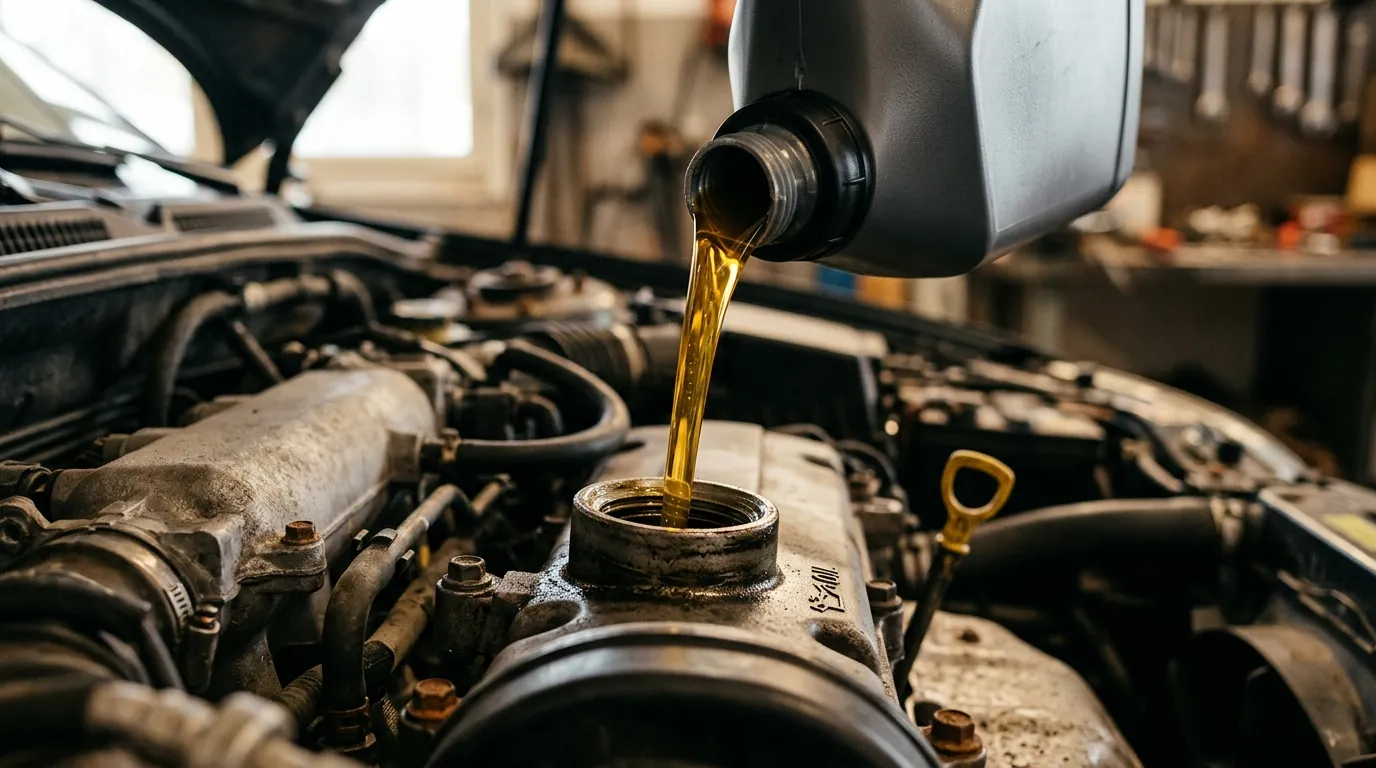
The quality of the oil affects the belt directly, because the belt runs in oil. For example, the owner's manual for the 2012 Focus specifies a 5W-20 oil meeting Ford's WSS-M2C948-B standard for the 1.0 EcoBoost. According to the manual, the alternative 5W-30 oil approved for the other petrol engines is not suitable for the 1.0 EcoBoost. Your own car's oil is listed in its owner's manual. We cover standards and viscosity in our article on engine oil viscosity.
Short trips are hard on the belt. According to NTN-SNR, cars that are driven rarely or on short journeys have more problems. When the oil does not warm up properly on a short trip, moisture and combustion residues do not evaporate. Sludge forms in the oil and weakens the belt further.
Regular oil changes matter, but they do not protect the belt on their own. Ford's answer to NHTSA was that regular oil changes prevent the fault. Yet according to NHTSA, failures have also occurred in cars whose oil had been changed properly. We cover when to change the oil in our article on the oil change interval.
Signs you should not wait on
A worn wet belt does not always give a warning. According to NHTSA, some drivers reported that the engine lost power or seized with no warning signs beforehand. Sometimes there are signs, though:
- The oil pressure warning light comes on. In the reports made to NHTSA, the light usually came on just before the engine lost power.
- The engine is hard to start. NTN-SNR names starting difficulties as a result of belt wear.
- The idle is rough or the engine runs unevenly at high revs. This is on NTN-SNR's list too.
- The belt change is overdue or is not recorded in the service history. Then nobody knows what state the belt is in.
If the oil pressure light comes on while you are driving, stop as soon as it is safe to do so and switch off the engine. Do not drive the car to a workshop: have it towed. According to NTN-SNR, loose material can also damage the oil pump and the turbocharger, and at worst the engine has to be replaced.
What does a timing belt change involve?
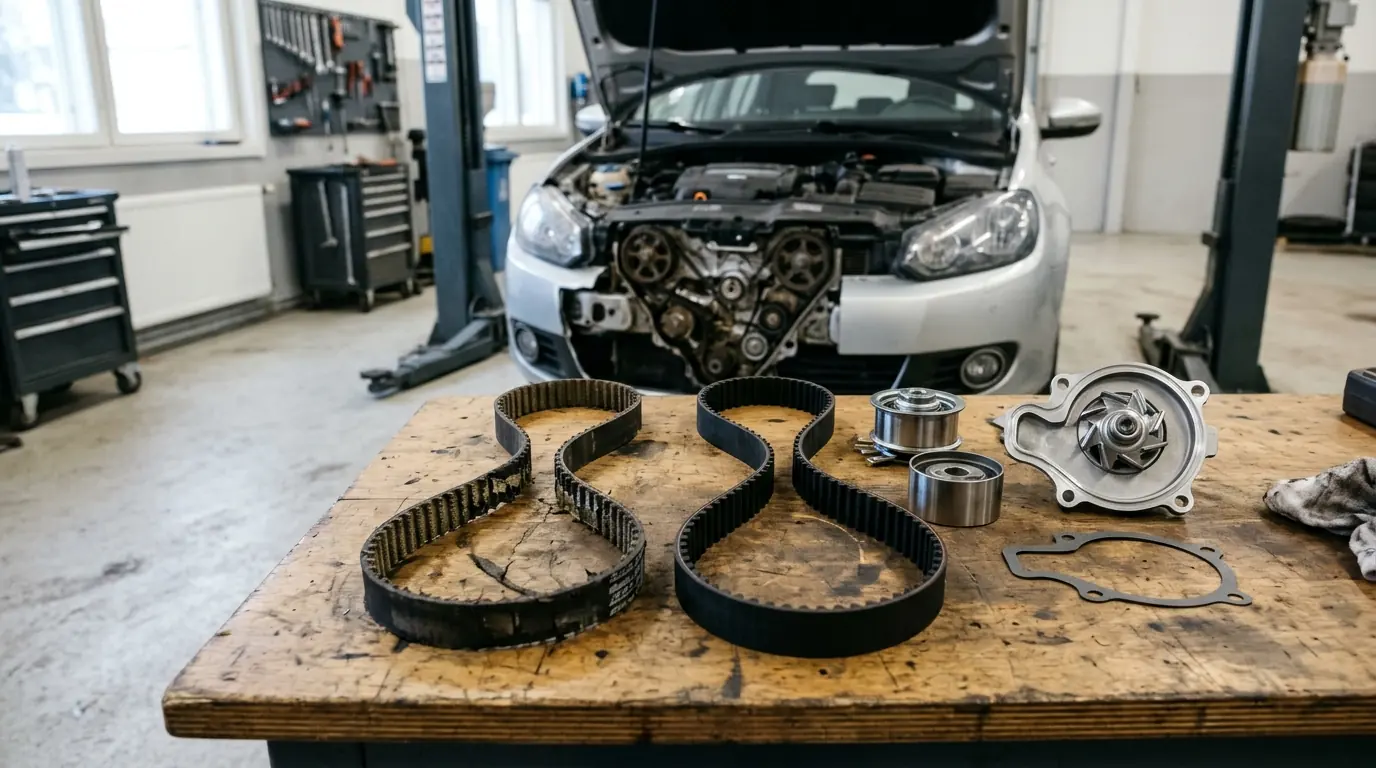
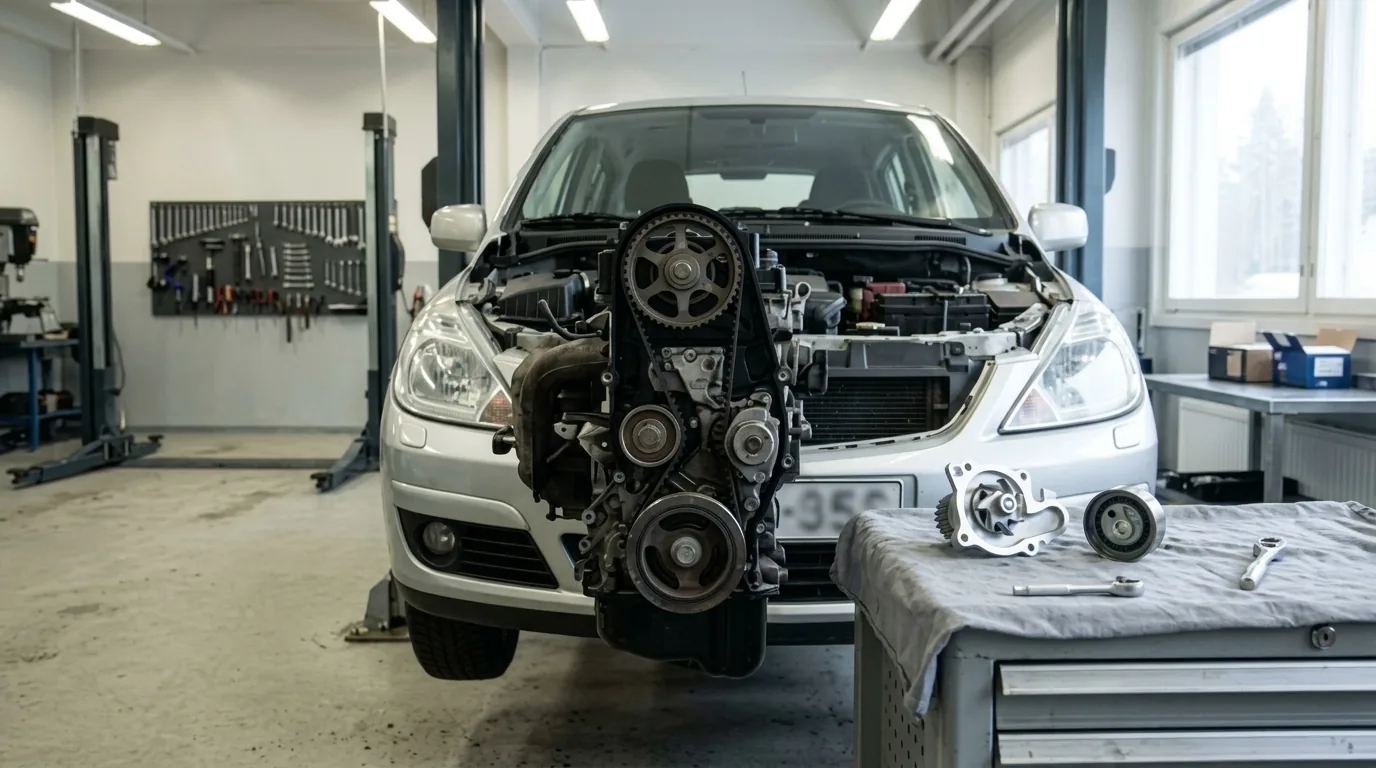
Changing a dry belt usually means opening the belt's cover. On the 1.0 EcoBoost the belt is inside the engine, so it can only be reached once many other parts have been removed. NTN-SNR's procedure removes these, among others:
- the right front wheel and splash shield, and the auxiliary belt
- the fuel rail, high-pressure pump and ignition coils
- the valve cover and the catalytic converter
- the alternator, and the air conditioning compressor, which is moved aside with its pipes still connected
- the engine's right-hand mount, once the engine is supported
- the crankshaft pulley and the timing cover, which is sealed with sealant
Before the belt comes off, the camshafts, crankshaft and flywheel are locked with special tools, so that the engine's timing is kept. NTN-SNR's bulletin lists twelve Ford special tools for the job. The engine oil and coolant are drained.
Besides the timing belt, the procedure renews the oil pump belt and the water pump. The timing cover's seal, the crankshaft seal, the valve cover gasket, the injector seals, the crankshaft bolt and the turbocharger oil pipe are also replaced. Finally, the oil filter is changed and new oil and coolant are added.
That is why the change is a considerably bigger job than an ordinary timing belt change, and it is worth booking the car into the workshop for a whole day.
What does the 1.0 EcoBoost timing belt change cost depend on?
The price depends on the car's model and engine version and on the parts replaced. Changing a wet belt involves more parts and work than an ordinary belt change, because the oil pump belt, water pump, seals, oil and coolant are replaced at the same time.
We tell you the price for your car before the work starts. See also our timing belt replacement page.
Before you buy a used 1.0 EcoBoost
On a used 1.0 EcoBoost, it pays to find out the state of the belt before you buy. Go through these points:
- The belt change. Look in the service book or the digital service book for the timing belt change, its date and the mileage.
- The invoice. Ask for the invoice for the change. It shows whether the oil pump belt and the water pump were changed as well.
- Oil changes. Check whether the oil has been changed according to the service schedule and whether the invoices record oil of the right standard.
- The next change. Work out from the years and kilometres when the next change is due, and allow for it in your offer.
- No proof. If you cannot find a record or an invoice, assume the belt has not been changed.
Ford told NHTSA that the same customer programme that announces the new interval reimburses eligible customers who have already paid for an engine repair or replacement caused by the belt. Ask a franchised Ford dealer whether the programme covers your car.
When should you take the car to a workshop?
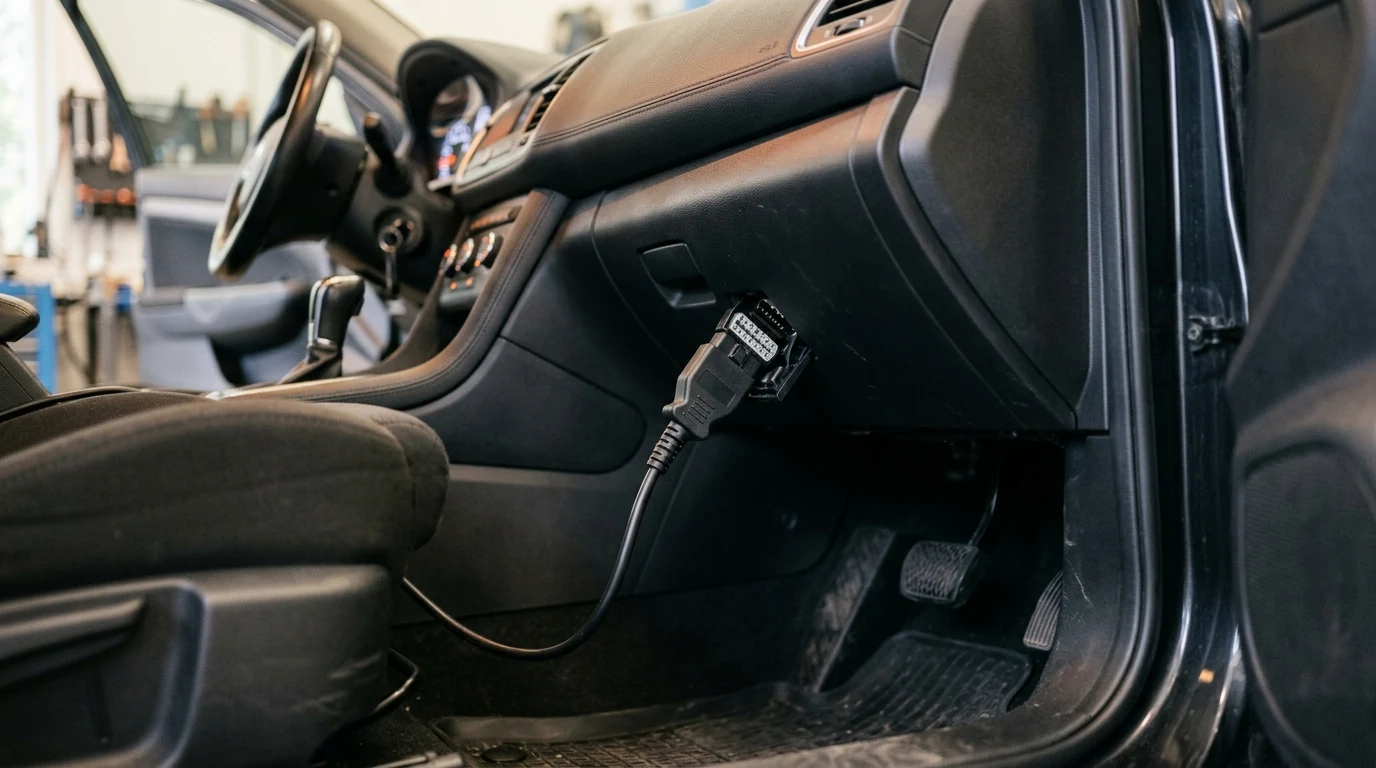
Book a belt change when the service schedule's time or mileage limit is getting close, or if you do not know when the belt was last changed. Also bring the car in for a check if the engine is hard to start or runs unevenly. That can have causes other than the belt, and diagnostics finds the cause.
We use the engine code to see which belt arrangement your car has, and we check the belt's replacement interval in Ford's service schedule. We tell you the price before the work starts. The timing belt replacement page describes what the work involves. Our Ford page covers Ford's other models and their inspection results.