
CV boot replacement
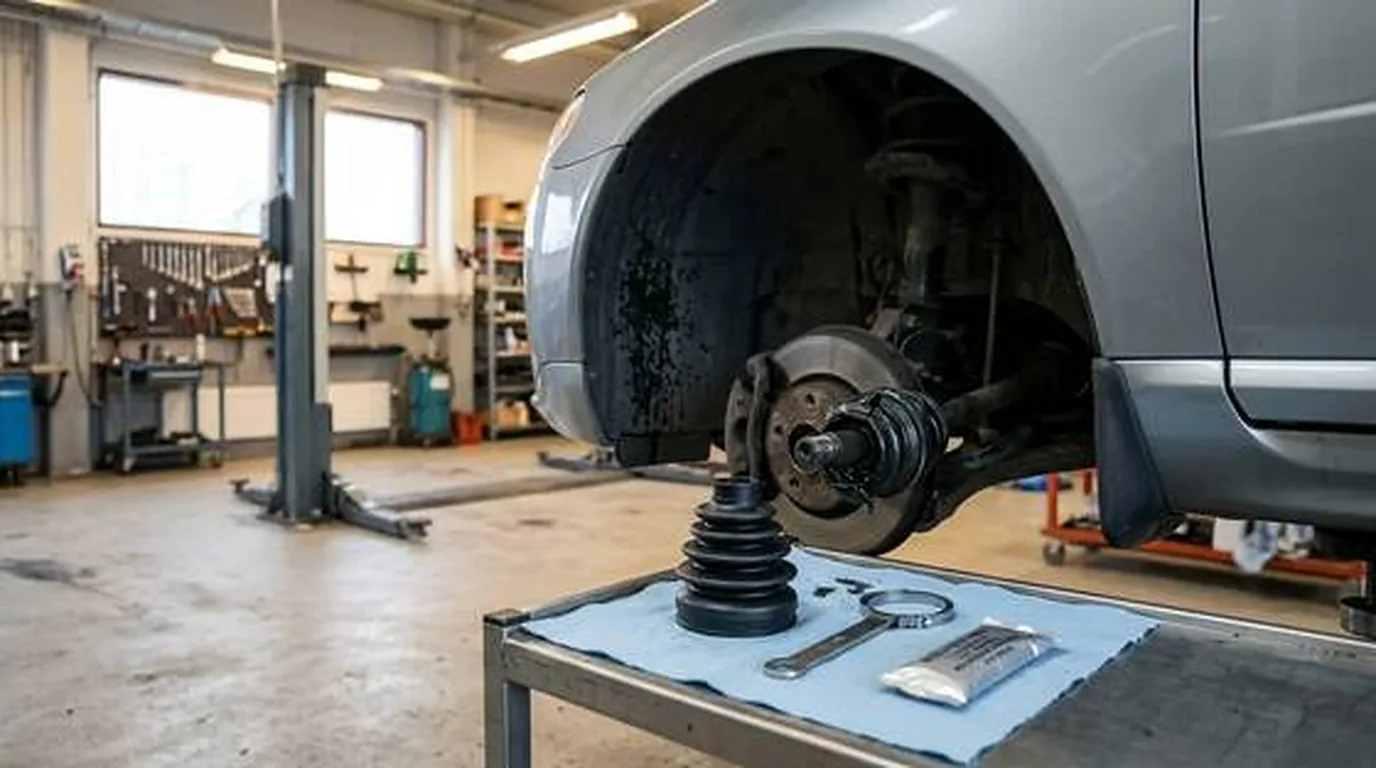
We replace a torn CV boot and, where needed, a worn CV joint or the whole driveshaft, whatever the make. Replacing one outer boot usually takes an hour to an hour and a half, and we tell you the price before the work starts.
typical price range
115–
We tell you the exact price for your car before the work starts.
- Prices include VAT
- 25,5 %
- One torn boot replaced with a new one
- The joint cleaned of old grease and its condition checked while the boot is off
- Fresh joint grease and new clips
How it works
Call us or drop in
Give us the registration. We confirm the price and agree a time in the same call.
We do the work
You get the car back at the time we agreed.
You pay the agreed price
No surprises on the invoice. If we find anything else, we call before we touch it.
A torn boot is worth replacing soon, before water and grit have time to wear out the joint.
Call 045 262 5950What the price includes
What the price includes
- One torn boot replaced with a new one
- The joint cleaned of old grease and its condition checked while the boot is off
- Fresh joint grease and new clips
- The hub nut and any suspension bolts that were removed tightened to the manufacturer's torque
- A check of the other CV boots, including the other side and the inner ones
- Road test and follow-up check on the lift
What the price does not include
- CV joint replacement, if the joint is already worn or rusted. We tell you that and the price before going on.
- Replacing the whole driveshaft, if replacing the joint is not worth it. Priced separately.
- Other cracked boots on the same or the other side. We tell you their price separately.
- The propshaft universal joints and centre bearing of a rear-wheel-drive or four-wheel-drive car. That is a different job.
- Replacing a gearbox output seal, if oil is leaking where the driveshaft enters the gearbox.
About this work in detail
A CV joint carries the engine's power to the driven wheel even while the wheel steers and the suspension moves. On a front-wheel-drive car each driveshaft has two joints: the outer one at the wheel and the inner one at the gearbox. Rear-wheel-drive cars usually have their driveshafts at the rear, and four-wheel-drive cars at both ends. Electric cars also drive their wheels through driveshafts and CV joints.
Every joint is covered by a concertina-shaped boot made of rubber or thermoplastic. Inside it is a special grease that lubricates the joint, and two clips hold the boot tight in place. The boot keeps the grease in and water, grit and road salt out. The outer boot flexes every time the steering wheel is turned, which is why it tears more often than the inner one.
The joint does not fail the moment the boot tears. The spinning shaft flings the grease out, and water and grit get in instead and start to wear the joint. How fast that happens depends on the weather, the mileage and the size of the tear. If the boot is replaced in time, the joint is saved.
Read the full guide
How to tell a boot has torn or a joint is worn
- There is black, sticky grease on the inside of the wheel rim, on suspension parts or around the brakes. The splashes are often the first sign.
- Cracks or a tear show in the folds of the boot, or a clip has come off.
- When you pull away or accelerate on full lock, there is a rhythmic clicking. It usually means the outer joint is already worn.
- The car shudders under acceleration or there is a clunk as you pull away. That can point to a worn inner joint, but worn engine mounts, for example, cause the same symptoms.
A torn boot on its own usually makes no sound and cannot be felt while driving, so many people only hear about it at a service or at the inspection.
When the boot is replaced
There is no manufacturer interval for the boot: it is replaced when it has cracked or torn. A boot grows brittle over the years, and a boot stiffened by frost cracks more easily. So the boots are worth a look at every service and whenever the car is on the lift for some other reason.
If the tear is caught early, replacing the boot alone is usually enough. If the car has been driven a long time on a torn boot, the joint has often had time to wear.
Boot, joint or the whole shaft
The joint's condition can only be judged reliably once the boot is off and the old grease wiped away. So only the check settles which job is done. There are three outcomes:
- Boot replacement, when the joint is sound, with no wear or rust.
- Joint replacement, when the joint is worn, clicks or has rusted. A new joint usually comes with a new boot and grease.
- Driveshaft replacement, when both joints on the shaft are worn or replacing the whole shaft makes more sense than replacing the joint alone. Replacing the shaft is often the quicker job, because the joint does not have to be taken off the shaft.
How the work is done
- We lift the car and look at all the CV boots, including the other side and the inner ones.
- We remove the wheel, the hub nut and the suspension parts needed to free the shaft or the joint.
- We remove the old boot and clean the old grease out of the joint.
- We check the joint. If it is worn or rusted, we call you before going on.
- We fill the joint with fresh grease, fit the new boot and tighten the clips.
- We reassemble the shaft and tighten the hub nut and the other fixings to the manufacturer's torque. Where the manufacturer says a nut or bolt is single-use, we replace it with a new one.
- We road test the car and check the work once more on the lift.
How long it takes
Replacing one outer boot is usually an hour or an hour and a half of work. It takes longer if the shaft has to come out of the gearbox, if the boots on both sides are replaced, or if bolts have rusted in. After a boot replacement alone the car is usually ready the same day. If a joint or a shaft has to be replaced, the part may have to be ordered.
What the price depends on
The price depends on:
- Which boot is replaced. Outer or inner, one side or both.
- How the car is built. Front-wheel or four-wheel drive, and whether the shaft has to come out of the gearbox. Some gearboxes then lose oil, and the gearbox is topped up at the end of the job.
- Parts. Boots come in rubber and thermoplastic, and original and aftermarket parts differ in price.
- Rust. On a car driven on salted roads the shaft often rusts into the wheel hub and the suspension bolts seize, and freeing them takes time.
- The joint's condition. If the joint is worn, the job becomes a joint or shaft replacement.
We check the car and tell you the price before the work starts. If a worn joint turns up under the boot, we tell you that and the new price before going on.
CV joints and the inspection
The inspection also checks the CV joints and their boots. Under Traficom's inspection rules, a loose or damaged boot is a minor fault, which earns a repair notice. Worn CV joints are a major fault, and the car fails. Four or more minor faults in different inspection items also fail the car.
According to Traficom's statistics, drivetrain faults led to 32 087 repair notices and 2 394 rejections in the 2025 inspections. The statistics do not say how many of them concerned boots.
With a repair notice the car still passes, and nobody checks the repair separately. But a torn boot lets the grease out and the dirt in, and a worn joint does fail the car. So a boot named in a repair notice is worth replacing straight away, not just before the next inspection.
What you can check yourself
- Turn the steering wheel to full lock and look behind the front wheel with a torch. The outer boot sits next to the hub. Check the other side by turning the steering the other way.
- Look at the inside of the rim and at the suspension parts. Black, sticky grease there usually means a torn boot.
- In an empty car park, drive slowly in a circle on full lock, in both directions, with the window open. A rhythmic clicking points to a worn outer joint.
- Note when the noise or the vibration comes, and tell us. It speeds up the diagnosis.
The inner boot usually cannot be seen without a lift.
When not to drive the car
A torn boot with no other symptoms is no reason to leave the car standing, but it is a reason to book a time soon. Do not set off on a long drive, however, if
- the joint clicks or knocks even when driving straight
- the car shudders hard under acceleration
- there is a loud clunk as you pull away.
If the joint breaks apart, the power no longer reaches the wheels, and the car does not move even with a gear engaged. A shaft that has come loose can also damage the parts around it. In that case the car has to be towed to the workshop.
If something else needs fixing
We do not start work you do not know about. If the car needs something else fixed, we call and tell you what the extra work costs and what happens if it is left undone. You decide.
Once we have seen the car, we tell you the price and whether it is a fixed price, a maximum price or an estimate. The work starts only once you have accepted the price.
We work to the motor vehicle service and repair terms approved by the consumer advisory board of the Finnish motor trade.
Related work

Scheduled service
The scope varies from car to car, so we tell you the price before the work starts.
approx. 189 €
Inspection repairs
We repair the faults on the rejection list, item by item. The price comes from the list, before any work starts.
Ask the price
Suspension repair
Control arms, joints and shock absorbers. The price is assessed from what the lift shows.
Ask the price
Shall we agree a time?
Leave a booking request online or call. We confirm the time and tell you the price before any work starts.
typical price range
115–
We tell you the exact price for your car before the work starts.
- Address
- Lampputie 12 C 67
00750 HelsinkiShow on the map - Opening hours
- Mon–Fri8.00–18.00Sat9.00–15.00Sunclosed
- Phone
- 045 262 5950
- huolto@caron.fi