
Volvo
Volvo XC60: servicing, faults and inspection
The XC60 fails the inspection (katsastus) less often than cars of the same age in every year of first registration, even though it is driven a lot. One item stands out all the same: the suspension.
Volvo XC60: most common inspection faults 2025
The most common rejection cause was springs and shock absorbers: 6.2 faults per hundred inspections, 6.1 for all cars. The next most common were the rear axle as well as the front axle.
| Rejection cause | Faults | / 100 inspections | All cars |
|---|---|---|---|
| Springs and shock absorbersAxles, wheels and suspensionFor example a broken spring or a leaking shock absorber. Shock absorbers are replaced in pairs on the same axle.Repair: Front shock absorbers | 1 466 | 6.2 | 6.1 |
| Rear axleAxles, wheels and suspensionFor example worn control arm joints and split rubber bushes.Repair: Suspension repair | 651 | 2.8 | 3.1 |
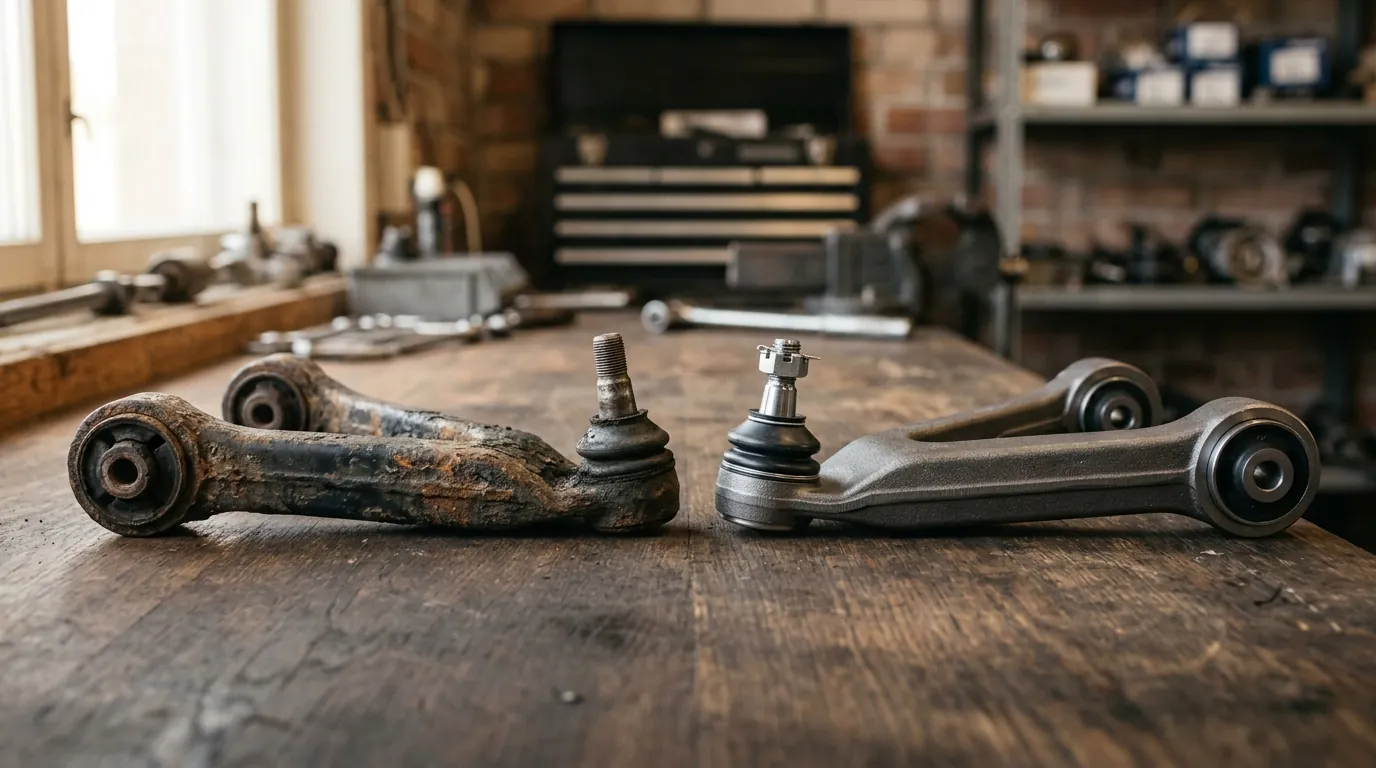
| Front axleAxles, wheels and suspensionFor example a worn ball joint or worn control arm bushes. On many cars the joint is part of the control arm, in which case the whole arm is replaced.Repair: Lower ball joint, one side | 530 | 2.2 | 7.5 |
| Service brakeBrake systemsFor example worn-out brake pads, discs that are rusted or too thin, and leaking brake pipes. Pads and discs are replaced according to their condition on the lift.Repair: Front brake pads and discs | 519 | 2.2 | 4.9 |
| Steering joints and track rodsSteeringA typical finding is a worn track rod end, which you feel as play in the steering. The alignment is adjusted after the replacement.Repair: Track rod end, outer, one side | 312 | 1.3 | 2.9 |
| Tyres and wheelsAxles, wheels and suspensionFor example tread that is too shallow.Repair: Inspection repairs | 227 | 1.0 | 1.8 |
All cars: every make and model in the same Traficom statistics, all ages together.
How to read the table
Traficom's statistics cover passenger cars aged 4 to 20 years and model series inspected at least a hundred times in the year. Fault figures are rejection faults per hundred inspections. The table counts faults, not cars: one rejected car can carry several. A repair notice does not fail the car, but a fault left unrepaired can fail it the next time.
Source: Traficom, inspection statistics 2025.
Service, faults and symptoms
The XC60 in the inspection statistics
According to statistics from Traficom, the Finnish Transport and Communications Agency, 23 578 XC60s were inspected in 2025. Among Volvos, only the V70 had more inspections. Of the XC60s inspected, 14.7 % failed. On average, 20.4 % of passenger cars of the same age failed.
XC60s cover a lot of kilometres. Their median mileage was 211 000 km, against 187 000 km for all cars. By age group the gap is even wider: XC60s first registered in 2015 had a median of 216 000 km, against 162 000 km for all cars from the same year. Despite the kilometres, the XC60 did better than average in every year of first registration from 2008 to 2021:
| First registered | XC60s failed | All cars from the same year failed |
|---|---|---|
| 2009 | 24.0 % | 35.9 % |
| 2011 | 20.9 % | 29.8 % |
| 2013 | 21.3 % | 23.6 % |
| 2015 | 14.4 % | 17.8 % |
| 2017 | 15.1 % | 17.2 % |
| 2019 | 6.8 % | 10.7 % |
| 2021 | 2.5 % | 8.2 % |
This table counts cars. The fault table on this page counts faults: XC60s had 18.7 rejection faults recorded per hundred inspections, against 46.8 for all cars. The figure for all cars includes older model years than the XC60 figure does, so the fairer comparison is the age-group table above.
Suspension is the XC60's most common rejection cause
Of the common rejection causes, the only one where the XC60 does not do better than average is springs and shock absorbers: 6.2, against 6.1 for all cars. The difference shows more clearly by age group. XC60s first registered in 2008–2017 had more suspension faults than cars of the same age in every year. The gap was widest in 2013–2016: XC60s had 8.0–11.3 of these faults, against 4.5–6.3 for cars of the same age.
XC60s first registered from 2018 onwards, mostly second-generation cars, have had fewer suspension faults than average. The symptom can be clunking on an uneven road or the car rocking after a bump.
Rear axle, brakes and rust
Overall, the XC60 has fewer rear axle faults than average, 2.8 against 3.1 for all cars. Even so, XC60s first registered in 2009–2017 had more of them than cars of the same age in every year. In the 2009 cars the figure was 6.7, against 5.0 in all cars from the same year. The overall figure stays below average because hardly any rear axle faults were recorded on XC60s first registered from 2018 onwards. Rear axle work comes under suspension repair. There are few front axle faults: 2.2, where the average is 7.5. Faults in steering joints and track rods came to 1.3, against 2.9 for all cars.
The brake roller test rarely fails an XC60. The service brake test recorded 0.4 faults and the parking brake test 0.2, against 3.2 and 4.6 for all cars.
Practically no rust in the floor and sills was recorded on XC60s: in all 23 578 inspections that year, this rejection fault was found once. For all cars it was recorded at 2.7 per hundred inspections.
XC60s were given 26.2 repair notices (korjauskehotus) per hundred inspections, less than half the figure of 59.9 for all cars. The most common items were the dipped beam, and the windscreen with its wipers and washers.
Before the inspection
On an XC60, it pays to have these items checked before the inspection:
- the springs and shock absorbers, especially on cars first registered in 2013–2016
- the rear axle joints and bushes on cars first registered in 2009–2017
- the front brake pads and discs
- the dipped beams and their alignment, the most common item for a repair notice
Servicing
An XC60's scheduled service follows Volvo's service schedule, and the schedule varies with the engine and the model year. For an oil change we use oil that meets the manufacturer's requirements. If the car has all-wheel drive or an automatic gearbox, the service schedule shows whether changing the oil in them is part of it.
Generations
- XC60 (first generation) 2008–2017
- XC60 (second generation) 2017–
When it is urgent
- The car keeps rocking for a long time after a bump, or one corner sits clearly lower than the others. A spring may be broken.
- The brake pedal is soft or sinks to the floor, or the car pulls hard to one side when braking. Have the brakes checked before the next drive.
- There is play in the steering or the car wanders in its lane without steering input. A front axle or steering joint may be worn out.
- The parking brake does not hold on a slope or releases by itself. Have the rear brake or the cable checked before parking on a slope again.
- The engine warning light flashes. A flashing light usually means a misfire, which can damage the catalytic converter.
- The coolant warning comes on or the temperature gauge rises. Stop in a safe place and follow the owner's manual: some makers advise letting the engine idle briefly before switching off.
If the Volvo XC60 failed its inspection
A repaired car can be approved at a re-inspection if it is presented within a month of the rejection. The re-inspection checks the items where faults were found, so the repair addresses the items on the rejection report. After a month, the car needs a new periodic inspection. If the car was inspected on time and not banned from driving, it may be driven for at most two months after the rejection.
Repair: Inspection repairs
A passenger car is first inspected four years after its first registration and then every two years. A car more than ten years old is inspected every year.
Work we do on this car
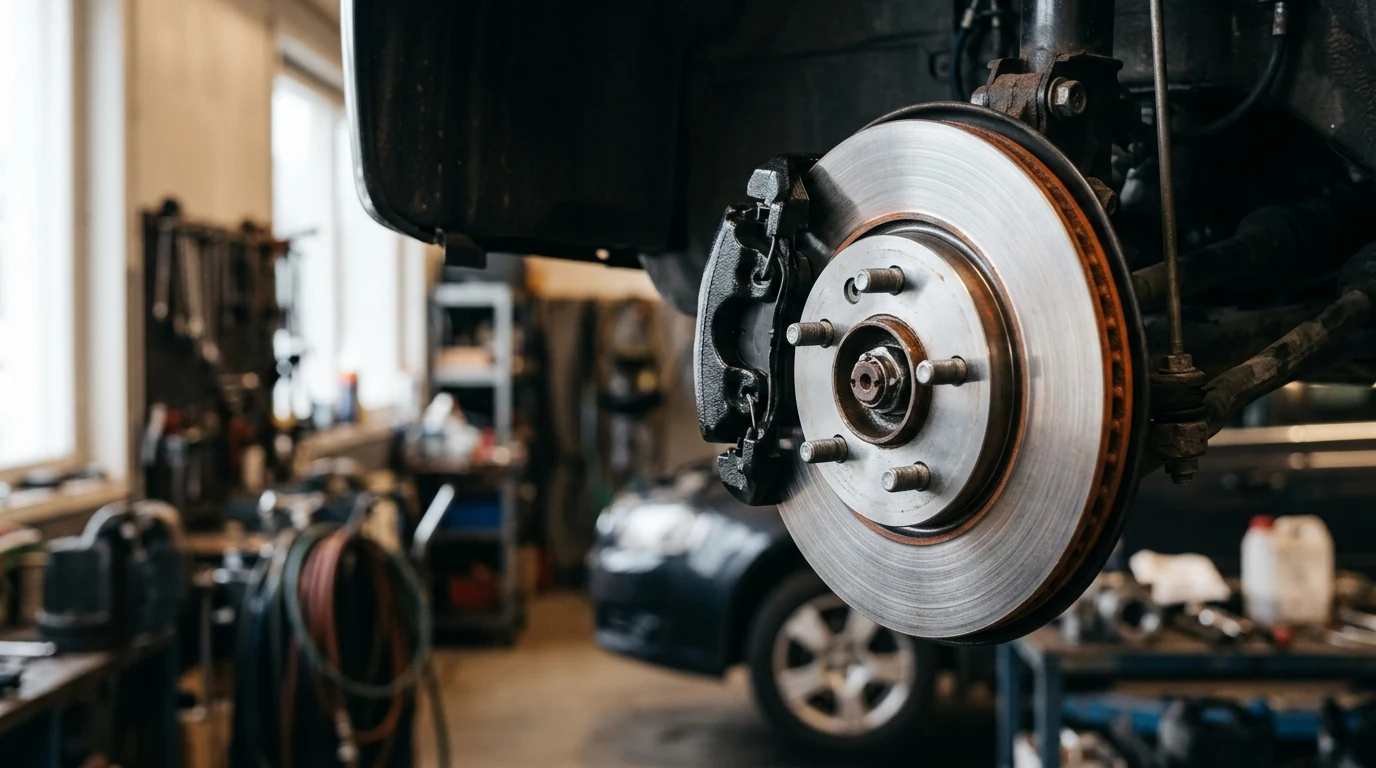
Front brake pads and discs
Front axle pads and discs, labour and parts, fixed price. Passenger cars with standard brakes; large or sport brakes priced on request.
299 €
Scheduled service
The scope varies from car to car, so we tell you the price before the work starts.
approx. 189 €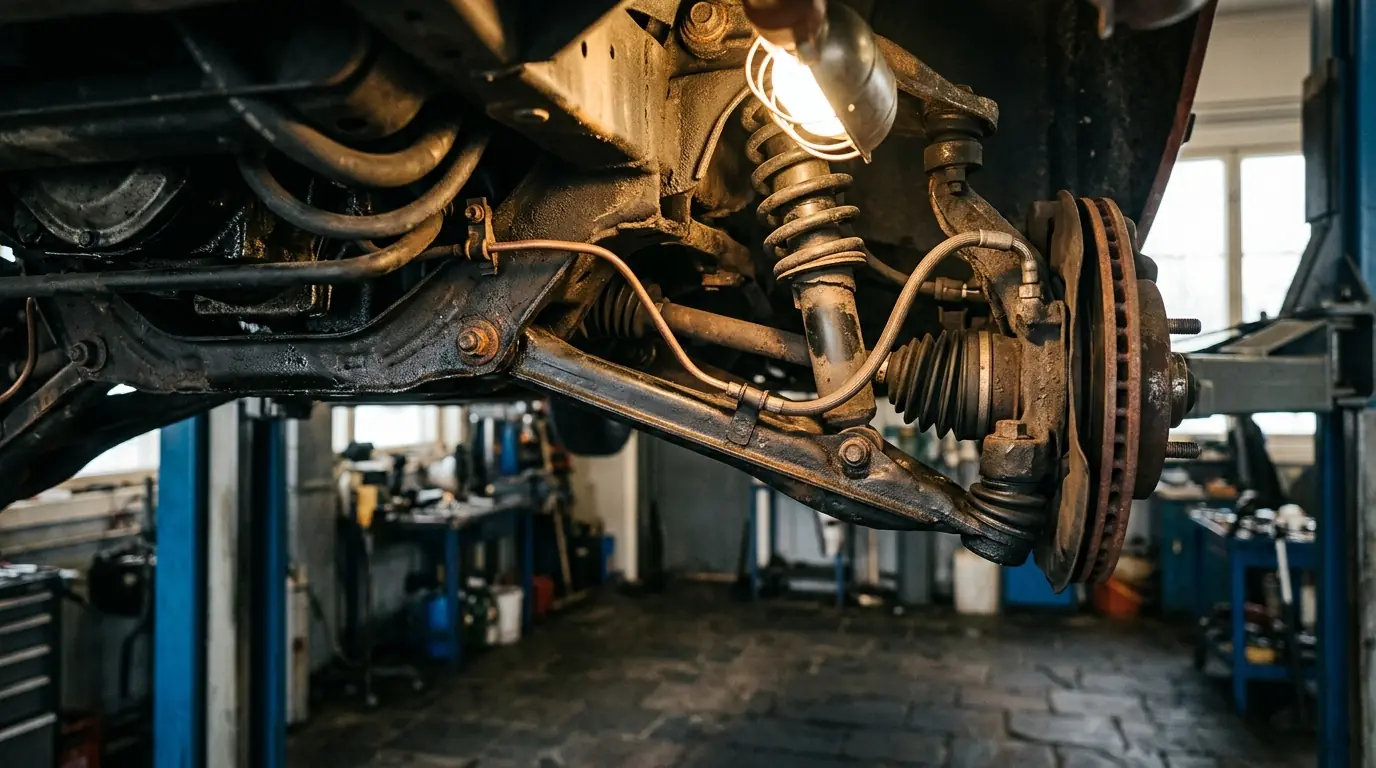
Inspection repairs
We repair the faults on the rejection list, item by item. The price comes from the list, before any work starts.
Ask the priceSuspension repair
Control arms, joints and shock absorbers. The price is assessed from what the lift shows.
Ask the price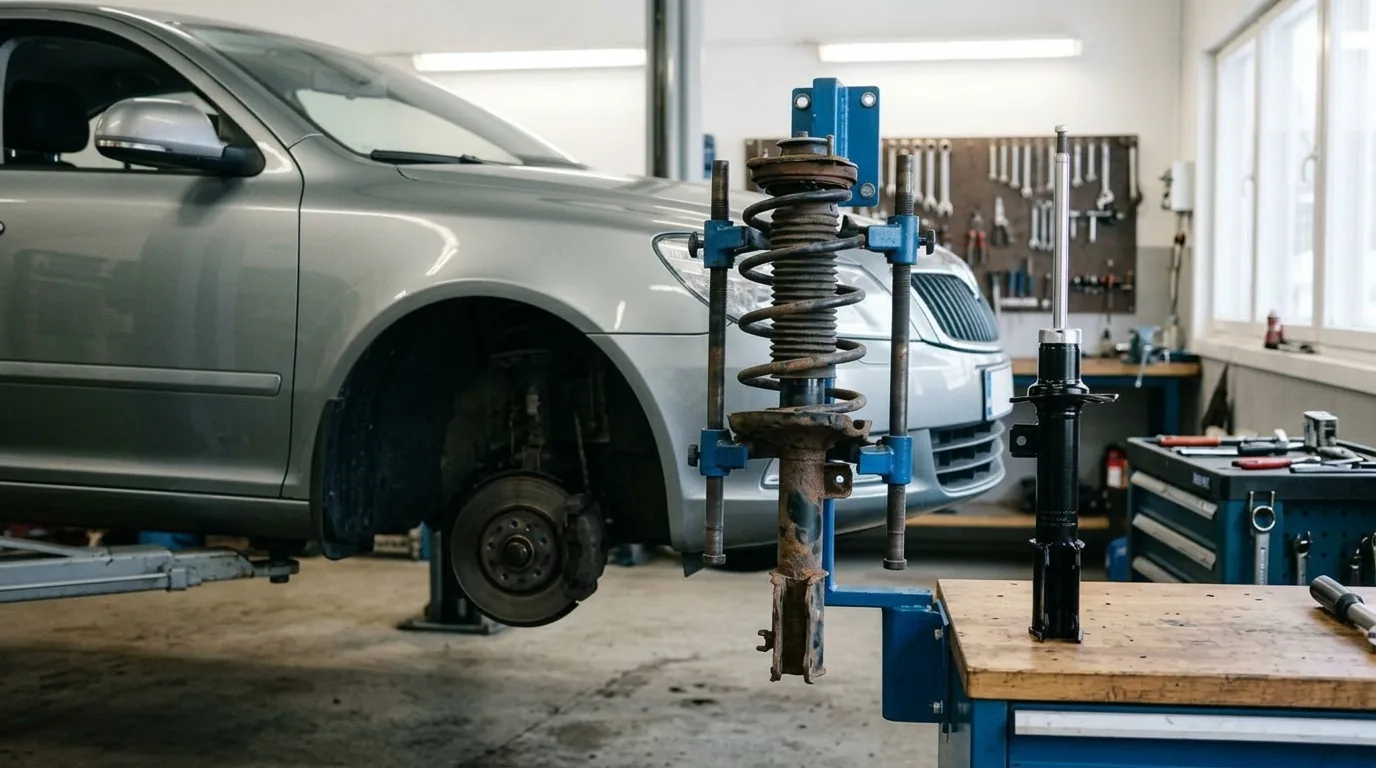
Front shock absorbers
Both front shock absorbers, as a pair. We check the springs and top mounts at the same time.
390–550 € 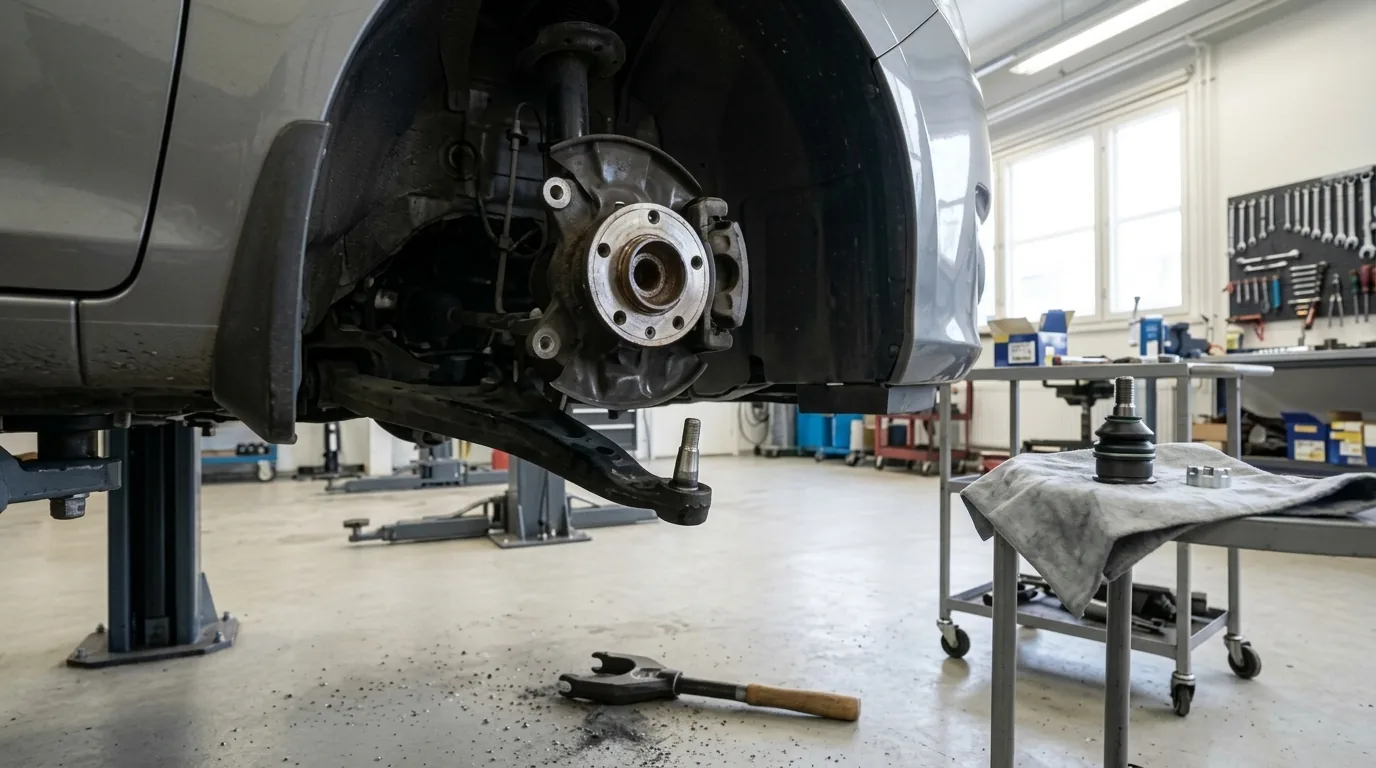
Lower ball joint, one side
One lower ball joint replaced, part and labour. If the joint is part of the control arm, we tell you the price of the whole arm before the work starts.
140–215 €
Read next
10 November 2026
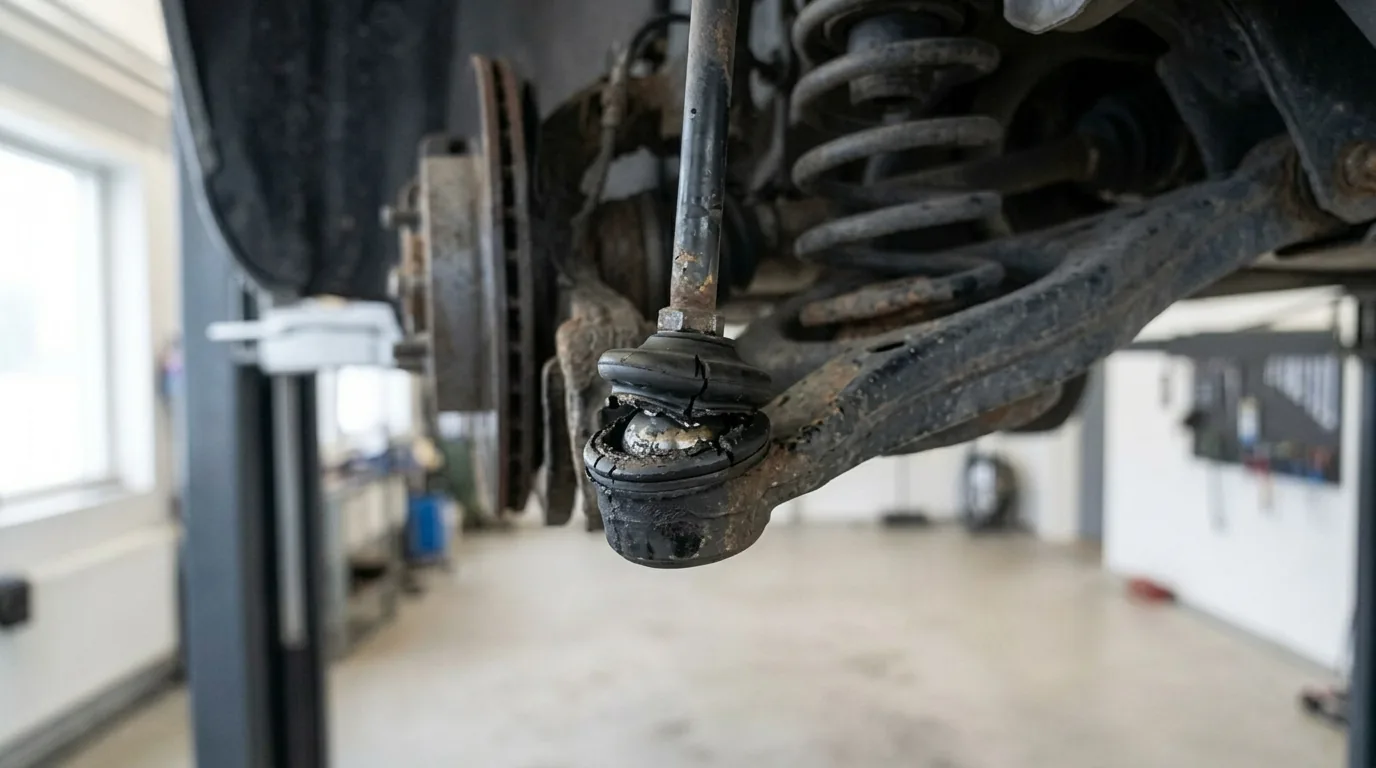
Clunking noise from your car: why it happens and when it is urgent
When a car clunks over bumps, in potholes or as it turns, the cause is often a worn joint or bush. The part is identified on the lift, and you are told the price before anything is replaced.
10 November 2026
How to prepare for the inspection: what is inspected and what you can check yourself
Before the inspection (katsastus), it pays to check the lights, wipers, tyres, number plates and dashboard warning lights yourself. They are among the commonest causes of repair notices (korjauskehotus): in 2025, 136 417 notices were recorded for the number plate light alone. The front axle, suspension and brakes only show on a lift, and that is where the inspection finds the most rejection faults.
10 November 2026
Inspection rejection rates and faults by make, 2025
In the 2025 inspections, Toyota and Audi failed least often and Citroën and Renault most often. The tables give each make's rejection rate, faults, mileage and rejection causes.
Quote request
Ask for a quote for this car: Volvo XC60
Type the registration number and we look up the job for your car and tell you the price before you agree a time.