Published
Related symptoms: windscreen fogs up on the inside · windows mist up on the inside · car steams up inside · ice on the inside of the windows
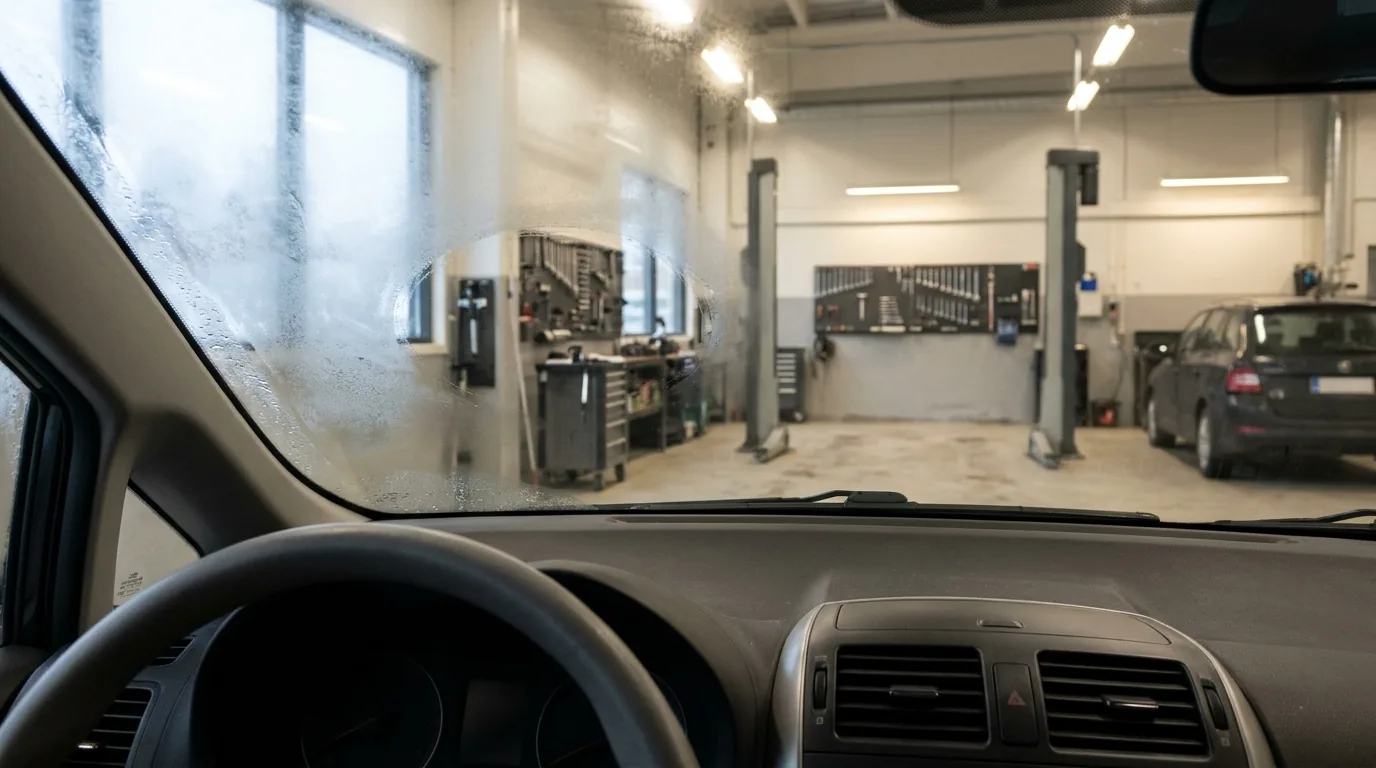
Why the windscreen fogs up on the inside
The colder the air, the less water vapour it can hold. In winter, the outside air cools the windscreen. When warm, moist air inside the car meets the cold glass, the air cools and the excess water vapour condenses on the glass as tiny droplets. The Finnish Meteorological Institute calls this limit the dew point: the temperature to which air has to cool for its water vapour to start condensing.
According to Teppo Vesalainen of Autoliitto, the Automobile and Touring Club of Finland, in newer cars the moisture usually comes in with the passengers. Every passenger gives off moisture when breathing, and wet shoes and clothes release water into the air as they warm up. The more passengers, the more moisture. In older cars, the cause can also be perished rubber seals.
Clean glass matters. According to Liikenneturva, the Finnish Road Safety Council, the dirtier the glass, the more readily moisture clings to it. Dirty glass scatters light, so the lights of oncoming cars dazzle more.
Where the moisture comes from
Occasional fogging in the rain or in a full car is normal. If the windows fog up every morning or there is water on the floor, extra moisture is getting in from somewhere, and it is worth finding the source. The table lists the sources of moisture and their signs:
| Source | Sign | What to do |
|---|---|---|
| Snow on shoes and clothes | Water in the footwell, or ice in the morning | Knock the snow off before you get in |
| Fabric mats | The mats stay damp | Change to rubber mats and dry them indoors |
| Clogged cabin filter | Weak airflow even on full, the air smells stale | Change the filter |
| Snow, ice or leaves in the air intake | The grille under the windscreen is covered | Brush the grille clear |
| Blocked drain holes under the windscreen | Water gets in, especially in heavy rain | Clear the holes or bring the car in to be checked |
| Leaking door, window or windscreen seal | Water gets in when it rains or at the car wash | Bring the car in to be checked |
| Blocked sunroof drain tubes | Water inside after rain | Clear the tubes or bring the car in to be checked |
| Blocked air conditioning drain hose | Clear, odourless water on the floor | Bring the car in to be checked |
| Leaking heater core | A sweet smell, a greasy film on the glass, the coolant level dropping | Check the coolant and bring the car to a workshop |
You can deal with the first four yourself. No blower setting will fix a leak: if the mats get wet even though no snow has been brought in, water is getting in from somewhere else.
Recirculation and a clogged filter make fogging worse
On recirculation, the blower draws its air from the cabin, not from outside. The moisture cannot get out of the car and keeps circulating inside. Kia's Finnish-language manual warns that the windscreen and side windows can fog up if the heating is run on recirculation for a long time without the air conditioning. The manual advises keeping the air intake on the fresh-air setting as much as possible. Liikenneturva's advice is the same: if the fogging does not stop, check whether recirculation has been left on.
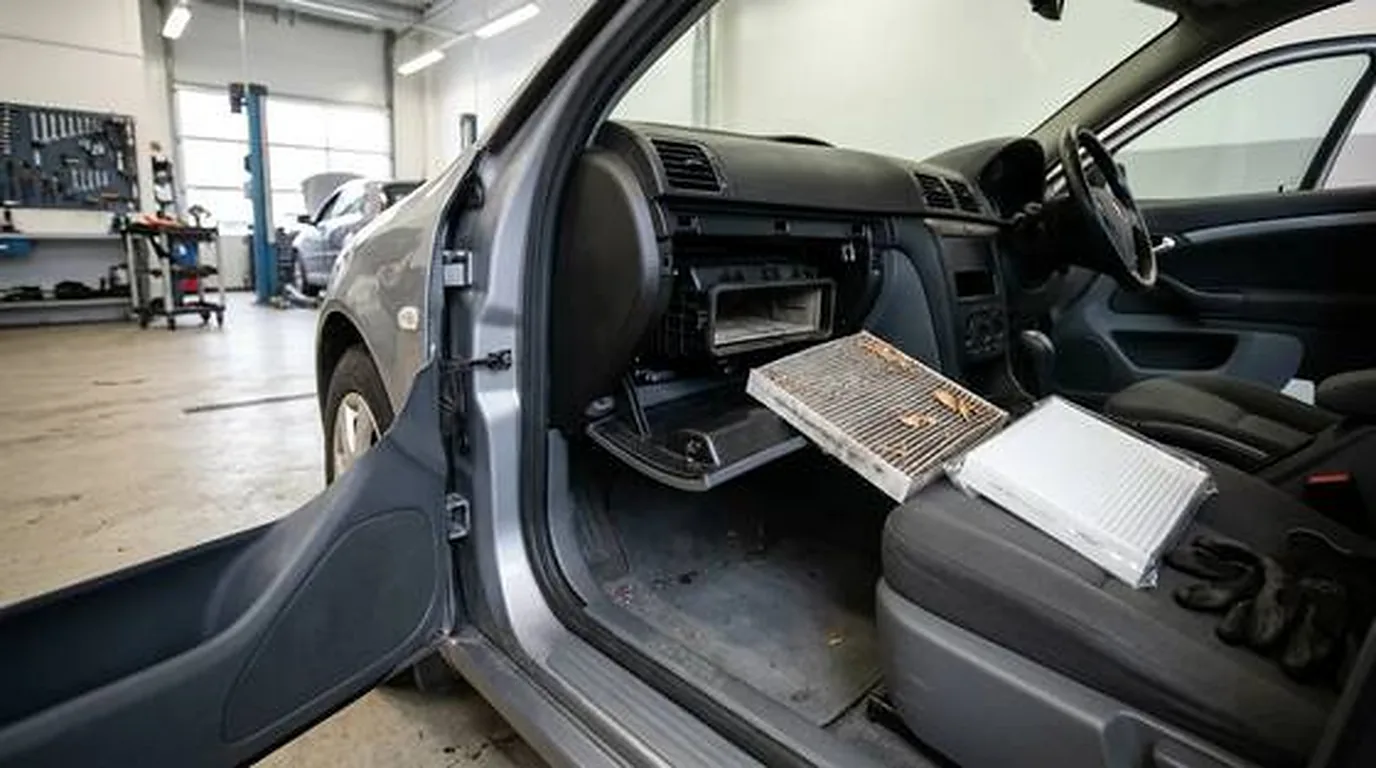
The cabin filter cleans the air the blower draws in from outside. Less air passes through a clogged filter. According to Kia's manual, the weakened airflow makes moisture condense on the inside of the windscreen even when the fresh-air setting is selected. The filter maker Bosch says the same: with a clogged filter, the windscreen fogs up more quickly. An old, waterlogged filter blows damp air straight into the car.
Fresh air usually enters the car through the grille under the windscreen. When there is snow, ice or wet leaves on the grille, the moisture inside the car increases.
How to clear the windscreen straight away
The controls vary from model to model, and Liikenneturva advises looking up the best combination for demisting in your own car's handbook. The principle is the same, though:
- Select windscreen demisting. It sends most of the air to the windscreen. In demist mode, automatic climate control also switches the A/C on, which clears the fog faster.
- Turn recirculation off. The moisture has to get out of the car, and on recirculation it stays inside.
- Keep the air conditioning on, in winter too. It dries the air even while the heating is on.
- Heat and blower to full. Point the airflow at the windows, and the moisture leaves the glass.
- Switch on the rear window heater. If your car has a heated windscreen, switch that on too.
- Wait for the windows to clear. According to Autoliitto, you should only drive off once the windows are clear and demisted.
In hard frost, the air conditioning may not help. According to the owner's manual of the Škoda Octavia, for example, the air conditioning's cooling does not work at all below freezing. Then fresh air does the drying. Frosty air holds little water vapour, and as it warms up in the car, it can take up moisture again. So in frost, keep recirculation switched off.
Autoliitto advises letting the blower clear the fog. Do not wipe the glass with your palm: there is always grease on your palm and fingers, and it stays on the glass. Next time, moisture clings to greasy glass even more readily. If you have to wipe the glass, use a clean microfibre cloth, and keep one ready in the car.
Dry the car out and the windows stay clear
Demisting helps for a while. The lasting fix is to keep moisture out of the car:
- Leave the snow outside. Knock the snow off your shoes and shake out your clothes before you get in. Brush off the snow above the door before you open it.
- Swap fabric mats for rubber ones. Moisture soaked into a fabric mat fogs up the windows. Snow shakes out of a rubber mat, and a wet one can be washed and dried indoors overnight.
- Air the car after driving. In frost, the damp air inside is replaced by cold, dry outside air. The air does not change in a moment, so air the car for at least a quarter of an hour.
- Use a dehumidifier. It takes moisture out of the air. It will not fix a leak, but it helps when the moisture comes from snow and clothes.
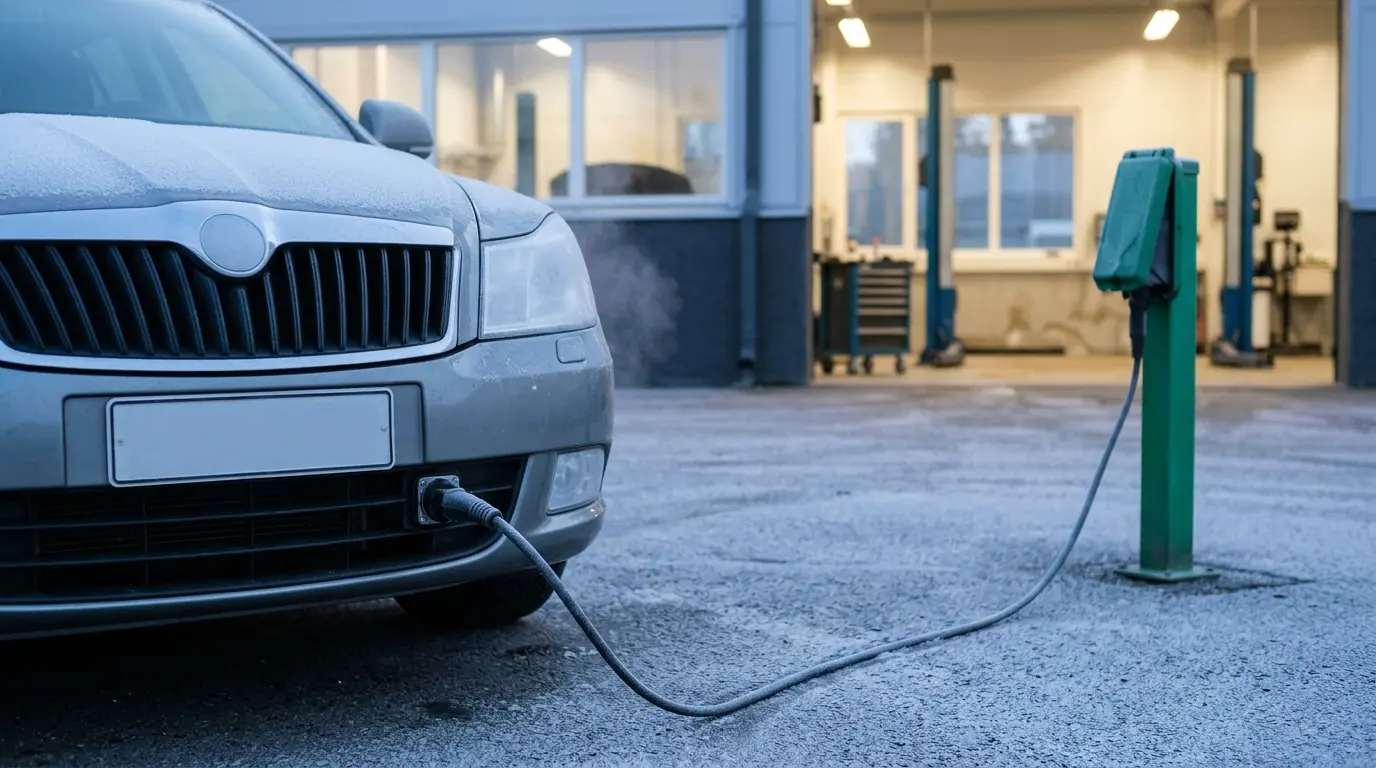
- Preheat the cabin. A cabin heater dries the car's surfaces before you even set off, and preheating stops the windows icing up and fogging up. You will find heating times in the article on using a block heater.
- Clean the inside of the glass regularly. Plastics and upholstery give off chemicals that leave a film on the glass, even in a car nobody smokes in. Spray the cleaner onto the cloth, not straight onto the glass. A clean cloth that sheds no lint leaves no streaks.
- Keep the air intake clear. Brush snow and leaves off the grille under the windscreen when you clean the windows.
According to Liikenneturva, servicing the ventilation system regularly means the windows fog up less. The cabin filter's change interval is in the car's service schedule, and filter makers recommend a shorter interval than some car makers do:
| Source | Change interval |
|---|---|
| Bosch | once a year or every 15 000 km |
| MANN-FILTER | once a year or every 15 000 km |
| Kia's manual, European service schedule | every 2 years or 30 000 km |
| Tesla Model 3, service instructions | every 2 years |
Bosch points out that the car maker's instructions should always be followed. Kia's service schedule has the filter changed more often if the car is driven a lot on dusty, gravel or salted roads. According to MANN-FILTER, windows that fog up often and clear slowly are a sign that the filter is worth changing.
If water gets in when it rains or at the car wash, drying the car out is not enough. The leaking seal or the blocked drain hole then has to be repaired.
Ice on the inside of the windows
In hard frost, the moisture in the air inside does not condense on the glass as droplets but freezes on it in a thin layer. Moisture that has got into the footwell freezes on a frosty night too, and in the morning the mat under your heels can be frozen. Ice on the inside of the glass tells you there is too much moisture in the car.
In the morning, do this:
- Start the car, select demisting and fresh air, and turn the heat to full.
- Let the heating melt the ice, and set off only once the windows are clear.
- Do not scrape the inside of the rear window. The heating elements are bonded to the inside of the glass, and a sharp object or an abrasive cleaner can damage them.
Thawing removes the ice but not the moisture. The meltwater stays in the car and freezes again the next night unless the car is dried out. Air the car after driving, take wet mats indoors overnight and preheat the cabin before you set off. If the windows are iced up every morning despite all this, water is getting into the car from somewhere.
A sweet smell and a greasy film on the glass
The heater core is a heat exchanger under the dashboard. The engine's coolant flows through it and heats the air blown into the cabin. When the core leaks, coolant gets into the cabin. The signs are:
- a sweet smell in the cabin
- windows that fog up again and again, and a greasy film on the inside of the windscreen
- a wet, sticky patch on the footwell mat
- the coolant level dropping in the expansion tank.
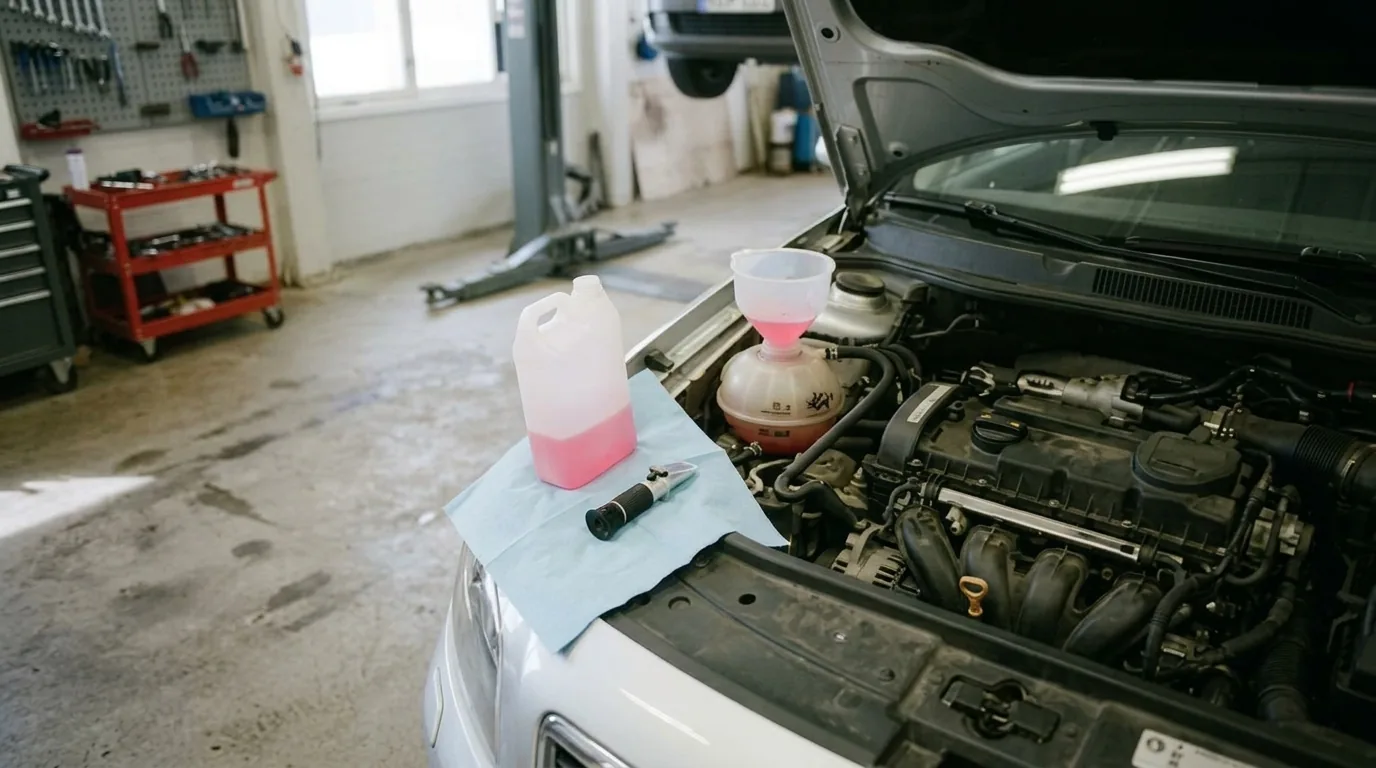
Check the level in the expansion tank when the engine is cold. Do not open the cap while the engine is warm, because the system is then under pressure. There are more detailed instructions on the coolant change page.
It is not wise to put off dealing with a leak. If a lot of coolant is lost, the engine can overheat. During diagnostics we track down the leak and tell you the price of the repair before the work starts.
When should the car go to a workshop?
Bring the car to a workshop if
- the windows fog up even though recirculation is off, the air conditioning is on and the heat is on full
- the airflow is weak even on full, or a stale smell comes from the vents
- there is water on the floor although no snow has been brought in
- the car smells sweet inside or a greasy film forms on the glass
- the air conditioning did not cool properly last summer. Air conditioning that does not cool does not dry the air either.
A working demister is required at the inspection (katsastus) too. Under the inspection criteria of Traficom, the Finnish Transport and Communications Agency, the inspector tests the windscreen wipers, the washer and the demister. If one of them does not work at all, the car fails. A weak one earns a repair notice (korjauskehotus).
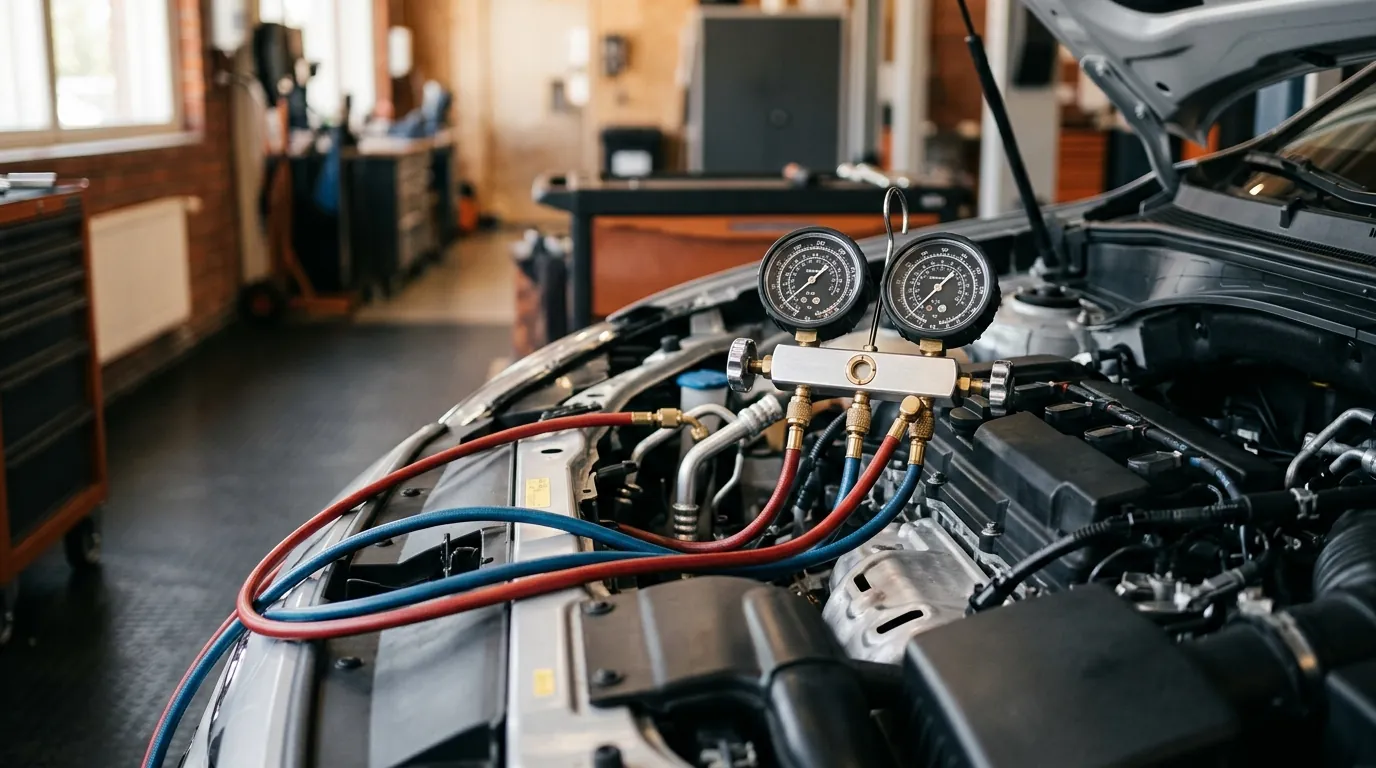
We start with the simplest checks. In a cabin filter replacement we vacuum out the filter housing and test the blower in both fresh-air and recirculation mode. Where the filter sits under the windscreen, we also check the fresh-air intake and the scuttle drain holes. In an air conditioning service we vacuum-test the system and measure the airflow and the cooling temperature. If these do not reveal the cause, or water gets onto the floor, we go on to diagnostics. We tell you the price before the work starts.
If you are coming to us for a tyre change, you can add two related jobs to the same visit. On the «At the same visit» step of the online booking, choose the cabin filter change with your own filter, cleaning the inside of the windscreen, or both. In that case, bring the filter with you. Our workshop is at Lampputie 12 in Suutarila, Helsinki.