Published
The figures come from the inspection statistics of Traficom, the Finnish Transport and Communications Agency, and cover the periodic inspections (katsastus) of passenger cars in 2025. They include cars first registered between 2005 and 2021, which were 4 to 20 years old when they were inspected. The Corolla Verso's high figure is largely down to age and mileage: its median mileage, 289 000 km, was the highest of the common models. All fault figures on this page are rejection faults per hundred inspections.
Toyota at inspection in 2025
Traficom publishes two figures that are worth keeping apart. The rejection rate shows what share of inspections ended in a rejection. The number of rejection faults per hundred inspections counts every fault that led to a rejection, and a single failed car can have several of them.
| Make | Inspections | Failed | Rejection faults / 100 | Median mileage |
|---|---|---|---|---|
| Toyota | 212 612 | 20.8 % | 35.2 | 173 000 km |
| Audi | 86 387 | 21.0 % | 33.5 | 220 000 km |
| Škoda | 109 003 | 23.2 % | 38.8 | 188 000 km |
| Volvo | 149 351 | 23.5 % | 37.8 | 243 000 km |
| Volkswagen | 182 456 | 25.9 % | 44.8 | 190 000 km |
| All makes | 1 672 937 | 26.9 % | 46.8 | 187 000 km |
Toyota's rejection rate was the lowest of all the makes inspected more than 20 000 times. Audi, however, had fewer rejection faults per hundred inspections. So, on average, a failed Audi had fewer faults than a failed Toyota. Audis had also been driven considerably further: their median was 220 000 km, against 173 000 km for Toyotas.
Even so, lower mileage does not fully explain Toyota's figure. When cars are compared with others first registered in the same year, Toyota had fewer rejection faults in every year from 2005 to 2021.
| Year first registered | Toyota | All makes |
|---|---|---|
| 2005 | 73.7 | 93.0 |
| 2008 | 58.7 | 75.7 |
| 2011 | 33.2 | 48.5 |
| 2013 | 19.1 | 36.2 |
| 2015 | 12.4 | 25.4 |
| 2019 | 6.4 | 14.1 |
| 2021 | 4.0 | 10.2 |
Part of the gap comes down to mileage: Toyotas first registered in 2011 had a median of 196 000 km, against 221 000 km for all cars from the same year. But the gap also shows in the oldest cars, where Toyotas had been driven just as far. Toyotas from 2005 had a median of 261 000 km, and all cars from the same year 257 000 km.
Figures by model
The table lists the Toyota models that were inspected more than 5 000 times in 2025.
| Model | Inspections | Failed | Rejection faults / 100 | Median mileage |
|---|---|---|---|---|
| Avensis | 45 565 | 24.8 % | 40.8 | 234 000 km |
| Corolla | 41 001 | 20.1 % | 34.8 | 169 000 km |
| Yaris | 40 486 | 20.6 % | 33.6 | 119 000 km |
| Auris | 30 957 | 15.2 % | 23.7 | 160 000 km |
| RAV4 | 17 454 | 17.4 % | 31.3 | 164 000 km |
| Corolla Verso | 6 334 | 31.9 % | 56.2 | 289 000 km |
| C-HR | 5 678 | 3.2 % | 4.1 | 81 000 km |
| Verso | 5 497 | 20.7 % | 31.3 | 218 000 km |
The Auris stands out: it had the fewest rejection faults of the common models, even though its median mileage was 160 000 km. The Yaris's fault figure was on a par with the Corolla's, although it had been driven considerably less. The Verso's figure was the same as the RAV4's, 31.3, even though Versos had been driven further, at 218 000 km. The C-HR's low figure reflects, above all, the cars' age. The C-HRs in the statistics were first registered between 2016 and 2021, and their median mileage was 81 000 km. The Corolla's figures by year of first registration are on the Corolla page.
One model outside the table stands out: the Aygo. It was inspected 4 123 times and had 86.7 rejection faults per hundred inspections, even though its median mileage was only 134 000 km. Its rejection rate was 38.9 %. The Aygo's most common rejection cause was the sills and floor pan, at 19.4 faults per hundred inspections.
What are Toyota's most common inspection faults?
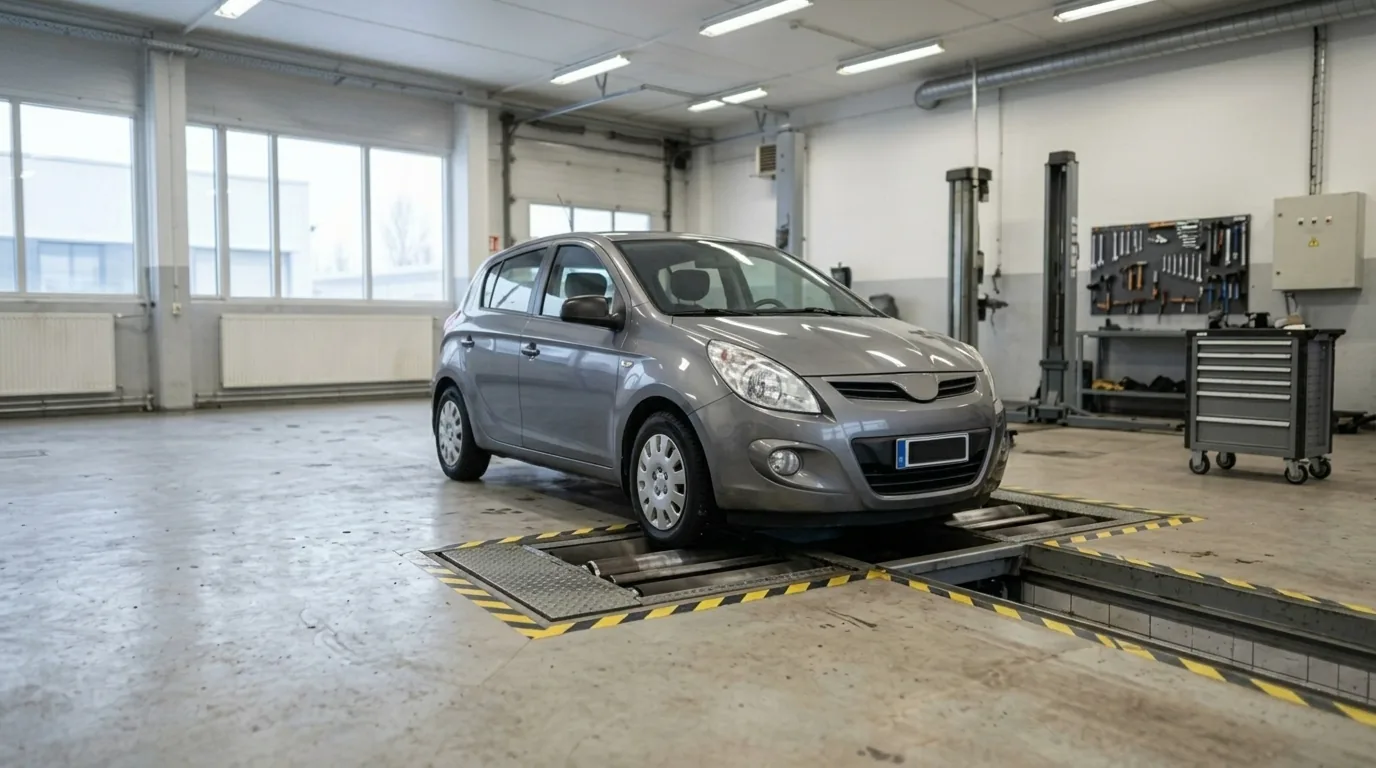
Across the make as a whole, Toyota's five most common rejection causes were the parking brake test, the service brake, the sills and floor pan, the rear axle and the service brake test. The tests are measurements made on a brake dynamometer, in other words on brake rollers.
| Inspection item | Toyota | All makes |
|---|---|---|
| Parking brake test | 4.5 | 4.6 |
| Service brake | 4.3 | 4.9 |
| Sills and floor pan | 3.8 | 2.7 |
| Rear axle | 3.7 | 3.1 |
| Service brake test | 3.4 | 3.2 |
| Springs and shock absorbers | 3.3 | 6.1 |
| Front axle | 2.6 | 7.5 |
Toyota's top faults are not unusually common. They rise to the top because Toyotas have far fewer front axle and suspension faults than other makes. On three items, however, Toyota had more rejection faults than the average for all makes: the sills and floor pan, the rear axle and, by a narrow margin, the service brake test.
On one item, Toyota stands out for the wrong reasons. Service brake faults that led to a driving ban (ajokielto) were recorded 1 294 times on Toyotas, or 0.61 per hundred inspections. For all makes the figure was 0.30, half as high. Under the inspection criteria, examples of service brake faults that put a car under a driving ban are a fluid leak in the brake lines and a badly corroded brake disc or brake pipe. The statistics do not show which of these keeps recurring on Toyotas, but it pays to have the brakes checked before the inspection.
The top faults vary from model to model. The table gives the three most common rejection causes for each common model.
| Model | Most common | Second most common | Third most common |
|---|---|---|---|
| Avensis | Rear axle 8.5 | Parking brake test 5.0 | Suspension 4.4 |
| Corolla | Sills and floor pan 6.4 | Parking brake test 5.9 | Service brake 5.2 |
| Yaris | Suspension 5.8 | Sills and floor pan 4.8 | Rear axle 3.7 |
| Auris | Service brake 4.5 | Parking brake test 3.2 | Service brake test 2.9 |
| RAV4 | Rear axle 6.7 | Parking brake test 4.3 | Service brake 3.4 |
| Corolla Verso | Sills and floor pan 9.7 | Parking brake test 8.7 | Service brake 6.2 |
It is worth comparing the table with the figures for all makes. The Yaris's most common fault, springs and shock absorbers, stood at 5.8 per hundred inspections, slightly below the 6.1 for all makes. The Corolla, on the other hand, had 6.4 faults in the sills and floor pan, more than twice the 2.7 for all makes.
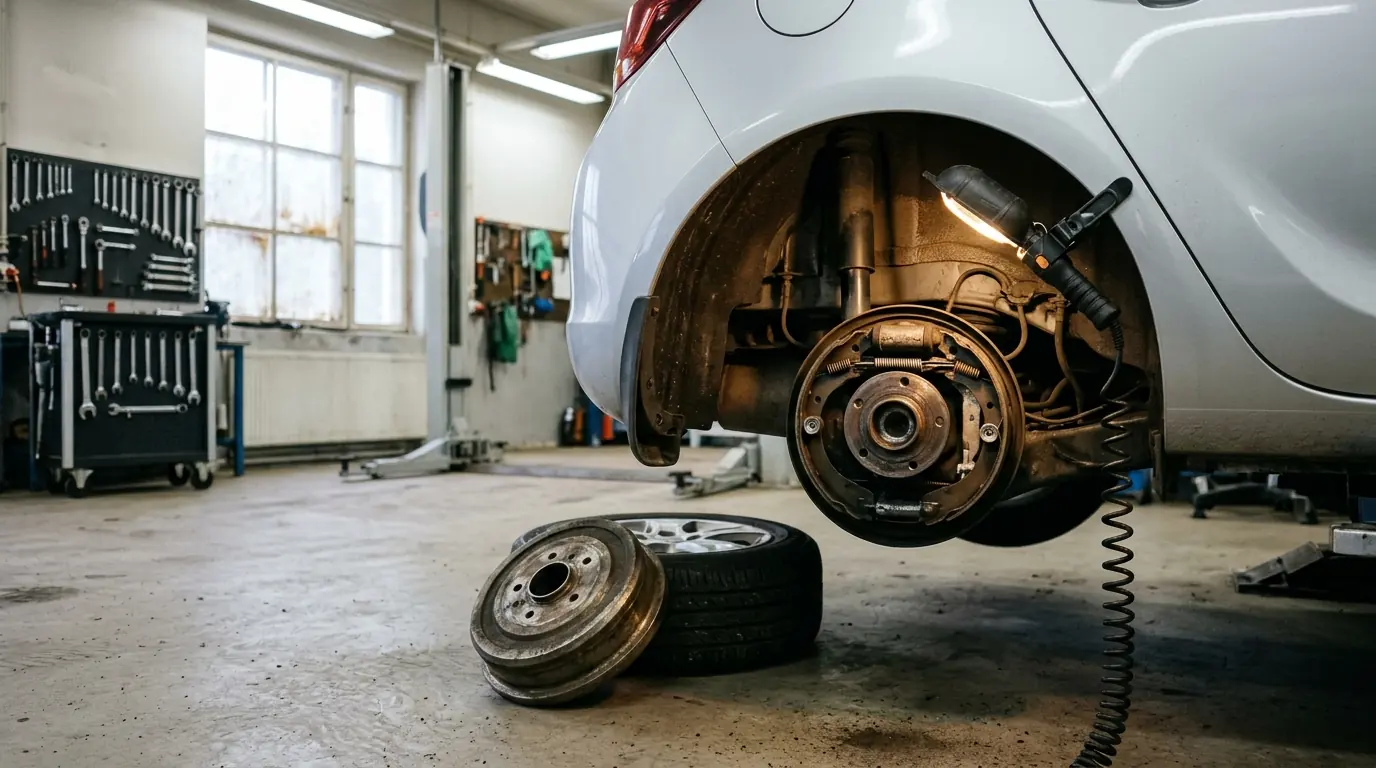
Parking brake test. At the inspection, the handbrake is tested on rollers. Under Traficom's inspection criteria, a car fails if the total braking force of the parking brake is less than 16 % of the car's total mass. A force below 8 % leads to a driving ban, unless the wheels lock. In our experience, the cause is often a stiff cable or a rear brake mechanism that does not move freely. We cover the symptoms and the repair in the article on a handbrake that does not hold.
Service brake. The service brake check covers the discs, pads and pipes, among other things. For example, a brake disc that has rusted or corroded across more than a third of its friction surface fails the car, as does a brake pad with less than 2 mm of friction material or a brake pipe that has corroded through more than a third of its wall thickness. On the rollers, a car fails if the braking forces of the wheels on the same axle differ by more than 30 %.
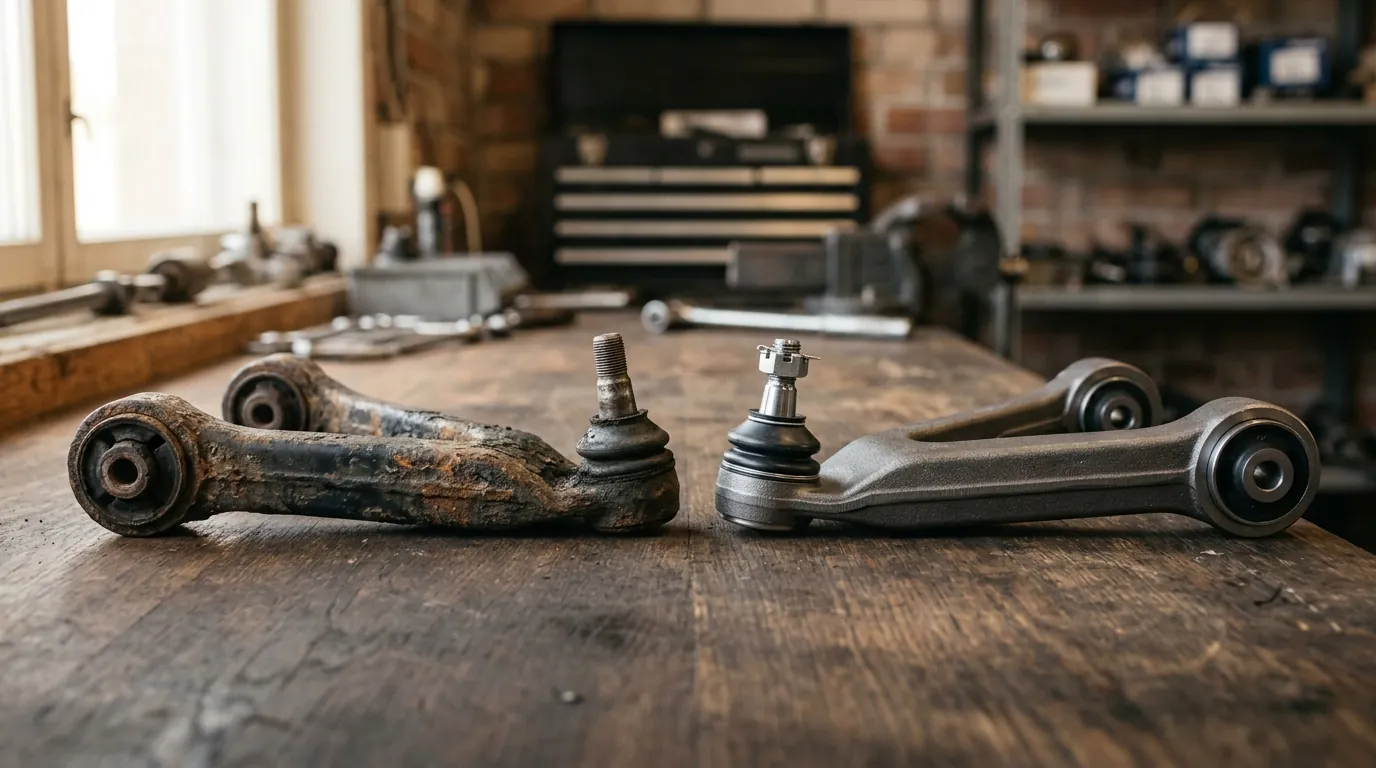
Rear axle and suspension. The rear axle check covers the mountings of the axle and its control arms, rust damage, the bushes and play in the joints. On the suspension, a broken coil spring, for example, fails the car, as does a shock absorber that does not damp enough. Under the inspection criteria, a leaking damper means a rejection or a repair notice (korjauskehotus), but slight seepage does not yet count as a leak.
Why do the Avensis and the Corolla Verso get more rejection faults?
The reason is age and mileage, not that these models are any worse than other Toyotas. The Corolla Versos in the statistics were first registered between 2005 and 2009, so they were 16 to 20 years old when inspected. The Avensis is included for the years 2005 to 2018, and of the five most common Toyotas it had been driven the furthest. Set against all cars first registered in the same year, both models had fewer rejection faults in every year.
| Year first registered | Corolla Verso | Avensis | All makes |
|---|---|---|---|
| 2005 | 73.2 | 82.7 | 93.0 |
| 2006 | 63.7 | 82.5 | 89.2 |
| 2007 | 54.9 | 70.3 | 80.9 |
| 2008 | 43.6 | 58.7 | 75.7 |
| 2009 | 37.6 | 43.0 | 64.3 |
Avensis cars first registered in 2008 had covered 283 000 km, while the median for all cars from the same year was 256 000 km. Even so, they had fewer rejection faults. The Corolla Versos from the same year had almost the same median, 282 000 km, and even fewer faults.
The Avensis's most common rejection cause was the rear axle, at 8.5 faults per hundred inspections. When the rear axle is a model's most common fault, it pays to look in particular at the control arm bushes and at rust on the mounting points while the car is on a lift, because these are exactly what the inspection criteria list.
Hybrid Toyotas at inspection
A hybrid car goes through the same periodic inspection as any other car. Traficom's inspection criteria also have a section of their own for the additional checks on electric and hybrid cars. It covers, among other things, the warning labels on high-voltage components, the parts and warning device of the regenerative braking system, the low-voltage wiring, the traction battery and its management system, and the traction motor.
In 2025, these additional checks recorded 20 rejection faults on Toyotas in 212 612 inspections. Across all makes, 357 were recorded in total. A hybrid's brakes are checked in the same way as any other car's: on the rollers and by eye.
The statistics do not separate hybrids from petrol cars within the same model. So the figures for the Corolla, Yaris, Auris or RAV4 cannot tell you whether the hybrid version does better or worse at inspection. The Prius, a Toyota hybrid model, had 54.5 rejection faults per hundred inspections. The figure reflects age and mileage, as its median mileage was 220 000 km. Its most common causes were the service brake, the parking brake test and the front axle: the same items that top the list for all makes.
Underbody rust
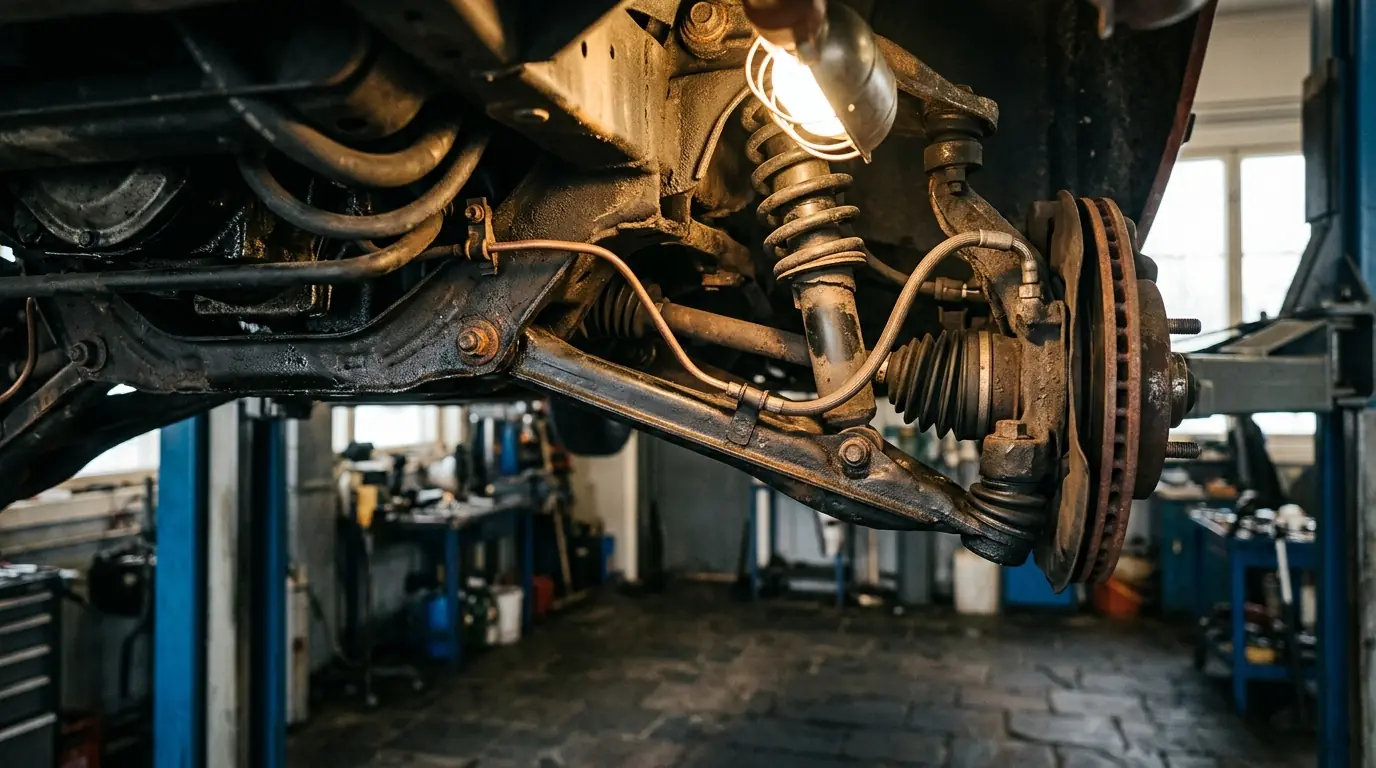
In the statistics, the item is called «sills and floor pan». In the inspection criteria, underbody rust is assessed under the item «Chassis». The inspector checks it by eye and with a tyre iron or a rust hammer: the underbody is tapped systematically, and suspect spots are pressed.
| Finding | Result |
|---|---|
| A single small area of rust damage | Repair notice |
| More extensive rust damage in the sills, or rust in the box sections of the spring mountings | Failed |
| Rust at the mounting points of the axles or subframes, or rust that weakens the structure | Failed or driving ban |
A «single small area of rust damage» means a hole rusted through that is at most the size of the tip of a tyre iron. On Toyotas, this item had 3.8 rejection faults per hundred inspections, against 2.7 for all makes. The Corolla had 6.4, the Corolla Verso 9.7 and the Aygo as many as 19.4.
You cannot feel rust when driving, but it shows on a lift. On a Toyota more than ten years old, the underbody is worth checking before the inspection, because a small rust hole still means a repair notice, while more extensive damage to a sill already means a rejection. If rust is the reason for a rejection, we look at the extent of the damage on the lift and tell you honestly whether the repair is worth it.
Check these before the inspection
Toyotas received as many repair notices as other cars: 59.6 per hundred inspections, against 59.9 for all makes. The most common notice was for the number plate light, at 11.2 per hundred inspections. You can check some things yourself on the drive.
- Handbrake. Pull the lever up on a slope and see whether the car stays put. If the lever comes up almost to the top before the brake bites, the adjustment has slackened. With an electric parking brake, just check whether the car stays put on the slope. Under the inspection criteria, lever travel of more than three quarters means a repair notice.
- Lights. Switch on the lights and walk round the car. Check the number plate light, the brake lights and the dipped beams separately.
- Tyres. Measure the tread depth. From November to March, winter tyres with main grooves less than 3.0 mm deep lead to a rejection, and grooves shallower than 1.6 mm lead to a driving ban.
- Brakes on the road. If the pedal feels soft, the car pulls to one side under braking or the brakes make a scraping noise, book a check before the inspection.
- Sills. Look at the surface of the sills below the doors. Bubbling paint or a brown streak is worth having looked at on a lift.
You will find the remaining checks in the article how to prepare for the inspection. The joints, brake pipes and box sections underneath can only be seen properly from a lift.
Buying a used Toyota?
The statistics show an average, not the condition of any one car. Ask the seller for the latest inspection certificate: according to Traficom, repair notices are printed on it, and they are only removed once the fault has been repaired and the car inspected again. Look especially at the entries for the parking brake, the service brake and underbody rust, because these are Toyota's most common rejection causes. If the car has a service book, check when the brakes were last serviced.
When should you visit a workshop?
The best time is before the inspection. During a scheduled service we check the brakes and the underbody on the lift, while the car is already up and the wheels are off. That way you find out about the parking brake cable, a leaking shock absorber or a rust spot in a box section on your own schedule, not during the month you have for the re-inspection (jälkitarkastus).
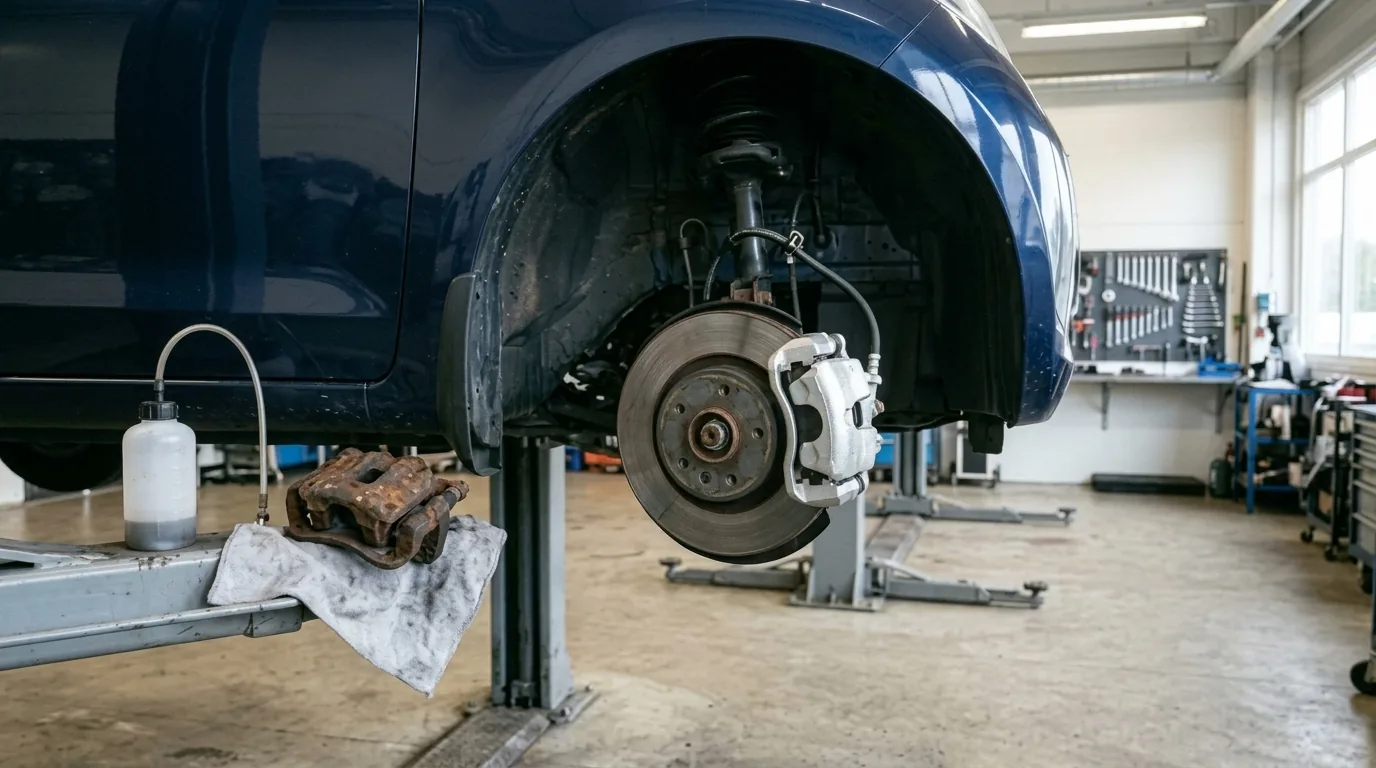
If the handbrake does not hold or a brake caliper is stuck, see brake caliper replacement. We repair rear axle and suspension faults as a suspension repair. If the car has already failed, we repair the items on the fault list as an inspection repair, and the deadlines are set out in the article on the re-inspection.
We say more about servicing Toyotas and about the models on the Toyota page. We are a general workshop in Suutarila, serving customers in Helsinki and Vantaa. We repair all makes. We do not carry out inspections, because we do not hold an inspection licence. You choose the inspection station yourself.