Published
Related symptoms: dual-mass flywheel rattle · rattle at idle · clunk when switching off the engine · clutch judder when pulling away
A dual-mass flywheel is a part that wears, but not every rattle comes from it. Many noises that sound like the flywheel come from somewhere else. That is why the order is always the same: listen first and rule out the other causes, and only then measure.
What is a dual-mass flywheel?
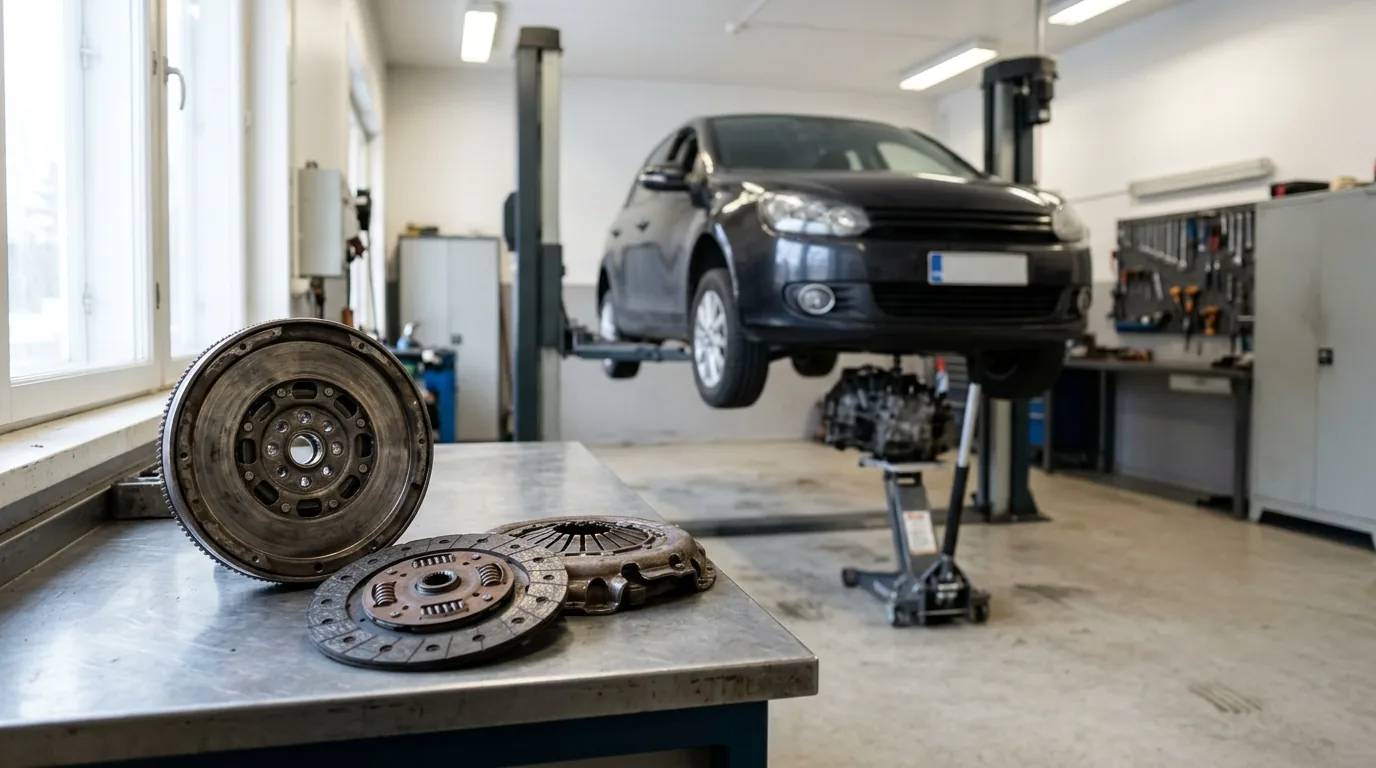
A flywheel is a heavy disc between the engine and the clutch. It is bolted to the end of the crankshaft, and the clutch disc is clamped against it. An ordinary flywheel is a single piece. A dual-mass flywheel, commonly shortened to DMF, is split into two parts.
The primary side is bolted to the crankshaft and carries the starter motor's ring gear. The secondary side carries the clutch. The two halves are joined by bearings that let them turn slightly relative to each other. Between them sit arc springs packed in grease, which flex with every pulse in engine speed.
According to ZF's technical description, the secondary side is carried on the primary side by separate axial and radial plain bearings. The springs are guided by spring seats and caps, which also stop them compressing solid. These sliding surfaces and the grease on the springs are what wear in use.
Why do cars have a dual-mass flywheel?
An engine does not turn evenly. Every power stroke in a cylinder gives the crankshaft a small jolt. Without damping, the jolts travel into the gearbox, the gears rattle and the vibration is felt through the body.
Diesel engines and turbocharged petrol engines produce plenty of torque even at low revs, and their pulses are strong. That is why DMFs are common in these cars in particular. The clutch manufacturer LuK developed the DMF in 1985, when the growing power and torque of engines had added to torsional vibration. The DMF damped it more effectively than the ordinary damper in the clutch disc.
The springs come in two stiffnesses. The soft springs take the jolts of starting and switching off the engine, and the stiffer springs damp vibration in normal driving.
Dual-mass flywheel symptoms
Over time the grease around the springs dries out, the springs and bearings wear and the play between the two halves grows. The table shows the most common symptoms and what else can cause the same symptom. The symptoms and when they appear come from workshop experience, and the alternative causes mostly from a technical guide by the clutch manufacturer LuK.
| Symptom | When | What else it could be |
|---|---|---|
| Rattle or clatter | At idle, in neutral | The auxiliary belt drive or the crankshaft pulley damper |
| Clunk | When the engine is switched off or started | Engine or gearbox mounts |
| Judder or jerking | When pulling away, as you release the clutch pedal | The clutch disc or the engine mounts |
| Clunk | When you press or release the accelerator sharply | Driveshafts, engine or gearbox mounts |
| Vibration | When accelerating in a high gear from low revs | An engine running problem |
Judder when pulling away can also come from the DMF itself. According to ZF, which makes Sachs dual-mass flywheels, hot spots on an overheated DMF can make the clutch grab unevenly.
None of these on its own proves a fault. LuK reports that a large number of DMFs returned under warranty because of noise turn out to be sound when they are examined. The cause is often another fault that gives the same symptom. Too much crankshaft end float and the gearbox bearings can also make the same noise.
How is the fault diagnosed?
- Road test. We listen for when the noise appears: at idle, as the engine is switched off, when pulling away or on and off the throttle.
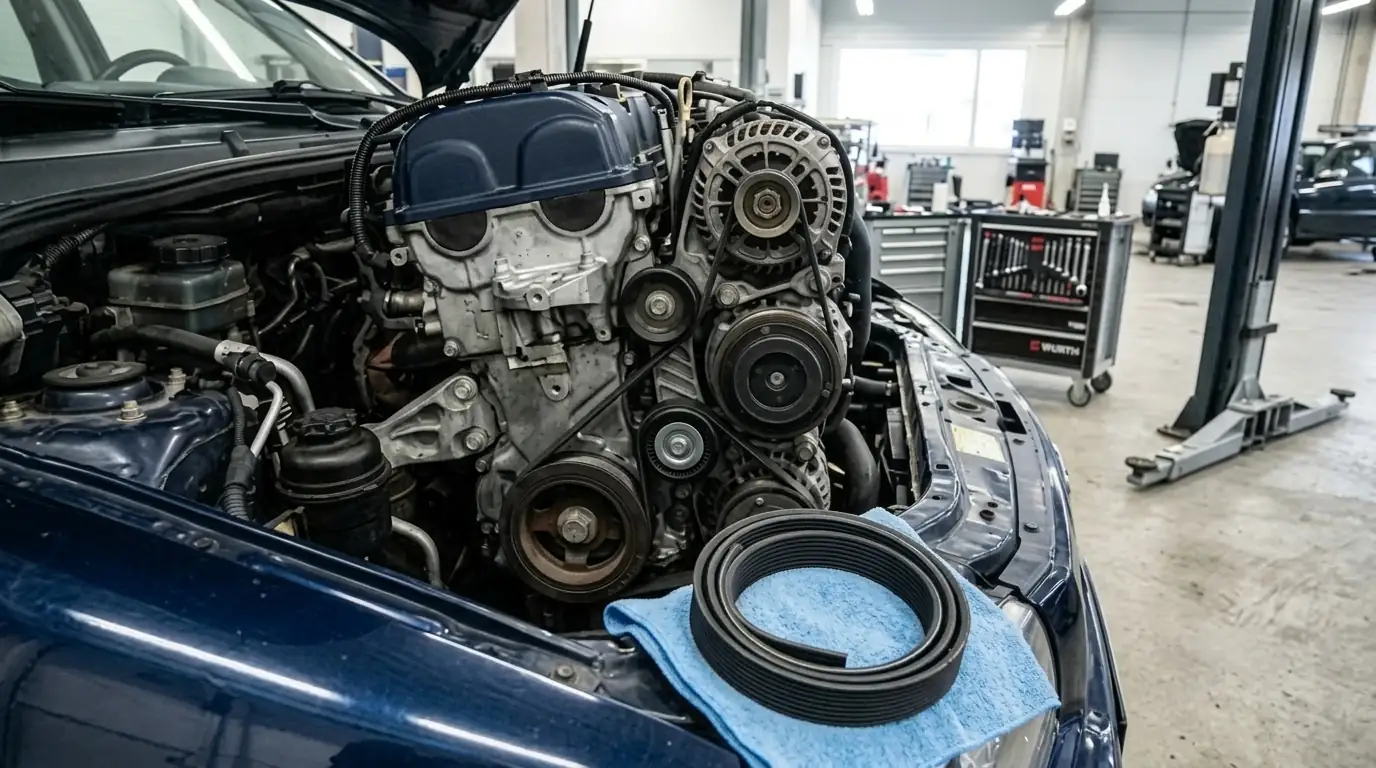
- Ruling out the belt drive. According to LuK, vibration from the auxiliary belt drive can be ruled out by removing the belt for a moment. At the same time we look at the engine and gearbox mounts and the driveshafts.
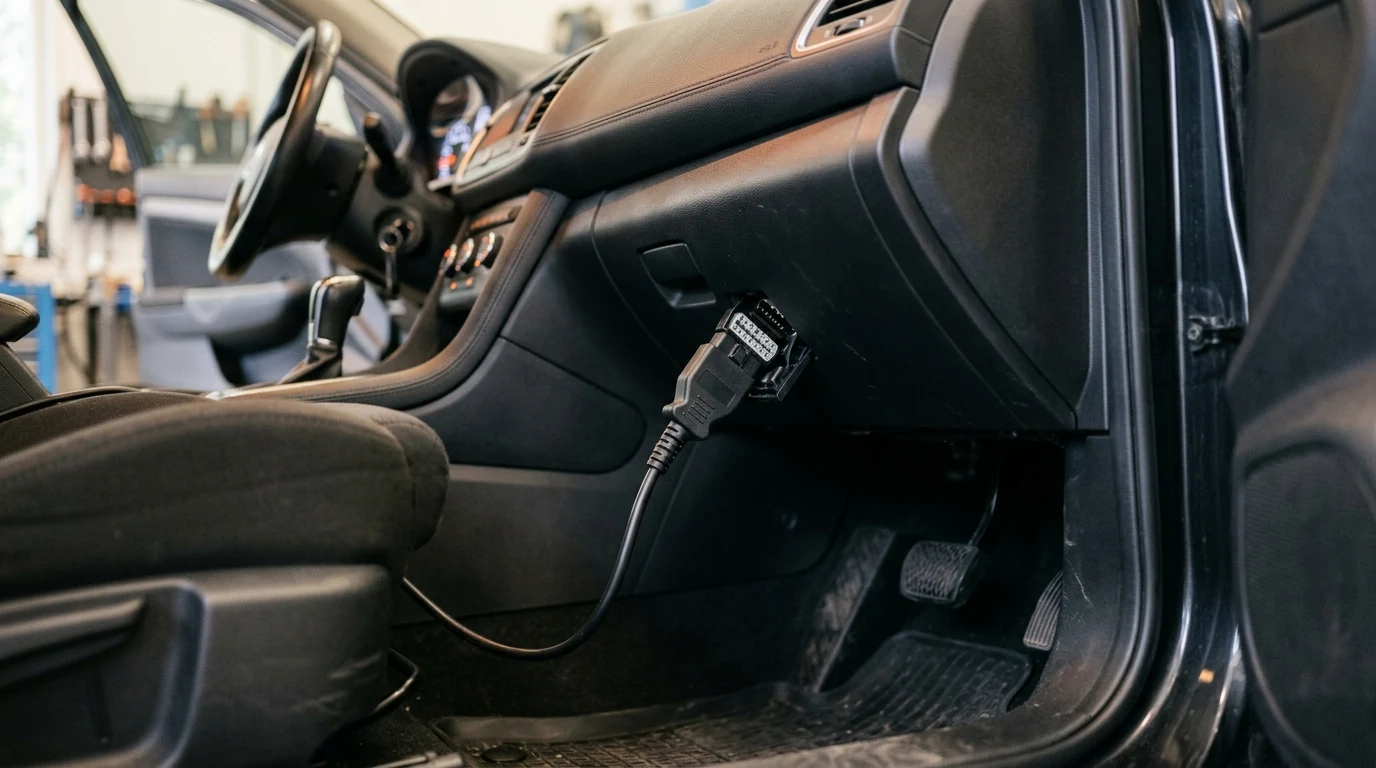
- Fault codes. We read the fault memory of the engine control unit, because an engine running problem can sound like a worn DMF, and it can also wear one.
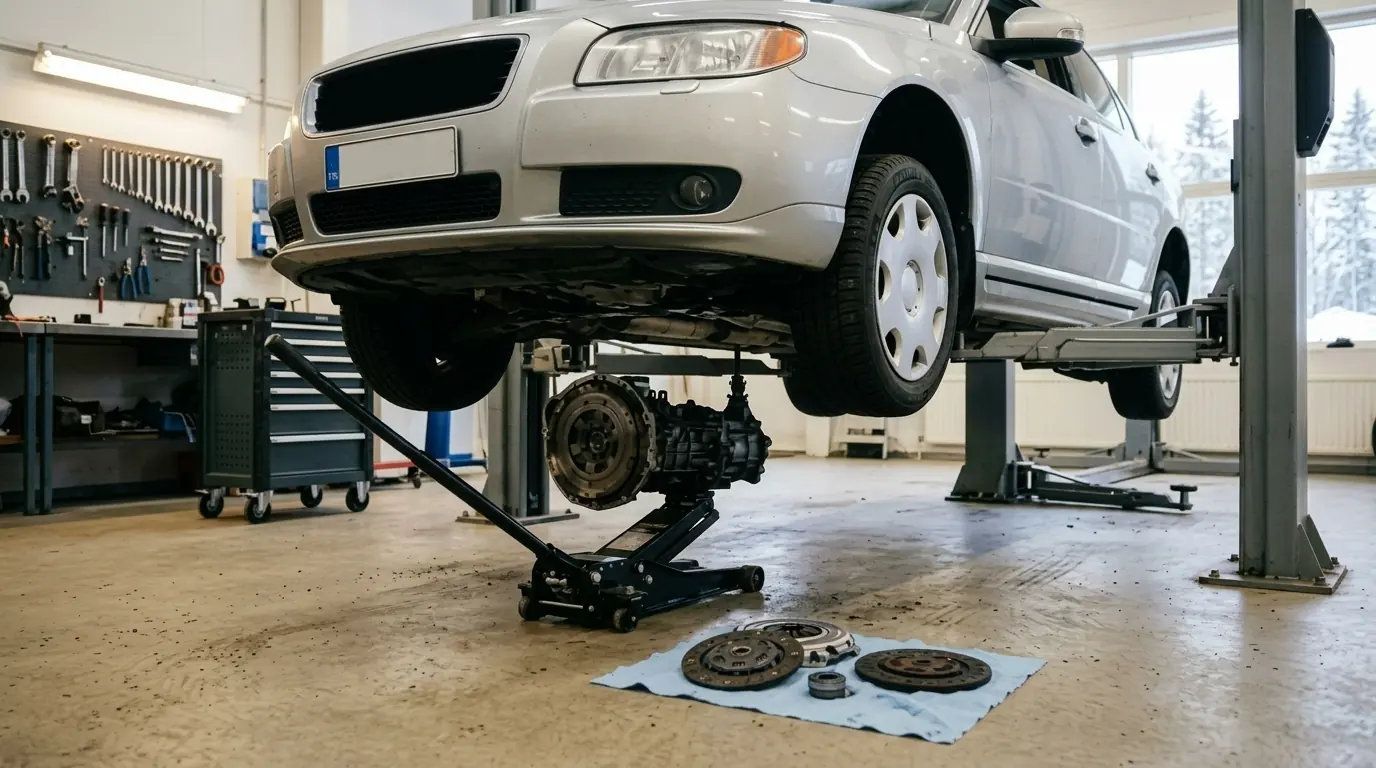
- Gearbox out. A DMF's condition cannot be measured while it is still in the car. We measure it once the gearbox has been removed.
- Play and rock. We measure how far the two halves turn relative to each other before the springs take up the load, and how much the secondary side rocks. On LuK's own DMFs the rock limit is 1.6 mm when there is a bearing between the halves, and 2.9 mm when there is a plain bush.
- Surfaces and grease. We look at the friction surface and the edges of the flywheel. ZF says that clear heat discolouration and heat cracks mean the DMF must be replaced. Grease leaking from inside is also a sign of internal damage.
- Findings and price. We tell you the measurements and the price before we carry on.
Play cannot be judged by hand. LuK notes that play can be misleading and must be measured accurately, because the permitted play depends on the bearing design. That is why we do not replace a DMF on the strength of the noise alone. If the cause remains unclear, we start with diagnostics.
Can you drive with a faulty dual-mass flywheel?
You can usually drive a short distance to the workshop, but the fault will not stay as it is. According to ZF, when the damping grease heats up and the springs run dry, the damping weakens or stops altogether. At worst the internal parts break up and can wear through the primary housing, at which point the DMF fails completely.
The DMF's job is to protect the gearbox from the engine's pulses, so a faulty DMF puts strain on the gearbox too. According to LuK, a worn DMF can also make a new clutch fail prematurely. Stop driving if the rattle turns into a constant metallic noise, the clutch starts to slip or the gears no longer engage properly.
The clutch and the dual-mass flywheel together
The DMF can only be reached with the gearbox out: the same job as getting to the clutch. If the DMF is worn, it is worth replacing at the same time. Otherwise the gearbox has to come out again later, and a worn DMF can also shorten the life of the new clutch.
The rule does not automatically work the other way round. A sound DMF does not need replacing just because the clutch is being replaced. The manufacturer's instruction is to check it for wear and overheating and to replace it if necessary.
The release bearing is usually replaced at the same time as well. LuK advises renewing the concentric slave cylinder every time the clutch is replaced, because the release bearing is part of it.
We check the DMF whenever the gearbox is out. If it has to be replaced, we call you and tell you the price before we carry on. The DMF is not included in the price of a clutch replacement, because its condition only becomes clear once the gearbox has been removed.
How long does a dual-mass flywheel last?
No one can promise how many kilometres a DMF will last. The technical guides from LuK and ZF give no lifetime in kilometres. Instead, they list the factors that shorten it. According to LuK, a DMF is designed to damp a certain amount of vibration, and if the car vibrates to begin with, its service life is shortened. LuK adds that DMFs found to be worn have often failed because of external factors. The LuK and ZF guides name these:
- A driving style that labours the engine in the wrong gear. For example, accelerating in a high gear from very low revs.
- Rough engine running. Faulty injectors, glow plug faults, slow starting and other running faults strain the DMF with every revolution.
- A slipping clutch. The slip heats the secondary side, so the grease loses its effect and the springs run dry.
- Resting a foot on the clutch pedal. Constant light pressure on the pedal wears the bearing between the halves.
- Towing a trailer and carrying heavy loads.
- Long idling with the air conditioning or heating on, as in taxi and ambulance use.
- Tuning the engine with software. The extra torque loads the flywheel more than it is designed to withstand.
The same list shows what extends its life: change down before the engine starts to vibrate at low revs, have running faults and the glow plug system repaired in good time, do not rest your foot on the clutch pedal and do not let the clutch slip.
If the replacement DMF also fails quickly, the cause is often elsewhere in the car. LuK then advises checking, among other things, the engine fault codes, the glow plug system, the idle, the crankshaft damper, the injectors and the previous repair history before the next replacement.
Is it worth fitting a single-mass flywheel instead?
One-piece flywheels are also sold as replacements for a DMF. According to LuK, however, a one-piece flywheel cannot damp as much harmful vibration. Driving comfort then suffers, and the life of the gearbox, the driveshafts and in some cases even the crankshaft can be shortened.
Did the dual-mass flywheel fail too soon?
If the car was bought second-hand from a business, the question is settled under the defect rules of the Consumer Protection Act (kuluttajansuojalaki). The Act applies only to sales where the seller is a trader (chapter 1, section 1), so it does not apply to a sale between two private individuals. Under chapter 5, section 12 of the Act, goods must be as durable as goods of the same type usually are and as the buyer can reasonably expect. If a defect appears within a year of delivery, it is presumed to have existed already at the time of the sale (section 15). You must notify the seller of the defect within a reasonable time of noticing it, and notice given within two months is always in time (section 16 a).
The Consumer Disputes Board (Kuluttajariitalautakunta) has ruled both ways on dual-mass flywheels. In a decision published in 2009, a five-year-old car had its flywheel replaced at 163 402 km. The Board considered the failure normal wear, but found that the buyer should have been told before the sale that the part might need replacing before the engine's normal service life ends. It recommended a price reduction. In a decision published in 2010, the failure of the DMF in a car that had covered about 220 000 km was considered normal wear, and no compensation was recommended.
Both decisions were given before the 2022 change in the law, and the Board's decisions are recommendations. Even so, they show what is weighed up: the car's age, its mileage, its price, its service history and what the buyer was told.
Tell the seller before you have the car repaired elsewhere. Under chapter 5, section 18 of the Act, the starting point is that the seller gets the chance to put the defect right. If we do the repair, ask for the old part and the measurements to take with you, because they show what was wrong with the part.
The dual-mass flywheel and the inspection
The DMF is not checked as a separate item at the inspection (katsastus), but its symptoms can show up on the test drive. Traficom, the Finnish Transport and Communications Agency, lists a slipping or heavily juddering clutch, and faults in how the gearbox or the clutch works, as grounds for rejection in its inspection criteria.
At the 2025 inspections, 2 394 rejection faults and 32 087 repair notices (korjauskehotus) were recorded for the transmission on passenger cars first registered from 2005 to 2021. The statistics do not separate clutch and DMF faults from other transmission faults. Under the inspection criteria, a torn CV boot, for example, leads to a repair notice, so the number of notices says nothing about DMFs.
When should you bring the car in?
Bring the car in when it starts to rattle at idle or when the engine is switched off, or when it starts to judder as you pull away. Tell us when the noise appears and whether it has changed, as that speeds up the fault-finding. Have the car looked at before the clutch starts to slip, because a slipping clutch heats the flywheel as well, and the repair then gets dearer. We start with a road test and by ruling out the other causes, and the DMF is replaced only when the measurement shows it needs to be.
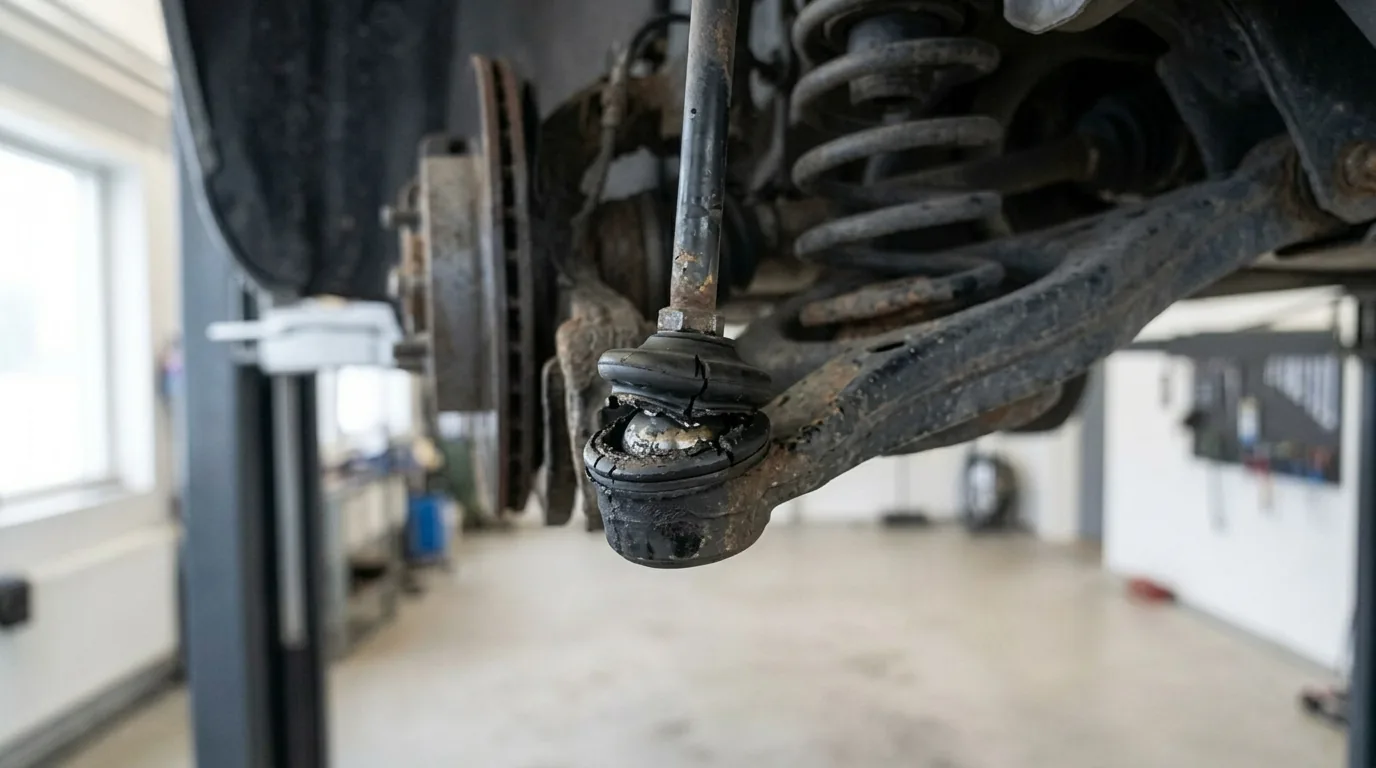
If the noise comes from the belt drive, see auxiliary belt replacement. We describe the clutch and DMF work on the clutch replacement page, and clunks from the suspension in the article a clunking noise from the car.