Published
Why renting can suit a project
Building a data centre takes a large workforce. Yle, the Finnish public broadcaster, reported on 24 June 2026 that about 10 000 people were building data centres in Finland. By one trade union's estimate, about half of them were Finns, while an employers' organisation put the share of Finns at 50 to 70 %. Crews of that size need cars and vans: to get people to the site, to carry tools and materials, and to move between sites.
Renting can suit a project that lasts a limited time. Crews move from one site to another as the work goes on, the number of vehicles needed rises and falls with the phases of the build, and rented vehicles need not be bought at the start or sold at the end. Whether the vehicles are rented, leased or owned, someone still has to keep them roadworthy for as long as the project runs.
Who is responsible for maintaining a rented vehicle
It depends on the contract, and contracts differ. Under the general rental terms of the Finnish Car Rental Association, in force from 1 October 2025, the renter must report every fault in or damage to the car to the rental company at once. A technical fault that the renter did not cause is the rental company's responsibility, and the renter may have only small repairs done on their own initiative. Taking the car out of Finland needs the rental company's written permission.
One major rental company's terms go further. When scheduled maintenance falls due during the rental, the renter must report it, and the company then chooses the workshop or swaps the vehicle for another. In the same terms, following the manufacturer's service schedule is tied to the vehicle's factory warranty and buyback agreements.
Some business leases include maintenance at workshops that the leasing company chooses. In that case the vehicle goes where the contract says.
So the practical advice is to check your contract before any work is booked, and to agree in writing who may order servicing and repairs and who approves the cost.
What Finland requires of vehicles in use
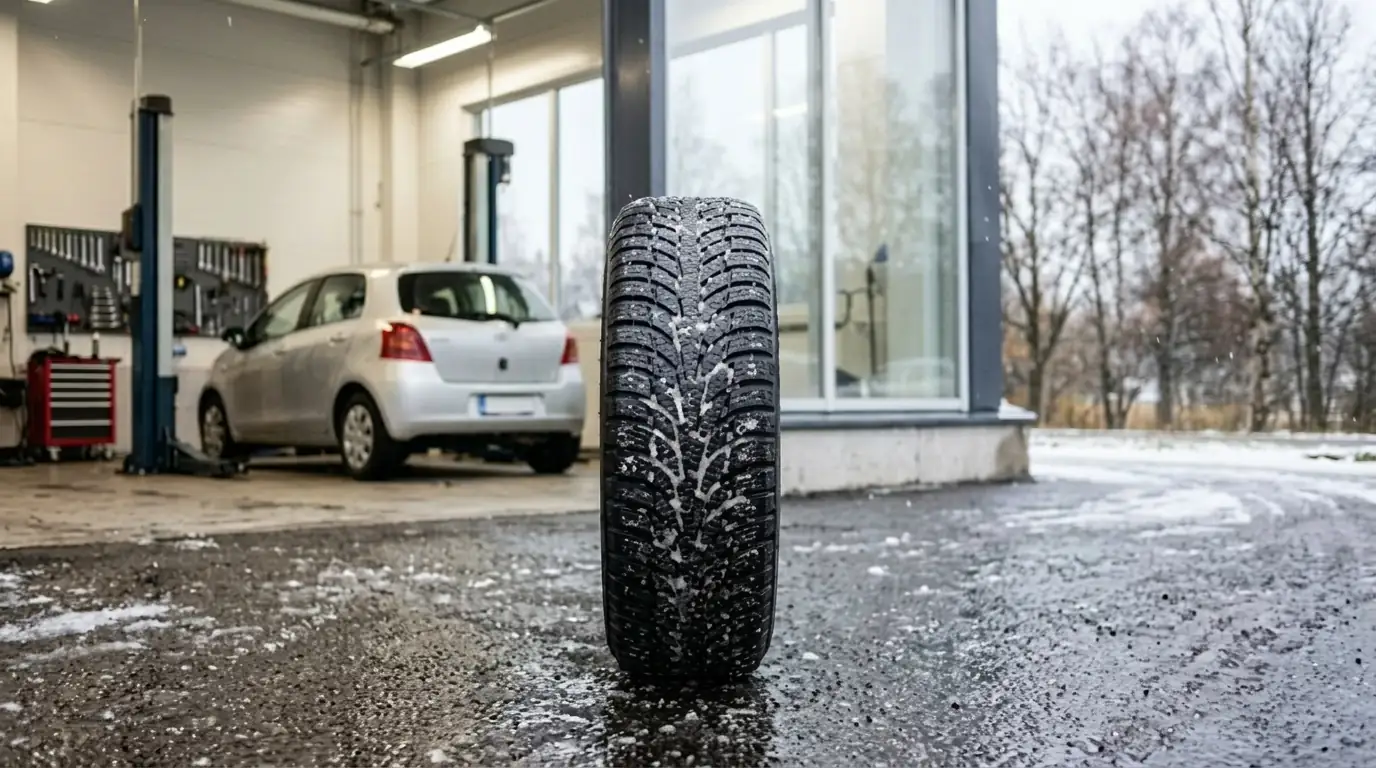
Winter tyres are a legal requirement. Under section 105 of the Road Traffic Act (729/2018), from November to March, a car with a gross weight of up to 3.5 tonnes and every van must run on winter tyres with a tread depth of at least 3.0 mm when the weather or road conditions require it. According to Traficom, the Finnish Transport and Communications Agency, non-studded winter tyres have also had to carry the three-peak mountain snowflake symbol since December 2024.
Cars and vans must also go through a periodic inspection (katsastus) at an inspection station. According to Traficom, the first inspection is due within four years of first use, the next after two years, then one every two years, and one every year once the vehicle is over ten years old.
If a vehicle registered in another country is used in Finland, Finnish car tax can apply to it. The Finnish Tax Administration (Vero) publishes the conditions, so check them before a foreign-registered vehicle comes to the site.
Coordinating maintenance from another country
Running vehicles in Finland from an office in another country brings problems of its own. The working day may start at a different hour, the workshop may answer in a language you do not read easily, you do not know which local workshops to trust, and a vehicle that has gone in for repair is hard to follow: you end up chasing the driver and the workshop for news of it.
Three things help. The first is one local contact who knows your vehicles and can deal with you in a language you read. The second is a written price before any work begins. The third is a shared view of each vehicle, so that you, the rental company and the site team see the same status without phoning round. You can see what such a view can look like in the Fleet Care demo, which uses example data.
Reducing time off the road
A vehicle off the road costs the project time, whether it is waiting for parts, for a slot at the workshop or for someone to approve the work. Some of that waiting can be planned away:
- Plan servicing in batches: split the vehicles that fall due at about the same time into small groups, so that only a few are away from the site at once.
- Agree preventive checks for each vehicle at regular intervals, such as tyres, brakes and lights, so that a fault is found before it stops the vehicle.
- Use collection and return where the workshop offers it, so that no driver loses a working day taking a vehicle in.
- Agree replacement vehicles in advance: which vehicle covers for which, or how a replacement is arranged when one is needed.
None of this needs a heavy system. It needs times agreed in advance and one person at the workshop who keeps track of them.
Why repairs should be approved in advance
When a vehicle is at the workshop and the mechanic finds more wrong with it than expected, someone has to decide whether to go ahead. If that has not been agreed beforehand, either the work stops while the right person is found, or work is done that nobody approved. Both cost money, and the second can also lead to a dispute over the invoice.
Agree three things with the workshop before the first visit:
- Who may approve additional work, and up to what amount without asking anyone else.
- How the workshop asks: by email, in a shared fleet dashboard or by phone, and what the question gives: the price of the additional work and, where it helps, a photo of the fault.
- What happens if nobody can be reached: whether the vehicle waits, or whether only the work already approved is finished.
With a rented vehicle there is one more party. Under the Finnish Car Rental Association's general terms, a renter cannot simply order a repair: apart from small repairs, the rental company decides. A long-term business rental may have its own terms, so check your contract.
Why records and digital documentation matter
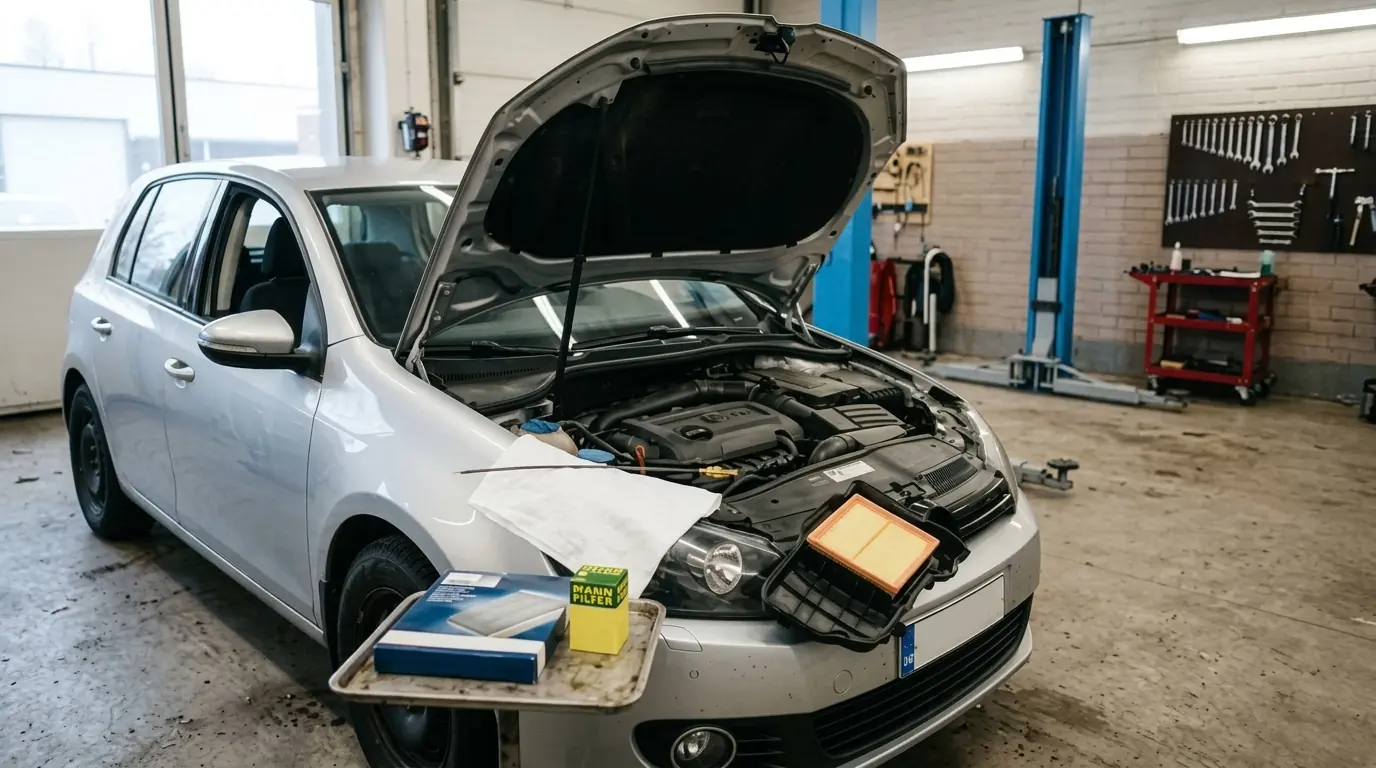
A record of every visit, kept for each vehicle, is worth having for several reasons. The rental company wants to see that its vehicle was looked after. A warranty claim can depend on proof that the vehicle was serviced on time. And when the vehicle is returned or sold, its history shows what was done. A good record gives the date, the mileage, the work done and the parts used.
Under EU competition rules, a manufacturer's warranty cannot normally be made conditional on routine servicing at an authorised dealer. Servicing to the manufacturer's schedule with parts of matching quality should not in itself affect the warranty, although a claim caused by faulty work or poor-quality parts can be refused, and warranty repairs themselves still go to the dealer.
Records are also how you keep control from abroad. If every visit ends with a report you can open, you do not need to ask anyone what was done. How a service is recorded in the manufacturer's system is explained in the article on the digital service book.
How to choose a local maintenance partner
Before you sign an agreement with a workshop, check that it offers these:
- A real address and opening hours, and someone who answers the phone during them.
- Servicing for all makes, and for both cars and vans, so that a mixed fleet can go to one place.
- A written price before the work starts.
- A clear way to approve additional work in writing or by phone, and a named person on your side.
- Liability insurance, and a clear answer on what it covers.
- Written warranty terms for its own work.
- A report for each vehicle after every visit.
- Service in your language, at least in writing.
If your project is in southern Finland, we offer local fleet maintenance for data centre projects from our workshop in Helsinki. We tell you the price before the work starts.